Gudi Padwa & Ugadi 2023: Significance, rituals, food & more
The first day of Chaitra month is considered one of the most auspicious days of the year.
By ET Online and Agencies |
BCCL
Everything you need to know about Gudi Padwa and Ugadi.
The festivals of Ugadi and Gudi Padwa fall on the first day of the Chaitra month of the Hindu calendar, which begins on March 22 this year.
According to Hindu mythology, Lord Brahma created the universe on this day. Hence, it is considered one of the most auspicious days of the year.
The first day of the Chaitra Navaratri coincides with festivals like Gudi Padwa, Sajibu Cheiraoba, Navreh, Cheti Chand and Ugadi which are celebrated in different parts of the country. Telugu New Year is observed on 'Chaitra Suddha Padyami' according to the lunar calendar.
The regional festivals mark the onset of the spring season and the warmer days ahead.
To celebrate this day with fervour, people clean their houses and decorate them with mango leaves and marigold flowers (also known as toran). To add a festive touch, they draw rangolis at the entrance of their homes, wear new ethnic clothes and offer prayers in temples. Some also distribute food and clothes to less-privileged people.
Gudi Padwa 2023
Gudi Padwa, mostly celebrated in Maharashtra, Goa and some other parts of the Konkan region, marks the beginning of the Marathi New Year.
ADVERTISEMENT
The word Gudi (or Gudhi) means a flag of Lord Brahma and Padwa is Pratipada (the first day of the new moon phase according to the Hindu calendar). It is also the beginning of the new harvest season for farmers.
People hoist Gudis at their houses, which is considered auspicious and believed to bring good luck and fortune. The Gudis are made of a metal pot (kalash) decorated with a colourful cloth and a garland of flowers, mango leaves and neem leaves and are attached to the top end of bamboo sticks. Gudi Padwa celebrations To celebrate Gudi Padwa, people clean and decorate their houses with colourful rangolis and Gudis.
In some places, men, women, and children dressed in traditional attire join colourful processions (shobhayatras) with music, performances, and dhols, among other things. The women in Maharashtra dress in traditional nine-yard (navvari) sarees and perform the traditional lezim dance.
ADVERTISEMENT
People enjoy festive foods like shrikhand puri on this day.
Ugadi 2023
Ugadi is one of the prominent festivals celebrated in South India. Mostly celebrated in the states of Telangana, Andhra Pradesh and Karnataka, it marks the beginning of the 'New Year' in many traditions.
ADVERTISEMENT
Ugadi, sometimes also referred to as Yugadi in Karnataka, is an amalgamation of two Sanskrit words - 'Yuga' and 'Adi' which mean the beginning of a 'new age'. It symbolises prosperity, growth, new beginnings and the victory of good over evil.
In some places, devotees prepare a paste of neem leaves mixed with jaggery, coriander seeds, and tamarind. It is believed that this mixture purifies the blood and increases immunity. Ugadi celebration In some traditions, people take an oil bath on Ugadi as they believe Goddess Lakshmi is present in the oil and Goddess Ganga is in the water.
Food also plays a prominent role on Ugadi. On this auspicious day, people also prepare a variety of traditional dishes like Ugadi Pachadi (chutney) in Telangana and Andhra Pradesh, Pulihora (lemon rice), Bobbatlu, Bevu Bella in Karnataka, and more.
The Ugadi Pachadi (drink) consists of six flavours - sweet, sour, salty, bitter, pungent and astringent - symbolising the different experiences of life. It is believed that consuming this food item on Ugadi brings good luck and prosperity throughout the year.
On this occasion, devotees throng temples to offer prayers.
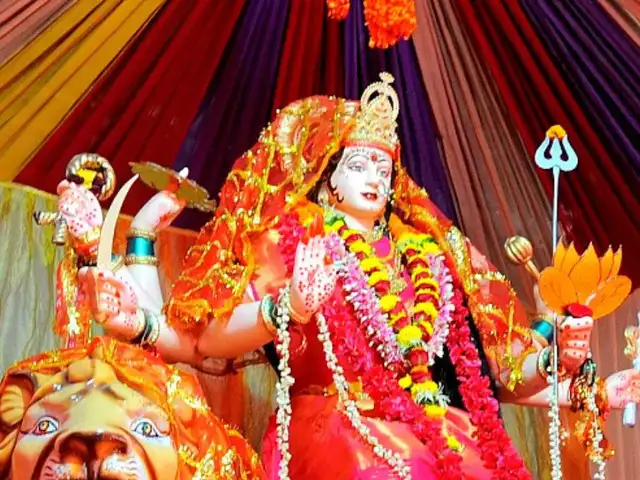
Chaitra Navaratri 2023: 9 Days, 9 Avatars Of Goddess Durga
1/10
Chaitra Navaratri begins on March 22 and concludes on March 30.
Chaitra Navaratri begins on March 22 and concludes on March 30.
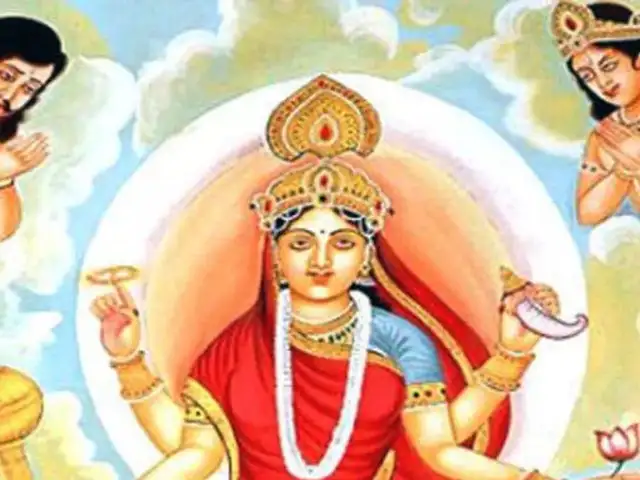
On Day 1, Maa Shailputri Devi, the daughter of the Himalayas, is worshipped on Chaitra Navaratri. With the powers of Shiva, Brahma and Vishnu, the goddess is known for blessing her devotees with a life free of pain and illness.
On Day 1, Maa Shailputri Devi, the daughter of the Himalayas, is worshipped on Chaitra Navaratri. With the powers of Shiva, Brahma and Vishnu, the goddess is known for blessing her devotees with a li..
Read More
Brahmacharini Devi, who is worshipped on Day 2, is known as the goddess of celibacy and penance. She helps her devotees achieve a peaceful and divine path to attain 'Moksha' (salvation).
Brahmacharini Devi, who is worshipped on Day 2, is known as the goddess of celibacy and penance. She helps her devotees achieve a peaceful and divine path to attain 'Moksha' (salvation).
Worshipping Chandraghanta Devi on Day 3 is the symbol of strength. The brave goddess, who bears chandra (moon) on her forehead, is known to ward off evil.
Worshipping Chandraghanta Devi on Day 3 is the symbol of strength. The brave goddess, who bears chandra (moon) on her forehead, is known to ward off evil.
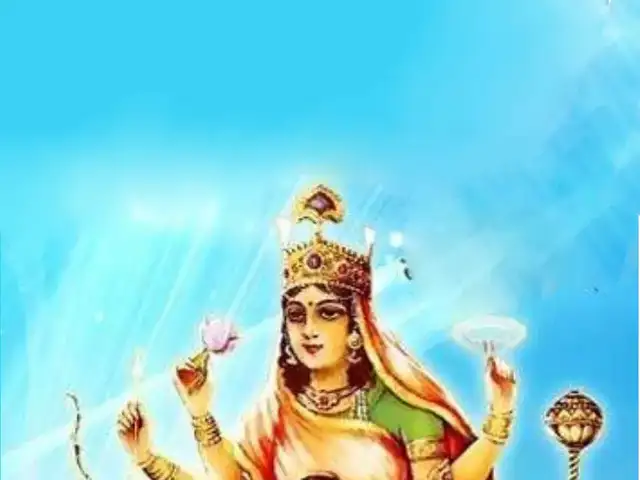
Goddess Durga's fourth avatar, Kushmanda Devi, is worshipped on Day 4. It is said that her laughter dispelled the darkness and created the universe. Her devotees pray to live a bright and happy life.
Goddess Durga's fourth avatar, Kushmanda Devi, is worshipped on Day 4. It is said that her laughter dispelled the darkness and created the universe. Her devotees pray to live a bright and happy life.
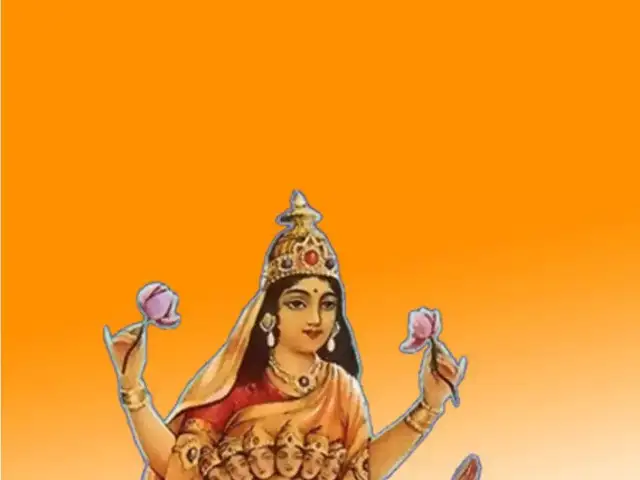
Skanda Mata Devi is Goddess Durga's fifth form. She is also known as warrior Skanda's mother, who is a symbol of divinity. Devotees seek her blessing to be healthy.
Skanda Mata Devi is Goddess Durga's fifth form. She is also known as warrior Skanda's mother, who is a symbol of divinity. Devotees seek her blessing to be healthy.
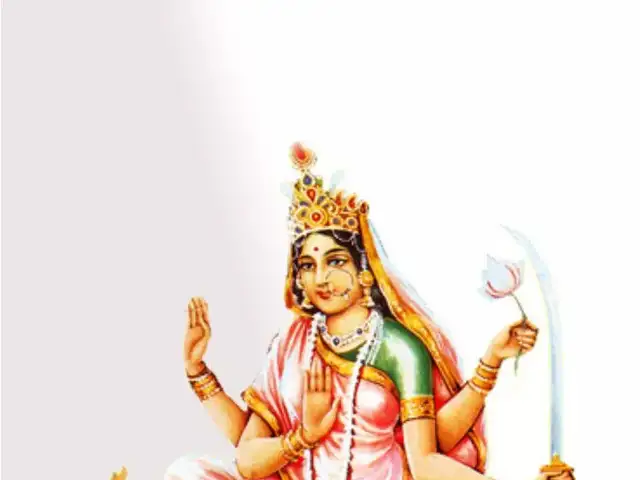
Born to sage Kata, Katyayani Devi is Goddess Durga's sixth avatar. She is known to fulfil the wishes of her devotees. It is said worshipping her can get a life partner on desired of.
Born to sage Kata, Katyayani Devi is Goddess Durga's sixth avatar. She is known to fulfil the wishes of her devotees. It is said worshipping her can get a life partner on desired of.
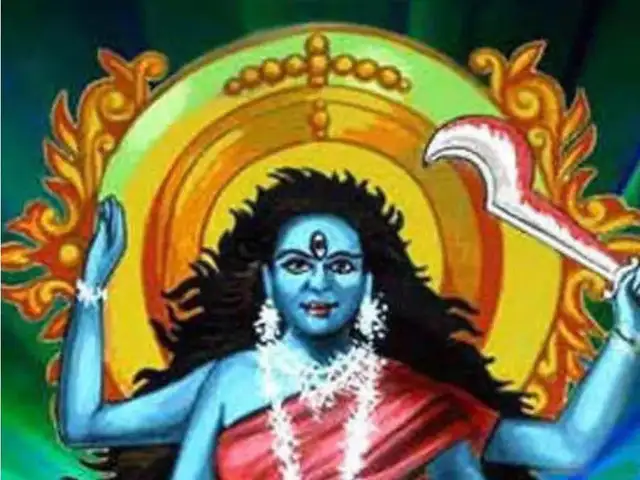
The seventh avatar is Maa Kalratri Devi who is believed to be a fierce goddess with a dark complexion. Devotees seek her blessing to ward off evil and to help overcome egoism.
The seventh avatar is Maa Kalratri Devi who is believed to be a fierce goddess with a dark complexion. Devotees seek her blessing to ward off evil and to help overcome egoism.
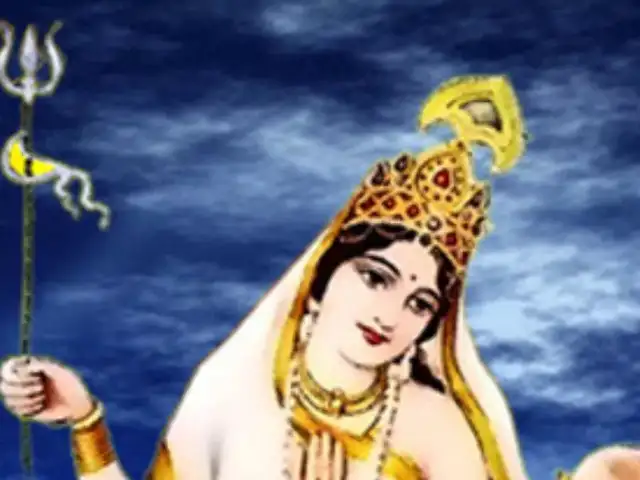
On Day 8, Goddess Durga's eighth avatar Maa Mahagauri Devi, who is also Lord Shiva's wife. Draped in a white ensemble, the goddess symbolises wisdom, peace and intelligence.
On Day 8, Goddess Durga's eighth avatar Maa Mahagauri Devi, who is also Lord Shiva's wife. Draped in a white ensemble, the goddess symbolises wisdom, peace and intelligence.
On the last and ninth day of Chaitra Navaratri, Siddhiratri Devi is worshipped. It is believed she protects her devotees and their families from unfortunate events.
On the last and ninth day of Chaitra Navaratri, Siddhiratri Devi is worshipped. It is believed she protects her devotees and their families from unfortunate events.



 On Ugadi 2023, Rishabh Shetty begins writing 'Kantara 2' script2023-03-23T05:15:17Z

