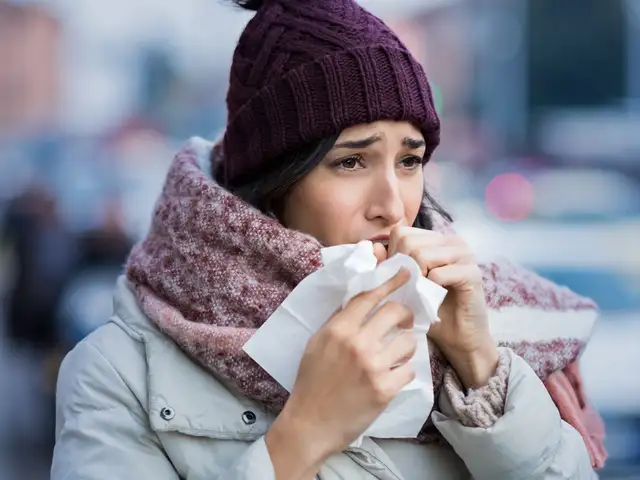
The year has begun with the return of swine flu across India. In over a month since the New Year, Rajasthan has reported over 225 deaths, and the toll is expected to rise further after 2,263 tested positive.
Apart from Rajasthan, other north Indian states like Punjab, Haryana, Uttar Pradesh (UP) and Himachal Pradesh (HP), Telangana in the South, and Gujarat and Maharashtra in the West, too, have also reported several cases of swine flu.
According to data issued by the government, Rajasthan is leading the number of cases followed by Gujarat with 737 cases and 34 deaths. Over 30 people died of suspected swine flu in Punjab this year out of more than 180 positive cases. In UP, so far 17 cases been reported, and Haryana has recorded 8 deaths over 372 positive cases. Over 82 H1N1 cases and 12 deaths were recorded in Maharashtra.
In the country’s capital, reported the third highest number with 1,093 cases, and 6 deaths.
George Fernandes, a lifelong socialist despite his political adventurism that included Cabinet posts in two ideological opposite governments where he ousted Coca-Cola in 1977 and oversaw the Kargil war in 1999, was suffering from Alzheimer's, and was down with swine flu before he passed away on January 29.
Tthe Bharatiya Janata Party president Amit Shah himself was hospitalised at Delhi’s All India Institute of Medical Sciences, after having been diagnosed with H1N1 influenza in mid-January. The party chief had tweeted that he is recovering.
ADVERTISEMENT
मुझे स्वाइन फ्लू हुआ है, जिसका उपचार चल रहा है। ईश्वर की कृपा, आप सभी के प्रेम और शुभकामनाओं से शीघ्र ही स्वस्थ हो जाऊंगा।
WHAT IS SWINE FLU? Swine flu is a viral infection caused by one of the several Swine Influenza Viruses, and affects the respiratory tract.
However, Dr Om Srivastava, the Head of Infectious Diseases at Mumbai’s Jaslok Hospital and Research Centre, explained that the disease is no longer referred to as swine flu.
"It is called an influenza infection or H1N1 because that's the antigenic structure of the virus. It was called swine flu years ago because the first association of the disease came from that family," he said..
ADVERTISEMENT
CAUSES Two main reasons that leads to the contamination of the H1N1 virus are contact and reach by air.
ADVERTISEMENT
Dr Swati Rajagopal, Consultant, Infectious Disease of Aster CMI Hospital, Bangalore, emphasised that global climate changes and a dip in the temperature are also leading to an increase in the number of cases.
WHO IS SUSCEPTIBLE TO SWINE FLU? Additional care and precaution are required to be taken for children less than 5 years of age, and senior citizens aged above 65, pregnant women and smokers.
Moreover, people suffering from chronic diseases like asthma, emphysema, hypertension, diabetes, heart condition, are at a higher risk of complications from the flu, Dr Rajagopal pointed out.
SYMPTOMS The H1N1 symptoms are similar to signs of common flu. In case of H1N1, flu symptoms may be quite protracted and can go on for 10-15 days.
If the flu-like symptoms don't recede in 3-4 days, it is advisable to seek treatment at a local hospital or consult a doctor. at the earliest if you experience any of these symptoms.
"Similar to influenza, H1N1 virus has become significant in the past 10 years because it leads to severe muscle weakness, multi-organ failure and also death in many cases," explained Dr Khusrav B Bajan, Consultant Physician, Intensivist and Head of Department of Emergency Medicine and critical care at P.D. Hinduja Hospital, Mumbai.
Swine Flu Symptoms While Dr Srivastava said that developing breathlessness is a warning sign of the disease, Dr Sushila Kataria, Director, Department of Internal Medicine at Medanta - The Medicity, Gurugram, said that swine flu may cause viral pneumonia in both the lungs which can lead to severe complications like adult respiratory distress syndrome (ARDS) and multi-organ failure.
Swine flu in pregnant women can get serious as it can lead to miscarriage, preterm labour and viral (severe) pneumonia. In term pregnancy, the influenza can even infect the fetus, shared Dr Kataria.
TREATMENT According to Dr Kataria, 99 per cent of the people suffering from swine flu recover. "Most people recover after 1 week's rest and hydration, and paracetamol (when necessary)," she added.
While most people recover, only the extreme cases (1%) need supportive care with an antiviral drug Oseltamivir (under the brand name Tamiflu) that treats and prevents influenza. "About 70% of the high-risk group recover," she added.
Dr Bajan said that the medication should be given very early i.e. in 48 hours of diagnosis - twice a day for 5 days. "The drug should be given as a preventive medication i.e. half a dose to the caregivers of the patient," he added.
Dr Suranjit Chatterjee, Senior Consultant of Internal Medicine at Delhi’s Indraprastha Apollo Hospitals, stressed on the importance of flu vaccination once a year for people suffering from diabetes, asthma, heart, kidney and liver problems, and children and elderly. Smokers should also get a shot of flu vaccine yearly, he added.
PRECAUTIONS H1N1 has had a big mutation over the years. Dr Bajan emphasised the importance of taking latest anti-viral vaccination as the older ones may not protect an individual from the influenza.
"Precaution and early referral to the hospital, and taking medication is the key. H1N1 virus can also lead to influenza, which should not be taken lightly," he pointed out.
Dr Chatterjee encouraged the habit of washing hands frequently to reduce the risk of contracting the infection for people not suffering from the influenza.
"If you wash your hands, one of the sources of infections decreases significantly," he said. He further added that one should wear an N95 mask if they are visiting a swine flu patient. Swine Flu Precautions Dr Srivastava also suggested keeping immunity on the better side. "Get regular blood tests as suggested by your doctor," he added.
RECOVERING FROM SWINE FLU While it is important to ensure safety during this time, there are certain measures one must take in order to recover from this infectious disease. Dr Kataria and Dr Srivastava have a few dos and don'ts that will speed up the recovery process.
FOOD FIXES Loss of appetite is normal for those suffering from H1N1 influenza.
What to eat & drink, and what to avoid Dr Seema Khanna, consultant nutritionist, and Dr Rajagopal advised that swine flu patient should consume calorie-rich and protein-rich diets, and more of antioxidants and vitamins.
"The most crucial things at this point is to boost the patients immunity, and food helps in a major way," Dr Rajagopal added.
Pneumonia, Strep Throat & Seasonal Influenza: Know The Different Types Of Winter Fever
1/7
Sore throat, itchy nose, sneeze, ceaseless cough and common cold troubling you? Blame it on the changing season. This sudden fluctuatiion in season can result in various viral infections, flus and poor health conditions.
Many people don't know the difference between cold, flu, and influenza.
Dr Kavita Ramanathan, Senior Pathologist at iGenetic Diagnostics, talks about many diseases that cause fever during winter.
Sore throat, itchy nose, sneeze, ceaseless cough and common cold troubling you? Blame it on the changing season. This sudden fluctuatiion in season can result in various viral infections, flus and p..
Read More
Fever, one of the most common known symptoms, is largely indicative of various infections and diseases during the winter season.
Known as hyperthermia, a person is said to be suffering from fever when the human body temperature crosses the normal range of 36-37 degree C (98-99 degree F). Fever is the body's mechanism of combating an infection. However, high levels of fever can work against the body, and can lead to complications.
Fever is generally accompanied by multiple symptoms including body ache, lethargy, sweating, shivering, feeling colder than others, appetite loss, and dehydration.
However, the challenge lies with multiple diseases having the same set of symptoms.
Fever, one of the most common known symptoms, is largely indicative of various infections and diseases during the winter season.
Known as hyperthermia, a person is said to be suffering from fever wh..
Read More
Both common cold is a respiratory diseases caused by virus. But, the symptoms are so similar that it becomes difficult to diagnose the disease without tests.
The virus can be contracted by air, water, food or touch. However, cold develops gradually with light fever.
Cold can be managed through pain relievers, decongested nasal spray, cough syrups, and other medicines.
Both common cold is a respiratory diseases caused by virus. But, the symptoms are so similar that it becomes difficult to diagnose the disease without tests.
The virus can be contracted by air, wat..
Read More
Seasonal influenza (flu) includes type A and B viruses.
The onset of influenza is abrupt with high fever. These viruses have many strains, especially type A; and most are manageable.
However, in the past decade, a new deadly influenza A virus strain H1N1 emerged creating pandemic in many areas of the world.
Going for timely diagnostic testing can rule out the presence of H1N1 virus and at the same time bacterial infection.
Ruling out bacterial infection is an indication to the doctor that antiviral rather than antibiotics should be prescribed.
Seasonal influenza (flu) includes type A and B viruses.
The onset of influenza is abrupt with high fever. These viruses have many strains, especially type A; and most are manageable.
However, in th..
Read More
Known as the 'Winter Fever', pneumonia is basically a lung infection, and one of the leading causes of deaths of children younger than 5 years.
The first signs of pneumonia are flu-like symptoms with high fever, chills and cough. However, the cause of pneumonia can be either of the three: bacterial, viral or fungal.
Due to the nature of the disease which affects lungs, early diagnosis is extremely important.
While X-rays helps in finding the extent of inflammation of lungs, it is the blood tests, such as the complete blood count (CBC) test and blood culture which are essential to identify the pathogen.
The right and quick diagnosis helps determine the white blood cell count, the severity of the lung infection, and the spread of the pathogen from lungs to blood stream. These details are vital for the doctor to find the course of the treatment.
Known as the 'Winter Fever', pneumonia is basically a lung infection, and one of the leading causes of deaths of children younger than 5 years.
The first signs of pneumonia are flu-like symptoms wi..
Read More
These diseases include malaria, dengue, yellow fever, and chikungunya - all of which have high fever as one of their first symptoms and many others are similar to flu or viral fever.
Transmitted by mosquito bites, the diseases are caused by various forms of viruses. It is commonly believed that these diseases are not prevalent during winters because mosquitoes don't survive low temperatures.
However, it is not the complete reality as many parts of India have tropical climate and one can contract vector borne diseases in warmer regions.
It is almost essential to conduct tests for finding out the disease which has affected the patient.
These diseases include malaria, dengue, yellow fever, and chikungunya - all of which have high fever as one of their first symptoms and many others are similar to flu or viral fever.
Transmitted by..
Read More
It is not sore throat.
Characterised by moderately high fever, the condition is mostly prevalent in kids and can be mistaken as a cold.
The remarkable symptoms for the disease are red swollen tonsils, white patches in the throat, and rashes.
Strep is different from cold because it is a bacterial disease, therefore only getting the patient tested is the sure way of identifying the disease.
Rapid strep test and throat culture can confirm whether the child has bacteria growth. Antibiotics are prescribed for treating the disease.
It is not sore throat.
Characterised by moderately high fever, the condition is mostly prevalent in kids and can be mistaken as a cold.
The remarkable symptoms for the disease are red swollen tons..