Billionaire Gopichand Hinduja on learning Persian from — wait for it — Hindi movies.
When a young Gopichand Hinduja was posted in Iran and had to learn Persian, he turned to Hindi cinema — every pre-Google Indian’s friend, philosopher and Lonely Planet.
“I’d take a random movie title, say ‘Sangam’, and then learn how to register that in Persian,” the 79-year-old billionaire said at a conclave in New Delhi recently. “In those days there was no English there. Nobody spoke Hindi. I knew that until I didn’t understand Persian I wouldn’t be able to do anything. Gradually, I picked it up. Now, not only can I speak, read and write Persian, but [with] many languages, I can manage quite sufficiently to be able to do my business.”
The Hindujas, worth about $50 billion, have a special connect with Iran. Parmanand Hinduja, the father of Gopichand Hinduja, expanded his business to Iran in the early 20th century. Sadly, for Gopichand, when he was looking forward to college life in India, his father packed him off to Iran.
Poster of the film 'Sangam'.
“I was going mad [about having to forgo his wonder years]. I wanted to enjoy my college life,” Hinduja said.
ADVERTISEMENT
What he now wants to enjoy is work. Even if he is in France, where the croissants are fluffy.
“If I’m in France, people want to have fun. But I have meetings and work from 7 in the morning to 11 pm,” Hinduja said. “I believe we have to keep doing our karma. My family often tells me I’m at the right age to retire. But I never understood what retirement is. Even if I go for a holiday, I take my secretaries and staff with me.”
The London-based Hinduja said he and his brothers (Srichand, Prakash and Ashok) often take key business decisions on the spot. And that is what led to their entry in the cybersecurity business.
“Two years ago, I was in St James Park one morning,” he said. “An American person was walking with me and he said, ‘Mr Hinduja, why don’t you get into cyber security?’. We don’t have any investment committees. We brothers take decisions on the spot. When I visited Silicon Valley I found him [the American, presumably] spending big money to develop this solution. So, I told him, ‘I will buy 51 per cent with one condition. I will take it home to develop’. And I was able to develop it at one-fifth of the cost and in six months instead of two years. Today, we are the only ones with this technology. It is used in hospitals, smartphones… If you don’t want your wife to find your girlfriend’s number, it will be well protected.”
ADVERTISEMENT
Taking A Stand: How Tech Bosses Brought About A Change
1/6
A culture revolution doesn’t always begin on the outside. Sometimes, accountability comes from the inside, as these powerful tech giants discovered.
A culture revolution doesn’t always begin on the outside. Sometimes, accountability comes from the inside, as these powerful tech giants discovered.
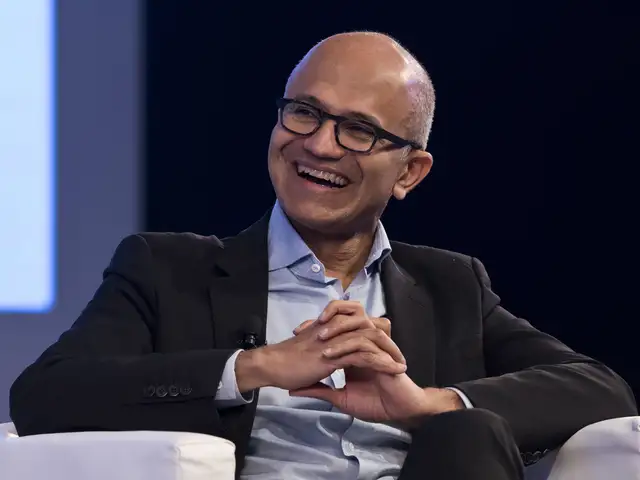
Earlier this year, Microsoft came under scrutiny when over a hundred employees published an open letter calling on the company to cancel its contracts with the US Immigration and Customs Enforcement agency. “We believe that Microsoft must take an ethical stand, and put children and families above profits,” the letter said. CEO Satya Nadella (in pic) defended the contract stating, “Microsoft is not working with the US government on any project related to separating children from their families at the border.” Nadella did not commit to more transparency.
Earlier this year, Microsoft came under scrutiny when over a hundred employees published an open letter calling on the company to cancel its contracts with the US Immigration and Customs Enforcement..
Read More
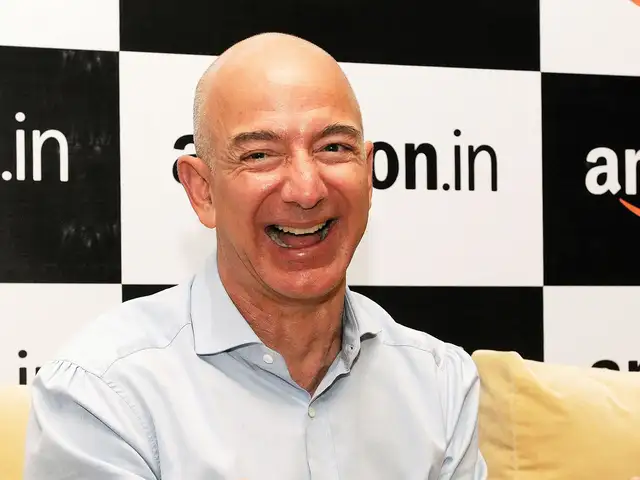
Earlier this year, hundreds of Amazon employees signed an internal letter demanding that the company stop selling its facial recognition surveillance software — Rekognition — to law enforcement agencies. “As ethically concerned Amazonians, we demand a choice in what we build and a say in how it is used,” they wrote. Despite the outcry, Amazon executives have skirted around the issue saying that it is the responsibility of the US government to specify the regulations needed around facial recognition.
In pic: Amazon CEO Jeff Bezos
Earlier this year, hundreds of Amazon employees signed an internal letter demanding that the company stop selling its facial recognition surveillance software — Rekognition — to law enforcement agenc..
Read More
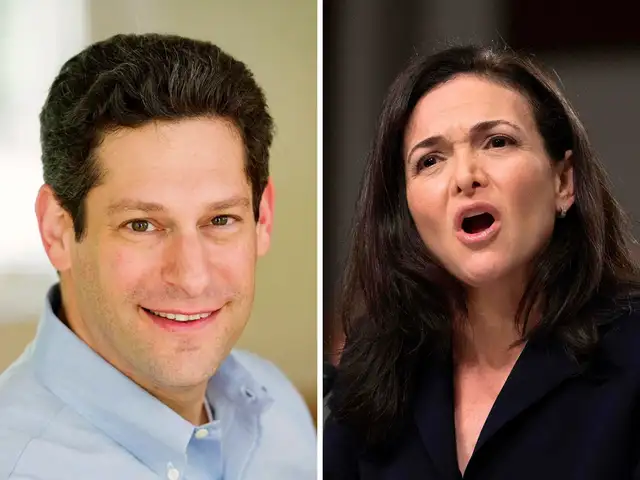
Last month, Facebook executives came under fire when the company’s VP of global public policy — Joel Kaplan (left) — was spotted publicly supporting Judge Brett Kavanaugh as he testified before the Senate. Kaplan’s appearance raised eyebrows and resulted in a strong backlash among employees with some viewing Kaplan’s show of support as an endorsement from the company itself. Following the outrage, Kaplan apologised and defended his actions, claiming that he had attended the hearing as a close friend of Kavanaugh. “I’ve talked to Joel about why I think it was a mistake for him to attend given his role in the company. We support people’s right to do what they want in their personal time but this was by no means a straight-forward case,” Facebook COO Sheryl Sandberg (right) wrote in an internal post.
Last month, Facebook executives came under fire when the company’s VP of global public policy — Joel Kaplan (left) — was spotted publicly supporting Judge Brett Kavanaugh as he testified before the ..
Read More
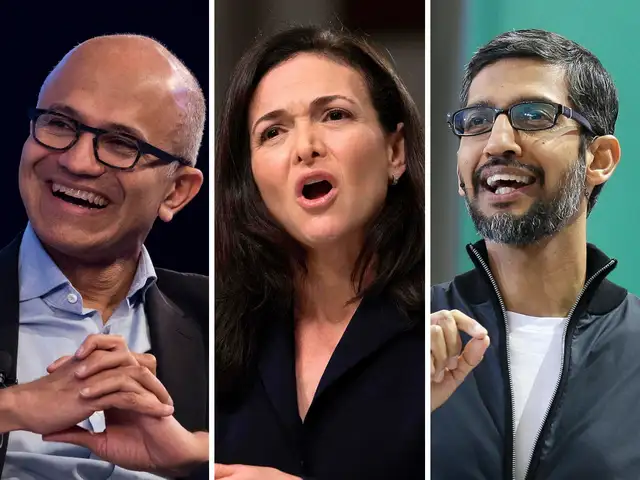
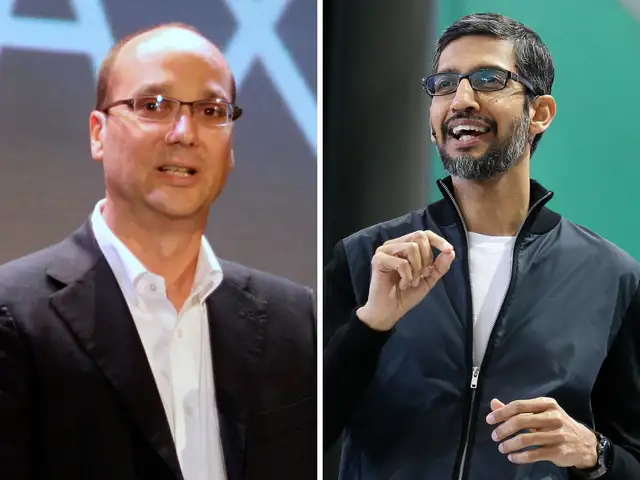
Last week, more than 20,000 Google employees staged a worldwide walkout over reports that former executive Andy Rubin (left) received a handsome $90 million severance package in 2014, despite sexual misconduct allegations. Reacting to the protests, Google CEO Sundar Pichai (right) said, “People are walking out because they want us to improve and they want us to show we can do better. We’re acknowledging and understanding we clearly got some things wrong.” Shortly after, Google announced new sexual harassment policies for employees including a crackdown on alcohol at work-related functions.
Last week, more than 20,000 Google employees staged a worldwide walkout over reports that former executive Andy Rubin (left) received a handsome $90 million severance package in 2014, despite sexual..
Read More
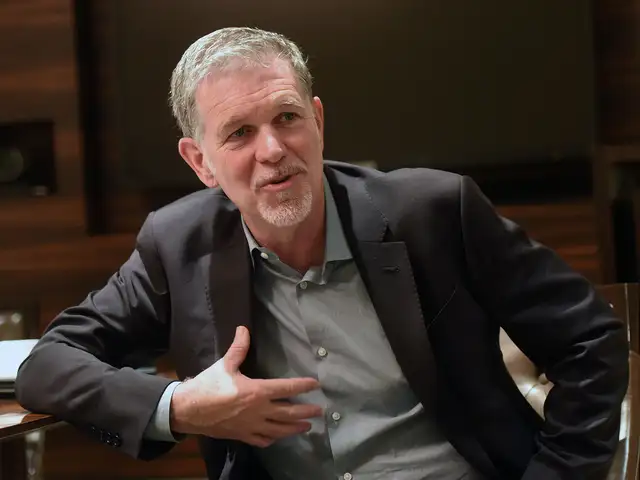
Netflix received a lot of pushback when it was discovered that its “unlimited parental leave” policy — which allowed new parents to avail of unlimited paid leave for the first year following the birth or adoption of a child — only extended to “salaried streaming employees” and not to those in the DVD or hourly workforce. Over 1,08,000 signatures were collected protesting the two-track policy. Netflix tried to defend its actions claiming that DVD workers received a minimum of 12 paid weeks of maternity and paternity leave. But the company bowed to the backlash and upgraded its parental leave policy for hourly workers and those in the DVD business.
In pic: Netflix CEO Reed Hastings
Netflix received a lot of pushback when it was discovered that its “unlimited parental leave” policy — which allowed new parents to avail of unlimited paid leave for the first year following the bir..