Google marks ISRO founder Vikram Sarabhai's birth centenary with doodle
Remembered as the Father of the Indian space program, Sarabhai was instrumental in setting up several institutions in the country.
By ET Online | Updated:
Google marks 100th birth anniversary of Dr Vikram Sarabhai, father of ISRO, with doodle
Google, on Monday, paid tribute to Dr. Vikram Ambalal Sarabhai on his 100th birth anniversary with a doodle.
Born in Ahmedabad in 1919, Vikram Sarabhai believed in using science and technology as "levers of development." The physicist, industrialist, and innovator is remembered as the Father of the Indian space program.
Sarabhai studied at Gujarat College, and later attended Cambridge University where he earned his doctorate.
On returning to India, the then 28-year-old Sarabhai founded the Physical Research Laboratory (PRL) in Ahmedabad on November 11, 1947, after having convinced charitable trusts controlled by family and friends to endow a research institution near home.
Following the launch of Russia's Sputnik, Sarabhai convinced the government that the India needed to have its own space program. He went on to set up the Indian National Committee for Space Research (INCOSPAR) in 1962, which was later renamed the Indian Space Research Organization (ISRO).
Vikram Sarabhai and wife Mrinalinli on their wedding day in 1942.
ADVERTISEMENT
Sarabhai also helped establish the Thumba Equatorial Rocket Launching Station in Thiruvananthapuram. He was supported in this endevaour by the father of India's nuclear science program, Dr. Homi Jehangir Bhabha.
Sarabhai also succeeded Bhabha as the chairman of the Atomic Energy Commission of India.
While he had a deep interest in scientific research and technological advancements, he was also involved in the development of industry and business. Among the several institutions set up by him, were the Ahmedabad Textile Industry’s Research Association in 1947 and the Indian Institute of Management in Ahmedabad in 1962.
The scientist and innovator also worked on India's first satellite, Aryabhata, but passed away due to a cardiac arrest four years before its launch in 1975.
ADVERTISEMENT
His 100th birth anniversary comes just weeks after ISRO launched its Chandrayaan-2 mission to the Moon. The Vikram lander, named so as tribute to the scientist, is scheduled to land on the lunar surface on September 7.
<p> India’s Moon mission Chandrayaan-2 lifts off onboard GSLV Mk III-M1 launch vehicle from Satish Dhawan Space Center at Sriharikota in Andhra Pradesh, on July 22, 2019. <br></p> Sarabhai was awarded the Shanti Swarup Bhatnagar Prize in 1962, and received the Padma Bhushan in 1966. He was also conferred the Padma Vibhushan posthumously in 1972, and a year on, a crater on the moon was named after him.
ADVERTISEMENT
Sarabhai, who was married to classical dancer Mrinalini, a Padma Bhushan recipient, is survived by environmentalist son Kartikeya and daughter Mallika, a classical dancer and also a Padma Bushan awardee.
The doodle has been illustrated by Mumbai-based artist Pavan Rajurkar.
Chandrayaan-2 Wasn't First Space Delay; Russia’s Progress 69, Japan’s Kounotori 7 Also Faced Similar Fate
1/6
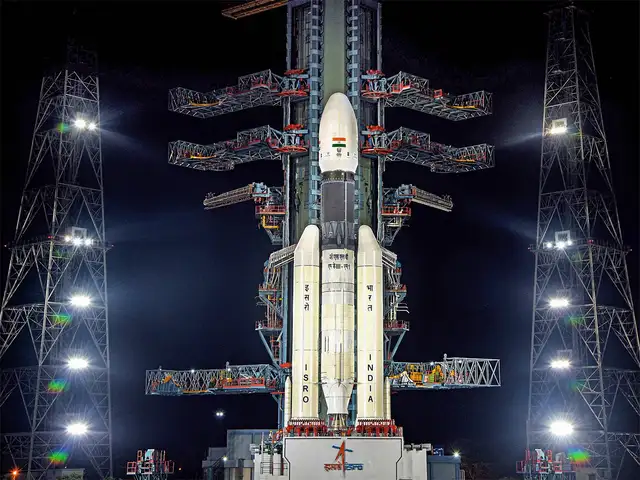
The Chandrayaan-2 launch is expected to take place today. Its postponement last week is reminiscent of other times when reaching the final frontier was delayed.
In Pic: A view of the Chandrayaan-2 on board GSLVMkIII-M1 at Satish Dhawan Space Centre in Nellore district.
The Chandrayaan-2 launch is expected to take place today. Its postponement last week is reminiscent of other times when reaching the final frontier was delayed.
In Pic: A view of the Chandraya..
Read More
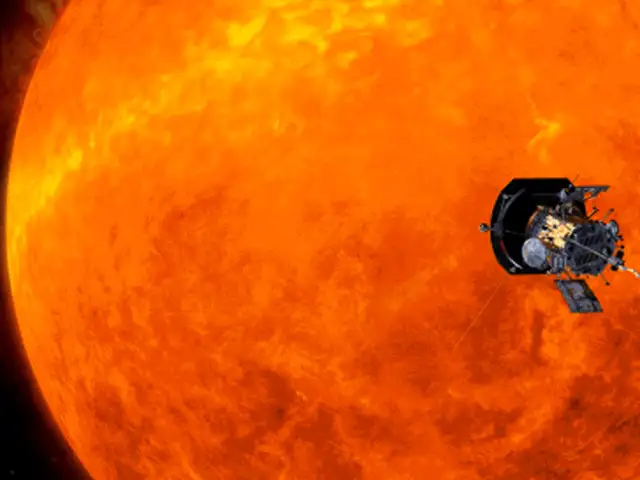
The ambitious launch of NASA’s $1.5 billion Parker Solar Probe mission to the sun was delayed by 24 hours in August 2018. The excitement was short-lived after scientists discovered a helium pressure anomaly and the launch had to be called off. Touted as the fastest spacecraft in history, it finally took off the next day on August 12. In its seven-year mission, the Parker Solar Probe will fly directly through the Sun’s outer atmosphere in a bid to unlock some of the solar system’s greatest secrets.
(Image: www.nasa.gov)
The ambitious launch of NASA’s $1.5 billion Parker Solar Probe mission to the sun was delayed by 24 hours in August 2018. The excitement was short-lived after scientists discovered a helium pressure ..
Read More
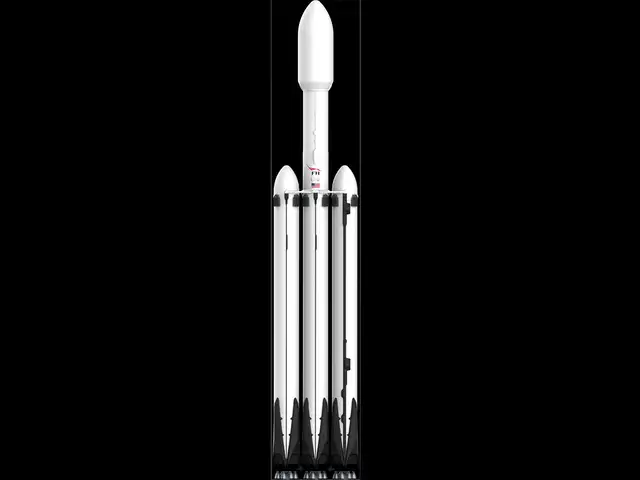
SpaceX’s Falcon Heavy rocket
Elon Musk’s SpaceX has had its share of delays. The first test was delayed by more than five years, from being scheduled in 2013 to finally being conducted in 2018 with a dummy payload.
In April this year, SpaceX had to postpone what would have been its first commercial launch with the Falcon Heavy rocket, citing strong wind in the upper atmosphere.
The launch was rescheduled two days later. Last month, the third flight of the Falcon Heavy was delayed by two days as the team needed a little extra time to wrap up final integration and prep work. The megarocket successfully lofted two dozen satellites into orbit on June 25.
(Image: www.spacex.com)
SpaceX’s Falcon Heavy rocketElon Musk’s SpaceX has had its share of delays. The first test was delayed by more than five years, from being scheduled in 2013 to finally being conducted in 2018 with a ..
Read More
ISRO’s GSLV-D5
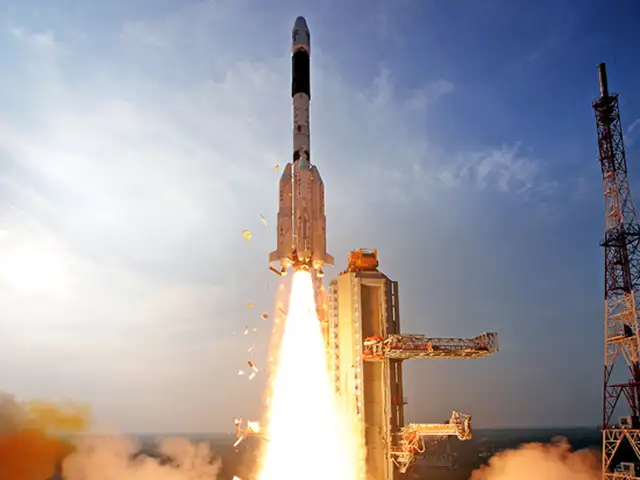
In August 2013, the national space agency had called off the launch of a Geosynchronous Satellite Launch Vehicle called Sriharikota, 74 minutes before the final launch, after detecting a fuel leak. The vehicle was taken off the site and was finally launched on January 5, 2014.
(Image: www.isro.gov.in)
ISRO’s GSLV-D5In August 2013, the national space agency had called off the launch of a Geosynchronous Satellite Launch Vehicle called Sriharikota, 74 minutes before the final launch, after detecting ..
Read More
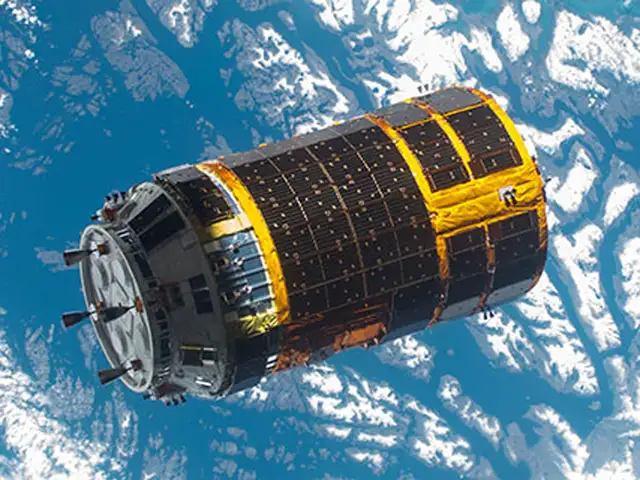
Japan’s Kounotori 7
On September 10, 2018, the unpiloted Kounotori 7 was supposed to take off for the International Space Station with 6,000 kg of crew supplies. But a typhoon forecast forced the Japan Aerospace Exploration Agency (JAXA) to postpone the launch of this cargo ship, and reschedule the lift-off to September 22.
(Image: global.jaxa.jp)
Japan’s Kounotori 7On September 10, 2018, the unpiloted Kounotori 7 was supposed to take off for the International Space Station with 6,000 kg of crew supplies. But a typhoon forecast forced the Japa..
Read More
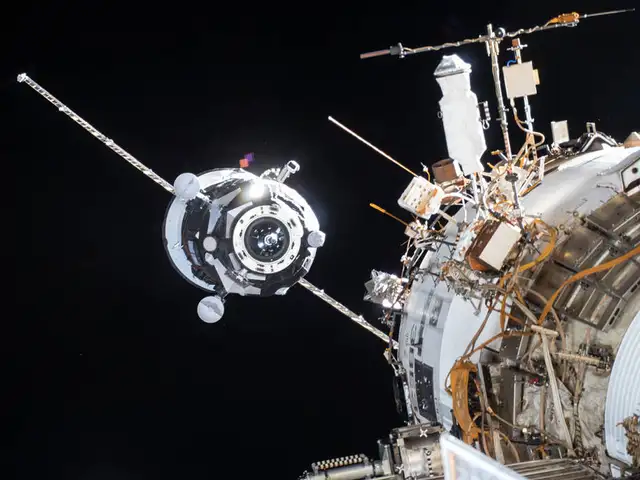
Russia’s Progress 69
The launch of a Russian cargo ship bound for the International Space Station was aborted in the final few seconds on February 11, 2018. The supply ship was seconds away from launching into space from Kazakhstan when an engine error halted the lift-off.
After its successful launch on February 13, the cargo craft delivered three metric tonnes of supplies, fuel, and oxygen to the ISS.
(Image: www.nasa.gov)
* Text: Aarti Bhanushali
Russia’s Progress 69The launch of a Russian cargo ship bound for the International Space Station was aborted in the final few seconds on February 11, 2018. The supply ship was seconds away from launc..