Get a glimpse of renovated cells which held dictators & Oscar Wilde at London's first police museum
The Bow Street Police Museum in Covent Garden is housed inside one of London's first police stations
By AFP |
AFP
The ground floor cells and offices of Bow Street Police Museum have become galleries, telling the story of the Bow Street Runners, the country's first organised force, and the Metropolitan Police officers who walked the streets of Covent Garden in their footsteps.
LONDON: Old police cells, including a so-called drunk tank, have been restored as historical exhibits in London's newest museum, charting the advent and evolution of policing in the British capital.
The Bow Street Police Museum in Covent Garden, which opened to visitors for the first time on Friday, is housed inside one of London's first police stations, dating back nearly a century and a half.
Situated next to a former magistrates' court, most of the site has been converted into a luxury hotel but part of the original police station now showcases its extraordinary history.
Visitors can step inside renovated cells which once held murderers, suffragettes, dictators -- and even the playwright Oscar Wilde.
"Bow Street Magistrates' Court saw lots of famous cases pass through," the museum's curator Jen Kavanagh told AFP during a preview tour.
"And we're very much showcasing the history of what took place within these walls," she said.
ADVERTISEMENT
Kavanagh worked closely with former officers stationed there since the 1950s to better appreciate its rich backstory.
"It's been incredible to see its transformation over the last few years," the curator added.
Lee-Jane Yates, who served as a WPC at Bow Street Police Station from 1982-1985, looks around a cell in the new Bow Street Police Museum in London.'Risen from the ashes' After closing in 1992 and sitting dormant for nearly three decades, the station now chronicles the three-century progression of British policing, which began with the Bow Street Runners.
ADVERTISEMENT
The Runners were Britain's first organised police force, made up of local volunteer watchmen in the early 18th century armed with just a bell, rattle, lantern and staff.
But Bow Street remained a busy hub for the Met over the ensuing decades, with the building housing the museum brought into service in 1881.
Philip Gough, a retired inspector who served there from 1989 until its closure, is now a trustee and joined other former colleagues at an "emotional" reunion last week to view the exhibits.
"When the station closed it was everybody's wish that it would be a museum," he told AFP, as two mounted Met officers trotted up to the site.
"Unlike any other station in the country it came with that tag of the Bow Street Runners... it felt like we were closing a chapter of history, but like the phoenix, it's risen from the ashes." A police uniform and various tools and items are seen displayed at Bow Street Police Museum.'Part of history' As well as chronicling the inception of modern policing from Bow Street, complete with exhibits like a 19th century lantern and a replica Runners' blue uniform, the museum also delves into the site's more recent history.
The Bow Street complex dealt with everything from IRA terrorist cases and the extradition of former Chilean dictator Augusto Pinochet, to being the home station of murdered policewoman Yvonne Fletcher.
She was patrolling a small demonstration outside the Libyan embassy in 1984 when she was hit by shots fired from the diplomatic compound, a killing that led Britain to sever relations with Libya for 15 years.
Meanwhile the museum also displays artefacts from the old courthouse -- including an original dock -- which closed 14 years after the police station, in 2006.
The six cells once used to house detainees have each been used to house exhibits, with visitors encouraged to step inside the sixth "tank", used for those held for drunken behaviour.
"There would have been graffiti on the walls, the smell in the cells... rancid, I think, is probably the polite way of putting it," recalled Lee-Jane Yates, another officer who served there in the 1980s and collaborated on the exhibits.
"It was the first police station in the country, more than likely, but you're not aware of the history, and it's only afterwards when you leave and you think, gosh, I was actually part of history here," she added.
When PM Modi and Xi Jinping Toured The Hubei Provincial Museum
1/4
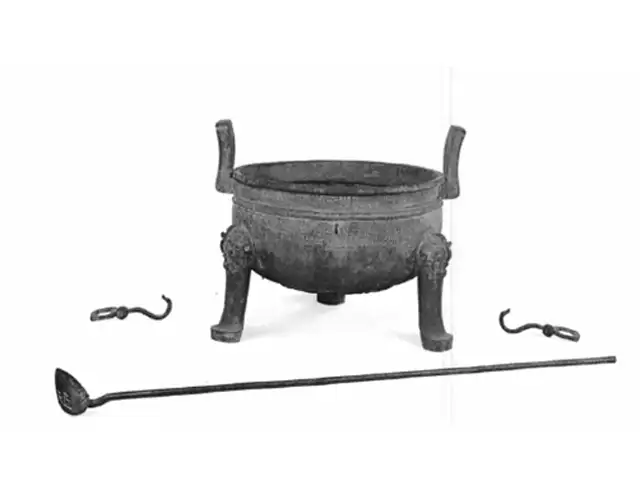
These two big Dings are called Huo Ding, with seperate weights of 54 kilograms and 41 kilograms, which were vessels for boiling the meat in major ceremonies. Ding stands for the power of country therein, and China had formed the highly mature system of rites and music more than 4,000 years ago which has influenced so far.
These two big Dings are called Huo Ding, with seperate weights of 54 kilograms and 41 kilograms, which were vessels for boiling the meat in major ceremonies. Ding stands for the power of country ther..
Read More
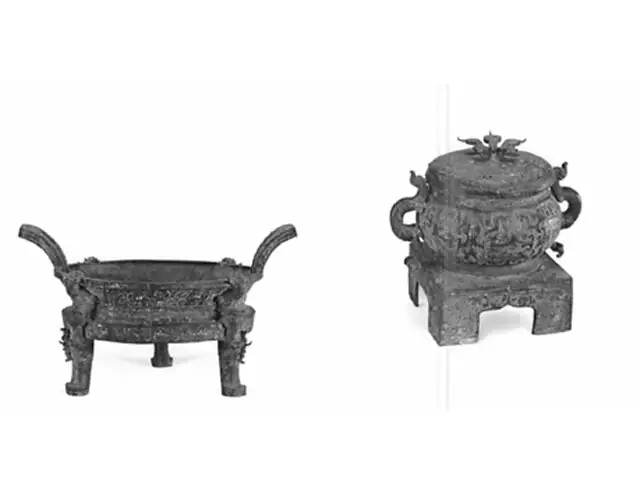
These are a set of sacrificial vessels consisting of Ding and Gui. The combinations with different numbers of Ding and Gui represented the different ranks of noble users. Nine Dings and Eight Guis are the symbol of the emperor. According to ancient records, the emperor enjoyed Nine Dings and Eight Guis and king of vassal state enjoyed Seven Dings and Six Guis.
These are a set of sacrificial vessels consisting of Ding and Gui. The combinations with different numbers of Ding and Gui represented the different ranks of noble users. Nine Dings and Eight Guis ar..
Read More
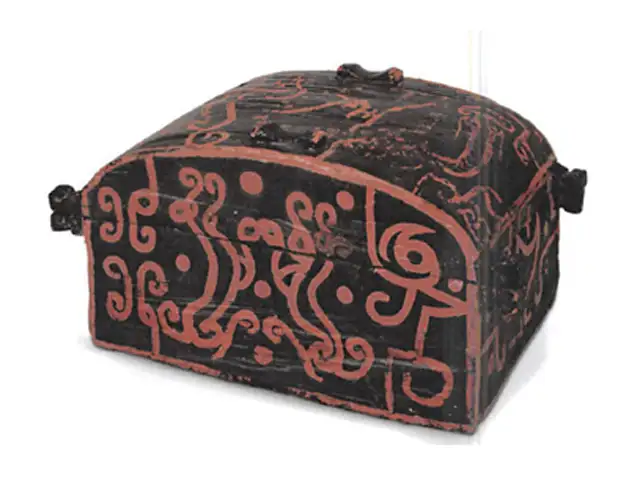
A wooden case containing clothes with an astronomical map on its cover, depicting the interaction between Bid Dipper and Twenty-eight Lunar Mansions. There was also Twenty-eight Lunar Mansions in ancient India and the era is similar to China. The Chinese ancients can grasp the change of seasons and time through observing the constellation.
A wooden case containing clothes with an astronomical map on its cover, depicting the interaction between Bid Dipper and Twenty-eight Lunar Mansions. There was also Twenty-eight Lunar Mansions in anc..
Read More
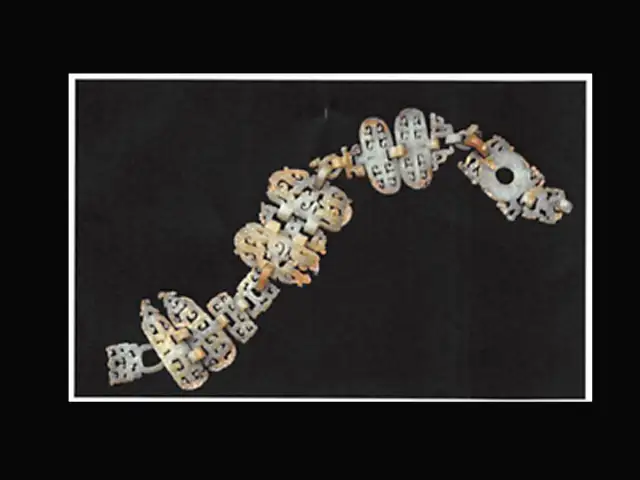
This jewellery contains sixteen pieces, with openwork carving images of dragons and phoenixes, and there are a total of thirty-seven dragons, seven phoenixes and ten snakes are carved, and they are in different poses, vivid and lifelike, which are the selection of Chinese ancient jadewares.
This jewellery contains sixteen pieces, with openwork carving images of dragons and phoenixes, and there are a total of thirty-seven dragons, seven phoenixes and ten snakes are carved, and they are i..