• Luzia Woman was the name for an Upper Paleolithic period skeleton of a woman who was found in a cave in Brazil in 1970.
• Some archaeologists believed that the young woman may have been part of the first wave of immigrants to South America.
• The skull, which was separated from the rest of the skeleton but was in surprisingly good condition, was buried under more than 40 feet of mineral deposits and debris. Forensics have determined that Luzia died in her early 20s.
• About one-third of Luzia’s skeleton has been recovered; enough to indicate that she appears to have perished in an accident or perhaps even from an animal attack.
L-R: The skull of Luzia Woman and a reconstruction of Luzia • Along with other material from the same expedition, Luzia was then taken to the national museum, but was put away in storage. It was not until 1995 that an team of archeologists examined the skull and noticed its unusual characteristics. They decided to draw up a profile of Luzia.
ADVERTISEMENT
• Using her skull, researchers at Britain’s University of Manchester managed to produce a digital image of her face, which was used as the base for a sculpture displayed in the museum that went up in flames.
• What they ended up with when they finished was a face “with the features one associates with Negroid skulls, particularly the nose and jaw”. “Luzia is a priceless loss for everyone interested in civilisation,” Paulo Knauss, director at Brazil’s national history museum.
• Among the rare items of Rio’s National Museum was a meteorite named ‘Bendego’, the largest one discovered in Brazil, weighing some 5.3 tonnes. The meteorite is one of the few objects that officials could confirm had survived. Apart from Bendego, officials said an Egyptian mummy— another prized item of the museum — had survived the disaster.
When PM Modi and Xi Jinping Toured The Hubei Provincial Museum
1/4
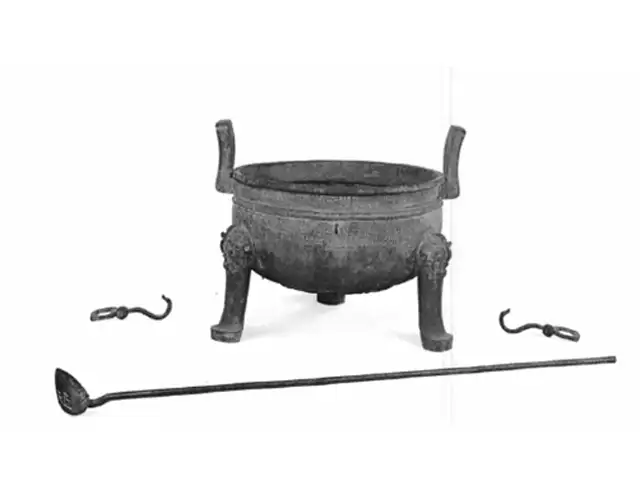
These two big Dings are called Huo Ding, with seperate weights of 54 kilograms and 41 kilograms, which were vessels for boiling the meat in major ceremonies. Ding stands for the power of country therein, and China had formed the highly mature system of rites and music more than 4,000 years ago which has influenced so far.
These two big Dings are called Huo Ding, with seperate weights of 54 kilograms and 41 kilograms, which were vessels for boiling the meat in major ceremonies. Ding stands for the power of country ther..
Read More
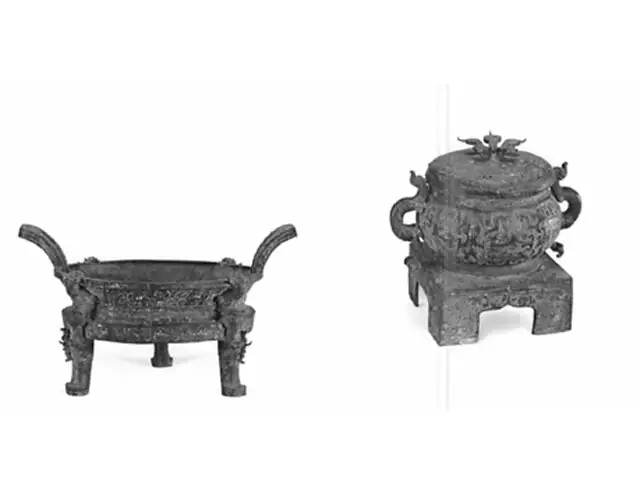
These are a set of sacrificial vessels consisting of Ding and Gui. The combinations with different numbers of Ding and Gui represented the different ranks of noble users. Nine Dings and Eight Guis are the symbol of the emperor. According to ancient records, the emperor enjoyed Nine Dings and Eight Guis and king of vassal state enjoyed Seven Dings and Six Guis.
These are a set of sacrificial vessels consisting of Ding and Gui. The combinations with different numbers of Ding and Gui represented the different ranks of noble users. Nine Dings and Eight Guis ar..
Read More
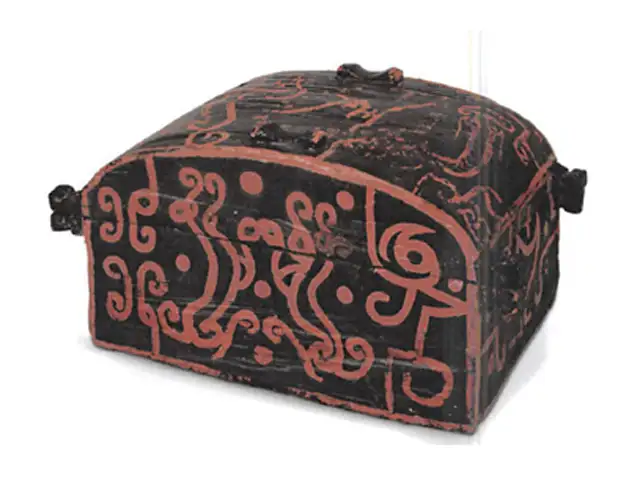
A wooden case containing clothes with an astronomical map on its cover, depicting the interaction between Bid Dipper and Twenty-eight Lunar Mansions. There was also Twenty-eight Lunar Mansions in ancient India and the era is similar to China. The Chinese ancients can grasp the change of seasons and time through observing the constellation.
A wooden case containing clothes with an astronomical map on its cover, depicting the interaction between Bid Dipper and Twenty-eight Lunar Mansions. There was also Twenty-eight Lunar Mansions in anc..
Read More
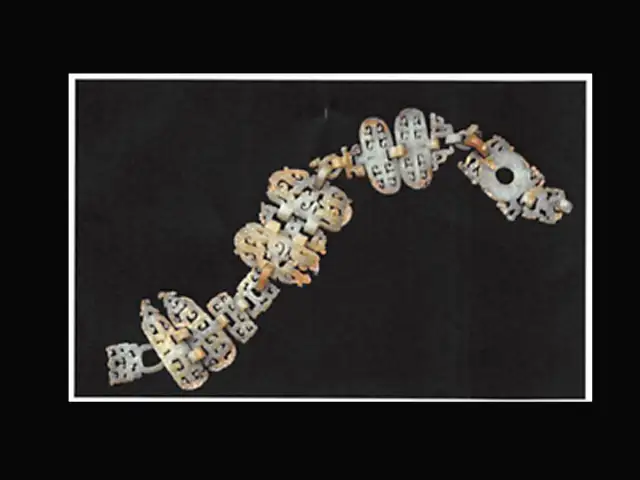
This jewellery contains sixteen pieces, with openwork carving images of dragons and phoenixes, and there are a total of thirty-seven dragons, seven phoenixes and ten snakes are carved, and they are in different poses, vivid and lifelike, which are the selection of Chinese ancient jadewares.
This jewellery contains sixteen pieces, with openwork carving images of dragons and phoenixes, and there are a total of thirty-seven dragons, seven phoenixes and ten snakes are carved, and they are i..