Fetching up to $3,998,000, Tyeb Mehta becomes top draw at auctions around the world
Saffronart CEO Dinesh Vazirani says that it's a decade of Mehta.
By Rashmi Menon, ET Bureau |

BCCL
While ‘Untitled (Falling Figure)’, created in the backdrop of communal violence in 1992, was chosen as the back cover of the Christie's catalogue, Saffronart led with Mehta’s 1989 work ‘Kali’ from the Ebrahim Alkazi collection as its front cover.
It's only halfway through the year and already two of three iconic pieces by Tyeb Mehta have come to the market. In the recently concluded auctions of international auction entity Christie’s and Indian art auctioneer Saffronart, a common thread was the prominence Mehta's works in catalogues.
While ‘Untitled (Falling Figure)’, created in the backdrop of communal violence in 1992, was chosen as the back cover of the Christie's catalogue, Saffronart led with Mehta’s 1989 work ‘Kali’ from the Ebrahim Alkazi collection as its front cover. It is interesting that Saffronart also led its March sale with a Mehta work, ‘Falling Bird’. And in the upcoming auction by Londonbased Sotheby’s in India in December (a first in 30 years), the artist's 1993 piece ‘Durga’ will be featured on the cover lot.
“I would say it's a decade of Tyeb Mehta,” says Saffronart CEO Dinesh Vazirani. “Like V Gaitonde, Mehta wasn't prolific at all; he may have painted 400-500 works. So, the body of work is not high and right now, a lot of great paintings are with strong collectors and in the museums. So, accessing Mehta is not easy. It only comes out when there is a price point increase or momentum with the artist.”
Vazirani reasons that from the seller's point of view, when an artist is doing well in auctions or public sales, there is a greater desire to sell, especially if they need the money. “That's why the works come to the market,” he says. In recent times, two fresh names have emerged. “It’s reached a certain price point that people are comfortable selling.” While the price of the Mehta painting with Sotheby’s is still undecided, Mehta’s work fetched $1,125,856 for Christie’s and $3,998,000 for Saffronart in the current auction (in the latter case, the painting was bought by a buyer of Indian origin).
Vazirani says that featuring Mehta twice in their catalogue was just a coincidence. He also says that in terms of sales, Mehta has led the Indian art market since 2005.
That year, Christie's sold Mehta's 'Mahishasura' for $1.5 million, though its estimated cost was $600,000 to 800,000 and the previous Mehta had sold for just $200,000. On the other hand, Vazirani says, Gaitonde became a top draw (at auctions) only in the last couple of years.
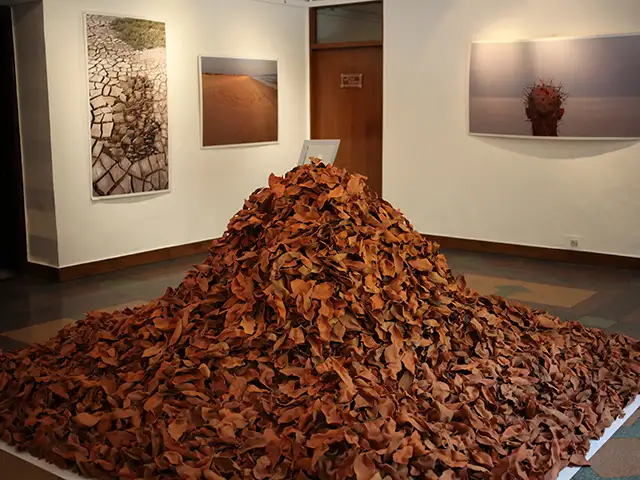
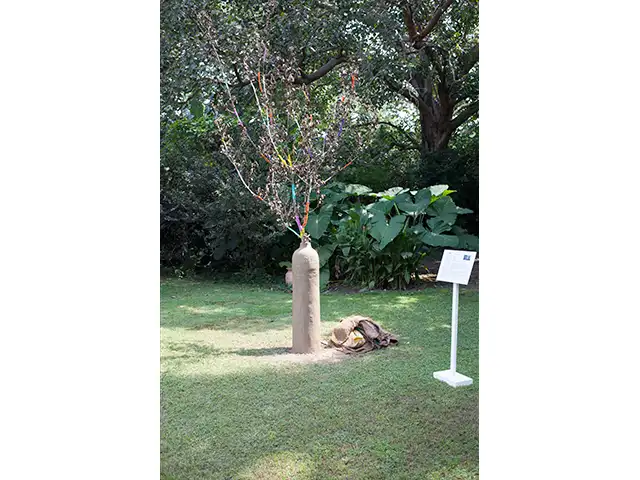
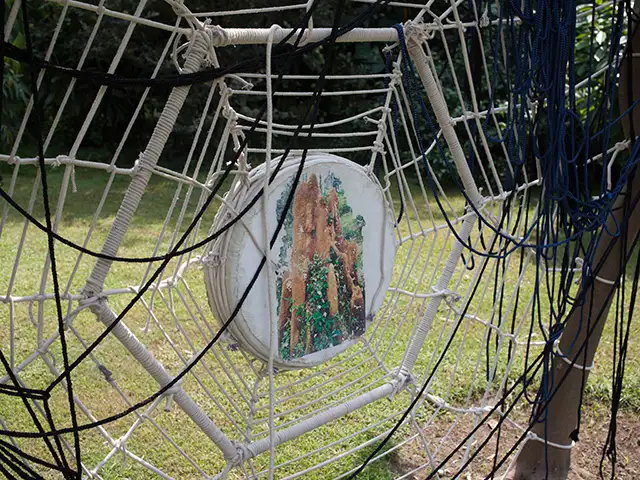
Climate change, depleting water tables, growing carbon footprints. A bunch of artists recently took up the cause of the environment to highlight green concerns.
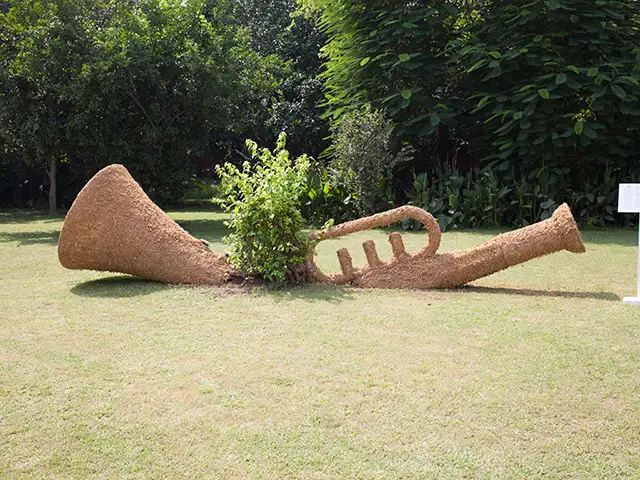
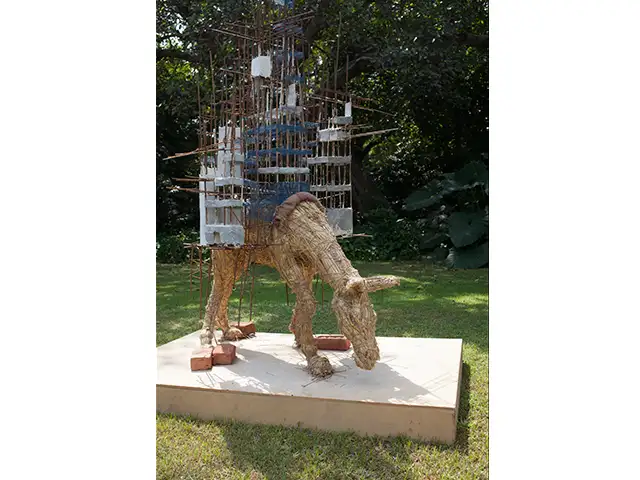
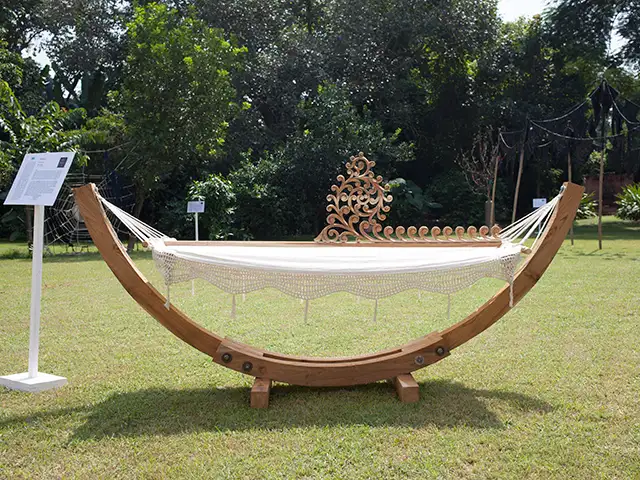
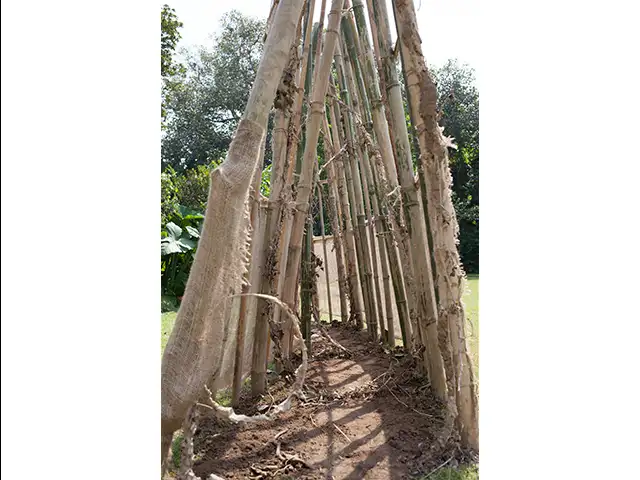
And the result was an impressive collection of art installations, created by eight artists from across the country, displayed at the Hungarian Information Cultural Centre (HICC) in the Capital.
Here: 'Red Leaf', by ceramic artist Rahul Modak, looks at biodegradable waste in a new light. The dry leaves hint at a new life, while the colour symbolises 'reincarnation'. The tutelage covering a bucolic passageway leads towards an unknown destination, invoking hope.
While ‘Untitled (Falling Figure)’, created in the backdrop of communal violence in 1992, was chosen as the back cover of the Christie's catalogue, Saffronart led with Mehta’s 1989 work ‘Kali’ from the Ebrahim Alkazi collection as its front cover. It is interesting that Saffronart also led its March sale with a Mehta work, ‘Falling Bird’. And in the upcoming auction by Londonbased Sotheby’s in India in December (a first in 30 years), the artist's 1993 piece ‘Durga’ will be featured on the cover lot.
“I would say it's a decade of Tyeb Mehta,” says Saffronart CEO Dinesh Vazirani. “Like V Gaitonde, Mehta wasn't prolific at all; he may have painted 400-500 works. So, the body of work is not high and right now, a lot of great paintings are with strong collectors and in the museums. So, accessing Mehta is not easy. It only comes out when there is a price point increase or momentum with the artist.”
Vazirani reasons that from the seller's point of view, when an artist is doing well in auctions or public sales, there is a greater desire to sell, especially if they need the money. “That's why the works come to the market,” he says. In recent times, two fresh names have emerged. “It’s reached a certain price point that people are comfortable selling.” While the price of the Mehta painting with Sotheby’s is still undecided, Mehta’s work fetched $1,125,856 for Christie’s and $3,998,000 for Saffronart in the current auction (in the latter case, the painting was bought by a buyer of Indian origin).
Vazirani says that featuring Mehta twice in their catalogue was just a coincidence. He also says that in terms of sales, Mehta has led the Indian art market since 2005.
That year, Christie's sold Mehta's 'Mahishasura' for $1.5 million, though its estimated cost was $600,000 to 800,000 and the previous Mehta had sold for just $200,000. On the other hand, Vazirani says, Gaitonde became a top draw (at auctions) only in the last couple of years.
ADVERTISEMENT
And the result was an impressive collection of art installations, created by eight artists from across the country, displayed at the Hungarian Information Cultural Centre (HICC) in the Capital.
Here: 'Red Leaf', by ceramic artist Rahul Modak, looks at biodegradable waste in a new light. The dry leaves hint at a new life, while the colour symbolises 'reincarnation'. The tutelage covering a bucolic passageway leads towards an unknown destination, invoking hope.

Download
The Economic Times Business News App for the Latest News in Business, Sensex, Stock Market Updates & More.
The Economic Times Business News App for the Latest News in Business, Sensex, Stock Market Updates & More.
ADVERTISEMENT


