Facebook's Oculus Rift S: VR headset for an immersive experience
The wearable is a PC-powered headset with improved optics and display tech.
By ET Bureau |
Agencies
Social media giant Facebook has recently unveiled Oculus Rift S, a new version of its PC headset Oculus Rift. The Rift S replaces the original Rift with an upgrade to a higher resolution display, improved optics and a feature called Passthrough+, which gives users a glimpse of the real world around them without ever taking off the headset.
High resolution Built on the Rift Platform, the new VR headset combines the built-in Oculus Insight tracking technology with the power of your PC. Improved optics and display technology deliver a sharp picture with higher pixel density for an immersive experience.
Comfort and integrated audio “We partnered with Lenovo to design Rift S, drawing on their experience in the VR and AR space and feedback from the Lenovo Legion gaming community,” the Oculus team wrote in a blog post. Lenovo co-designed the Rift S to bring increased comfort, better weight distribution and improved light blocking, as well as a single-cable system for a clutter-free experience. It features the same integrated audio system as Oculus Quest and Oculus Go, with a headphone jack that lets you use your favourite headphones.
Introducing Passthrough+ It is a feature that utilises Oculus runtime advancements to produce a comfortable experience with minimal depth disparity or performance impact. Passthrough+ is helpful when you need to step or see outside of your physical space.
Since Rift and Rift S share the same platform experience, current owners will be able to take advantage of the company’s software updates. They will also have access to the upcoming content.
ADVERTISEMENT
VR, Social Media, 9/11: Bizarre Book Predictions Which Came True
1/6
By Viandra Dsouza
From virtual reality to social media, here’s a look at books that made some bizarre predictions which actually came true.
(Image: Getty)
By Viandra DsouzaFrom virtual reality to social media, here’s a look at books that made some bizarre predictions which actually came true.(Image: Getty)
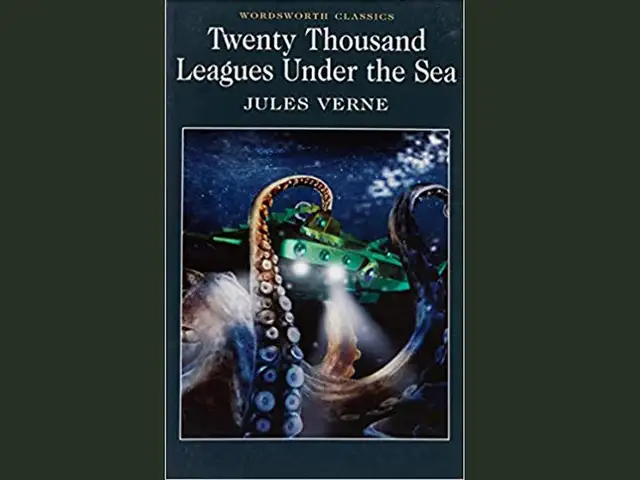
In the year 1870, Jules Verne wrote about the exploits of an electric powered submarine. It was described as “a long object, spindle-shaped, occasionally phosphorescent, and infinitely larger and more rapid in its movements than a whale”. In the book, Captain Nemo describes electricity as “a powerful agent, obedient, rapid, easy, which conforms to every use, and reigns supreme on board my vessel”. Around 90 years later, in 1964, the three-passenger submarine-Alvin was powered by lead-acid batteries bringing electric powered submarines into service.
(Image: www.amazon.com)
In the year 1870, Jules Verne wrote about the exploits of an electric powered submarine. It was described as “a long object, spindle-shaped, occasionally phosphorescent, and infinitely larger and mor..
Read More
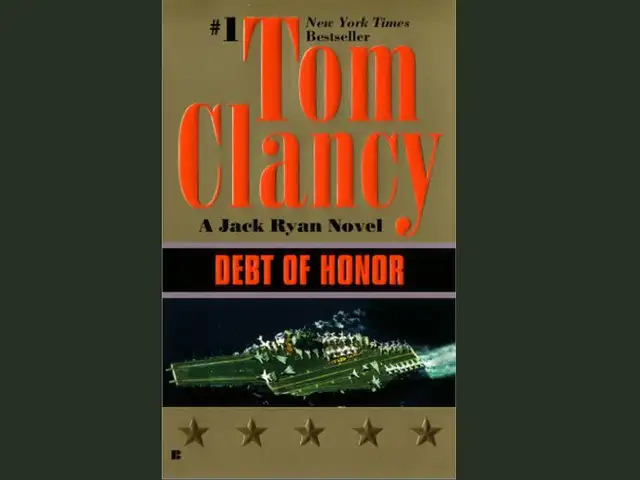
Written in 1994, author Tom Clancy imagined a scenario where an economic dispute between the United States and Japan boils over into a military conflict. Though recurring hero Jack Ryan is able to outmanoeuvre the ruling Japanese cabal, the conflict results in the death of a Japan Air pilot’s son and brother. The pilot, driven insane with grief, flies his Boeing 747 into the US capitol during a joint session of Congress. Unfortunately, nobody saw this coming on September 11, 2001 and the 9/11 report mournfully noted that “neither the intelligence community nor aviation security experts analysed systemic defenses within an aircraft or against terrorist-controlled aircraft, suicidal or otherwise”.
(Image: www.amazon.com)
Written in 1994, author Tom Clancy imagined a scenario where an economic dispute between the United States and Japan boils over into a military conflict. Though recurring hero Jack Ryan is able to ou..
Read More
The sci-fi writer, Arthur C Clarke, in this 1953 book, wrote about an alien invasion of Earth. One of the technologies mentioned in the book was a type of virtual reality that is so realistic that you can’t tell the difference between the movie and real life. “The program”, as Clarke called it, would appeal to all the senses and would allow people to be someone completely different from themselves. He also wrote that in the early 2000s, people might watch TV for three hours a day. In the era when televisions in homes were just becoming common, Clarke did correctly predict video games and virtual reality.
The sci-fi writer, Arthur C Clarke, in this 1953 book, wrote about an alien invasion of Earth. One of the technologies mentioned in the book was a type of virtual reality that is so realistic that yo..
Read More
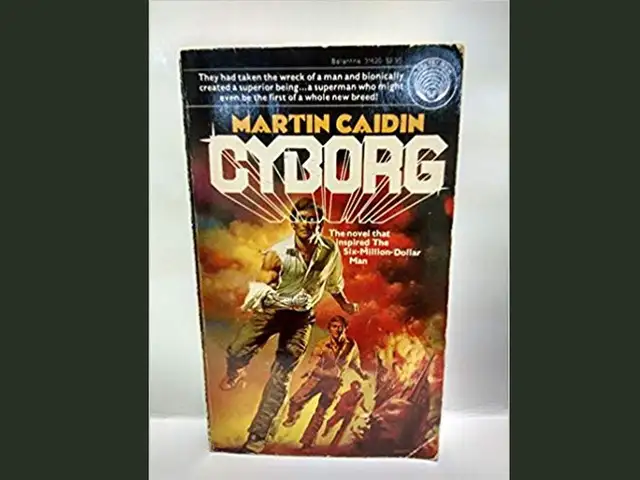
Martin Caidin, in his 1972 novel, puts his focus on a former-astronaut-turned-pilot Steve Austin, who crashed during a flight, leaving him with only one limb and blind in one eye. With the help of a team of scientists Austin has new legs, a removable eye with a camera, and a bionic arm, which makes him a “cyborg”, or a mixture of man and machine. This book managed to predict the use of bionic limbs that would enhance human capabilities. In 2013, this vision came to life when the first bionic leg implant was performed.
(Image: www.amazon.com)
Martin Caidin, in his 1972 novel, puts his focus on a former-astronaut-turned-pilot Steve Austin, who crashed during a flight, leaving him with only one limb and blind in one eye. With the help of a ..
Read More
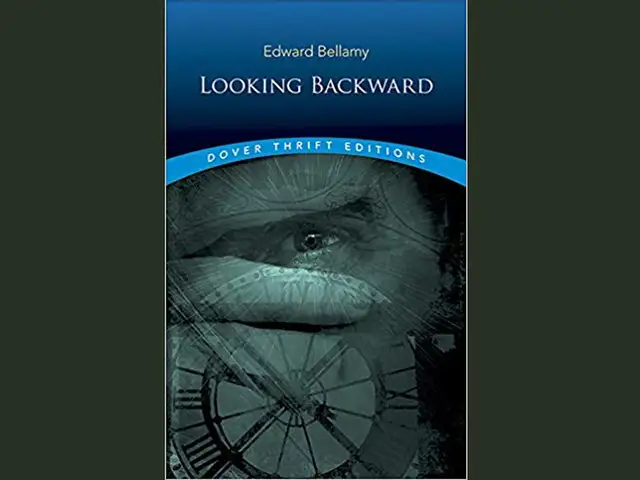
Published in 1887, Edward Bellamy described an American utopian society in Looking Backward. One element in the world that Bellamy created is a card with an allotted amount of credit, which citizens may use to make purchases. Bellamy made quite an impressive prediction about how credit cards work in the modern era, even down to the concept of one receipt for the customer and one receipt for the buyer. The book not only predicted credit cards and their usage, but it described the modern department store in great detail, envisioning it much like a warehouse that stocked all varieties of goods in great abundance. Individuals could visit these warehouses and select whatever items they liked.
(Image: www.amazon.com)
Published in 1887, Edward Bellamy described an American utopian society in Looking Backward. One element in the world that Bellamy created is a card with an allotted amount of credit, which citizens ..