Facebook teams up with 8 third-party fact checkers, covering 11 Indian languages, to flag Covid-19 fake news
The company said it was focused on connecting people to accurate information from health experts and curb misinformation.
By PTI | Updated:
AFP
Facebook and Instagram reduce the distribution of content that these third-party partners label as false.
NEW DELHI: Facebook is working with eight independent third-party fact-checking entities, covering 11 Indian languages, to identify misinformation around COVID-19, its India Managing Director Ajit Mohan said.
Besides, the social media giant is also imparting training to local governments and emergency health organisations on designing impactful health campaigns and accurate messaging with special focus on coronavirus.
"We are deeply committed to being an ally for India as the country fights the Coronavirus outbreak and addresses extraordinary challenges on both the healthcare and economic fronts," Mohan said in a blogpost.
He added that the company is focused on connecting people to accurate information from health experts, curb misinformation and support local communities and businesses.
"We have 8 independent third-party fact-checking partners covering 11 Indian languages as well as English. On Facebook and Instagram, we reduce the distribution of content that these partners label as false," he said.
Mohan added that if users still see this content appear on their news feed, it attaches a label warning of misinformation along with a link to a fact-checked article.
ADVERTISEMENT
Facebook is also enabling greater collaboration between its fact-checkers and official state and national government in its efforts to notify the public of misinformation.
Facebook, Twitter Instagram: Tips & Tricks To Keep Social Media Private
1/9
It seems counter intuitive – after all, social media helps you share your opinions and speak to a larger audience. But thanks to rampant identity theft and online stalking, there is a solid argument to be made to target your social posts instead of keeping them public. Karan Bajaj shows you how.
It seems counter intuitive – after all, social media helps you share your opinions and speak to a larger audience. But thanks to rampant identity theft and online stalking, there is a solid argument ..
Read More
Facebook has a dedicated section for privacy settings and tools (accessible in the Settings menu). In this section, you can choose who can see your future activity. For privacy, select Friends instead of Public. Also on the same page, you get the option to limit accessibility of your existing posts on the social network to only friends instead of everyone. You can also choose individual settings for items such as friend requests, email addresses access, phone number access and who can see your friends list. To step up your privacy, switch all these settings to ‘Friends Only’. We also recommend switching off access to search engines outside of Facebook.
Facebook has a dedicated section for privacy settings and tools (accessible in the Settings menu). In this section, you can choose who can see your future activity. For privacy, select Friends instea..
Read More
By default, all the information in your profile is in the public domain. To change this, click on your profile picture on the top bar to view your profile. On this page, you can view all the information available to anyone who opens your profile page. Click the edit button (the small pencil icon) that appears inside the intro box and you can then customize your info. We recommend switching off all the items you want to keep private from prying eyes.
By default, all the information in your profile is in the public domain. To change this, click on your profile picture on the top bar to view your profile. On this page, you can view all the informat..
Read More
Many regular Facebook users tend to upload a lot of photos to share with friends and family. However, you don’t want everyone who visits your profile to have access to all these memories either. One way to hide them is to delete them from Facebook after a few months. The other way is to edit the privacy settings for each photo album. Click on Photos > Albums. For any album that you want to limit access to, click the options button (the three dots on the right corner) on an individual album and choose edit. This will open the privacy settings for the album for which you can select only friends, family or only you.
Many regular Facebook users tend to upload a lot of photos to share with friends and family. However, you don’t want everyone who visits your profile to have access to all these memories either. One ..
Read More
Quite like Instagram, Twitter lets you hide your tweets from the world — this means they’ll only be visible to your existing followers and won’t show up in searches. You will also have to individually approve new followers from that point forward. To do this, go to the ‘Settings and Privacy’ section and look for ‘Privacy and Safety’. Here, you can switch-on the feature marked ‘Protect your Tweets’.
Quite like Instagram, Twitter lets you hide your tweets from the world — this means they’ll only be visible to your existing followers and won’t show up in searches. You will also have to individuall..
Read More
One of the nicest privacy features on Twitter is that it lets you control how people can look you up on Twitter. In Settings, look for a section on Discoverability — here you can choose if other users can find you on Twitter using your email address or phone number. You can also view and manage any contacts you have uploaded to Twitter from your smartphone or choose to remove uploaded data from your account altogether.
One of the nicest privacy features on Twitter is that it lets you control how people can look you up on Twitter. In Settings, look for a section on Discoverability — here you can choose if other user..
Read More
This is the easiest method to prevent access to your Instagram posts and stories. In the Instagram app on your phone, open settings > Privacy and Security. You will see the option for Account Privacy here which gives you the option to switch to a private account. Once enabled, only people that are following you will be able to see your posts. Any new followers will have to be approved by you individually. You should do this if you’re not interested in growing your followers and want to share with a group of people only.
This is the easiest method to prevent access to your Instagram posts and stories. In the Instagram app on your phone, open settings > Privacy and Security. You will see the option for Account Privacy..
Read More
Chances are that you have linked your Facebook profile to your Instagram account — either by choice or by using a Facebook account to login to Instagram. What happens in this scenario is that when anyone visits your Facebook profile, it shows them that you are also available on Instagram. To avoid this, head to Settings in your Instagram app, tap on Account > Linked Accounts > Facebook and select ‘Unlink Account’.
Chances are that you have linked your Facebook profile to your Instagram account — either by choice or by using a Facebook account to login to Instagram. What happens in this scenario is that when an..
Read More
Even with your account set to private, a friend can share your story to their timeline and it would then become public through their feed. To stop this from happening, you can control how your Instagram stories can be seen and shared. In Settings, go to Privacy and Security > Story Controls. Here, you can switch off the option that lets people share your story. You can create a blacklist to hide your story from certain people, choose who can reply to your story (everyone, people you follow or no one) and there are also options to prevent saving story posts to the Instagram archive.
Even with your account set to private, a friend can share your story to their timeline and it would then become public through their feed. To stop this from happening, you can control how your Instag..
Internet companies like Facebook, Google and ShareChat have stepped up efforts to tackle the spread of rumours and fake news on their platforms amid the coronavirus pandemic that has seen cases rise to almost 19,000 and claimed over 600 lives in the country.
Mohan said Facebook's teams are also imparting training to local governments and emergency health organisations, given the increasing need to get timely and accurate information to local communities.
ADVERTISEMENT
"We have so far trained the Union Health Ministry, state units of the National Health Mission, State Governments of Kerala, Delhi, Karnataka, Telangana, Maharashtra, Andhra Pradesh, Rajasthan, Punjab and Odisha," he said.
Mohan added that the company is also making efforts to ensure some of these states use the power of the platform to amplify their efforts through ad credits, as well as strategic marketing support for a scaled coronavirus response.
ADVERTISEMENT
It has also banned advertisements and commerce listings for masks, hand sanitiser, surface disinfecting wipes and coronavirus testing kits in order to help protect against inflated prices and predatory behaviour.
A lot of what you hear or read about the coronavirus may be myths. WHO data busts a few common misconceptions.
A lot of what you hear or read about the coronavirus may be myths. WHO data busts a few common misconceptions.
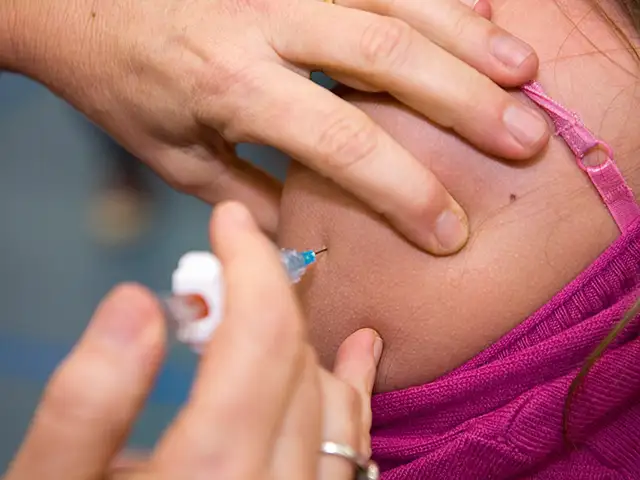
Myth: Pneumonia vaccines will protect you against coronavirus.
Reality: Vaccines against pneumonia, such as pneumococcal vaccine and Haemophilus influenza type B (Hib) vaccine, do not provide protection against coronavirus. The virus is so new and different that it needs its own vaccine. Researchers are trying to develop a vaccine against 2019-nCoV, and WHO is supporting their efforts. However, while they are not effective against 2019-nCoV, vaccination against respiratory illnesses is highly recommended to protect your health.
Myth: Pneumonia vaccines will protect you against coronavirus.
Reality: Vaccines against pneumonia, such as pneumococcal vaccine and Haemophilus influenza type B (Hib) vaccine, do not provide protec..
Read More
Myth: Ultraviolet disinfection lamp can kill the coronavirus.
Reality: UV lamps should not be used to sterilise hands or other areas of skin. Far from killing the virus, the UV radiation can actually cause skin irritation.
Myth: Ultraviolet disinfection lamp can kill the coronavirus.
Reality: UV lamps should not be used to sterilise hands or other areas of skin. Far from killing the virus, the UV radiation can actuall..
Read More
Myth: Thermal scanners can help detect infected people.
Reality: Thermal scanners are effective in detecting people who have developed a fever due to the coronavirus infection. However, they cannot detect people who are infected but are not yet sick with the fever. This is because it takes between two and 10 days before people who are infected become sick and develop a fever.
Myth: Thermal scanners can help detect infected people.
Reality: Thermal scanners are effective in detecting people who have developed a fever due to the coronavirus infection. However, they cannot ..
Read More
Myth: Spraying alcohol or chlorine all over the body kill the coronavirus.
Reality: Spraying alcohol or chlorine all over your body will not kill viruses that have already entered your body. In fact, spraying such substances can be harmful to clothes or mucous membranes (ie eyes, mouth). Be aware that both alcohol and chlorine can be used to disinfect surfaces, but they need to be used under appropriate recommendations.
Myth: Spraying alcohol or chlorine all over the body kill the coronavirus.
Reality: Spraying alcohol or chlorine all over your body will not kill viruses that have already entered your body. In fact..
Read More
Myth: Putting on sesame oil will block the coronavirus from entering the body.
Reality: Sesame oil does not kill coronavirus. There are some chemical disinfectants that can kill the 2019-nCoV on surfaces. These include bleach or chlorine-based disinfectants, solvents, 75 per cent ethanol, peracetic acid and chloroform. However, they have little or no impact on the virus if you put them on the skin or under your nose. It can even be dangerous to put these chemicals on your skin.
Myth: Putting on sesame oil will block the coronavirus from entering the body.
Reality: Sesame oil does not kill coronavirus. There are some chemical disinfectants that can kill the 2019-nCoV on sur..
Read More
Myth: Coronavirus mainly affects older people.
Reality: People of all ages can be infected by the 2019-nCoV. Older people, and people with preexisting medical conditions [such as asthma, diabetes, heart disease] appear to be more vulnerable. But WHO has advised people of all ages to take steps to protect themselves from the virus.
Myth: Coronavirus mainly affects older people.
Reality: People of all ages can be infected by the 2019-nCoV. Older people, and people with preexisting medical conditions [such as asthma, diabetes, h..
Read More
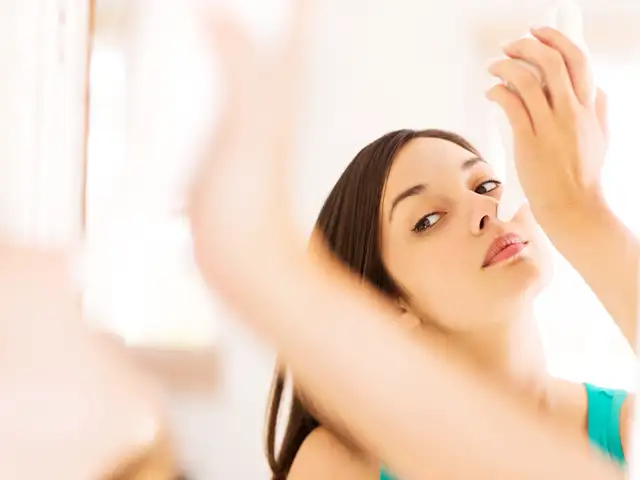
Myth: Rinsing your nose with saline will help prevent coronavirus infection.
Reality: There is no evidence that regularly rinsing the nose with saline has protected people from a coronavirus infection. But there is some limited evidence that regularly rinsing nose with saline can help people recover more quickly from a common cold. However, regularly rinsing the nose has not been shown to prevent respiratory infections.
Myth: Rinsing your nose with saline will help prevent coronavirus infection.
Reality: There is no evidence that regularly rinsing the nose with saline has protected people from a coronavirus infecti..
Read More
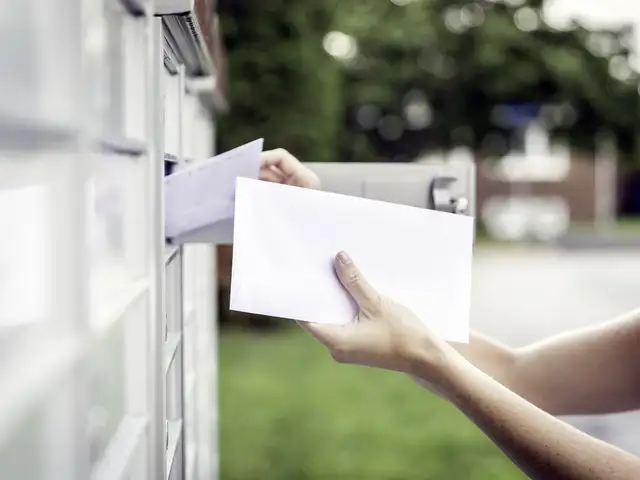
Myth: It’s not safe to receive letters or packages from China.
Reality: It is safe to receive letters and packages from China. People receiving packages from China are not at risk of contracting the coronavirus. From previous analysis, we know that coronaviruses do not survive long on objects such as letters or packages.
Myth: It’s not safe to receive letters or packages from China.
Reality: It is safe to receive letters and packages from China. People receiving packages from China are not at risk of contracting the..
Read More
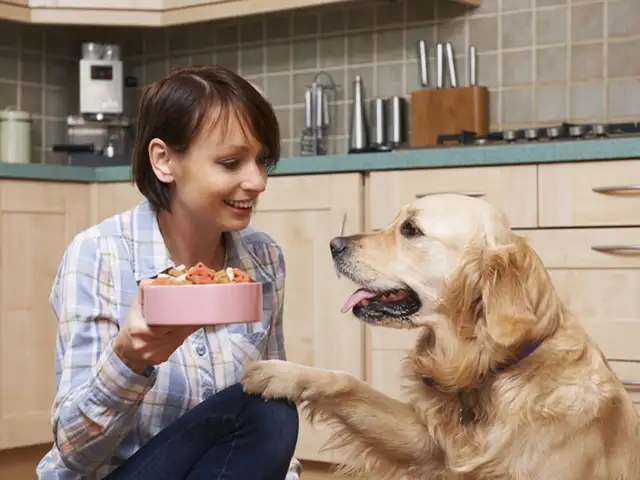
Myth: Pets at home can spread the coronavirus
Reality: At present, there is no evidence that companion animals or pets such as dogs or cats can be infected with the coronavirus. However, it is always a good idea to wash your hands with soap and water after contact with these pets. This will protect you against various common bacteria such as E.coli and Salmonella that can pass between pets and humans.
Myth: Pets at home can spread the coronavirus
Reality: At present, there is no evidence that companion animals or pets such as dogs or cats can be infected with the coronavirus. However, it is alway..
"And if we see people selling these products in organic posts on Facebook or Instagram, we remove them. We have also banned ads and commerce listings that imply a product guarantees a cure or prevents people from contracting the Coronavirus," Mohan said.
In India, the company is running a coronavirus information centre on Facebook and a WhatsApp Coronavirus Information Hub.
WhatsApp also has partnerships with the Centre and state governments, while Messenger has a partnership with MyGov India and Health Ministry.
Business News › Magazines › Panache › Facebook teams up with 8 third-party fact checkers, covering 11 Indian languages, to flag Covid-19 fake newsText Size:AAA