ET Review: Galaxy S6 delivers the grand comeback Samsung needed
As far as the hardware is concerned, Samsung has chosen to go with their own Exynos octa core chipset instead of the Snapdragon 810.
By Hitesh Raj Bhagat, ET Bureau | Updated:

It’s no secret that Samsung’s smartphone division has seen better times. Some earlier blockbuster Galaxy devices (S3 and S4) sold over 80 million devices each globally — and the S4 continues to be a strong seller. Last year’s Galaxy S5, though packed with features including water resistance and heart rate monitor, failed to set the cash registers ringing.
Samsung needed a grand comeback and the S6 delivers on that promise. If early numbers are any indication, Samsung seems to have a winner. A Korea Times reports has Samsung reps predicting sales of 70 million handsets globally and the company is struggling to keep up with the demand.
Viewed from the front, the Galaxy S6 is instantly recognisable as a Samsung — the rest of the device is a whole new story. The company has used a strong, flexible aluminium frame and fused it with Gorilla Glass 4 (front and back) to create a device that looks and feels exquisite. There is an incredible attention to detail in the construction: micron-thin gaps, precisely drilled speaker holes and subtle bends in the aluminium for grip.
Even the earpiece speaker merges so well with the glass that when you run a finger across it, you can’t feel the difference. This also marks an important departure in philosophy for Samsung: this is their first flagship without expandable memory or a removable battery. Many are complaining vociferously and it’s true that this move will be a dealbreaker for many Samsung loyalists, but it has advantages (sleeker design, fewer air gaps for dust/liquids) and it will likely bring a lot of new buyers into the fold.

The new screen is a thing of beauty. You may scoff at the super-high resolution (it’s got the highest density screen of any digital device) saying that no one will be able to make out the difference, but it matters when you use the device in a virtual reality headset (whether Google cardboard or Samsung’s own). It’s got the darkest blacks, great sunlight visibility, excellent viewing angles and brilliant colours — we think it’s simply the best screen on the market.
As far as the hardware is concerned, Samsung has chosen to go with their own Exynos octa core chipset instead of the Snapdragon 810 (which will likely be the platform of choice for many other upcoming Android flagships). The performance is exemplary and there’s very little heating even when it’s being taxed heavily.
The RAM and storage are much faster than before. You only need to place a finger on the new finger scanner for it to work — and it works well. Samsung’s Touchwiz layer is much lighter (and prettier) than before. It seems that Samsung has been listening to complaints very closely.
Samsung needed a grand comeback and the S6 delivers on that promise. If early numbers are any indication, Samsung seems to have a winner. A Korea Times reports has Samsung reps predicting sales of 70 million handsets globally and the company is struggling to keep up with the demand.
Viewed from the front, the Galaxy S6 is instantly recognisable as a Samsung — the rest of the device is a whole new story. The company has used a strong, flexible aluminium frame and fused it with Gorilla Glass 4 (front and back) to create a device that looks and feels exquisite. There is an incredible attention to detail in the construction: micron-thin gaps, precisely drilled speaker holes and subtle bends in the aluminium for grip.
Even the earpiece speaker merges so well with the glass that when you run a finger across it, you can’t feel the difference. This also marks an important departure in philosophy for Samsung: this is their first flagship without expandable memory or a removable battery. Many are complaining vociferously and it’s true that this move will be a dealbreaker for many Samsung loyalists, but it has advantages (sleeker design, fewer air gaps for dust/liquids) and it will likely bring a lot of new buyers into the fold.
The new screen is a thing of beauty. You may scoff at the super-high resolution (it’s got the highest density screen of any digital device) saying that no one will be able to make out the difference, but it matters when you use the device in a virtual reality headset (whether Google cardboard or Samsung’s own). It’s got the darkest blacks, great sunlight visibility, excellent viewing angles and brilliant colours — we think it’s simply the best screen on the market.
ADVERTISEMENT
As far as the hardware is concerned, Samsung has chosen to go with their own Exynos octa core chipset instead of the Snapdragon 810 (which will likely be the platform of choice for many other upcoming Android flagships). The performance is exemplary and there’s very little heating even when it’s being taxed heavily.
The RAM and storage are much faster than before. You only need to place a finger on the new finger scanner for it to work — and it works well. Samsung’s Touchwiz layer is much lighter (and prettier) than before. It seems that Samsung has been listening to complaints very closely.
The camera performance is where the bulk of the improvements are. For starters, both cameras have an aperture of f1.9 — apart from letting in more light (some 40 per cent more than before), they also capture photos with shallow depth of field, lending a more ‘professional’ look. You can double tap the home button (even from standby) to instantly start the camera and the shutter lag is minimal. In both start up and shot-to-shot times, the S6 camera is actually faster than many dedicated cameras. With auto mode, it delivered spectacular results 95 per cent of the time. For a few difficult lighting situations, you can use Pro mode which offers greater control.
The optical image stabilisation really shines on the S6 and it gives you sharp results where most others will falter — it even works really well on videos up to 1080p (higher resolution video recording is possible, but without the OIS active).
Finally, the battery life is excellent, despite a smaller battery than the S5. Starting with a 100 per cent charge at 8am, it regularly lasted till 11pm, sometimes with 30% battery remaining. Some of the complaints we had were about the protruding camera module (so it doesn’t sit flat), the slippery frame and the ultra glossy surfaces. All said and done, this is Samsung’s best yet — and by a very wide margin.
If you prefer a large screen, you can look at the Samsung Galaxy Note 4 at around the same price. It has a 5.7-inch super amoled display with Gorilla Glass 4, Snapdragon 805 processor, 3GB RAM, expandable storage, 16MP camera with optical image stabilisation and a pressure sensitive stylus.
Download
The Economic Times Business News App for the Latest News in Business, Sensex, Stock Market Updates & More.
The Economic Times Business News App for the Latest News in Business, Sensex, Stock Market Updates & More.
Related Articles
 South Korea concrete delivery halt threatens Samsung, SK Hynix chip plant work: Report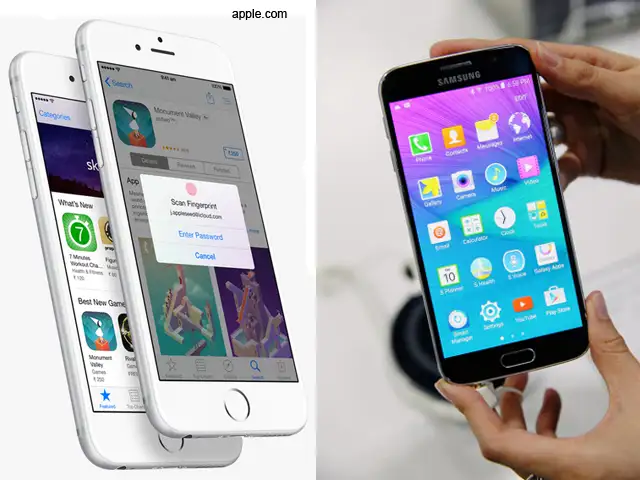
Text: Anupam Saxena,TOI Tech
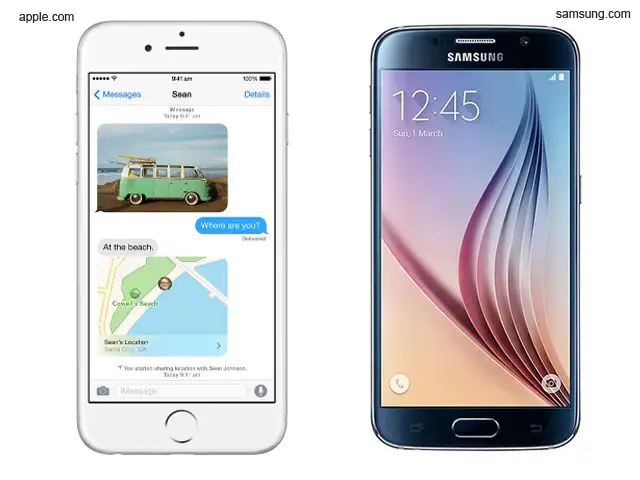
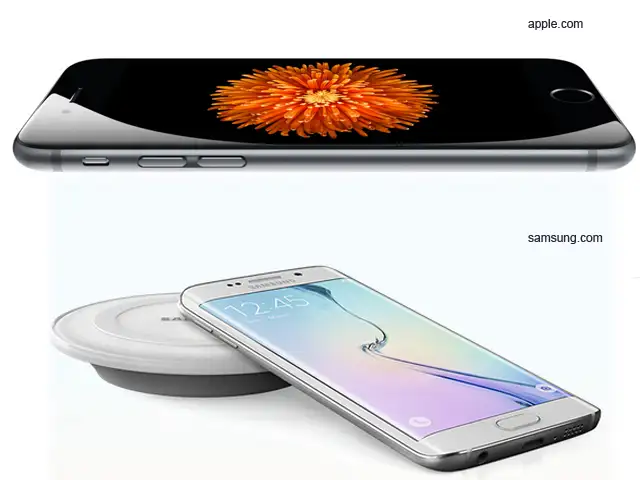
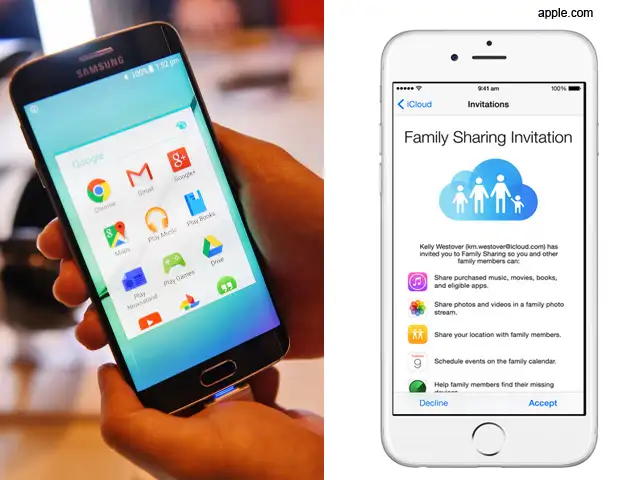
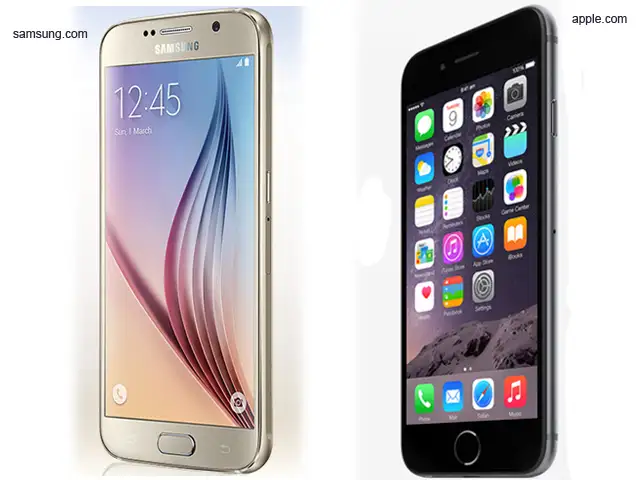
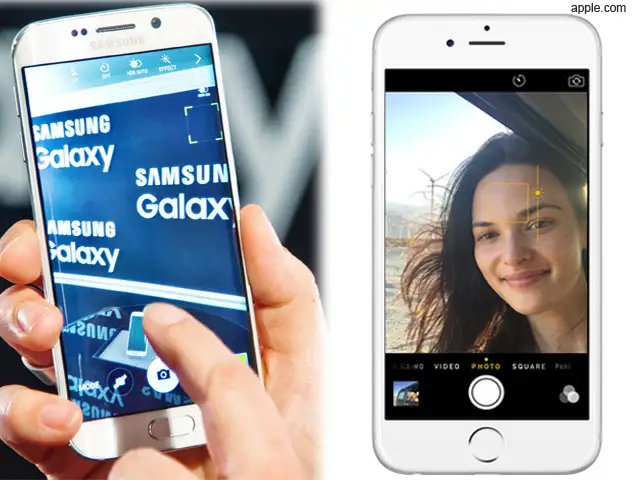
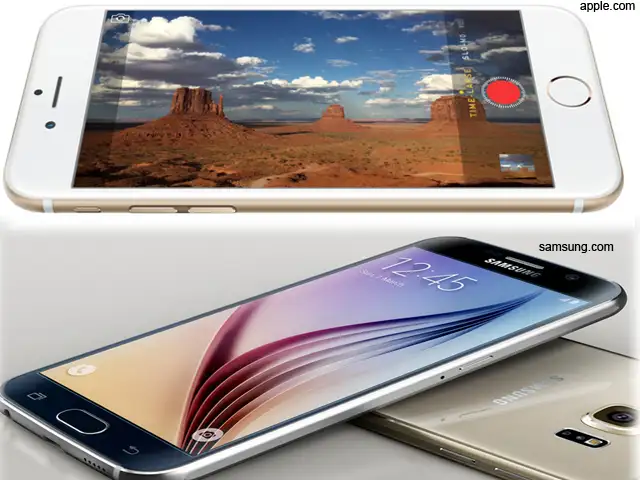
There are no two ways about it that Apple's iPhone 6 and Samsung's Galaxy S6 edge are two of the most good looking smartphones you can buy right now. Interestingly, Samsung has taken a page out of Apple's design notebook, liberally using glass and metal in the Galaxy S6's construction.
We try to find out which out of the two is a better looking device...
There are no two ways about it that Apple's iPhone 6 and Samsung's Galaxy S6 edge are two of the most good looking smartphones you can buy right now. Interestingly, Samsung has taken a page out of Apple's design notebook, liberally using glass and metal in the Galaxy S6's construction.
We try to find out which out of the two is a better looking device...