ET Evoke: Top Yale economist feels financial inclusion, peers and role models empower women wanting to work
Rohini Pande believes powerful interventions can strengthen women wanting to work.
By ET CONTRIBUTORS | Updated:
iStock
In India, the constraint on women’s labour force participation is not childcare or related policies — women are just not entering the labour force.
Rohini Pande is Henry J Heinz II Professor of Economics and Director of the Economic Growth Center, Yale University. The leading economist shares her perspective with ET Evoke on powerful interventions that can strengthen women wanting to work — and change social norms:
First, it is important to empower women for the sake of their own rights. In India, we have evidence starting from child sex ratios that women face constraints in just remaining alive. Work discrimination follows thereon.
Policy often focuses on education or providing health measures. But, in the longer run, if women are unable to have the full ability to earn a living on their own, those measures are not going to do enough. Providing women adequate ability to enter the labour market and manage their own earnings is important for them to control their own destiny.
It is also important for other members of communities to recognise the economic value of women, and treat them with equality.
Labour is a productive input, so if you increase female labour force participation, you have improved talent allocation. This translates to productivity gains. Importantly, these gains are driven by women themselves. Data from our surveys in India shows many women have a strong preference to work — if given the opportunity, the female labour force participation rate could double.
Rohini Pande feels peer networks are valuable.
ADVERTISEMENT
Generally, the world over, women enter the labour force after their education. There is usually a drop in female labour force participation when women have children — whether they go back into work then depends on maternity leave and other policies.
However, in India, the constraint on women’s labour force participation is not childcare or related policies — women are just not entering the labour force. The typical transition is from being unmarried-not working to being married-not working. Despite the education gap reducing, why are women not entering the labour force?
A critical reason is social norms — these are beliefs about women’s mobility being a source of stigma for a household. This is linked with the functioning of arranged marriages, which place a great deal of emphasis on norms of purity. These can then powerfully impact decisions like women migrating for work. To effect women’s labour force participation, we need to change these informal institutions which dictate women’s mobility, and therefore, entry to work choices.
Two effective interventions I’ve worked on recognise that women’s own preferences are often to resist these norms — thus, giving women control over their own earnings, by having a bank account, and having direct deposit of wages in it, is necessary. Financial inclusion can do a lot, but it is not enough in itself. So, beyond opening accounts for women, you need to ensure direct deposits or transfers and that women are able to use these. Many women, as we found, are ready to challenge social norms — they should have the economic resources to do so.
ADVERTISEMENT
Her Good Sense: Data shows men, not women, overestimate community disapproval of women working. Peer networks also, as seen in data from the Self Employed Women’s Association (SEWA), are valuable. They can create a recognition that a woman has someone else to learn from, to depend on — and to gauge that beliefs about women working might not be as negative in a community as an individual may think.
There is also a measurable impact of female leadership role models. Some of my research examines gender quotas for women in panchayats. I’ve noticed that when you discuss these with people, you often hear comments like, ‘Oh, it’s just the wives of male pradhans who are running for office’ or ‘It’s actually the husband of a female pradhan who controls the office’.
ADVERTISEMENT
We need to move beyond anecdotes here. Survey data from West Bengal showed us how, with exposure to female leadership role models, parents’ aspirations for their daughters changed — exposure to women leaders made parents more gender equal.
We also found that having a woman leader for two terms under a quota makes a difference — once a reserved seat opens up, women are more likely to run and win. And men are more likely then to have women as leaders.
Divas Of Tech: Women Who Broke Barriers & Made It Big
1/10
Women are going places - and there is no denying that.
From classrooms to boardrooms, many women in the world of technology have proved their merit. Famous names like Debjani Ghosh, Padmasree Warrior and Sheryl Sandberg made it big, and have been an inspiration to the womankind.
On International Women's Day, here's a list of women who have managed to break the stereotype and carve a niche for themselves.
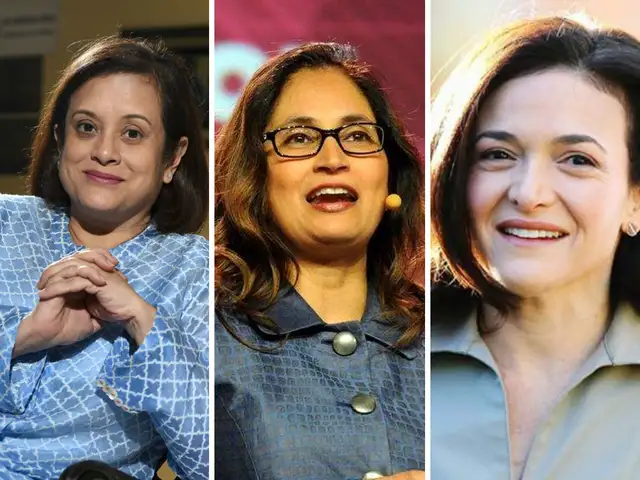
(In Pic: From left: Debjani Ghosh, Padmasree Warrior, Sheryl Sandberg)
Women are going places - and there is no denying that.From classrooms to boardrooms, many women in the world of technology have proved their merit. Famous names like Debjani Ghosh, Padmasree Warrior ..
Read More
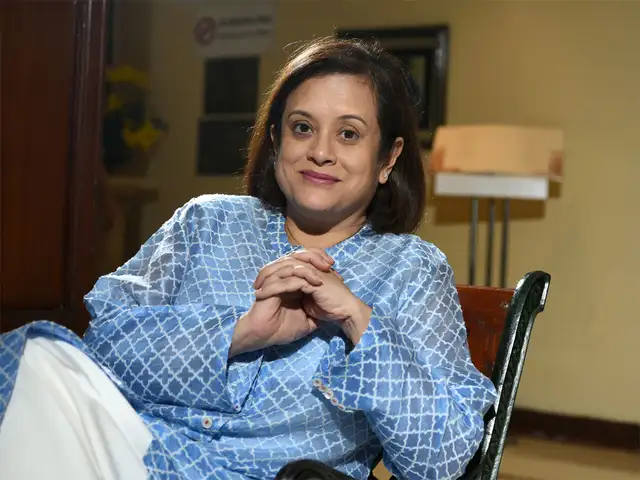
For the first time in three decades, NASSCOM appointed their first ever women President, Debjani Ghosh, in April 2018. She has been a strong advocate of gender diversity in the workplace. Before taking up the NASSCOM responsibility, she had worked with Intel Corporation for nearly two decades. A veteran in the field of technology, her endeavour is to make the domain of technology a level playing field. She plans to stress on innovation and skill development to enable individuals and enterprises to make the most of AI and Machine Learning. Her appointment to this position is a huge step in the direction of including women in the higher rungs of technology, which is otherwise male dominated.
For the first time in three decades, NASSCOM appointed their first ever women President, Debjani Ghosh, in April 2018. She has been a strong advocate of gender diversity in the workplace. Before taki..
Read More
With the tech industry experiencing rapid growth, Deepa Madhavan believes that it's the right time for women to join forces to ensure a fair say in decision making. Before joining PayPal, Madhavan worked with Deloitte, and took a break to raise her three children. Deepa Madhavan, who has a Bachelors in Economics and a Masters in Computer Science, is also the force behind causes like 'Girls In Tech' and 'Unity'.
With the tech industry experiencing rapid growth, Deepa Madhavan believes that it's the right time for women to join forces to ensure a fair say in decision making. Before joining PayPal, Madhavan wo..
Read More
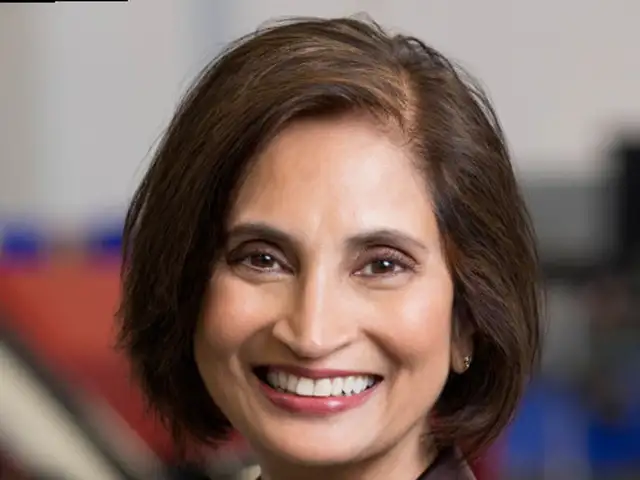
As her name suggests, Padmasree is a true warrior. A role model for girls, she is the former CEO of NIO U.S., a Chinese electric car company which is considered Tesla's biggest rival. She is currently a member of the Board of Directors at Microsoft and Spotify. In the past, Warrior has also worked with Cisco and Motorola. Motorola Inc received a National Medal of Technology in 2004 when she was the CEO of the company. With 1.46 million followers on Twitter, she continues to mentor scores of women who dream of building a career in the field of technology.
As her name suggests, Padmasree is a true warrior. A role model for girls, she is the former CEO of NIO U.S., a Chinese electric car company which is considered Tesla's biggest rival. She is currentl..
Read More
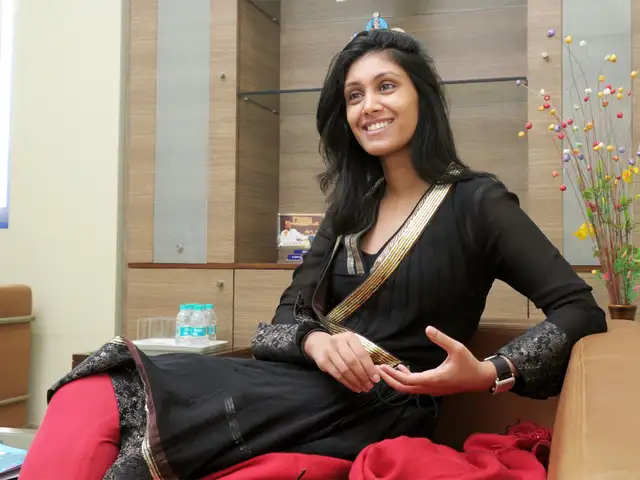
Roshni Nadar Malhotra is the HCL heiress and an IT stalwart. Born to Shiv Nadar and Kiran Nadar, Roshni was always sure of being a part of the empire that her parents created. She provides strategic guidance to HCL and is also closely associated with the philanthropic arm of the IT conglomerate. She manages to strike the perfect balance between her work, personal life and philanthropic activities with ease and efficiency. She became the CEO of the organisation at 28, and took a break when she became a mom to two doting sons. Promoting diversity in HCL is one of her biggest goals, and she hopes to see more women in the domain of technology.
Roshni Nadar Malhotra is the HCL heiress and an IT stalwart. Born to Shiv Nadar and Kiran Nadar, Roshni was always sure of being a part of the empire that her parents created. She provides strategic ..
Read More
Rubbing shoulders with the men from the big, bad world of tech, Ginni Rometty has managed to carve a niche for herself in the technology industry. In a men-dominated industry, Rometty has been heading the computer giant since 2012. She has successfully featured in lists like, '50 Most Influential People in the World' and '50 Most Powerful Women in Business'. Ever since her leadership in IBM, she has managed to lead the company on the path of success. It was reported that the company was in the pits when she took over in 2012. Her commitment to diversity and inclusion has resulted in a sea change in IBM's work culture. The company offers extended parental leave to women, makes it easier for them return to the workforce, and encourages them to learn new skills to advance their careers. Thanks to their path-breaking work, last year, the company was recognised by the prestigious Catalyst Award for advancing diversity and women’s initiatives. In the past 20 years, it is the only tech company to have been recognised in this category, and the only company that was honoured four times.
Rubbing shoulders with the men from the big, bad world of tech, Ginni Rometty has managed to carve a niche for herself in the technology industry. In a men-dominated industry, Rometty has been headin..
Read More
A best-selling author and an inspiration to girls all over, Sheryl Sandberg has remained strong even in the face of adversity. While Facebook, Mark Zuckerberg have been struggling with the perils of Cambridge Analytics, Sandberg has been the Rock of Gibraltar for the social media giant. She made it to the 11th position on Forbes Power Women list 2018 and 12th spot on America's Self-Made Women 2018. She recently faced flak for Facebook's involvement in a privacy battle and election hacking, but that hasn't stopped the Facebook COO from aggressively promoting corporate feminism, and advocating #MeToo at work.
A best-selling author and an inspiration to girls all over, Sheryl Sandberg has remained strong even in the face of adversity. While Facebook, Mark Zuckerberg have been struggling with the perils of ..
Read More
With an estimated net worth of $300 million, she began her career with a startup that co-founders Larry Page and Sergey Brin established in her Menlo Park garage. Since then, Wojcicki has been an integral part of Google. She was the first Google employee to get pregnant. After that, she took the opportunity to change the parental leave policy at the company. Maternity leave was increased from 18 to 12 weeks in 2007, which reduced the attrition rate of new moms. She hires more women, both at beginning and senior levels to create a continuous cycle of female employees, which in turn helps in improving the work-culture, and reduces attrition in the company.
With an estimated net worth of $300 million, she began her career with a startup that co-founders Larry Page and Sergey Brin established in her Menlo Park garage. Since then, Wojcicki has been an int..
Read More
Whitney Wolfe Herd's dating idea struck gold, and now she has a fortune of nearly $230 million. The app is valued at $1 billion. Herd was also the co-founder of Tinder which she left after claiming sexual harassment by her ex-boyfriend and Tinder co-founder, Justin Mateen. She completely changed how dating apps work with Bumble. In a world of dating apps, she empowered women to reach out to their matches first. Although, she was told that the idea didn't have much steam, nothing could stop her. And, the company's net worth speaks for itself.
Whitney Wolfe Herd's dating idea struck gold, and now she has a fortune of nearly $230 million. The app is valued at $1 billion. Herd was also the co-founder of Tinder which she left after claiming s..
Read More
Renee James began her career as a R&D engineer, and left the company as the President in 2015. She spent 28 years in the company, and now has her own start-up Ampere which she spearheads as the CEO.
Renee James began her career as a R&D engineer, and left the company as the President in 2015. She spent 28 years in the company, and now has her own start-up Ampere which she spearheads as the CEO.
(Disclaimer: The opinions expressed in this column are that of the writer. The facts and opinions expressed here do not reflect the views of www.economictimes.com.)
Business News › Magazines › Panache › ET Evoke: Top Yale economist feels financial inclusion, peers and role models empower women wanting to workText Size:AAA