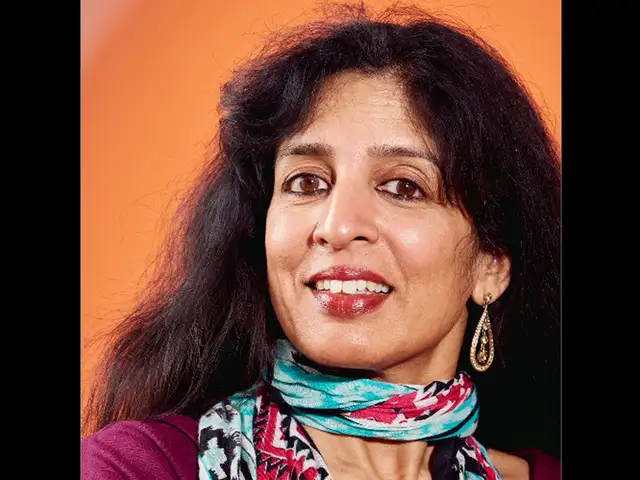
Q. Is there data linking women’s economic empowerment with macroeconomic growth? The most compelling evidence of the strong link between women’s economic empowerment and economic growth comes from the Nordic countries — Norway, Sweden, Denmark and Iceland. These countries have long been champions of gender equality, both in the workplace and in the home. They are amongst the first countries to have granted women full voting rights and implemented legal reforms prohibiting discrimination on grounds of marriage or parenthood.
These countries were also amongst the first in the world to face the prospect of an ageing population, which has profound implications for economic growth — when the working age population shrinks, so does the labour force and with that, potential growth.
To tackle this challenge, Nordic countries focused on policies that were both family- and work-friendly — these included paid and separate parental leave for both women and men, subsidised childcare and early childhood education, including out of school hours, and individual-based tax and benefit systems to not discourage participation in paid work by the second wage earner.
The consequences are clear — the gains in female labour force participation produced dramatic and measurable results. The OECD estimates that in Denmark and Sweden, increases in women’s labour force participation accounts for 0.25-0.4 percentage points of annual growth in per capita GDP over the last four decades — to put that into dollars, the current GDP per capita in Denmark and Sweden, about $55,000-60,000, would otherwise have been $5,000-6,000 lower.
Losses due to gender gaps in labour force participation and entrepreneurship
ADVERTISEMENT
Q. Is there a quantifiable cost of gender bias for businesses, labour markets and communities? There is a significant cost to countries and firms from the gaps in economic empowerment between men and women. In our work at the IMF, we estimate that gender gaps in labour force participation result in income losses of 27% in the Middle East and North Africa, 23% in South Asia, 17% in Latin America and the Caribbean, 15% in East Asia and the Pacific, 14% in Europe and Central Asia, and 12% in Sub-Saharan Africa.
How do we arrive at these numbers? We assume that the population of men and women have the same distribution of talent. They have the same probability of being born with high, medium or low capabilities. Then, we assume that the only difference between men and women is that women face a large number of constraints through unequal access to education, healthcare, finance, the labour market, etc. When an economy operates by constraining half its labour force from participating as productively as it can, half the country’s talent is wasted, resulting in a loss in productivity and income.
Other IMF research starts from the premise that not only do women bring additional skills to the workplace, but their skills are different to those of men — there is economic benefit from including more women in the workforce, over and above the benefit from simply having more workers. This is especially true as economies shift from manufacturing to services. Because women tend to be more highly represented in services sector employment, barriers to their participation in employment may slow the diversification of the economy and impact economic growth. There is also strong evidence showing that gender diversity is associated with stronger financial performance in firms — using data from companies in 35 European countries, IMF researchers find that adding one more woman to senior management or to the corporate board is associated with an 8-13 basis point higher return on assets — that’s equal to an increase in profitability of 3-8 per cent.
In service sector firms, including one more woman in senior management is associated with a 20 basis point higher return on assets.
ADVERTISEMENT
WAY BACK IN 1947: Women have been demanding equal pay for decades now. Q. What are the larger economic implications of the gender wage gap that exists between women and men? This is a critically important issue. The gender wage gap is also a measure of the average wage of a man and a woman in a country — by this measure, there are very large gaps, even in advanced countries.
The gender wage gap reflects: (1) the gaps in educational attainment between men and women, but also implicit and explicit biases in the workplace — these result in slower rates of promotion for women, and very low representation of women in senior positions in the public and private sectors; (2) the overrepresentation of women in low-paying occupations, even in advanced countries; (3) the disproportionate prevalence of women in the informal sector in developing countries, where pay levels are lower, employment is more vulnerable and social safety nets are virtually non-existent; and (4) the fact that women perform the majority of unpaid work worldwide.
ADVERTISEMENT
Wage gaps during their working years translate into much lower incomes for women in advanced ages. Thus, women tend to be locked into a cycle of low earnings and low income throughout their lives.
Apart from the basic issue of justice, there are significant economic benefits from closing gender wage gaps. Women typically invest a higher proportion of their earnings on their families — higher earnings by women is strongly associated with an improvement in their children’s nutrition, health and school attendance. Closing gender wage gaps has not only an immediate effect on poverty, income inequality and economic development, but long-lasting ones, through the impact on the education, earning capacity and productivity of the next generation.
Q. What explains India’s declining female labour force participation rate — and what are its macroeconomic implications? IMF work in 2017 found that India has one of the lowest female labour force participation rates. At around 33% at the national level in 2012, India’s female labour force participation rate is well below the global average of around 50% and the East Asian average of around 63%. Furthermore, we have found that female labour force participation had been on a declining trend in India, particularly since 2004-05.
She Grows Business: Adding women to senior positions in companies increases return on assets significantly. This gender gap needs to be narrowed to fully harness India’s much awaited demographic dividend — without an urgent and concerted effort to bring more women into the labour force, India risks squandering the benefits of a young population that drove the growth of many East Asian ‘tigers’.
Policy efforts should focus on increased labour market flexibility, allowing more women to be employed in the formal sector, reforms to improve infrastructure (particularly electricity, transport and sanitation) and higher social spending, including in education, which leads to higher female labour force participation by boosting female human capital.
Q. Does the Covid-19 situation now offer an opportunity in terms of empowering women in economies seeking to grow? The Covid-19 pandemic threatens to roll back gains in women’s economic opportunities, undoing decades of progress. Women are more likely than men to work in sectors, such as services industries, retail and tourism, that have been hit hardest by the pandemic. Second, women are more likely than men to be employed in the informal sector in low-income countries — informal employment leaves women with lower pay, no protection of labour laws and no benefits like pensions or health insurance.
Third, women do more unpaid household work and bear the brunt of family care responsibilities resulting from shutdowns, such as school closures. Fourth, pandemics put women at greater risk of losing human capital — in many developing countries, girls are forced to drop out of school and work to supplement household income. In India, since the Covid-19 lockdown, matrimony websites reported a 30% increase in registrations as families seek to secure their daughters’ futures — however, without education, these girls suffer a permanent loss of human capital, sacrificing productivity growth and perpetuating the cycle of poverty among women.
In the short term, the focus needs to be on measures to limit the scarring effects of the pandemic on women — this includes income support to the vulnerable, preserving employment linkages, providing incentives to balance work and family care, improving access to healthcare and more support for small businesses. Over the long term, we need gender responsive fiscal policies such as investing in education and infrastructure, subsidising childcare, offering parental leave to both parents and improving women’s access to finance. One of the biggest game changers would be a concerted effort to expand access to digital devices and content — as experienced in Latin America, greater access to digital technology can enable women to participate in paid work, while balancing their care and domestic work obligations.
IIFL Wealth Hurun India List: Meet India’s Richest Women
1/10
The IIFL Wealth Hurun India Women Rich List is out. In its second year of existence, the list continues to celebrate women wealth creators in the country. And despite strong murmurs of an economic slowdown, this list has something to cheer about, after all.
The number of women in this year’s rich list has grown to 152 women. And while that can hardly be called an equal representation - with just about 16 percent of the total number of individuals - it’s a leap from previous years where women were hardly visible.
Here's a list of this year's entrants:
The IIFL Wealth Hurun India Women Rich List is out. In its second year of existence, the list continues to celebrate women wealth creators in the country. And despite strong murmurs of an economic sl..
Read More
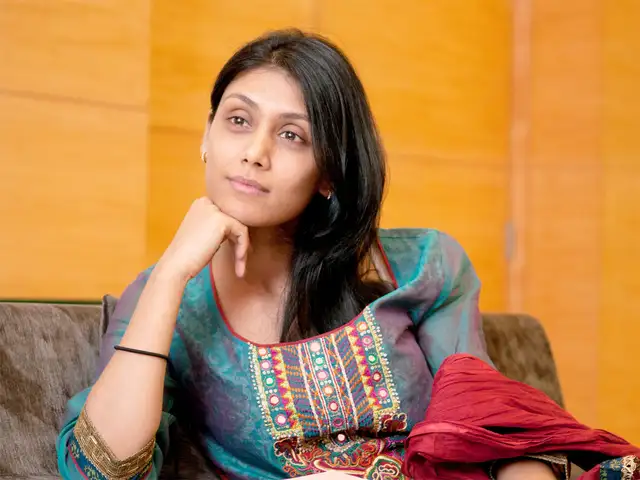
The 37-year-old HCL Technologies scion tops this year’s women rich list at Rs 36,800 crore. Roshni Nadar, the only child of Shiv and Kiran Nadar, is also the only woman in the top 20 that boasts of the usual suspects including Mukesh Ambani, Azim Premji and Gautam Adani. Roshni, who is married to Shikhar Malhotra, also serves as the Executive Director and CEO of HCL Enterprise. Ranked 51 in the Forbes Power List 2018, she has been driving change via diversity and philanthropy through the Shiv Nadar Foundation.
The 37-year-old HCL Technologies scion tops this year’s women rich list at Rs 36,800 crore. Roshni Nadar, the only child of Shiv and Kiran Nadar, is also the only woman in the top 20 that boasts of t..
Read More
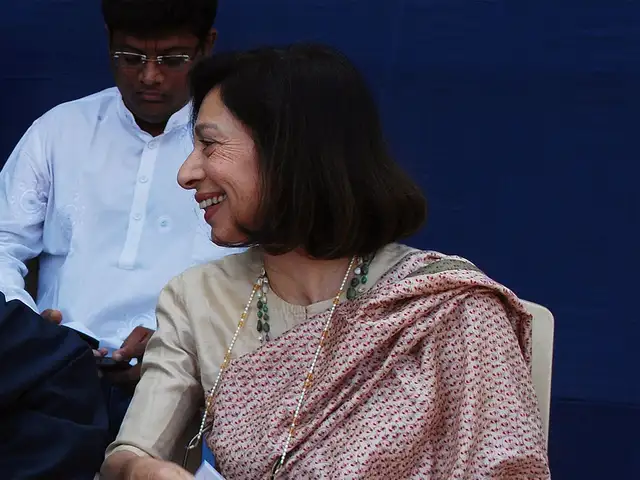
Smitha V. Crishna ranks second on this year’s list at Rs 31,400 crore. A third-generation heir of the Godrej Empire, she has a one-fifth stake in the Group, along with her brothers. Her brother Jamshyd runs consumer goods firm Godrej & Boyce. She is married to Vijay Crishna, a well-known theatre actor, and has a daughter Nyrika Holkar who also works in the group. In 2014, she purchased a bungalow belonging to the late atomic physicist, Dr. Homi J. Bhabha, for ₹371 crore. The bungalow was demolished two years later, with reports of a high-rise being planned in its place. This move was met with much displeasure by the Indian scientific community.
Smitha V. Crishna ranks second on this year’s list at Rs 31,400 crore. A third-generation heir of the Godrej Empire, she has a one-fifth stake in the Group, along with her brothers. Her brother Jamsh..
Read More
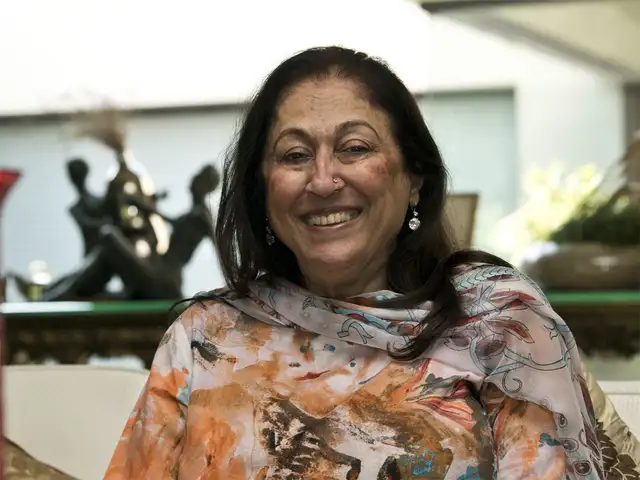
Kiran Nadar, who comes third in the list at Rs 25,100 crore, is a well-known art enthusiast. Under her patronage and guidance, the famed Kiran Nadar Museum of Art has provided a platform to young artists, and also helped improve the visual aesthetics of public spaces in and around the National Capital. Apart from art and aesthetics, the 67-year-old is also one of the top bridge players in the country and has represented India in several world championships. Last year, Nadar led her team to win Gold at the Commonwealth Bridge Games in Australia.
Kiran Nadar, who comes third in the list at Rs 25,100 crore, is a well-known art enthusiast. Under her patronage and guidance, the famed Kiran Nadar Museum of Art has provided a platform to young art..
Read More
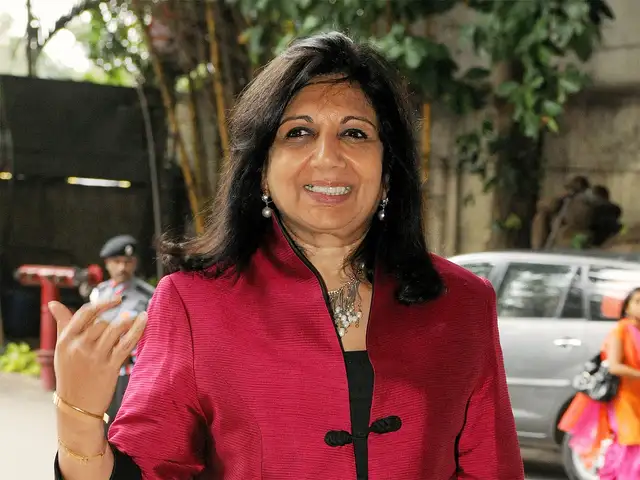
With a net worth of Rs 18,500 crore, Kiran Mazumdar-Shaw of Biocon retains the crown of the richest self-made woman in India. She founded Biocon in 1978 and has led its successful IPO in 2004. The Biocon Chairperson and Managing Director, who has 1.5 mn followers on Twitter, has often highlighted government apathy and policy failures on the micro-blogging site. A role model for millions of young women, she has also been conferred with the Padma Shri and the Padma Bhushan for her achievements.
With a net worth of Rs 18,500 crore, Kiran Mazumdar-Shaw of Biocon retains the crown of the richest self-made woman in India. She founded Biocon in 1978 and has led its successful IPO in 2004. The Bi..
Read More
Irrespective of gender, pharmaceuticals has shone in this year’s rich list. Of the top ten entries, four belong to the domain. Manju Deshbandhu Gupta follows biocon entrepreneur Kiran Mazumdar-Shaw at the fifth slot with Rs 18,000 crore. She served as the Executive Director of Lupin till 2017, and has been a Member of the Board for over four decades.
(Image: Lupin)
Irrespective of gender, pharmaceuticals has shone in this year’s rich list. Of the top ten entries, four belong to the domain. Manju Deshbandhu Gupta follows biocon entrepreneur Kiran Mazumdar-Shaw a..
Read More
The pharmaceuticals domain continues its golden streak in this year's IIFL Wealth Hurun India Rich List. Leena Gandhi Tewari, the chairperson of USV Private Limited which is a multinational pharmaceutical and biotechnology company, comes in at the sixth position. Her wealth is estimated at Rs 13, 200 crore. USV was founded by her grandfather Vithal Balkrishna Gandhi in 1961.
(Image: USV India)
The pharmaceuticals domain continues its golden streak in this year's IIFL Wealth Hurun India Rich List. Leena Gandhi Tewari, the chairperson of USV Private Limited which is a multinational pharmaceu..
Read More
Hyderabad-based Nilima Motaparti comes in at number eight on the list. The daughter of Divi's Laboratories founder Murali Divi, her wealth is valued at Rs 9,800 crore. She has a masters in international business from Gitam Institute of Foreign Trade, Visakhapatnam, and masters in international finance from Glasgow University in the UK. At Divis Laboratories, she acts as the Chief Controller - Commercial, and handles finances and matters related to procurement.
(Image: Divis Labs)
Hyderabad-based Nilima Motaparti comes in at number eight on the list. The daughter of Divi's Laboratories founder Murali Divi, her wealth is valued at Rs 9,800 crore. She has a masters in internatio..
Read More
The London-born, India-raised Jayshree Ullal ranks at the ninth spot. The President and CEO of Arista Networks, she is now one of the wealthiest female executives in America. She owns close to 5 per cent of Arista's stock, some of which has been kept for her two children, niece and nephew.She studied electrical engineering at the San Francisco State University. The 58-year-old lives in Saratoga, California.
(Image: LinkedIn)
The London-born, India-raised Jayshree Ullal ranks at the ninth spot. The President and CEO of Arista Networks, she is now one of the wealthiest female executives in America. She owns close to 5 per ..
Read More
Sangita Jindal, the better half of steel magnate Sajjan Jindal, is ranked at the tenth position with Rs 9,600 crore. She is the Chairman of the JSW Foundation which drives social development projects within the Group. The 57-year-old also leads Jindal Arts Centre and is the President of Art India magazine that focuses on contemporary art practices and critical theory. She has one son and two daughters.
Sangita Jindal, the better half of steel magnate Sajjan Jindal, is ranked at the tenth position with Rs 9,600 crore. She is the Chairman of the JSW Foundation which drives social development projects..
Business News › Magazines › Panache › ET Evoke: Empowering women via employment boosts nation’s GDP & company’s profitability, says IMF HR bossText Size:AAA