Dog-eared pages turn to digital bookmarks: Readers move to ebooks, publishers welcome change
Many bibliophile are eager to embrace the new technology as the way to go in a post-corona tomorrow.
By PTI |
iStock
Readers, who preferred a physical copy, have no other option than to pick ebooks as most shops are closed due to the lockdown.
NEW DELHI: Sweet, summer afternoons of lounging with the latest bestseller or that old favourite might feel like a postcard from a sepia-tinted past, but the days of reading aren't over - they have just shifted from dog-eared pages to digitally bookmarked ones.
With a nationwide lockdown that has been in place since March 25 and is only now beginning to relax in some sectors, everyone is adapting to the new normal of staying indoors. And so are readers who are turning to ebooks, some reluctantly, still viewing them as inferior to the physical book, and others eager to embrace new technology as the way to go in a post-corona tomorrow.
Publishers have largely welcomed the change and see it as an opportunity to enter a new market they hadn't tapped properly before.
Customers like Reva Malhotra, PR professional and former literature student who must read for a couple of hours before she goes to bed, are their target.
"It is more out of lack of choice that I had to switch. I have never been an ebook person, I come from a background in literature so I always preferred a physical copy. But since shops are closed and nobody is delivering, I don't have an option," Malhotra told .
Not so long ago, she would just pop into a bookstore, browse through tall shelves, and bring home a new book. Now, Malhotra has downloaded the Amazon Kindle app on her phone and manages to get in her quota of reading.
ADVERTISEMENT
That publishers are constantly adding new titles to their inventories to accommodate all kinds of readers helps.
With a new digital store on Kindle and over 260 new ebooks, publisher Bloomsbury India has recorded a "significant spike" in sales.
Readers have shown particular interest in "mythology, romance, well-being, spirituality and cookery" during the lockdown period. Yogesh Sharma, senior VP sales and marketing, Bloomsbury India, said traditionalists experimenting with ebooks are making the difference.
ADVERTISEMENT
"Monthly sales of ebooks have more than doubled in the lockdown period. Though the trend may not continue in the post-lockdown period, those who experimented reading from ebooks for the first time will help expand the ebook readership in the long run.
"I think a large section of readers, even traditionalists who love the look, feel, touch of physical books, will now see ebooks as an option. Those who still don't like the idea or the experience of ebooks will probably stock up more print books in the future," Sharma said.
ADVERTISEMENT
Roli Books has registered a 50 per cent increase in the sale of ebooks and Hachette India sold 80 per cent more ebooks under the lockdown.
In the third phase of the lockdown, which started from May 4, the Union Home Ministry allowed standalone shops, including bookshops to operate. Many welcomed this, of course, but commuting is still a problem with no public transport and the fear of the spread of the infection anyway keeps customers away.
Delhi-based The Bookshop was among the first to start "shipping anywhere in the city" and open the store to customers on Tuesdays, Thursdays and Saturdays, Bahrisons, another old Delhi bookshop, also informed its readers on Twitter this week that they could now order books sitting at home.
The Oxford Bookstore remains shut and is not taking orders either.
Ankur Singhal, a chartered accountant, is among those who want to wait it out and try ebooks for now.
"It's good to know the shops are open, but I think it's better to stay indoors for now. I am not particularly into ebooks, but for the last 40 days they have been a constant support.
"Earlier I thought it would be difficult to get used to, but once you get a hang of it, it's all about reading a good book," he said.
The lockdown has shifted the focus to ebooks as all access to physical books was denied to readers. To maintain reader interest in the digital format, Penguin Random House is collaborating with authors on social media and has launched online communities to increase engagement with its customers.
"To keep this interest going, we are releasing some very topical and suitable ebooks. We are also closely reviewing the trends, genres that are attracting people's attention and accordingly building awareness about our titles in those genres," said Niti Kumar, senior vice president, marketing, digital and communications, Penguin Random House India.
Readers have shown particular interest in "mythology, romance, well-being, spirituality and cookery" during the lockdown period, Kumar said.
Switching from the printed word to the digital one is an opportunity to tap into a new market, according to Riti Jagoorie, general manager, product, Hachette India. Jagoorie believes physical books will once again rule the market after shops open.
"The lockdown has shifted the focus to ebooks as all access to physical books was denied to readers but physical books will again reign supreme in our market once the lockdown is over and the book business gets back on its feet.
"A change we might see is publishers here may look at creating more ebooks... there is a definite market to be tapped into, even if it seems quite small at the moment," Jagoorie said.
In this period, Hachette has not brought out any new titles but has handpicked over 700 of their top titles to curate a Kindle store. The oeuvre includes "A Man Called Ove", "Steve Jobs: The Exclusive Biography" and "Shantaram".
A similar ebook store has been opened for children's books with over 700 titles, including all-time Enid Blyton favourites such as "The Famous Five" and "The Secret Seven" series.
Roli Books' director Kapil Kapoor is also of the opinion that the digital readership may decrease once the lockdown is lifted, but will still be more than what it was.
"While I don't think the growth rate for ebooks will remain this high once the lockdown has lifted, it will definitely be more than what it used to be before the lockdown. This is because many new users have been introduced to ebooks for the first time," Kapoor said.
Predictive Text: 'Frankenstein', '1984' And Other Books That Foretold The Future
1/6
A look back at the different times when authors unleashed the Nostradamus in them and came up with something that was years ahead of its time.
A look back at the different times when authors unleashed the Nostradamus in them and came up with something that was years ahead of its time.
Vision: Virus outbreak
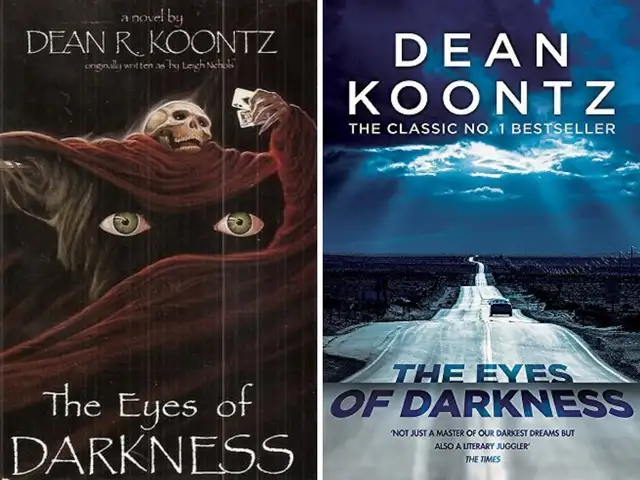
In 1981, Dean Koontz wrote a novel titled 'The Eyes of Darkness'. In the book, Koontz mentions a fictional biological weapon Wuhan-400, nearly 40 years before the coronavirus outbreak occurred.
'The Eyes of Darkness' is a story about a mother who discovers her son Danny is being kept in a military facility after being infected with a man-made microorganism called ‘Wuhan-400’. While Twitter went into a little bit of tizzy, that’s where the similarity ends. Unlike the book’s virus, which has a 100 per cent fatality rate, the real world covid-40 has a fatality rate that ranges between two per cent and 14 per cent, depending on several factors.
(Image: Amazon)
Vision: Virus outbreakIn 1981, Dean Koontz wrote a novel titled 'The Eyes of Darkness'. In the book, Koontz mentions a fictional biological weapon Wuhan-400, nearly 40 years before the coronavirus ou..
Read More
Vision: Electric submarines
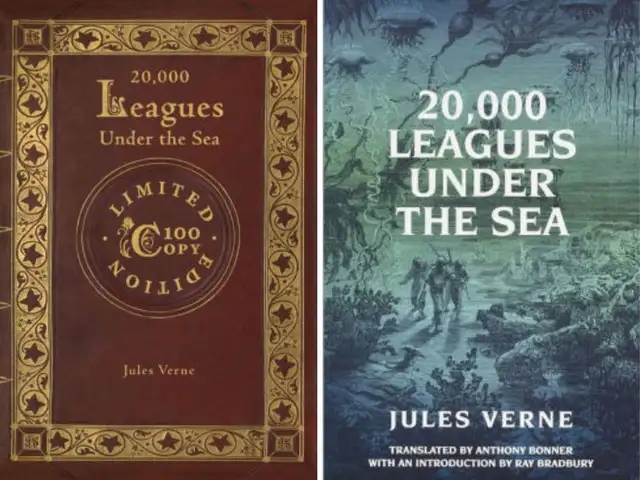
Jules Verne is considered one of the most forward thinking authors of the 19th century and has predicted numerous things in his most famous book, Twenty Thousand Leagues Under The Sea, which was published in 1870. Verne not only predicted electric submarines 90 years before they were invented, he also imagined them just as they turned out — long and cylindrical. Verne’s submarine called Nautilus also included a main cabin, navigational devices, a dining room, and barometer.
(Image: barnesandnoble.com)
Vision: Electric submarinesJules Verne is considered one of the most forward thinking authors of the 19th century and has predicted numerous things in his most famous book, Twenty Thousand Leagues Un..
Read More
Vision: Mass surveillance
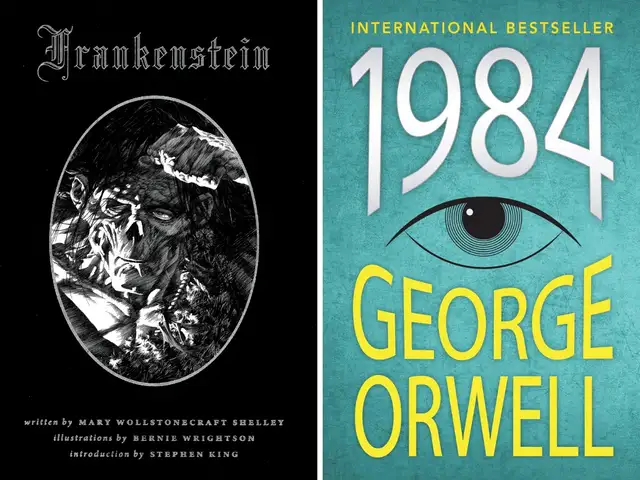
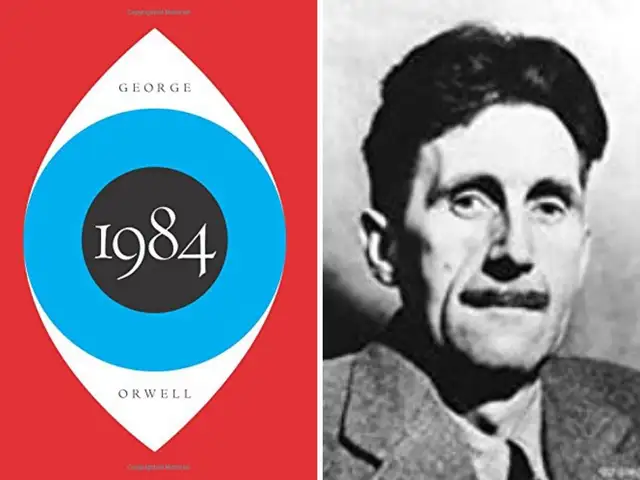
Orwell’s book focuses on topics we are all too familiar with today: Censorship, propaganda, surveillance, and oppressive governments. It was written nearly 70 years ago. In the book, Orwell predicted mass surveillance and police helicopters. Much of what the British author imagined has come true, including facial recognition, speech to text conversion, music made by artificial intelligence, and, of course, the concept of ‘Big Brother’ watching your every move.
(Image: Amazon)
Vision: Mass surveillanceOrwell’s book focuses on topics we are all too familiar with today: Censorship, propaganda, surveillance, and oppressive governments. It was written nearly 70 years ago. In t..
Read More
Vision: Mars has two moons
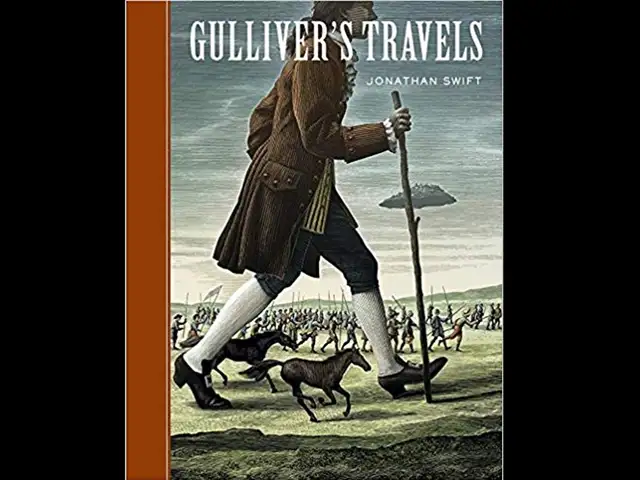
This all-time favourite book follows a man named Gulliver as he stops at different worlds, those occupied by giants, another by little humans, and one of the most interesting, the island of Laputa. Laputa, in the book, is a floating world filled with scientists. Swift writes about how Gulliver and Laputian astronomers noted that Mars has two moons in its orbit. Today we know this claim to be true, that Mars indeed does have two moons. But Swift wrote 'Gulliver’s Travels' in 1726, nearly 150 years before Phobos and Deimos — the two moons of Mars — were discovered in 1877.
Vision: Mars has two moonsThis all-time favourite book follows a man named Gulliver as he stops at different worlds, those occupied by giants, another by little humans, and one of the most interestin..
Read More
Vision: Organ Transplants
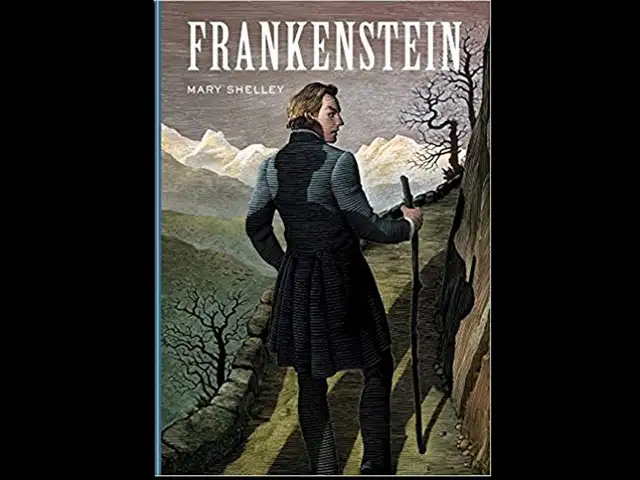
Written in 1818, Shelley’s novel is often considered one of the first science-fiction novels. At that time, science was just beginning to explore the concept of bringing dead tissue back to life using electricity. In Mary Shelley’s 'Frankenstein', the doctor is able to keep an organ alive outside of a body to be transplanted into a new body. To say this was ahead of its time is an understatement. It wasn’t until the mid-20th century (1954) that the first organ transplant became a reality.
Vision: Organ TransplantsWritten in 1818, Shelley’s novel is often considered one of the first science-fiction novels. At that time, science was just beginning to explore the concept of bringing dead..