Did you know Leonardo da Vinci could not complete his iconic works because he had ADHD?
Da Vinci's difficulties with sticking to tasks were pervasive from childhood.
By PTI | Updated:
Agencies
Leonardo da Vinci
LONDON: Italian polymath Leonardo da Vinci may have struggled to complete some of his iconic art works because he suffered from Attention Deficit and Hyperactivity Disorder (ADHD), scientists claim.
According to Professor Marco Catani from King's College London in the UK, as well as explaining his chronic procrastination, ADHD could have been a factor in da Vinci's extraordinary creativity and achievements across the arts and sciences.
Da Vinci produced some of the world's most iconic art, but historical accounts show that he struggled to complete his works.
Five hundred years after his death, Catani suggests the best explanation for da Vinci's inability to finish projects is that the great artist may have had ADHD.
In a research article published in the journal Brain, researchers lay out the evidence supporting this hypothesis, drawing on historical accounts of da Vinci's work practices and behaviour.
"While impossible to make a post-mortem diagnosis for someone who lived 500 years ago, I am confident that ADHD is the most convincing and scientifically plausible hypothesis to explain Leonardo's difficulty in finishing his works," said Catani.
ADVERTISEMENT
Mona Lisa
"Historical records show Leonardo spent excessive time planning projects but lacked perseverance. ADHD could explain aspects of Leonardo's temperament and his strange mercurial genius," he said.
ADHD is a behavioural disorder characterised by continuous procrastination, the inability to complete tasks, mind-wandering and a restlessness of the body and mind.
While most commonly recognised in childhood, ADHD is increasingly being diagnosed among adults including university students and people with successful careers.
ADVERTISEMENT
Da Vinci's difficulties with sticking to tasks were pervasive from childhood, said researchers, including Paolo Mazzarello from the University of Pavia in Italy.
Accounts from biographers and contemporaries show he was constantly on the go, often jumping from task to task.
ADVERTISEMENT
Like many of those suffering with ADHD, he slept very little and worked continuously night and day by alternating rapid cycles of short naps and time awake.
Alongside reports of erratic behaviour and incomplete projects from fellow artists and patrons, there is indirect evidence to suggest that da Vinci's brain was organised differently compared to average.
He was left-handed and likely to be both dyslexic and have a dominance for language in the right-hand side of his brain, all of which are common among people with ADHD, researchers said.
Mystery Buyers: When The Saudi Prince Bought Vinci's 'Salvator Mundi'
1/2
Sold for: $643,900
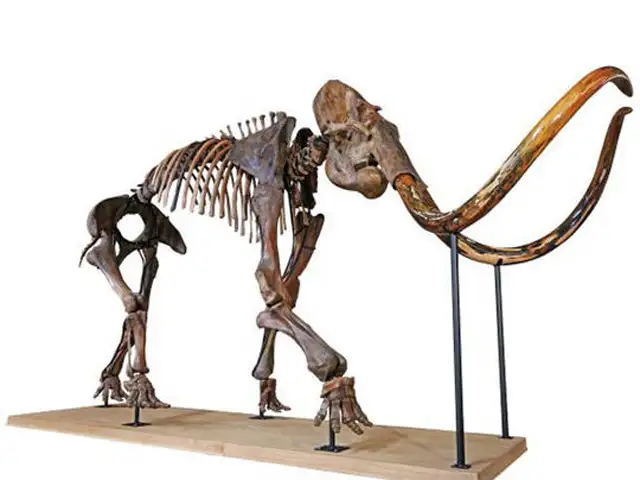
Literally the skeleton of a mammoth is what went under the gavel at an auction in Lyon, France. The 15,000-year-old skeleton was purchased by a Strasbourgbased construction company Soprema for $643,900. Why? Because the company sells a coating product called Mammouth, or Mammoth in English. And seemingly they felt that an actual mammoth skeleton is perfect decoration for their reception lobby. "We are going to display it in the lobby of our firm," Pierre-Etienne Bindschedler, the CEO of Soprema, told newspapers after the purchase, adding, "I think we have enough room."
(Image: www.aguttes.com)
Sold for: $643,900
Literally the skeleton of a mammoth is what went under the gavel at an auction in Lyon, France. The 15,000-year-old skeleton was purchased by a Strasbourgbased construction compan..
Read More
Sold for: $110 million
The Brooklyn-based artist died at a young age of 27 after a drug overdose. But he was already one of the leading figures in the world of modern art, Basquiat's glory lives on, and in 2017 found a collector. Yusaku Maezawa, a Japanese billionaire, bought Basquiat's skull painting for over $110 million at an auction in May.
Maezawa hopes to display the work at the museum he plans to open in Chiba, his hometown in Japan. He is the founder of an online fashion mall and is the 14th richest person in Japan. Apparently, the billionaire's extensive art collection hangs on the walls of a rented apartment in Tokyo.
(Image: www.sothebys.com)
Sold for: $110 million
The Brooklyn-based artist died at a young age of 27 after a drug overdose. But he was already one of the leading figures in the world of modern art, Basquiat's glory lives on,..
The most distinctive and yet disruptive side of da Vinci's mind was his voracious curiosity, which both propelled his creativity and also distracted him, they said.
Catani suggests ADHD can have positive effects, for example mind-wandering can fuel creativity and originality.
However, while beneficial in the initial stages of the creative process, the same traits can be a hindrance when interest shifts to something else, he said.
"There is a prevailing misconception that ADHD is typical of misbehaving children with low intelligence, destined for a troubled life," said Catani, who specialises in treating neurodevelopmental conditions like Autism and ADHD.
"On the contrary, most of the adults I see in my clinic report having been bright, intuitive children but develop symptoms of anxiety and depression later in life for having failed to achieve their potential," he said.
"It is incredible that Leonardo considered himself as someone who had failed in life. I hope that the case of Leonardo shows that ADHD is not linked to low IQ or lack of creativity but rather the difficulty of capitalising on natural talents," said Catani.