Cute, furry pooches come to the rescue of Indians feeling lockdown blues, more people adopt strays
India has an estimated 30 million stray dogs.
By AFP |
iStock
Animal activists have long encouraged people to adopt mixed-breed street mutts.
CHENNAI: When Lakshmi Sundar brought a malnourished stray puppy into her home in the Indian city of Chennai, she thought the brown-and-white bundle of energy would be a guest for just a few weeks.
With the world marking International Dog Day on Wednesday, her household is one of a growing number across India to have adopted man's best friend to cope with the loneliness inflicted by the pandemic.
"We bonded so well from day one, which is very rare... I don't bond that easily with anyone," Sundar, a 53-year-old who treats diabetes patients, told AFP of the pup her daughter named Meenakshi after a Hindu warrior goddess.
"She's a bundle of joy," said Sundar as she explained how no-one in the house wanted to give Meenakshi to another family. "And she has had a very calming effect on my daughter."
India -- which has more than three million coronavirus cases -- imposed a months-long lockdown to try and halt its spread.
As case numbers grew and more people were stuck at home, early fears about pets being potential carriers turned into a search for love and friendship from the four-legged creatures.
ADVERTISEMENT
"When the lockdown was opened partially, people were rushing and coming to take puppies," Dawn William of the Blue Cross of India animal-welfare group in Chennai told AFP.
In the first half of August, some 68 puppies were adopted from the group's shelter, he said.
"There are people and children who have time to spend with a pet. You know you have to care for it, you have to give him a bath, you have to play with him... so it keeps you going."
India has an estimated 30 million stray dogs, and animal activists have long encouraged people to adopt mixed-breed street mutts.
ADVERTISEMENT
But while a growing middle class is becoming open to having dogs as pets, many still prefer pedigrees, which are more of a status symbol.
Shelter owners say, however, there has been a cultural shift -- with younger people more willing to adopt mixed-breed strays.
ADVERTISEMENT
Animesh Katiyar, who owns the Fur Ball Story dog cafe in Gurgaon near New Delhi, says there has been a jump in demand for his services from young professionals, many of whom are now working from home.
The 27-year-old helps people find puppies to adopt, offers training for new owners and prepares pedigree and street pooches for animal-assisted therapy.
"A pet just helps a lot because they're supposed to be providing unconditional love," Katiyar said, adding that the number of calls for his services has jumped from one per day to seven in recent months.
One of Katiyar's regular customers is Avani Naresh, 29, an IT business owner who had a lifelong fear of dogs.
Eager to overcome his phobia, he sought Katiyar's help last year and slowly learnt to become comfortable around mutts.
When the pandemic hit, the cafe shut and Naresh -- unable to have a pet as he splits his time between Delhi and Gurgaon -- realised he missed the animals he used to run away from.
"A dog can be a big, big game-changer in terms of an emotional journey. A dog absorbs your entire stress. They understand... what you are going through," Naresh told AFP.
"I think if I had a dog during the lockdown, I think my anxiety levels, my stress levels would have been to the minimum."
The World Health Organization (WHO) for the longest time believed that coronavirus cannot infect pets like dogs or cats.
In less than a month, several reports of various animals contracting the diseases made the WHO pause and think about their stance. The reports suggest that this deadly virus can break the species barrier and move around.
WHO's intergovernmental animal health body - World Organisation for Animal Health (OIE) - confirmed that there is a possibility that some animals can get infected through close contact with infected humans.
OIE said that studies are under way to understand the issue better and that it is still too early to say whether pets could be the intermediate host in the transmission of the COVID-19.
While they are urging anyone who has become sick to limit contact with pets, we look at all the animals who contracted the disease from humans.
(Representative Image)
The World Health Organization (WHO) for the longest time believed that coronavirus cannot infect pets like dogs or cats.In less than a month, several reports of various animals contracting the diseas..
Read More
Warning! This might upset all dog lovers out there.
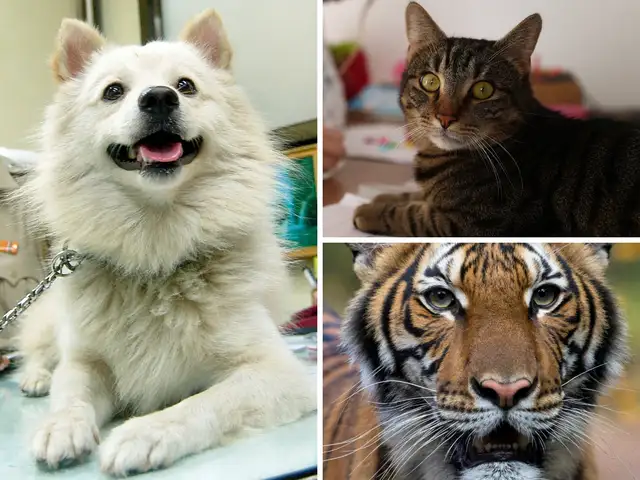
The first animal in the world to test positive for coronavirus was a 17-year-old dog which had to be kept under mandatory quarantine in Hong Kong since February 26. The news got grim when the owner revealed that the canine passed away on March 16 - less than a week after he was declared Covid-19-free and released from the government facility.
He was sent home after testing negative, but it was not clear if the virus was the reason for the animal's death. The 60-year-old owner, who also recovered from her Covid journey after being in quarantine, had refused an autopsy of his pet to determine cause of death.
The Pomeranian had been through five tests and all returned 'weak positive' for the new virus.
The last two tests - carried out on March 12 and 13 - 'proved the dog's samples were negative'.
(Representative Image)
Warning! This might upset all dog lovers out there.The first animal in the world to test positive for coronavirus was a 17-year-old dog which had to be kept under mandatory quarantine in Hong Kong si..
Read More
Days after the death of the world's first animal detected with Covid-19, another case emerged in Hong Kong, again, where a German Shepherd living in the Pok Fu Lam area had tested positive for coronavirus during a screening campaign.
While the dog was asymptomatic, his mixed-breed sibling who was living in the same house had tested negative. Both canines were put under quarantine along with their owner who had tested positive as well.
(Representative Image)
Days after the death of the world's first animal detected with Covid-19, another case emerged in Hong Kong, again, where a German Shepherd living in the Pok Fu Lam area had tested positive for corona..
Read More
During a screening campaign carried out on 17 dogs and eight cats living in contact with people carrying the virus, where two canines tested positive, other pets animals like a cat and three dogs were also placed at the animal keeping facility in Hong Kong.
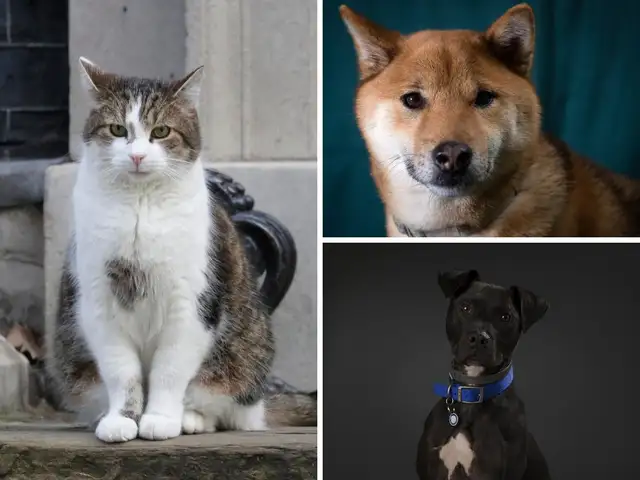
Apart from the Pomeranian which died, the other three animals - an exotic shorthair cat, a Shiba Inu and a mongrel - were also tested negative for the deadly virus, according to reports.
(Representative Image)
During a screening campaign carried out on 17 dogs and eight cats living in contact with people carrying the virus, where two canines tested positive, other pets animals like a cat and three dogs wer..
Read More
Coronavirus didn't spare the felines. In late March, a pet cat was found infected with Covid-19 in Belgium, and it was believed that it contracted the virus from the people it was living with. The corona cat suffered from transitory respiratory and digestive problems after contracting the infection.
To shock you further, the Chinese researchers from Harbin Veterinary Research Institute revealed in a study that cats are not only susceptible to contracting the deadly virus, but could also pass it on to other cats.
However, the study said that other animals such as dogs (despite two known positive cases worldwide), chicken and pigs weren't susceptible like ferrets and cats.
Back home, in an interesting development, authorities have even warmed up to feline lovers. In Kerala, the High Court on April 6 allowed a permit to a cat owner to drive around town in his car amid lockdown to buy food (seven kg biscuits) for his pets.
(Representative Image)
Coronavirus didn't spare the felines. In late March, a pet cat was found infected with Covid-19 in Belgium, and it was believed that it contracted the virus from the people it was living with. The co..
Read More
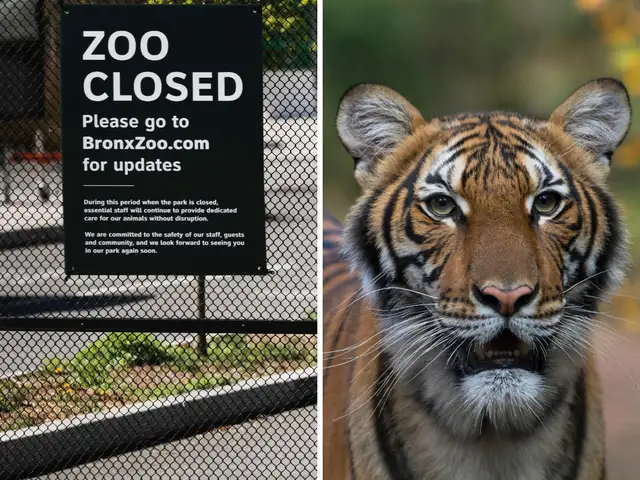
Another resident of the cat family, a 4-year-old female Malayan tiger, Nadia, tested positive for the novel coronavirus on April 6. The tigress, who lives at the Bronx Zoo in New York with six other big cats, is said to have contracted the deadly virus by an asymptomatic zoo keeper.
Nadia's sister, Azul, and two Amur tigers had also developed a dry cough and loss of appetite.
This case came as a shocker as this was believed to be the first known case of an animal infected with COVID-19 in the US, raising questions about human-to-animal transmission of the virus.
Another resident of the cat family, a 4-year-old female Malayan tiger, Nadia, tested positive for the novel coronavirus on April 6. The tigress, who lives at the Bronx Zoo in New York with six other ..
Read More
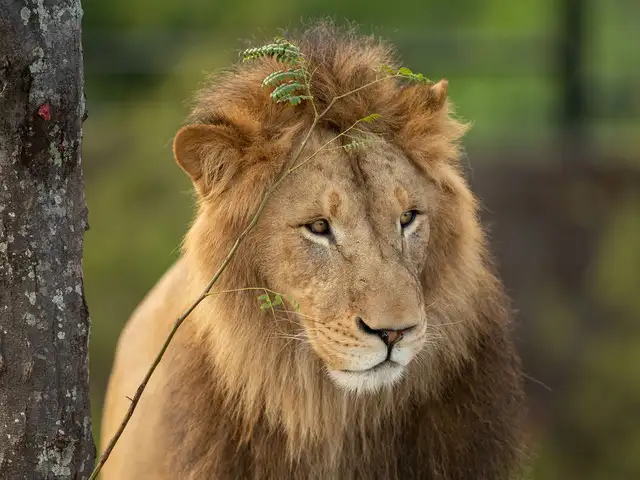
Along with the 4-year-old Nadia, three African lions had also developed a dry cough and decrease in appetite. While they did not contract the virus, it was reported that they were expected to recover soon.
The deep-chested cats were put under veterinary care, and were seen bright, alert and interactive with the zookeepers at the Bronx Zoo in New York.
(Representative Image)
Along with the 4-year-old Nadia, three African lions had also developed a dry cough and decrease in appetite. While they did not contract the virus, it was reported that they were expected to recover..