Born in Dublin and raised in the suburb of Rush, Eoin Morgan’s journey as the World Cup-winning captain of England is nothing less than fascinating.
It was a midsummer’s night in London, and an Irishman was on his way to living the dream. When the floodlights came on at Lord’s cricket ground, the Kiwis had the hosts on the ropes. It was the final of the ICC Cricket World Cup, and at 89/4, England risked being bowled out unless their middle order held firm.
For the home fans thronging the pews of the sport’s foremost cathedral, play was following a familiar script. England was knocked out by Australia in the first edition of the tournament in 1975. Subsequent reruns had ended in disappointment despite promising individual performances.
On the night in question, the hosts clawed back from a tough spot through some gritty batting by their characteristically combative middle order. New Zealand-born Ben Stokes smashed two sixes in the last over, sending the white ball into the tapestry of the night sky. A single off the last ball took match to a super over.
“When the game was getting tight, we knew that a tie could be a realistic possibility,” said England captain Eoin Morgan at an event in Mumbai. Jofra Archer was tapped to bowl the deciding over in what was to be the last act of a dramatic final.
“Throughout the game, short balls were working, but during the super over, we decided to stick to yorkers,” he added. The two teams were inseparable in the super over, scoring 15 runs apiece. In the end, the hosts emerged victorious, albeit on a technicality. Morgan, England’s Irish-born skipper, lifted the World Cup, a distinction that had eluded his predecessors.
ADVERTISEMENT
An adopted son had delivered the World Cup to the birthplace of cricket.
Eoin Morgan celebrates with the One Day Series Cup during the 5th Royal London ODI match between England and Pakistan at Headingley on May 19, 2019 in Leeds, England. Early days Morgan’s first communion with the sport happened at Rush Cricket Club, situated on the outskirts of Dublin. “At Rush, the pitches were made of concrete, and beer barrels doubled up as practice stumps. My dad [Jody Morgan] was an inspiration to us — my brothers and sisters. My two sisters play cricket for Ireland, as do both my brothers,” he said. Jody, an amateur cricketer, missed the birth of his son Evan, as he was in the middle of an innings. He was Morgan’s first coach.
Morgan remains the black sheep of the family, having opted to play for England, the country of his mother’s birth. However, he is proud of his roots, and insists that his being Irish was not a setback to establishing himself in the England setup. “My background means that I had a different route compared to some of the others. If you look at the team we have now, one of the most beautiful things is how multicultural the dressing room is,” he said.
ADVERTISEMENT
From the current crop, Jofra Archer was born in Barbados, while Keaton Jennings and Ben Stokes were born in South Africa and New Zealand, respectively. “We realise that members of our team have been born in different countries. There are guys like Jason Roy and Tom Curran, who are South Africa-born. There are also guys of different races, ethnicities and religions. We have a deep understanding of people’s journeys, what they’ve gone through, and it’s a great exercise in team bonding,” Morgan said.
Captain Morgan There has been a marked shift in strategy during Morgan’s tenure as skipper, with the team playing a more attacking brand of cricket. Despite the recent Ashes loss, it can be argued that the rewriting of England’s style book has now spread to Test cricket, and Morgan believes credit should be apportioned to the England and Wales Cricket Board (ECB) for the inspired hires.
ADVERTISEMENT
“Getting knocked out of the 2015 World Cup was the lowest point in my career, and for English cricket in general. The difference in quality between the top four teams in the world and us was evident for everybody to see. The exit was a sore point and we realised something had to change,” Morgan said.
Eoin Morgan with the Cricket World Cup trophy after the Final of the ICC Cricket World Cup 2019 between New Zealand and England at Lord's Cricket Ground on July 14, 2019 in London, England. Andrew Strauss, who mentored Morgan when he first broke into the team, was appointed as the Director of cricket. Trevor Bayliss took over the coaching reins. “We sat down and forged a plan on a blank sheet of paper. Selection plays a huge role. We wanted a group of players who were aggressive and positive. We decided to completely change the look of the bowling unit and we gave the guys time to improve their performance as well,” he added.
Heads rolled. James Anderson and Stuart Broad made way. New faces were inducted to the limited-overs teams. The reforms eventually took shape, culminating in the famous victory at Lord’s. But things could’ve worked out differently had Morgan not declared for England in 2009.
Irish blood, English heart A wunderkind, Morgan made his debut for Ireland at the age of 16, earning 63 caps in the process. However, the country of his birth could not offer him what he craved: A chance to play Test cricket. When asked if he would’ve acted differently in deciding which sides of the water his cricketing loyalties lay, Morgan was circumspect.
“I think it would be different because Ireland today is a Test-playing nation. For the past six years, the Board has given full-time contracts, which, when I was coming through, wasn’t even on the radar,” he said, adding that the lack of funds compelled many Irish cricketers to take up day jobs and train in their spare time.
“The game has grown a lot in the past few years, but things were different back then. I definitely would have had a different option. But growing up watching Test cricket, I had heroes who were English. For an Irish guy growing up now, I think their role models might be Irish cricketers. So, the landscape has completely changed,” Morgan said.
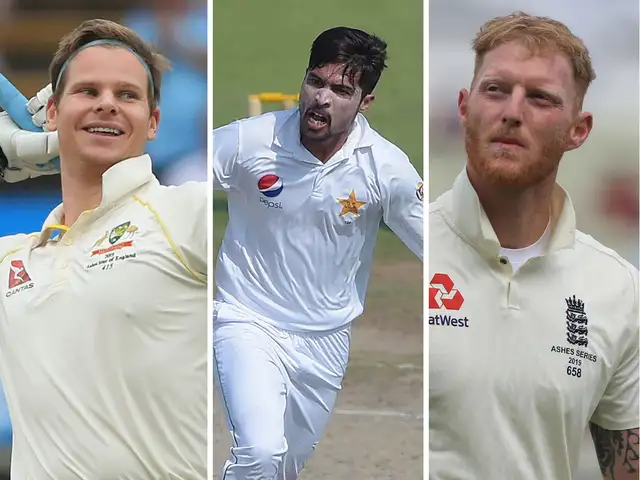
Steve Smith, Mohammad Aamir, Ben Stokes: Cricket Stars Who Fared Well In Their First Test After Exile
1/3
How leading international cricketers fared in their first Test match upon return from exile.
(In pic from left: Steve Smith, Mohammad Aamir, Ben Stokes)
How leading international cricketers fared in their first Test match upon return from exile.(In pic from left: Steve Smith, Mohammad Aamir, Ben Stokes)
Suspension sentence: One year Charged with: Ball tampering Performance in first Test upon return: 144 and 142, three catches.
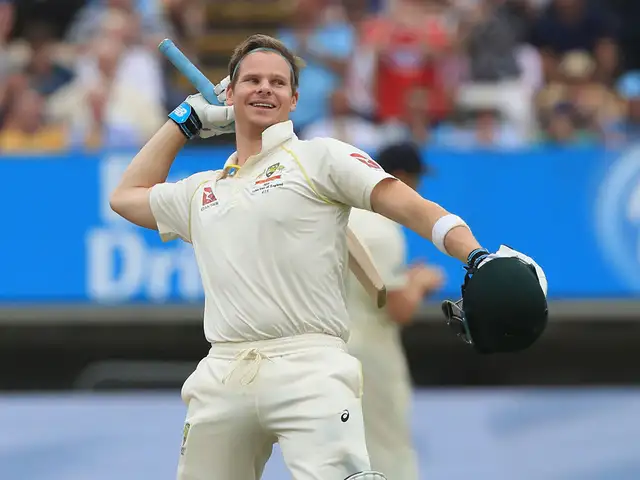
In March 2018, Australian Test captain Steve Smith admitted to tampering the ball while on tour in South Africa. Smith received a one-year ban from cricket, and made his return to international cricket in this summer’s World Cup. But the first Test he played upon return was the first Ashes Test at Edgbaston last week. It couldn’t have gone better for Smith.
Stripped off captaincy roles, he relished the responsibility. He hit a century in both innings, scoring 144 and 142, and almost single handedly earned his side a 1-0 lead. The best compliments came in the form of comparisons with the peerless Don Bradman, who had similarly taken on England in the 1948 Ashes.
Suspension sentence: One yearCharged with: Ball tampering Performance in first Test upon return: 144 and 142, three catches.In March 2018, Australian Test captain Steve Smith admitted to tampering th..
Read More
Self-imposed exile: Three years Performance in first Test upon return: 107 and 80 not-out
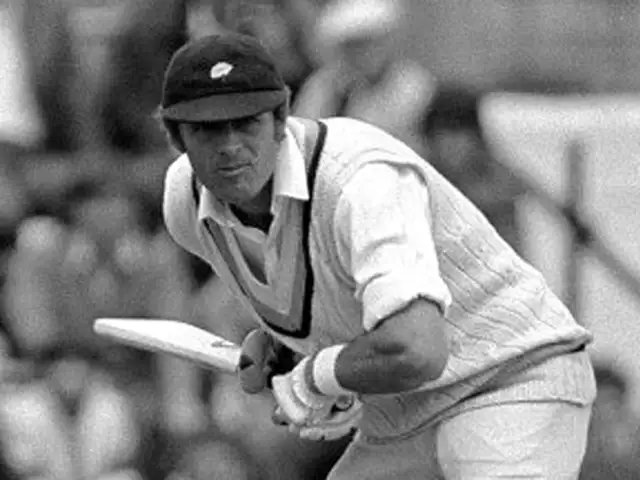
Geoffrey Boycott, in what was the prime of his career in 1974, made himself unavailable for selection. He said he lost his appetite for the game, but his autobiography hinted that it may have been linked to the appointment of Mike Denness as captain.
But the time spent away from the pitch didn’t seem to have made impact on his game. In his first match upon return, aged 37, he batted on every one of the five days of cricket, scoring 107 and an unbeaten 80, as he saw England home by seven wickets. He would go on to play 45 more Tests, continuing to play until the ripe old age of 42.
Self-imposed exile: Three yearsPerformance in first Test upon return: 107 and 80 not-outGeoffrey Boycott, in what was the prime of his career in 1974, made himself unavailable for selection. He said ..



 Jhulan Goswami, Heather Knight, Eoin Morgan join MCC World Cricket Committee2023-06-26T10:56:11Z

