'Cos need to go beyond introducing incentives, should aim to improve the overall quality of life for women employees'
TR Ramachandran believes organisations need to introduce policies to make it simpler for women to return to the office.
By ET CONTRIBUTORS |
Agencies
TR Ramachandran feels there's a need to encourage new ventures led by women.
By TR Ramachandran
Gender disparity has been a long-standing issue at workplaces around the world. The recent Economic Survey 2020 revealed the widening gender gap due to a decrease in female labour force. The fact that almost three out of four women are not a part of the workforce is a cause of concern across sectors.
As India takes positive strides towards becoming a prosperous economy, it will need equal gender participation from its workforce. In our journey towards becoming a $5 trillion economy by 2024-25, it is imperative that men and women are equal partners in India’s growth story. Hence the question that looms before us is - how can India accelerate its growth by encouraging greater economic participation of women?
This International Women’s Day, it is important to realise the need to move beyond lip service and work towards ensuring gender parity because of its positive implications on the holistic development of the country.
A 2015 McKinsey report showed that India’s GDP can increase by as much as 60 per cent if the gender gap in the workplace is completely bridged. A similar McKinsey report in 2018 stated that even a 10 per cent increase in women labour force participation could add $700 billion to India’s GDP by 2025 . These are significant numbers for the country’s businesses and policymakers to take note of. However, there are various other reasons which necessitate the inclusion of women in the workforce.
Profitable growth through participation of women Diverse leadership teams and boards are often linked to higher agility and profits for companies. A study by Harvard Business Review presented the fact that companies with women occupying one-third of the leadership positions are 15 per cent more profitable than those without women in leadership roles. Diversity enriches the quality of the talent pool while ensuring that the organisation is brimming with new and innovative ideas.
ADVERTISEMENT
Higher labour force participation by women should ideally be an automatic outcome of economic growth, but evidence suggests that women are increasingly opting out of formal employment. While higher education and skill training can improve the numbers, the result is yet not satisfactory as women still battle thick glass ceilings within organisations.
<p>A 2015 McKinsey report showed that India’s GDP can increase by as much as 60 per cent if the gender gap in the workplace is completely bridged. (Representative image)<br></p> Supporting gender parity at the workplace While a major reason for women to stay out of the workforce is filial responsibilities, the fact is that they are not incentivized enough to join it, monetarily or otherwise. Day-to-day concerns like spending adequate time at home and work, and the lack of support infrastructure like play schools/creches often make them choose one role over the other.
Another reason for the skewed gender ratio at workplaces is the lack of a robust mental health policy. Many a time, women try to, but do not, get the mental support they seek at their workplace, precipitating their eventual exit. Organisations must acknowledge the importance of a mental health policy specially while dealing with potential exits.
ADVERTISEMENT
While gender equality remains an important to-do for companies, there must be honest introspection on whether the policies are being implemented. Companies should determine and eliminate implicit and explicit biases against female employees and skewed hiring policies to ensure the overall ascent of women towards leadership positions.
Visa follows a no discrimination recruitment process to improve gender parity, with adequate female representation in its shortlist of candidates as well as panel of interviewers. The company also holds Unconscious Bias Training Programs for employees, that helps them identify and eliminate stereotypes and biases.
ADVERTISEMENT
Do more Other ways in which organisations can increase women participation include equal pay, eliminating gender bias from the appraisal process and providing facilities such as daycare, and Ready to Return programs that facilitates the re-entry of women who have taken a break.
At the Mumbai Visa office, acting on feedback from a new mother, a nurturing room was set up.
As India remains among the top three start-up hubs of the world, we must also encourage new ventures led by women. India’s Regulatory Sandbox policy could support women-led fintechs with additional incentives.
Companies need to go beyond introducing incentives for women and fundamentally evolve their value systems into measurable and realistic initiatives and policies. The outlook should be to improve the overall quality of life for women employees. Only then will the country’s path to becoming an economic superpower be paved with an inclusive, diverse workforce that is able to create value for all.
- The author is the Group Country Manager, India & South Asia, at Visa.
Gita Gopinath, Pinelopi Goldberg: Women Economists Who Rule The World
1/6
In a changing world, women are matching strides with men, breaking barriers and setting new boundaries. As workplaces become more inclusive and diverse, we see women taking charge across the sectors.
The world of finance and economics, too, has seen the rise of woman power. Women economists, across latitudes, are calling the shots in leading global financial organisations. From the World Bank to the International Monetary Fund, it's women all the way.
Here's looking at these power bosses, and their inspiring journeys to the top.
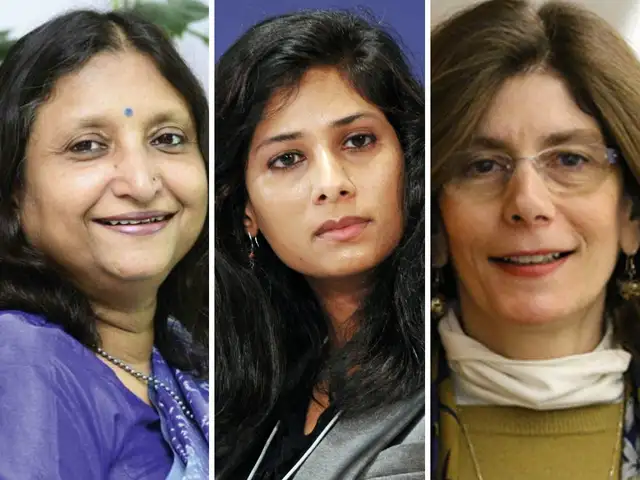
In Pic (l to r): Anshula Kant, Gita Gopinath and Pinelopi Koujianou Goldberg.
In a changing world, women are matching strides with men, breaking barriers and setting new boundaries. As workplaces become more inclusive and diverse, we see women taking charge across the sector..
Read More
State Bank of India (SBI) Managing director Anshula Kant recently made history when she was named MD and Chief Financial Officer (CFO) of the World Bank. The appointment makes her the first woman CFO of the international body.
Born on September 7, 1960, Kant - who grew up in Roorkee - has been with the SBI for over 35 years, having joined the bank in 1983 as a probationary officer. A Lady Shri Ram College and Delhi School of Economics alumna, Kant rose through the ranks during her tenure at SBI, where she previously also served as CFO. As CFO, she managed USD 38 billion of revenues and total assets of USD 500 billion. The mother-of-two, she has a son (who lives in New York) and a daughter (based in Singapore) with her CA husband, also served as the CEO of the Singapore unit of SBI.
In her new role, Kant will be responsible for financial and risk management of the World Bank Group and reporting to its president David Malpass.
State Bank of India (SBI) Managing director Anshula Kant recently made history when she was named MD and Chief Financial Officer (CFO) of the World Bank. The appointment makes her the first woman CFO..
Read More
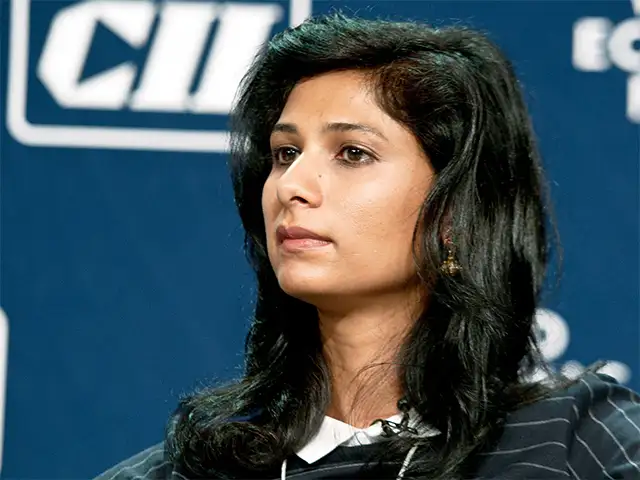
India-born Gita Gopinath’s appointment as the chief economist of the International Monetary Fund (IMF) in October 2018 made her the first woman, and second Indian after former RBI governor Raghuram Rajan, to hold the position.
Born on December 8, 1971, in then Calcutta, during the Bangladesh war, Gopinath’s family moved to Mysore when she was nine – and enrolled her in Nirmala Convent school. She later joined Mahajana PU college in Mysuru and pursued science, before moving to Delhi to study economics at Lady Shiram College and later at the Delhi School of Economics – where she met her now-husband Iqbal Singh Dhaliwal, with whom she has a son.
Having completed another M.A. from the University of Washington, Gopinath – who at one time loved athletics but gave it up to concentrate on her studies - did her PhD in Economics from Princeton University.
Gopinath worked at the University of Chicago in 2001 as an assistant professor, before moving to Harvard where she became a tenured professor in 2010. Gopinath is now on leave of public service from Harvard University’s Economics department where she is the John Zwaanstra Professor of International Studies and of Economics. The 46-year-old is the third woman, and second Indian after Nobel laureate Amartya Sen to be made a permanent member of the economics department at Harvard.
In 2016, Gopinath was appointed by the CPM-led LDF government in Kerala as financial advisor to chief minister Pinarayi Vijayan, but she stepped down from the position in 2018.
India-born Gita Gopinath’s appointment as the chief economist of the International Monetary Fund (IMF) in October 2018 made her the first woman, and second Indian after former RBI governor Raghuram..
Read More
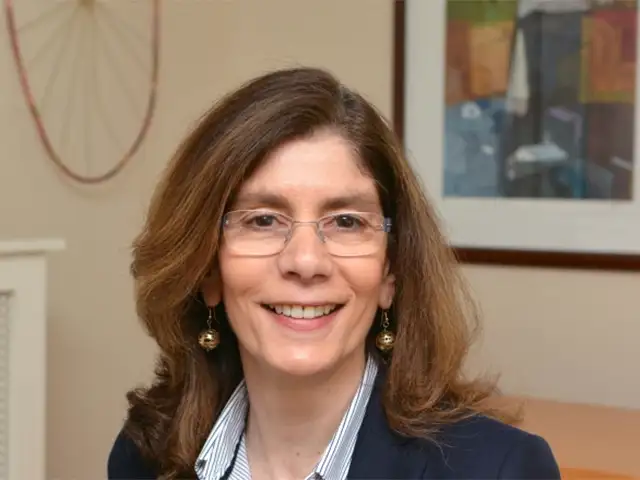
When Pinelopi Koujianou Goldberg was appointed the World Bank’s Chief Economist in April last year, she became just the second woman – and first Greek – to hold the position. But the 56-year-old Elihu Professor of Economics at Yale University (she joined the faculty in 2001) was once rejected from the bank for an internship, according to a report in The National Herald.
As an undergraduate student in Germany, Goldberg had applied for an internship at the World Bank, but got a letter saying that she wouldn’t even be considered till she had a doctorate. And that pushed Goldberg to leave home for the US to pursue her PhD.
Born in Athens in 1963, she studied at the German High School of Athens, and gained a Diploma from the University of Freiburg, Germany, before getting her Ph.D from Stanford University.
Goldberg’s illustrious career included various roles in academia (she has previously served on the economics faculty at Princeton and Columbia), apart from her several roles in the economic community.
From 2011-2017, she was also the Editor-in-Chief of the American Economic Review. A member of the American Academy of Arts and Sciences, she is a recipient of both Guggenheim Memorial Foundation and Sloan Research Fellowships, and also won the Bodossaki Prize in Social Sciences - among her various awards and recognition.
(Image:Yale University)
When Pinelopi Koujianou Goldberg was appointed the World Bank’s Chief Economist in April last year, she became just the second woman – and first Greek – to hold the position. But the 56-year-old El..
Read More
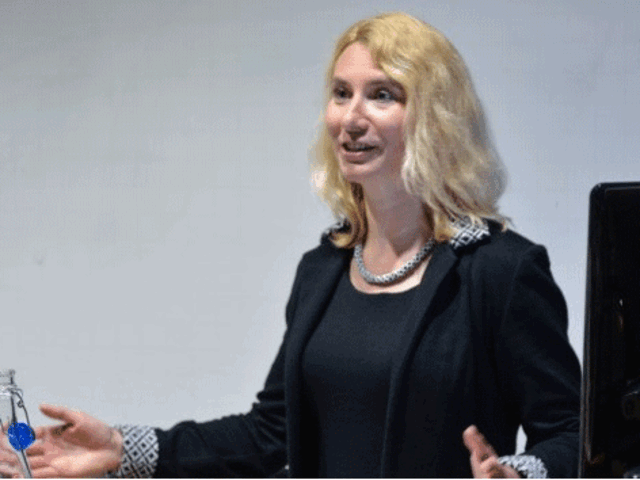
In its recent appointment of Beata Javorcik, the European Bank for Reconstruction and Development (ERBD) got its first woman chief economist. The Polish national, who has a Ph.D. in Economics from Yale, will join the bank on September 1.
Javorcik was also the first woman to hold a Statutory Professorship in Economics at the University of Oxford. Prior to joining Oxford, she worked at the World Bank in Washington DC.
She is also a managing editor of the quarterly Economic Policy,and a member of the Royal Economic Society’s Executive Committee, apart from being a Director of the International Trade Programme at the Centre for Economic Policy Research in London.
In its recent appointment of Beata Javorcik, the European Bank for Reconstruction and Development (ERBD) got its first woman chief economist. The Polish national, who has a Ph.D. in Economics from Ya..
Read More
Laurence Boone, former chief economist at insurer AXA, was last year appointed as the chief economist at Organisation for Economic Co-operation and Development (OECD) – where she had also served from 1998-2004. The French national, with a PhD in Applied Economics from the London Business School, began her career at Merrill Lynch Asset Management.
Equipped with a Master's Degree in Econometrics & Macroeconomic Modelling from Reading University and another Master's Degree in Economics from Université Paris X Nanterre, her other positions have included Chief Economist at Barclays Capital France and Managing Director of European Economic research at Bank of America Merrill Lynch.
Between 2014 and 2016, she was advisor to former President Francois Hollande.
Laurence Boone, former chief economist at insurer AXA, was last year appointed as the chief economist at Organisation for Economic Co-operation and Development (OECD) – where she had also served from..
(Disclaimer: The opinions expressed in this column are that of the writer. The facts and opinions expressed here do not reflect the views of www.economictimes.com.)
Business News › Magazines › Panache › 'Cos need to go beyond introducing incentives, should aim to improve the overall quality of life for women employees'Text Size:AAA