Coronavirus clings on to thin liquid films and survives on surfaces for days
The virus has a relatively longer survival time on plastic and glass compared to metals.
By PTI |

iStock
MUMBAI: The COVID-19 virus survives on surfaces by clinging to thin liquid films, according to a study by researchers at IIT-Bombay which provides insights into how the novel coronavirus sustains for hours or days on solid surfaces under ambient conditions.
The study, published in the journal Physics of Fluids, attributes the long survival time of the novel coronavirus on a surface to the slow evaporation of a thin nanometre liquid film remaining after the evaporation of the bulk droplet.
The ability to predict the survival of the novel coronavirus on different surfaces can help prevent and contain the spread of COVID-19, the researchers said.
While the typical respiratory droplets dry within seconds, the survival time of the SARS-CoV-2 virus on different surfaces within recent experiments has been found to be on the order of hours, they said.
This discrepancy suggests an orders of magnitude difference in the time between droplet drying and the survival time of the COVID-19 virus on surfaces, according to the researchers.
The researchers described how a nanometres-thick liquid film clings to the surface, due to London-van der Waals forces, which allows the COVID-19 virus to survive for hours.
Van der Waals forces include attraction and repulsions between atoms, molecules, and surfaces, as well as other intermolecular forces.
"Our model for the thin film transport shows that survival or drying time of a thin liquid film on a surface is on the order of hours and days, similar to what has been observed in measurements of the virus titer," said Amit Agrawal, professor at Indian Institute of Technology (IIT) Bombay.
"It captures the relatively longer survival time on plastic and glass compared to metals," Agrawal said.
A titer is the lowest concentration of virus that still infects cells.
The nanometric film is assumed to be like a pancake deposited onto a surface. The researchers briefly examined changes in drying time as a function of contact angle and surface type.
"Our biggest surprise was that the drying time of this nanometric film is on the order of hours," said Rajneesh Bhardwaj, a professor at IIT Bombay.
"It suggests the surface isn't completely dry, and the slowly evaporating nanometric film is providing the medium required for the survival of the coronavirus," Bhardwaj said.
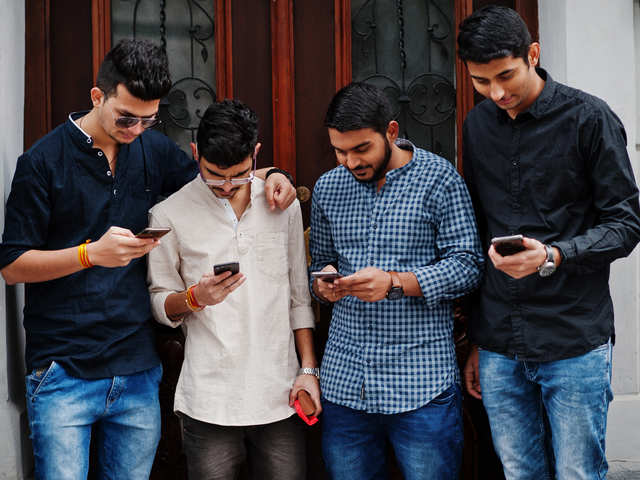
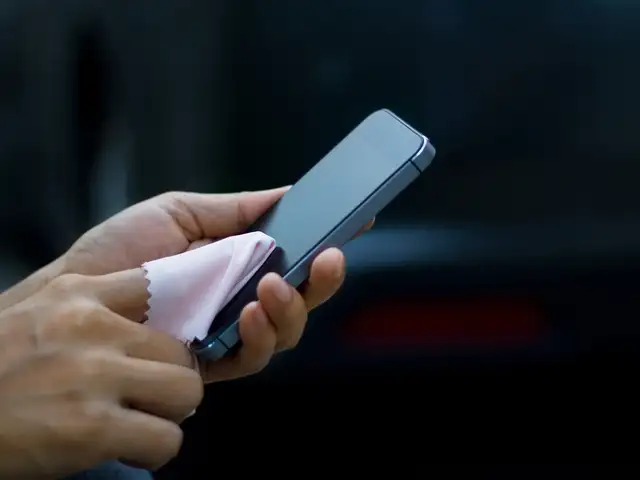
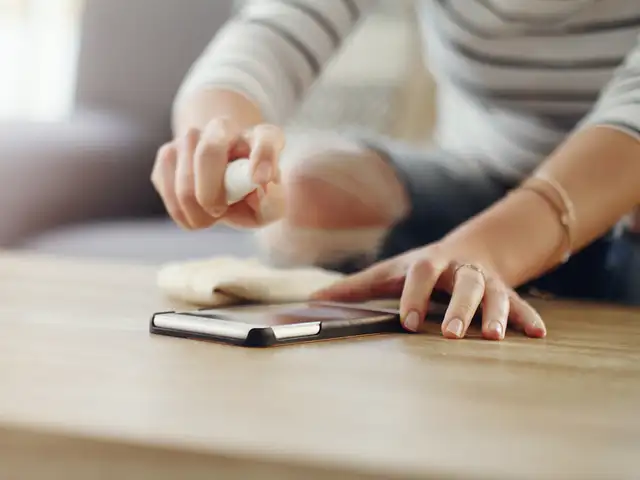
Since a longer survival time of the virus corresponds to increased chances of being infected, the researchers said it is desirable to disinfect frequently touched surfaces, such as door handles or hand-held devices, and within hospitals and other areas prone to outbreaks.
"We also recommend heating surfaces, because even short duration high temperatures, at which the surface is at a higher temperature than the ambient, can help evaporate the nanometric film and destroy the virus," Bhardwaj added.
The study, published in the journal Physics of Fluids, attributes the long survival time of the novel coronavirus on a surface to the slow evaporation of a thin nanometre liquid film remaining after the evaporation of the bulk droplet.
The ability to predict the survival of the novel coronavirus on different surfaces can help prevent and contain the spread of COVID-19, the researchers said.
While the typical respiratory droplets dry within seconds, the survival time of the SARS-CoV-2 virus on different surfaces within recent experiments has been found to be on the order of hours, they said.
This discrepancy suggests an orders of magnitude difference in the time between droplet drying and the survival time of the COVID-19 virus on surfaces, according to the researchers.
The researchers described how a nanometres-thick liquid film clings to the surface, due to London-van der Waals forces, which allows the COVID-19 virus to survive for hours.
ADVERTISEMENT
Van der Waals forces include attraction and repulsions between atoms, molecules, and surfaces, as well as other intermolecular forces.
"Our model for the thin film transport shows that survival or drying time of a thin liquid film on a surface is on the order of hours and days, similar to what has been observed in measurements of the virus titer," said Amit Agrawal, professor at Indian Institute of Technology (IIT) Bombay.
"It captures the relatively longer survival time on plastic and glass compared to metals," Agrawal said.
A titer is the lowest concentration of virus that still infects cells.
ADVERTISEMENT
The nanometric film is assumed to be like a pancake deposited onto a surface. The researchers briefly examined changes in drying time as a function of contact angle and surface type.
"Our biggest surprise was that the drying time of this nanometric film is on the order of hours," said Rajneesh Bhardwaj, a professor at IIT Bombay.
ADVERTISEMENT
"It suggests the surface isn't completely dry, and the slowly evaporating nanometric film is providing the medium required for the survival of the coronavirus," Bhardwaj said.
Since a longer survival time of the virus corresponds to increased chances of being infected, the researchers said it is desirable to disinfect frequently touched surfaces, such as door handles or hand-held devices, and within hospitals and other areas prone to outbreaks.
"We also recommend heating surfaces, because even short duration high temperatures, at which the surface is at a higher temperature than the ambient, can help evaporate the nanometric film and destroy the virus," Bhardwaj added.
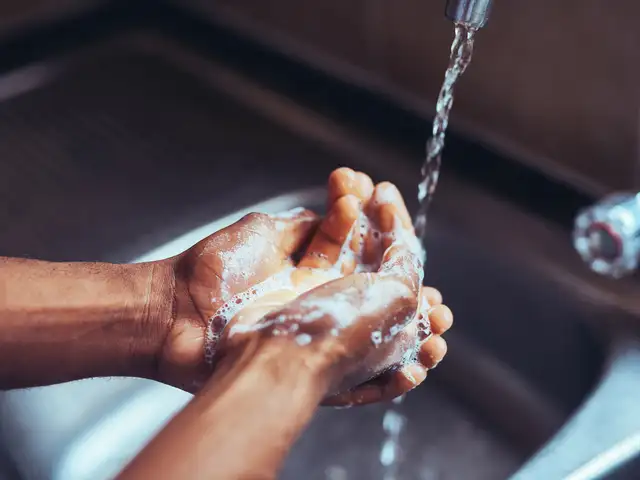
Holding hands, an affectionate gesture with romantic undertones, has become taboo in the time of the coronavirus. Handshakes, too, have been outlawed in the boardroom as well as stadiums - and after closing a deal, folks now pick up their phones and send each other formal emails.
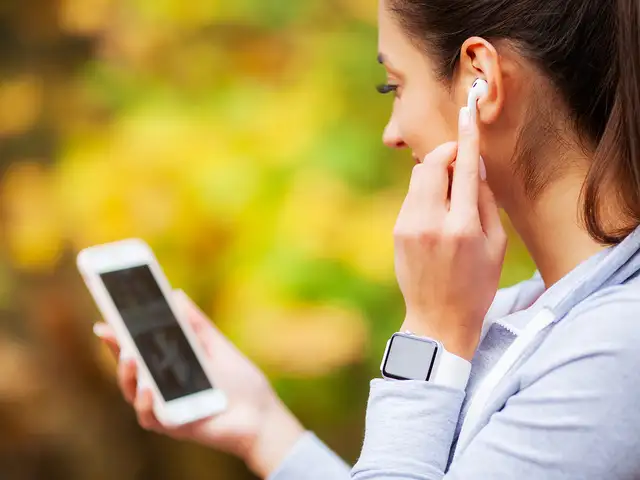
Lovers in parks sit on benches, their hands skidding across smartphone screens, sending emoji-laced messages. However, exercising one’s primary tactile organs to communicate through gestures might not be as dangerous as using a mobile phone.

Download
The Economic Times Business News App for the Latest News in Business, Sensex, Stock Market Updates & More.
The Economic Times Business News App for the Latest News in Business, Sensex, Stock Market Updates & More.
ADVERTISEMENT


