Coronavirus can spread through air very fast
Airborne transmission could be the dominant route for spread of COVID-19.
By PTI | Updated:

iStock
LOS ANGELES: Airborne transmission of the novel coronavirus is highly virulent, and could be the dominant route for the spread of COVID-19, according to a study which assessed the progression of the pandemic in three major epicentres across the world. Scientists, including Mario J. Molina -- the recipient of the 1995 Nobel Prize in Chemistry -- assessed the transmission pathways of COVID-19 by analysing the trend and mitigation measures used in the three epicentres of the disease -- Wuhan in China, New York City in the US, and Italy.
The researchers, including those from the University of California San Diego in the US, expressed concern that the World Health Organisation (WHO) for a long time only emphasised the prevention of contact transmission, and largely ignored the importance of the airborne transmission route for the novel coronavirus.
Based on the study, published in the journal PNAS, they said airborne transmission, "particularly via nascent aerosols," is highly virulent and represents the dominant route for the transmission of this disease.
According to the findings, "the difference with and without mandated face covering represents the determinant in shaping the trends of the pandemic."
The researchers said this protective measure significantly reduced the number of infections.
They believe that the airborne transmission route is highly virulent and dominant for the spread of COVID-19.
"Even with normal nasal breathing, inhalation of virus-bearing aerosols results in deep and continuous deposition into the human respiratory tract, and this transmission route typically requires a low dose," they explained.
Newly released aerosols, about the size of a human hair's width, produced from coughing or sneezing of infected people have the potential of containing many viruses, particularly for carriers who do not show any symptoms, the study noted.
In the study, the researchers analysed the growing trend in the number of patients, and mitigation measures enforced in Wuhan, Italy, and New York City from January 23 to May 9, 2020.
Between these epicentres, they said the difference in the trends of number of cases is linked to mitigation measures enforcing mandated face covering.
"This protective measure alone significantly reduced the number of infections, that is, by over 78,000 in Italy from April 6 to May 9, and over 66,000 in New York City from April 17 to May 9," the scientists wrote in the study.
According to the researchers, other mitigation measures, such as social distancing implemented in the US, were insufficient by themselves in protecting the public.
"Our work suggests that the failure in containing the propagation of COVID-19 pandemic worldwide is largely attributed to the unrecognized importance of airborne virus transmission," the researchers noted.
From their analysis, they concluded that wearing protective face masks in the public was highly effective in containing the spread of the disease.
"We conclude that wearing of face masks in public corresponds to the most effective means to prevent inter-human transmission," the researchers said.
"This inexpensive practice, in conjunction with simultaneous social distancing, quarantine, and contact tracing, represents the most likely fighting opportunity to stop the COVID-19 pandemic," they added.
However, the scientists said more studies are needed to assess the dispersion of virus-bearing aerosols from humans under different environmental conditions, as well as the related impacts on the infectivity of the pathogen.

The researchers, including those from the University of California San Diego in the US, expressed concern that the World Health Organisation (WHO) for a long time only emphasised the prevention of contact transmission, and largely ignored the importance of the airborne transmission route for the novel coronavirus.
Based on the study, published in the journal PNAS, they said airborne transmission, "particularly via nascent aerosols," is highly virulent and represents the dominant route for the transmission of this disease.
According to the findings, "the difference with and without mandated face covering represents the determinant in shaping the trends of the pandemic."
The researchers said this protective measure significantly reduced the number of infections.
They believe that the airborne transmission route is highly virulent and dominant for the spread of COVID-19.
ADVERTISEMENT
"Even with normal nasal breathing, inhalation of virus-bearing aerosols results in deep and continuous deposition into the human respiratory tract, and this transmission route typically requires a low dose," they explained.
Newly released aerosols, about the size of a human hair's width, produced from coughing or sneezing of infected people have the potential of containing many viruses, particularly for carriers who do not show any symptoms, the study noted.
In the study, the researchers analysed the growing trend in the number of patients, and mitigation measures enforced in Wuhan, Italy, and New York City from January 23 to May 9, 2020.
ADVERTISEMENT
Between these epicentres, they said the difference in the trends of number of cases is linked to mitigation measures enforcing mandated face covering.
"This protective measure alone significantly reduced the number of infections, that is, by over 78,000 in Italy from April 6 to May 9, and over 66,000 in New York City from April 17 to May 9," the scientists wrote in the study.
ADVERTISEMENT
According to the researchers, other mitigation measures, such as social distancing implemented in the US, were insufficient by themselves in protecting the public.
"Our work suggests that the failure in containing the propagation of COVID-19 pandemic worldwide is largely attributed to the unrecognized importance of airborne virus transmission," the researchers noted.
From their analysis, they concluded that wearing protective face masks in the public was highly effective in containing the spread of the disease.
"We conclude that wearing of face masks in public corresponds to the most effective means to prevent inter-human transmission," the researchers said.
"This inexpensive practice, in conjunction with simultaneous social distancing, quarantine, and contact tracing, represents the most likely fighting opportunity to stop the COVID-19 pandemic," they added.
However, the scientists said more studies are needed to assess the dispersion of virus-bearing aerosols from humans under different environmental conditions, as well as the related impacts on the infectivity of the pathogen.
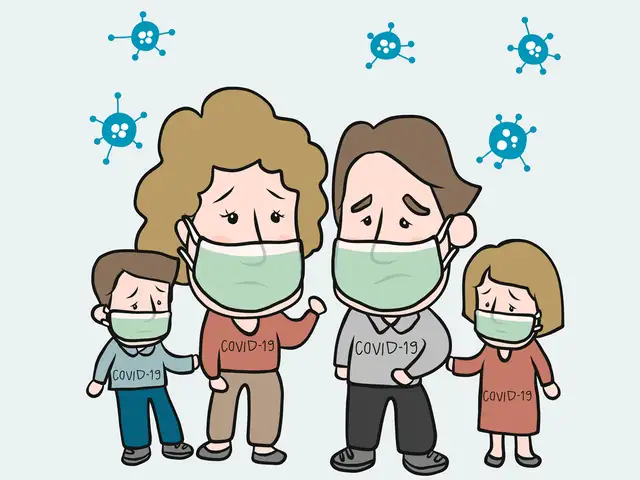
In the wake of coronavirus, several schools and colleges have been shut in many parts of the world to contain the spread of COVID-19. As public awareness and conversations around the novel virus increase, the situation can get the children anxious and worried for their family members and friends.
Parents, family members, teachers, healthcare professionals and trusted adults play a significant role in helping children make sense of what they hear in a way that is honest, accurate and minimise their fear or anxiety.
Dr Sreenath Manikanti, Senior Consultant Neonatologist & HOD Fortis La Femme Hospital, Richmond Road, Bangalore shares a few tips to help make the corona conversation easier around children.





Download
The Economic Times Business News App for the Latest News in Business, Sensex, Stock Market Updates & More.
The Economic Times Business News App for the Latest News in Business, Sensex, Stock Market Updates & More.
ADVERTISEMENT


