Corona reading list: 'Vedanta Treatise' is Anita Dongre’s go-to book

The designer has underlined a number of passages for quick reference; hopes to read Michelle Obama’s ‘Becoming’ next.

BCCL
Another book that Dongre recommends is 'Measuring What Counts' by Joseph Stiglitz, Jean-Paul Fitoussi & Martine Durand.
Working from home and wondering how to get through the lockdown? Try using this moment, where time seems to stretch out infinitely, to go back to the things you once loved and cherished.

In this time of great uncertainty and ‘slow living’, designer Anita Dongre is turning to the works of Swami Parthasarathy for comfort and guidance.

“As an avid reader, there is nothing I enjoy more than delving into a book’s pages,” she posted on Instagram recently. “Among the ones I have bookmarked the most, and gained the most from are the works of Swami Parthasarathy. A personal favourite of mine is his 'Vedanta Treatise'.”


For Dongre, what stands out the most is the sheer simplicity and practicality of the text.

“A pre-eminent philosopher, Swami Parthasarathy has translated the Vedas for modern living with astonishing simplicity and practicality. Having underlined so many pages, and having typed out many of his teachings on my phone for quick reference, his books are my go-to’s for reading and gifting. Not only do I highly recommend his work, (but) I also think they should be included as essential reading in all schools.”

View this post on Instagram

Which is that one book that has inspired you the most? - As an avid reader, there is nothing I enjoy more than delving into a book’s pages. Among the ones I have bookmarked the most, and gained the most from are the works of Swami Parthasarathy. A personal favourite of mine is his Vedanta Treatise. A pre-eminent philosopher, Swami Parthasarathy has translated the Vedas for modern living with astonishing simplicity and practicality. Having underlined so many pages, and having typed out many of his teachings on my phone for quick reference, his books are my go-tos for reading and gifting. Not only do I highly recommend his work, I also think they should be included as essential reading in all schools. Comment below the book(s) that has impacted your life in a similar way. Let us inspire each other. 💫 Photo by @benaishakharas #AnitaDongre #ADHome #ADLibrary #Vedanta #VedantaTreatise #BookForLife #StayHome #StaySafe #StayHealthy

A post shared by Anita Dongre (@anitadongre) on


ADVERTISEMENT
Another book that Dongre recommends is 'Measuring What Counts' by Joseph Stiglitz, Jean-Paul Fitoussi & Martine Durand. “It strengthens my belief that companies and countries must focus on sustainability and the environment and not just on profits,” she said in an interview last year.

Quaran-reads
What’s next on the designer’s reading list? 'Becoming', the best-selling memoir from former US First Lady Michelle Obama.
Predictive Text: 'Frankenstein', '1984' And Other Books That Foretold The Future
1/6

A look back at the different times when authors unleashed the Nostradamus in them and came up with something that was years ahead of its time.
A look back at the different times when authors unleashed the Nostradamus in them and came up with something that was years ahead of its time.
Vision: Virus outbreak

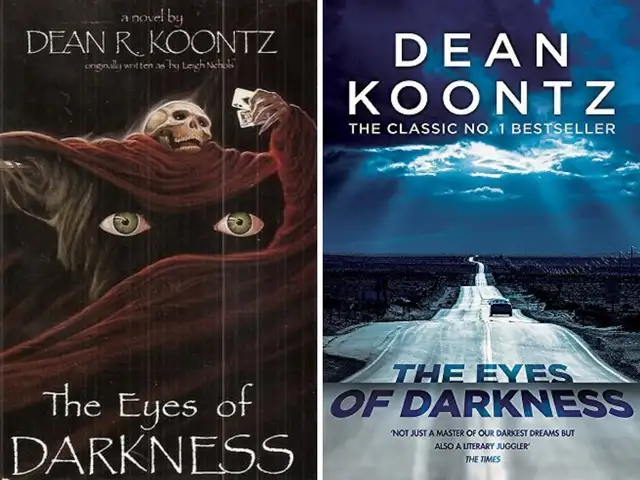
In 1981, Dean Koontz wrote a novel titled 'The Eyes of Darkness'. In the book, Koontz mentions a fictional biological weapon Wuhan-400, nearly 40 years before the coronavirus outbreak occurred.

'The Eyes of Darkness' is a story about a mother who discovers her son Danny is being kept in a military facility after being infected with a man-made microorganism called ‘Wuhan-400’. While Twitter went into a little bit of tizzy, that’s where the similarity ends. Unlike the book’s virus, which has a 100 per cent fatality rate, the real world covid-40 has a fatality rate that ranges between two per cent and 14 per cent, depending on several factors.

(Image: Amazon)

Vision: Virus outbreakIn 1981, Dean Koontz wrote a novel titled 'The Eyes of Darkness'. In the book, Koontz mentions a fictional biological weapon Wuhan-400, nearly 40 years before the coronavirus ou..
Read More

Vision: Electric submarines

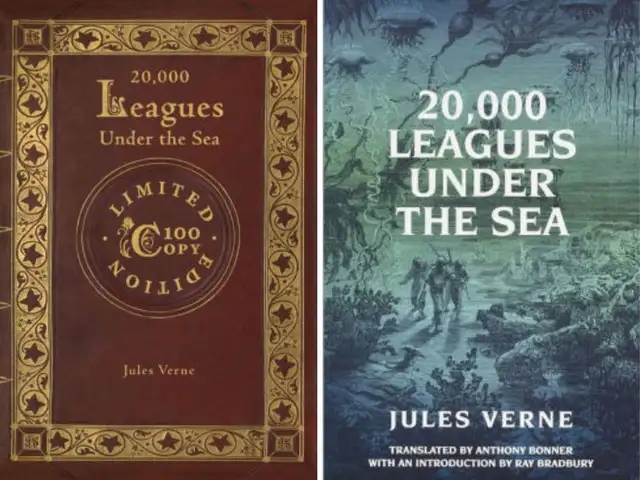
Jules Verne is considered one of the most forward thinking authors of the 19th century and has predicted numerous things in his most famous book, Twenty Thousand Leagues Under The Sea, which was published in 1870. Verne not only predicted electric submarines 90 years before they were invented, he also imagined them just as they turned out — long and cylindrical. Verne’s submarine called Nautilus also included a main cabin, navigational devices, a dining room, and barometer.

(Image: barnesandnoble.com)

Vision: Electric submarinesJules Verne is considered one of the most forward thinking authors of the 19th century and has predicted numerous things in his most famous book, Twenty Thousand Leagues Un..
Read More

Vision: Mass surveillance

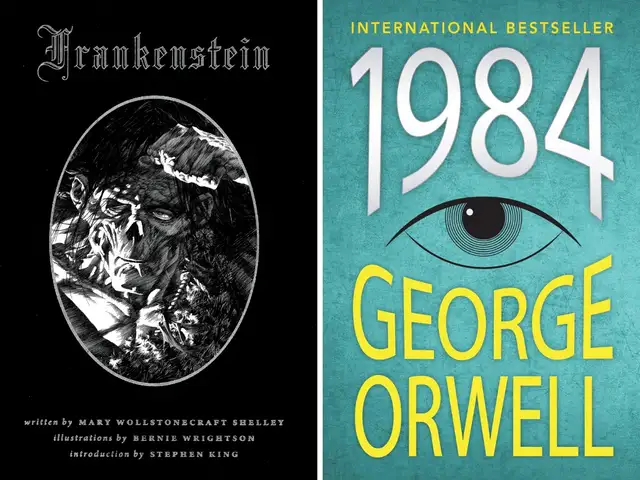
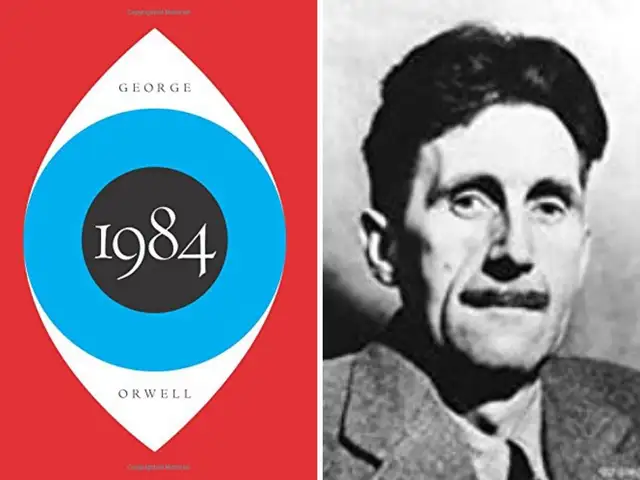
Orwell’s book focuses on topics we are all too familiar with today: Censorship, propaganda, surveillance, and oppressive governments. It was written nearly 70 years ago. In the book, Orwell predicted mass surveillance and police helicopters. Much of what the British author imagined has come true, including facial recognition, speech to text conversion, music made by artificial intelligence, and, of course, the concept of ‘Big Brother’ watching your every move.

(Image: Amazon)

Vision: Mass surveillanceOrwell’s book focuses on topics we are all too familiar with today: Censorship, propaganda, surveillance, and oppressive governments. It was written nearly 70 years ago. In t..
Read More

Vision: Mars has two moons

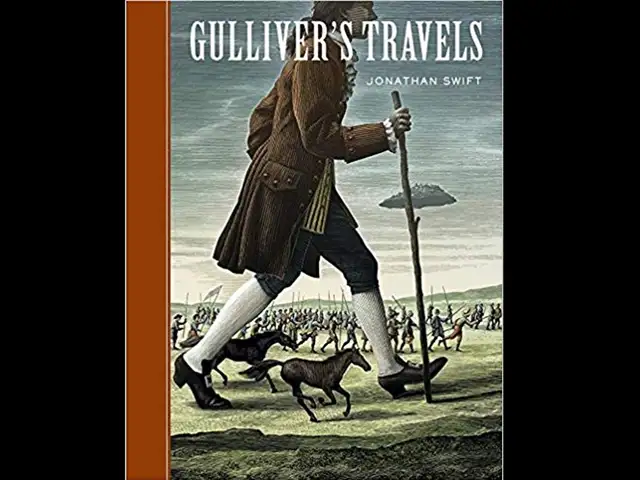
This all-time favourite book follows a man named Gulliver as he stops at different worlds, those occupied by giants, another by little humans, and one of the most interesting, the island of Laputa. Laputa, in the book, is a floating world filled with scientists. Swift writes about how Gulliver and Laputian astronomers noted that Mars has two moons in its orbit. Today we know this claim to be true, that Mars indeed does have two moons. But Swift wrote 'Gulliver’s Travels' in 1726, nearly 150 years before Phobos and Deimos — the two moons of Mars — were discovered in 1877.

Vision: Mars has two moonsThis all-time favourite book follows a man named Gulliver as he stops at different worlds, those occupied by giants, another by little humans, and one of the most interestin..
Read More

Vision: Organ Transplants

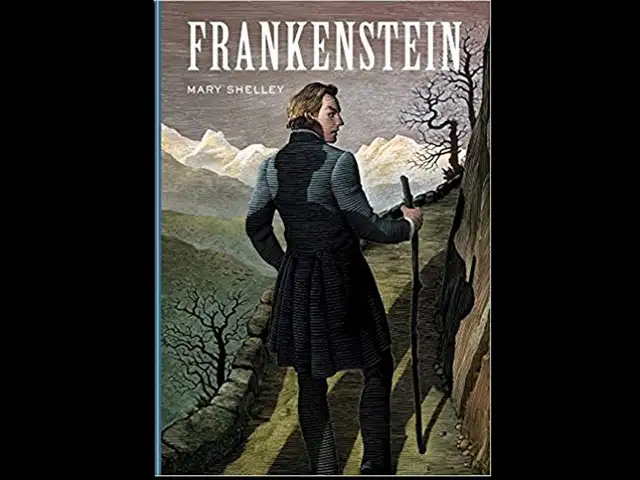
Written in 1818, Shelley’s novel is often considered one of the first science-fiction novels. At that time, science was just beginning to explore the concept of bringing dead tissue back to life using electricity. In Mary Shelley’s 'Frankenstein', the doctor is able to keep an organ alive outside of a body to be transplanted into a new body. To say this was ahead of its time is an understatement. It wasn’t until the mid-20th century (1954) that the first organ transplant became a reality.

Vision: Organ TransplantsWritten in 1818, Shelley’s novel is often considered one of the first science-fiction novels. At that time, science was just beginning to explore the concept of bringing dead..
Read More

Download
The Economic Times Business News App
for the Latest News in Business, Sensex, Stock Market Updates & More.
READ MORE
ADVERTISEMENT

READ MORE:

LOGIN & CLAIM

50 TIMESPOINTS

More from our Partners

Loading next story
Business News › Magazines › Panache › Corona reading list: 'Vedanta Treatise' is Anita Dongre’s go-to book
Text Size:AAA
Success
This article has been saved

*

+