Corona alert! New smartphone app may warn when you come in contact with Covid-19 patient
The app will also ensure that it protects the privacy of Covid patients.
By PTI |
iStock
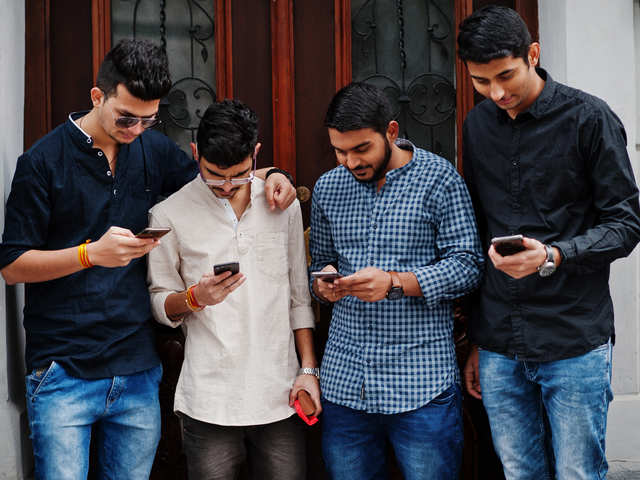
The app will use Bluetooth-enabled cell phones to notify a person if they have come into close proximity with someone infected with coronavirus.
BOSTON: Scientists, including one of Indian origin, are working on a smartphone app that could let people know if they have come in contact with someone who has tested positive for COVID-19, while protecting their privacy.
The app being developed by researchers, including Mayank Varia from Boston University in the US, uses Bluetooth-enabled cell phones to notify a person if they have come into close proximity with someone infected with SARS-CoV-2, the novel coronavirus that causes COVID-19.
To work efficiently, the app requires many people to use it, whether they have had COVID-19 or not, the researchers said.
The app transmits and captures random Bluetooth signals via nearby cell phones that also have the app installed, they said.
App users who have been diagnosed with COVID-19 voluntarily and anonymously report their positive results, which then causes their Bluetooth pings from the last 14 days to be uploaded to a database that's coded to ensure that the diagnosed user is uploading their own pings, the researchers explained.
From there, those signals are compared with pings of other app participants in the system, they said.
ADVERTISEMENT
All of the uploaded information is verified by a public health agency, and all apps must be installed by users voluntarily. The app, the team said, then alerts users of possible proximity to an infected person, and subsequently directs them to follow up with health officials.
All of the uploaded information is verified by a public health agency, and all apps must be installed by users voluntarily.
Varia explained that the app does not transmit any personal information, or even a unique identifier for a phone.
ADVERTISEMENT
"To protect everyone's privacy, we are only sending random 'garbage' within each Bluetooth packet," he said.
"We call these random numbers 'chirps'. People who are diagnosed with COVID-19 voluntarily post only these random chirps to a public database, which permits anyone who has come into contact with the diagnosed person to check whether any of the chirps they have match the entries in the public database," Varia said.
ADVERTISEMENT
The technology demonstrates how automatic contact tracing can be done on a phone-to-phone basis and without a centralised opaque database that holds location information on all individuals, the researchers said.
"That's important because it counters the prevailing perception that mitigating the pandemic via automatic contact tracing mandates large-scale, government-led violation of privacy of all or most of the population," they said.
Keeping Your Phone Clean, And Safe, In The Time Of Coronavirus
1/5
Holding hands, an affectionate gesture with romantic undertones, has become taboo in the time of the coronavirus. Handshakes, too, have been outlawed in the boardroom as well as stadiums - and after closing a deal, folks now pick up their phones and send each other formal emails.
Lovers in parks sit on benches, their hands skidding across smartphone screens, sending emoji-laced messages. However, exercising one’s primary tactile organs to communicate through gestures might not be as dangerous as using a mobile phone.
Holding hands, an affectionate gesture with romantic undertones, has become taboo in the time of the coronavirus. Handshakes, too, have been outlawed in the boardroom as well as stadiums - and after ..
Read More
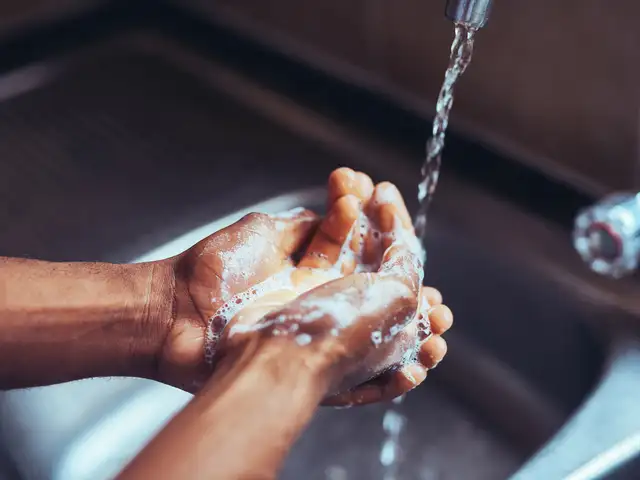
The World Health Organization has explained how people should wash their hands to safeguard against infection and to prevent the spread of the coronavirus. However, the benefits of smearing hands with sanitizers is an exercise in futility if people then pick up their phones and expose themselves to germs all over again.
The World Health Organization has explained how people should wash their hands to safeguard against infection and to prevent the spread of the coronavirus. However, the benefits of smearing hands wit..
Read More
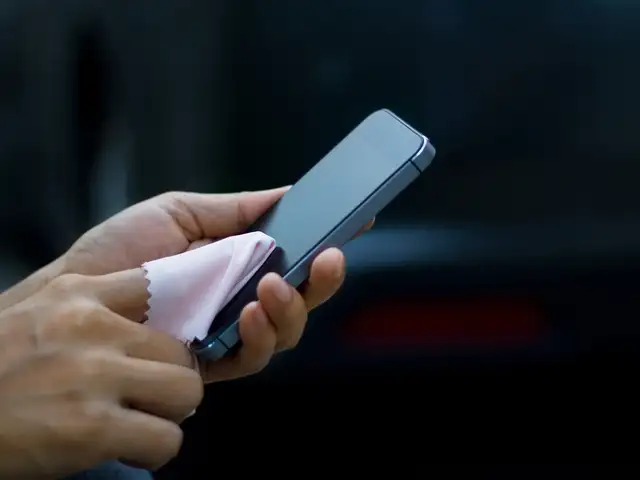
Phone screens are a hotbed of different types of germs. Phone hygiene, therefore, becomes an imperative to ward off contagious germs. Apple recommends using felt cloth, the type used to clean spectacles.
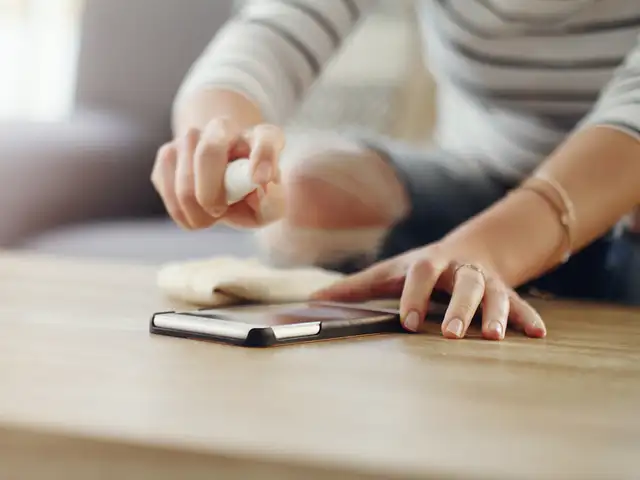
The iPhone 7 and upwards, which are water-resistant, can be cleaned using a cloth dabbed with soapy water, as long as the different orifices of the devices are covered. Other manufacturers do not specify water-tolerance, but most new models are partially resistant to fluids, meaning that cleaning your phone display with a wet cloth is the least you could do.
Phone screens are a hotbed of different types of germs. Phone hygiene, therefore, becomes an imperative to ward off contagious germs. Apple recommends using felt cloth, the type used to clean spectac..
Read More
Samsung and Apple advise against using cleaning fluids as they could potentially damage fingerprint-resistant coatings on their screens. Some new phones have in-display fingerprint sensors which make the task of cleaning your phone more complex. However, this could be remedied by using a screen protector, which in turn, could be wiped clean using diluted alcohol.
The back and sides of the phone should also be cleaned thoroughly. Germs will invariably accumulate on phone screens. The best possible remedy seems to be washing one’s hands before and after touching one’s phone, especially when in public spaces or commuting to work.
Samsung and Apple advise against using cleaning fluids as they could potentially damage fingerprint-resistant coatings on their screens. Some new phones have in-display fingerprint sensors which make..
Read More
Users given to making a lot of phone calls are advised to use headphones or Bluetooth earphones to prevent the germs on phone screens from coming in contact with their faces. Bluetooth earphones aren’t germ-proof either, but their exteriors can be cleaned with cotton swabs dipped in antiseptic fluids or isopropyl alcohol.
Be careful to not get any inside your audio device as it could damage the circuitry. Boozy headphones can make one grin from ear to ear.
Users given to making a lot of phone calls are advised to use headphones or Bluetooth earphones to prevent the germs on phone screens from coming in contact with their faces. Bluetooth earphones aren..