Sadaf Hussain’s charming new, first book Daastane-Dastarkhan has been published by Hachette India.
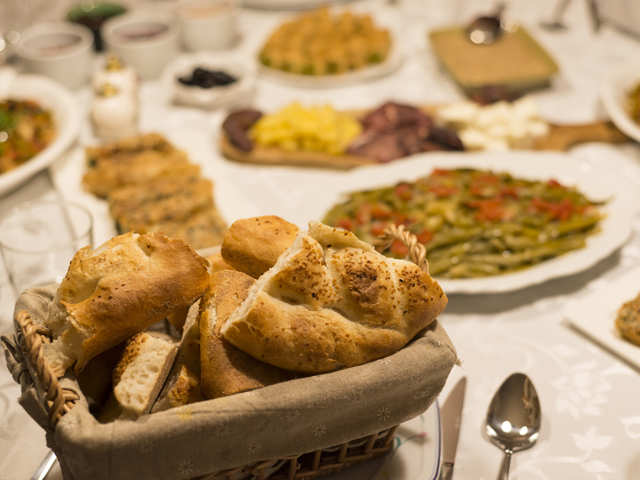
Sadaf Hussain’s charming new book Daastane-Dastarkhan starts with the story of a pir who, every Thursday, visited his mother’s family in Sasaram, Bihar. But one day he appeared on a Wednesday, throwing his grandmother into panic because there was no meat for the aloo-gosht she always fed him. She had to be inventive. She used dried figs and poppy seed paste, to make a salan, threw in fried potatoes, balanced it with garam masala and chillies, and served it with rice and besan rotis. The pir was delighted: “May Allah bless you with an abundance of food and may no one ever leave your home hungry.”
A recipe like this is not what many would think of as Indian Muslim food. Where is the intense meat focus? Where are the kebabs and biryanis? The problem starts with thinking there is something that can be neatly labelled Indian Muslim food. The fact that people do this might be just another way in which Indian Muslims are diminished by clubbing their many communities into one and ascribing easy stereotypes to them.
Ummi Abdulla, who has documented the food of Malabar Muslims, makes mutta mala or egg threads.
Part of the problem is that there is a market in catering to such stereotypes. Once a year during Ramzan, many people decide to have an iftar experience and go out — without fasting — to eat the rich food cooked on street sides for the occasion. But this has as little relation to regular home food in Muslim communities across India, as does a Diwali or Christmas feast have for Hindu or Christian home food.
One way people get exposed to home food of different communities is when they share food with neighbours, especially as kids. But as housing becomes increasingly segregated, this is becoming harder.
This lack of knowledge has been compounded by a curious lack of cookbooks from different Indian Muslim communities.
ADVERTISEMENT
There are cookbooks from cities like Lucknow and Hyderabad where certain types of Muslim food dominate, but what’s presented tends to be street food or special occasion dishes, both mostly made by men. These are important, but it means that the daily, home dishes get left out.
Explore flavours and lanes of Purani Dilli in my book Daastan-e-Dastarkhan published by @HachetteIndia. Order onlin… https://t.co/4UlqUxyAhh
There have been a few exceptions. Ummi Abdulla made a pioneering contribution by documenting the food of the Malabar Muslim, or Moplah, community, with all its complex interactions between the local ingredients of Kerala and influences from Arab traders.
Bilkees Latif ’s Essential Andhra Cookbook captured similar interactions from Hyderabad. Mumbai’s Inquilab newspaper brought out a collection of booklets, in Urdu and English, on Memon, Kokani, Bohra and Kashmiri food. There were a few other books printed privately or abroad, but little else.
Now a very welcome change is happening. Home dining formats, like Mumbai’s The Bohri Kitchen, are inviting people for a taste of the real food of different communities, and several books are also documenting this. Apart from Hussain there is Sadia Dehlvi, whose Jasmine & Jinns captures the food of old Delhi families. Husna Rahaman presented Kutchi Memon food in the form of a story with recipes in Spice Sorcery.
ADVERTISEMENT
Adil Ahmad’s Tehzeeb chronicles the home food of an upper-class Lucknow family.
Daastan-e-Dastarkhān by #MasterChefIndia contestant @hussainsadaf1, unravels the history and traditional #cooking t… https://t.co/bZ2NH8oJpI
— Hachette India (@HachetteIndia) 1565174059000
ADVERTISEMENT
Doreen Hassan’s Saffron and Pearls does the same for her husband’s family from Hyderabad, but with roots in both Persia and Uttar Pradesh. Zaiqa e-Kadwai provides a very different perspective. It is a team effort to document the food of a village in Ratnagiri district, where most of the families just happen to be Muslim, but their food is quite typically Konkani. Hazeena Syed’s Ravathur Recipes: With a Pinch of Love shows, in a very impressively produced volume, the food of this Tamil Muslim community.
These books show the food of these communities to be, as with all communities in a region, primarily dictated by what’s locally available, but with small tweaks. As Hassan’s husband’s family shows, at a more upper-class level there were more likely to be interactions with communities across countries, and recipes travel with daughters-inlaw, who are one of the least acknowledged agents for social change.
There is certainly a lot of meat eaten in all these communities, but the recipes are much simpler and subtler than what is served up to unthinking eaters as “Muslim” food. Meat is often cooked with vegetables as in the chuqandar gosht, beetroot and mutton; or keema kakdi, cucumbers and mince, given in Tehzeeb. There are inventive egg dishes, like boiled eggs stuffed with mince and then skewered, that Hassan discovers in Hyderabed, or eggs fried in gravy that are a favourite in Kadwai.
#EidMubarak. Today is not just another day for me. Today, I am releasing my book Daastan-e-Dastarkhan published by… https://t.co/FH7JrA2100
Other similarities might be slightly more use of some spices, like star anise, and less of others — hing rarely features since onions are widely used. Chefs will tell you that Muslims in their kitchens are particularly adept at frying, and that copper, with its excellent heat conduction, is the metal of choice for utensils. Many traditional vessels shown in these books are copper, and careful distinctions are made in types of frying: shallow, deep, braising and so on.
Books like these are important because, apart from the problems of unthinking stereotypes, the food of Indian Muslim communities faces another kind of obliterating pressure. Many cooks from the communities have gone to work in the Gulf and have picked up the kind of Lebanese-Arab food that is becoming a standard across the world. It is easy to produce, cheap and tasty enough and has the allure of being modern, rather than old-fashioned, labour-intensive home food. People shouldn’t be faulted for opting for what’s cheap and convenient, but it is important to remember, as these books remind us, that there are also other ways to nourish our roots.
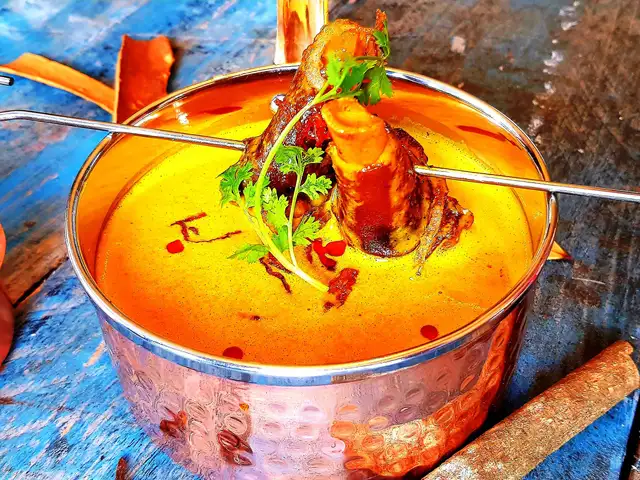
Nalli Nihari, Gosht Biryani, & Meat Aloo Bhukara Recipes To Add To Your Eid Feast
1/5
Eid-al-Adha, or Barka Eid, is a Festival of Sacrifice that celebrates the obedience of Ibrahim towards Allah. The four-day celebrations involve a lavish feast of delicacies.
To make your Eid party a success, give these recipes a shot.
Eid-al-Adha, or Barka Eid, is a Festival of Sacrifice that celebrates the obedience of Ibrahim towards Allah. The four-day celebrations involve a lavish feast of delicacies. To make your Eid party a ..
Read More
Ingredients
Mutton cut: 600 gm
Curd: ½ cup
Ginger-garlic paste: 1 tbsp
Cooking oil: 2 tbsp
Desi ghee: 3 tbsp
Fried onion: 1 cup
Degi mirch: 2 tsp
Coriander powder: 2 tsp
Turmeric powder: 1/2 tsp
Cloves: 4-5
Black cardamom: 2
Cinnamon stick: 1 inch
Black peppercorns: 8-10
Garam masala powder: 1/2 tsp
Salt to taste
Coriander leaves: For garnishing
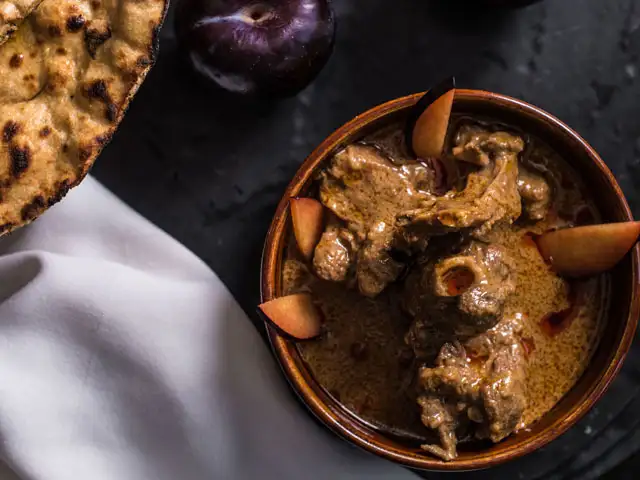
Dried plums: 100 gm
Fresh plum: 2-3
Method
- Heat oil in a thick bottom cooking pot and add whole spices. Cook till they crackle
- Add ginger-garlic paste, cook for a few minutes
- Cut mutton and fry on high heat for 3-4 minutes
- In a bowl, mix yogurt, fried onions, degi mirch, coriander powder, salt, turmeric powder
- Mix it with mutton and add ½ cup of water
- Cook while covered for about 40 minutes; till the mutton is soft
- Add fresh chopped plums and dried plums puree
- Adjust seasoning, sprinkle garam masala, cook for 1 minute
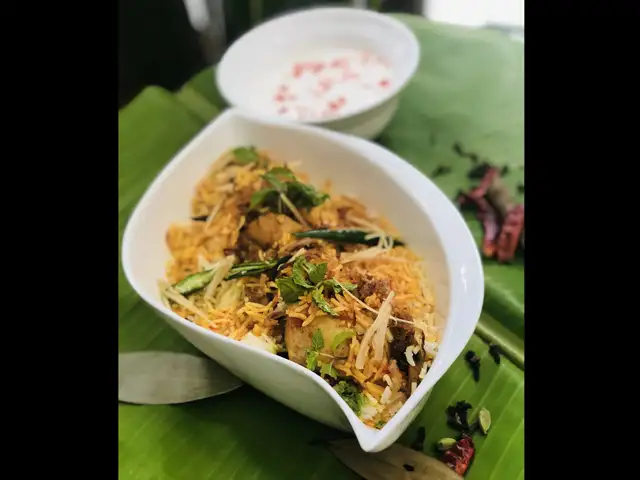
Basmati rice: 1 kg
Mutton boti without bone: 1 kg
Cardamom: 10 gm
Cinnamon: 10 gm
Cumminseed: 10 gm
Cloves: 10 gm
Ginger: 40 gm
Garlic: 20 gm
Green chillies: 100 gm
Fried onion: 50 gm
Coriander leaves: 1 bunch
Mint leaves: 1 bunch
Lemon: 2
Curd: 1/4 cup
Ghee: 1/4 kg
Saffron: 1 pinch
Method
- Wash mutton and take it in a vessel.
- Grind green chillies, ginger, garlic, spices, fried onion, and mix them well together
- Add this mixture to the meat
- Add curd to it, mix thoroughly
- Leave for half an hour
- Boil 2 litres of water in a vessel. Then add rice to it, while still on flame
- Take out semi-cooked rice and spread it on the meat and spices mixture in a vessel
- Repeat
- Mix ghee and saffron to a cup of boiled water. Pour it on the rice
- Cover the vessel with a plate and seal the edges with dough and cook for 15 minutes on medium flame
- Turn off the heat. Let it sit for 15 minutes
- Uncover and garnish with saffron
(Courtesy: Shailendra Bhandari, Executive Chef, The Metropolitan Hotel & Spa, New Delhi)
Ingredients
Basmati rice: 1 kg
Mutton boti without bone: 1 kg
Cardamom: 10 gm
Cinnamon: 10 gm
Cumminseed: 10 gm
Cloves: 10 gm
Ginger: 40 gm
Garlic: 20 gm
Green chillies: 100 gm
Fried onion: 50 gm
Co..
Business News › Magazines › Panache › Food in Indian Muslim households is beyond biryani & kebabs: Recipes are subtle, and include various vegetablesText Size:AAA