Budget wishlist: Education leaders bat for 1-yr compulsory internship; want experiential learning that will boost mental health, self-confidence
Industry experts are also optimistic about a hike in funds for higher education.
By ET Online | Updated:
BCCL
The top priorities remain experiential learning, skill training integrated in school, mainstream university for vocational education and a robust, new National Education Policy.
NEW DELHI: Last week, a study by the Tata Trust and Centre for Budget and Governance Accountability revealed that progress across major development schemes in India, including education, health and nutrition among others, remains constrained due to sub-optimal utilisation of available funds, especially at the district level.
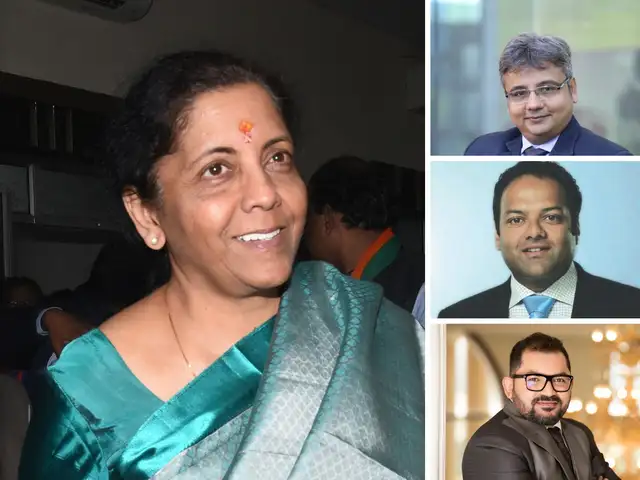
As Finance Minister Nirmala Sitharaman gets ready for the Union Budget, experts from the industry have several suggestions that can boost the educational ecosystem in the country.
The top priorities remain experiential learning, skill training integrated in school, mainstream university for vocational education and a robust, new National Education Policy.
Professor Pankaj Chandra, Vice Chancellor of Ahmedabad University “For India to progress towards achieving higher quality employment, the Government should invest more in the education sector this year. The Draft Education Policy, which suggests increasing the spending on education to about 6 per cent of GDP, should be a good target for this year’s budget.
Professor Pankaj Chandra feels it is imperative to provide very low interest rates on education loans to support higher levels of enrollment. "It is also imperative to provide very low interest rates on education loans to support higher levels of enrollment. The Government needs to double the investment in Research and Development in the country, which is currently only 0.7 per cent of the overall GDP, and also encourage the private sector to invest more in R&D by providing translational incentives.
ADVERTISEMENT
"Additionally, to encourage corporates to invest in training of its people which is crucial because of the changing work landscape, the Government should provide for tax credits for investments made in deep training of employees.”
“The manufacturing industry is expecting the Government to rectify the inverted tariff structure for manufactured products. Tuning up cluster-based incentives for electronic companies will bring in more investment into the country, and more importantly, complete the ecosystem for electronics manufacturing in India.”
Dharinini Upadhyaya, Co-founder and Co-CEO, Furtados School of Music "This is the start of a new decade. We look forward to creating an educational ecosystem in our country that fosters experiential learning so that students can build their skills and capabilities for their future. In the era of automation, we need an educational system with creative subjects which will act as a pressure valve to help teenagers deal with stress, boosting self confidence and collaboration skills.
Dharini Upadhyaya is confident that experiential learning will help students build their skills and capabilities for the future.
ADVERTISEMENT
"During the 2019 Budget, FM had suggested increasing the total government expenditure for education to 20 per cent from 10 per cent by 2030. This is yet to find funding in India’s current education Budget, and we’re hoping it will be addressed this year. Initiatives like sound music education ecosystem can strengthen the educational infrastructure in the country, and the Government's support will only accelerate this process."
Dr Narendra Shyamsukha, Founder Chairman, ICA Edu Skills "One of the first things the Government needs to do is cap the GST rate for all types of skill-training irrespective of whether it is Government-funded/CSR funded/self or employer-funded by 15 per cent. Even skill training should be integrated with school education, and it should be made compulsory for at least one job role from class X to XII.
ADVERTISEMENT
"National Skill Development Corporation’s interest rate charged from skill partners should be reduced from the present by two per cent. The Government needs to make adequate budgetary allocation so that in every district at least 10,000 to 15,000+ people can be given some sort of skill training. The number of Pradhan Mantri Kaushal Kendras and budgetary support for them should also be increased.
Dr Narendra Shyamsukha hopes that the Government spruces up an apprenticeship program. "In addition, vocational education should be made into a mainstream university which is distinct from engineering and medical streams for students passing out from school. Skill universities should be operated pan-India, instead of state wise. As skill delivery happens in association with employer demand and R&D work, placement tie-ups can be more beneficial, if allowed pan-India.
"One-year internship should be made compulsory for every graduation program. The Government should set aside Budget allocations for international globally-accepted certification and training programs which are standardised skill development tools for creating a baseline skill benchmark. Examples of such alliances and funding are commonplace in many developed as well as developing economies. Also, the Government should spruce up an apprenticeship program that helps industry and academic institutions get on the same page on the skill required from fresh graduates."
Dr RL Raina, Vice-Chancellor, JK Lakshmipat University, Jaipur "The countdown to Budget day has started, and expectations of various sops for everyone have risen tremendously. Being an education leader, we are expecting higher allocation of funds in higher education from the present 1.34 per cent for FY 2020-21 to create ‘World Class Institutions’. We are also keen to know the Government’s plans to promote higher education in privately-funded institutions.
Dr RL Raina feels India needs a robust, new National Education Policy. "A robust New National Education Policy is needed that will transform India's higher education system into one of the best education systems, globally. This will enable us to get more world university rankings besides only three institutions - two IITs and IISc Bangalore - in the top 200 bracket. To achieve the objectives of research and innovation, FM should start working on setting up of a National Research Foundation (NRF) to fund, co-ordinate and promote research in the country.
"The Government should also promote its 'Study in India' program so that more focus will be put on bringing foreign students and faculty to our institutions of higher learning."
Sachin Karnik, Finance Controller, ITM Group of Institution “Education sector is one of the most important indicators of any nation’s growth and development. Hence, the sector must be highlighted in budgetary allocation. The higher the allocation of Budget, the more there is a room for improvement. The Budget 2020 should consider to raise the education expenditure nearly to 6 per cent over the next three years which is 4.6 per cent of GDP as of now.
Sachin Karnik is looking for improved academic facilities, more jobs and reduction in GST rates for online education. "Apart from this, we are looking for improved academic facilities, more jobs and reduction in GST rates for online education. PM Narendra Modi's vision of making India digital and advent of digital technologies calls for government aid as they add more skills to match the digital world requirements.
"Also tax free education, teacher training programmes, better education policies are some of the expectations from the government by the education sector for Budget 2020.”
India Inc's Budget Wishlist: Tax Relief For Art Philanthropy, Boosting EV Ecosystem
1/16
All eyes are on Finance Minister Nirmala Sitharaman as she gets to roll out her second Budget on February 1.
While the main focus is to spur economic growth, India Inc bosses feel certain initiatives in this year's Budget will help various sectors like food, culture & art, real estate, fintech and automobile. Several suggestions like boosting 'Make In India' in order to generate employment, reviving consumer demand and reintroducing the subvention scheme have also been doing the rounds.
As the day nears, here are some suggestions from top business leaders.
All eyes are on Finance Minister Nirmala Sitharaman as she gets to roll out her second Budget on February 1.While the main focus is to spur economic growth, India Inc bosses feel certain initiatives ..
Read More
The Government should build on its recent push towards sustainability by prioritising the growth of the Electric Vehicle ecosystem. This can be done by promoting the creation of a strong and well-connected charging infrastructure on a pan-India level, promoting the setting up of EV battery capacity in the country and incentivising the adoption of EVs, especially for public transport buses, fleet operator cars and two- and three-wheelers.
The road connectivity must also be improved between major urban centres and tier-2/3 regions to bolster the growth of the travel and tourism sector.
The Government should build on its recent push towards sustainability by prioritising the growth of the Electric Vehicle ecosystem. This can be done by promoting the creation of a strong and well-con..
Read More
In order to generate employment, the Budget should consider further incentives for boosting 'Make In India', and look into new mechanisms to prevent whole-sale dumping of goods by many countries into India, specifically in the area of solar energy.
Given the deceleration in economic growth, the FM may be compelled to look at measures both for immediate impact and long-term growth. The Budget will have to play a fine balancing act between managing the deficit and providing a boost to flagging economic growth. Also, India's ease of doing business ranking improved last year from 77th to 63rd. The Government needs to push ahead with sustained regulatory reforms to provide a conducive business environment.
In order to generate employment, the Budget should consider further incentives for boosting 'Make In India', and look into new mechanisms to prevent whole-sale dumping of goods by many countries into..
Read More
The 2020 Budget allocation for the food industry is going to be critical, mainly due to the removal of the input tax credit on food sold in restaurants and workplaces. This step has negatively impacted the agricultural economy, ultimately having an adverse reaction to the food services industry which is a $10 billion-economy that backs $7 billion of agriculture produces. It has largely resulted in a disorganised industry, creating a lopsided structure of the entire sector as previously there was service tax and GST that claimed to have an input tax credit. The removal of Input Tax Credit and replacing it with flat-tax took away the core promise of GST, that is to eliminate the cash economy and to make sure the business of the companies help meet the expectations of the Government in ensuring transparency in the transactions.
Furthermore, it is worse when it comes to food services provider or organised caterer of any sort. When the customer is billed, he or she can claim ITC on that purchase but the service provider cannot as that is considered as a restaurant. Due to this, while the restaurants are hiking up the prices to compensate for the loss of ITC, food service providers are left high and dry. As a consequence, it reflects negatively towards the motive of helping bring about an organisational approach to agriculture produces and streamline the process. We remain optimistic that the decision of bringing back the input tax credit will be considered under the cognisance and some change is hopeful. It is also important that more focus is given to the agricultural produce so that the area substantially gets highly streamlined. The need to spur private investment and therefore to have a more predictable tax regime which can allow us to kick start our acquisitions in India is mandatory. The industry is looking forward to a revised and much predictable tax regime along with the reintroduction of the input tax credit on food sales to streamline the GST in the sector.
The 2020 Budget allocation for the food industry is going to be critical, mainly due to the removal of the input tax credit on food sold in restaurants and workplaces. This step has negatively impact..
Read More
With the increasing demand for online purchasing, more and more businesses are moving to e-store from brick and mortar stores. e-Commerce has also revolutionised the way companies are doing business. The Government should make GST obligations for both offline and online traders same to provide more clarity on policy guidelines pertaining to eCommerce.
Looking at it as a major opportunity, the Government should look to spend higher on infrastructure and rural programs, and focus on tax cuts to boost personal consumption.
With the increasing demand for online purchasing, more and more businesses are moving to e-store from brick and mortar stores. e-Commerce has also revolutionised the way companies are doing business...
Read More
The Government needs to do a tight rope walk in the 2020 Union Budget by balancing the burgeoning fiscal deficit and increasing the borrow at one end and stimulating growth at the other. The need to strike a fine balance will be a key agenda in the upcoming Budget. There are expectations of reduction in personal income tax rates to boost consumption and dividend distribution tax, and long-term capital gains tax to improve the sentiment in the capital markets. These measures will increase the disposable income in the hands of the individual, boosting the currently subdued demand and supporting the massive divestment program that is running short the target. Given the Budget constraints, the Government needs to maximise collections and spending efficiency in future.
The Government needs to do a tight rope walk in the 2020 Union Budget by balancing the burgeoning fiscal deficit and increasing the borrow at one end and stimulating growth at the other. The need to ..
Read More
The Government should bring in more business-friendly policies, and take steps to reduce regulatory compliance, thereby creating a holistic environment for the ease of doing business. Removal of MAT from SEZ and simplification of domestic sales from SEZ will give required boost to the manufacturing industry. Last but not the least, removal of capital gain from equity transaction will facilitate overall market capitalisation of stock market.
The Government should bring in more business-friendly policies, and take steps to reduce regulatory compliance, thereby creating a holistic environment for the ease of doing business. Removal of MAT ..
Read More
Fund availability has to be made for a conducive and supportive financial environment. This is because the lending fintechs are largely the ones that cater to the masses or the people who are not served by the formal financial institutions. The access to liquidity has to be eased for such fintechs. Though there are many funds which are established for the fintechs, the flow of money for the same has its own unique challenges. There has to be rationalisation of MAT tax rate along with the increase in the minimum threshold for tax exemption as many end up paying taxes despite being eligible for the tax holiday.
Fund availability has to be made for a conducive and supportive financial environment. This is because the lending fintechs are largely the ones that cater to the masses or the people who are not ser..
Read More
This year’s Budget is being eagerly awaited by all stakeholders as the need of the hour is to revive consumer demand which in turn will spur economic growth. To tackle this, a reduction in personal income-tax rates through concessions in tax slabs, and an increase in welfare spends will boost spending. With the dip in foreign investment currently impacting businesses, steps towards a healthy economy will improve foreign investor confidence and attract more international investments. To reduce the burden on business owners, the Government should initiate the simplification of various tax-related compliance and faster processing of tax refunds.
This year’s Budget is being eagerly awaited by all stakeholders as the need of the hour is to revive consumer demand which in turn will spur economic growth. To tackle this, a reduction in personal i..
Read More
There has been a downturn in the overall auto industry lately, and the challenges have directly affected the mainstream luxury car industry. The pre-owned luxury car segment is eyeing 50% growth with this year’s Union Budget. We expect the Government to align its electric mobility vision with challenges faced by automakers and auto-dealers in terms of innovation and elasticity. The automobile sector is a crucial contributor in country’s GDP. Hence, the Government must take steps to ease the implementation of Bharat Stage VI norms which may lower the demand until the public fully understands the policies.
There has been a downturn in the overall auto industry lately, and the challenges have directly affected the mainstream luxury car industry. The pre-owned luxury car segment is eyeing 50% growth with..