Booker Prize for Geetanjali Shree's 'Tomb of Sand' opens new opportunities for Hindi writers
'Tomb of Sand' is the first Hindi-to-English' translation book to receive the coveted recognition.
By PTI | Updated:
ANI
The cash prize of 50,000 Pounds is split between the author and the translator equally.
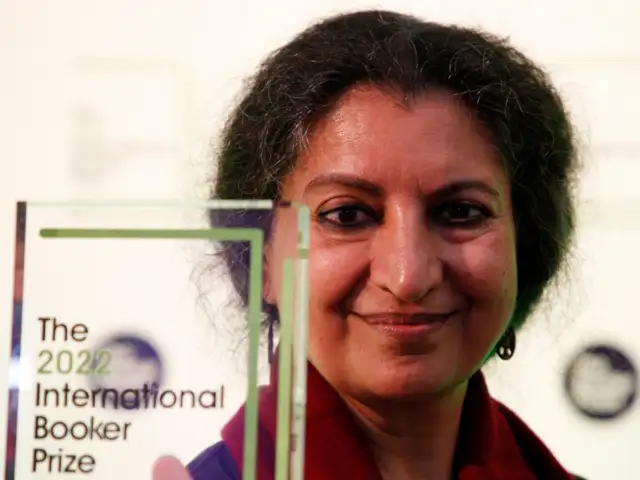
NEW DELHI: Author Geetanjali Shree's International Booker Prize win has opened a window of opportunity for other deserving Hindi titles waiting for their share of readers and translations, Hindi writers said on Friday. "Tomb of Sand" - originally titled "Ret Ki Samadhi" - is the first Hindi work translated to English to have received the coveted recognition. The book was translated by author-translator Daisy Rockwell. The cash prize of 50,000 Pounds is split between the author and the translator equally.
The New Delhi-based author of three novels and several story collections, Shree has gotten her works translated into English, French, German, Serbian and Korean.
"Geetanjali Shree's translation winning the Booker opens a new window of hope to Hindi writing. Due to lack of good translations and publishers interested in them, so many illustrious works of Hindi writers have failed to reach the canon of world-class literature.
Celebrations are on at this benchmark for Hindi writers and readers," Sahitya Akademi Award winning Hindi novelist Alka Saraogi told PTI.
According to veteran Hindi writer Prayag Shukla, who claimed he was the first one to write a review of 'Ret Ki Samadhi', said it can't get bigger and that Hindi literature is on its way to get its due status globally.
"It was bound to happen. The translation works of Hindi literature into various languages, including French and German, in the past few years have been really good. And it is the culmination of this that today Geetanjali, whom I have known since her teenage years as a very talented writer, has won the award.
ADVERTISEMENT
"I am very happy and very hopeful of the future of Hindi literature. You will see translations of Hindi literature picking up pace 20 times more than ever," the 82-year-old, author of several bestsellers, including "Bite Kitane Barasa" and "Ghara Aura Bahara".
The 64-year-old Uttar Pradesh-born author winning the prize was that much more special for Rachna Yadav, managing director of Hans - the largest Hindi literary magazine in India -- who said the author's first work, a short story titled "Bel Patra", was published in their magazine only in the late 1980s.
The magazine, which was founded by Munshi Premchand and had ceased publication in 1953, was re-launched by Rachna's father, the late Hindi author Rajendra Yadav, in 1986.
"It is such a proud moment for us because we consider Shreeji a Hans writer. My father selected her works and published her three stories almost one after the other-- which was really rare in Hans. I am certain that her success will give the desired push to Hindi literature and lead to more translations -- and more importantly good quality translations," said Yadav.
ADVERTISEMENT
Geetanjali Shree's 'Ret Ki Samadhi' was translated to English by author-translator Daisy Rockwell, titled 'Tomb of Sand'. Set in northern India, the much-acclaimed book is a story about an 80-year-old woman who travels to Pakistan to confront the unresolved trauma of her teenage experiences of partition and re-evaluates what it means to be a mother, a daughter, a woman and a feminist.
Not only the veterans, the 64-year-old author's achievement has brought a new sense of purpose and hope in the current generation of Hindi writers as well.
ADVERTISEMENT
For instance, writer-filmmaker Era Tak, who did admit to once contemplating to start start writing in English, said Shree's unprecedented achievement tells us that language is no barrier and "strong content along with proper platform" is all that you need to attain success.
"People would always say Hindi writing has no scope. And I, a Penguin author, would sometimes ask myself, 'Shall I also write in English only?' But this award gives us hope that if what you have written is good, it will be appreciated across the world," the author of "Raat Paheli" and "Risk @Ishq" said.
"I hope the publishers will now be forthcoming in translating works of Hindi writers, at least in English. Because once done in English, it can be translated into other languages and the reach increases not only globally, but also in India," Tak added.
That said, there is a word of caution from bestselling author Naveen Chaudhary, who though immensely proud of the recognition coming the Hindi language way, said the immediate chances of other Hindi books feeding off from this rare achievement stands low.
Even the Oscar-winning movies don't attain the global viewership immediately, things take time. So I don't see any visible change in the Hindi literature market -- not at least in the coming six months or a year, noted Choudhary, who previously also held the position of associate director of marketing at Oxford University Press.
"Yes, there might be an increase in sales of this (Ret Ki Samadhi) book, but any other Hindi book is still going to sell on the basis of its content and the way it is marketed. But immediately, I am not sure how much boost it is going to give to Hindi literature," the author of "Janta Store" and "Dhaai Chal" said.
Shree's novel was chosen from a shortlist of six books, the others being: "Cursed Bunny" by Bora Chung, translated by Anton Hur from Korean; "A New Name: Septology VI-VII" by Jon Fosse, translated by Damion Searls from Norwegian; "Heaven" by Mieko Kawakami, translated by Samuel Bett and David Boyd from Japanese; "Elena Knows" by Claudia Pineiro, translated by Frances Riddle from Spanish; and "The Books of Jacob" by Olga Tokarczuk, translated by Jennifer Croft from Polish.
From Geetanjali to Arundhati: The Indian Connection To Booker prize
1/7
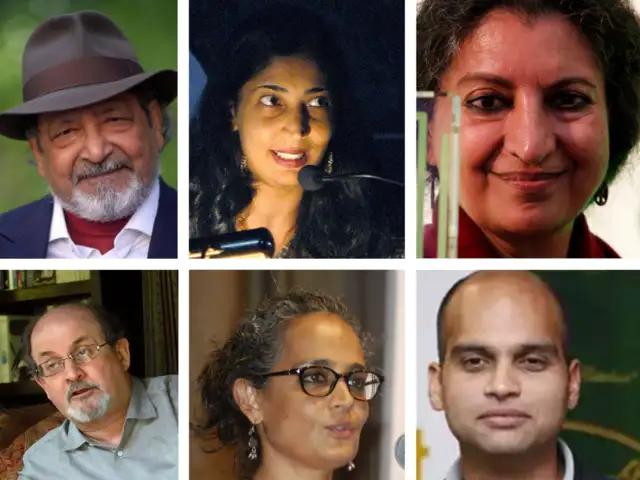
Booker is one of the most prestigious international literary awards that has catapulted many obscure authors to sudden fame, as well as solidified already flourishing writers’ careers and turned them to literary giants. While the literary prize was initially limited to the writers of the commonwealth nations, it was later opened up for the entire English speaking world making the competition very fierce. However, despite the competition, over the years several writers who have an Indian connection had clinched the award. Here is a look at the writers who made India proud with their novels.
Booker is one of the most prestigious international literary awards that has catapulted many obscure authors to sudden fame, as well as solidified already flourishing writers’ careers and turned them..
Read More
Geetanjali Shree’s ‘Tomb of Sand’ is the first Hindi novel to win the prestigious International Booker. While Shree’s exquisite work tells the story of an 80-year-old woman who steps out of depression after her husband’s death to find new purpose in life, the author says that her literary win is a victory of many Hindi writers who came before her.
A doctorate in history, Shree’s penchant for infusing humour and word play into her writing has won over the Booker judges too, who called her work a ‘luminous novel’.
Geetanjali Shree’s ‘Tomb of Sand’ is the first Hindi novel to win the prestigious International Booker. While Shree’s exquisite work tells the story of an 80-year-old woman who steps out of depressio..
Read More
V S Naipaul or Sir Vidiadhar Surajprasad Naipaul placed India on the Booker map, way back in 1971 when he won the prize for his work 'In a Free State'. The Trinidad-born and Oxford-educated Naipaul is the first person of Indian origin to win the Booker. Published by André Deutsch, the winning work looks at alienation, disruption and racial tension in an unpredictable world through five connected tales.
Naipal, whose other notable works include ‘A House for Mr Biswas’, ‘The Enigma of Arrival’, ‘A Bend in the River’ among others, was also shortlisted, for his entire body of work, for The Man Booker International Prize in 2009.
Naipaul, with family roots in India, made his literary debut with the novel ‘The Mysterious Masseur’ in 1957. An intrepid traveller, his novels and reportage captured his journeys through the lens of a post-colonial society where identity and alienation in a multicultural world remained the central themes.
V S Naipaul or Sir Vidiadhar Surajprasad Naipaul placed India on the Booker map, way back in 1971 when he won the prize for his work 'In a Free State'. The Trinidad-born and Oxford-educated Naipaul i..
Read More
Ten years after Sir V S Naipaul’s win, it was Salman Rushdie who repeated the feat. Rushdie’s ‘Midnight Children’ bagged the Booker Prize in 1981.
And that’s not all.
The British-American novelist and essayist of Indian descent bagged serious bragging rights - after the iconic book went on to scoop the anniversary Booker of Bookers in 1993, and The Best of the Booker in 2008 on the prize's fortieth anniversary through a public vote.
A cocktail of magical realism and real events, the novel is set around the 1947 Partition and the independence of India. Considered among the finer reads in post-colonial fiction, Rushdie’s creativity managed to ruffle political feathers after then Indian Prime Minister Indira Gandhi slapped a defamation suit.
In 2012, the novel found its way to the big screen with Deepa Mehta bringing to life a screenplay done by Rushdie himself.
Ten years after Sir V S Naipaul’s win, it was Salman Rushdie who repeated the feat. Rushdie’s ‘Midnight Children’ bagged the Booker Prize in 1981.And that’s not all.The British-American novelist and ..
Read More
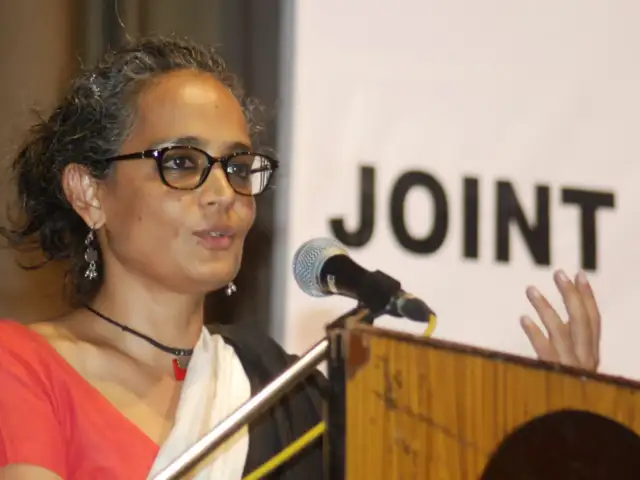
In 1997 Arundhati Roy won the £20,000 ($ 30,000) Booker Prize for 'The God of Small Things.' With that she became the first Indian - previous winners V S Naipaul and Salman Rushdie both had Indian roots - to win the Booker, considered the ultimate prize for writers of the Commonwealth.
A story of love and death through the eyes of a set of 7-yr-old twins, it beat the other front-runners including Irish author Bernard MacLaverty's 'Grace Notes' and Madeleine St John's 'The Essence of The Thing'.
For Roy, the novel and the Booker acclaim came before she plunged herself into social activism taking up green causes and environmental damage.
In 1997 Arundhati Roy won the £20,000 ($ 30,000) Booker Prize for 'The God of Small Things.' With that she became the first Indian - previous winners V S Naipaul and Salman Rushdie both had Indian ro..
Read More
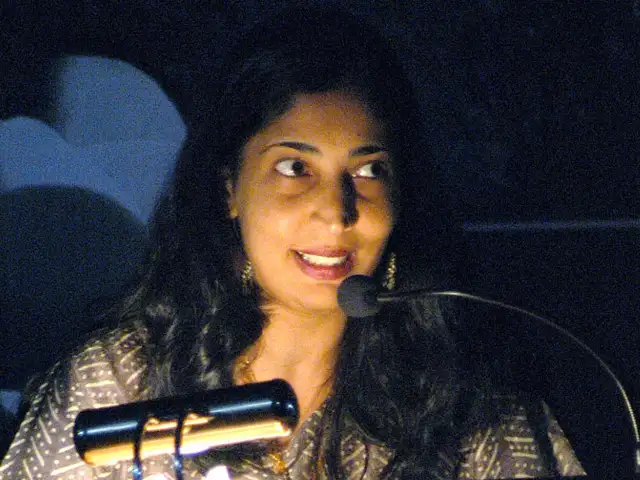
Kiran Desai catapaulted to Booker fame in 2006 with her novel ‘The Inheritance of Loss’. At 35, Desai scripted history by becoming the youngest-ever woman to win the Booker Prize - later Eleanor Catton, 28, pipped her when she won for ‘The Luminaries’ in 2013.
Kiran, the daughter of noted writer Anita Desai, was born in Delhi and spent her early childhood in Mumbai before moving to the UK. ‘The Inheritance of Loss’, which won high praise from critics across the globe, was written over a period of seven years. Themed on migration, and shifting narratives of time and life, between past and present, it was her second novel after her first book, the critically acclaimed ‘Hullabaloo in the Guava Orchard’.
Kiran Desai catapaulted to Booker fame in 2006 with her novel ‘The Inheritance of Loss’. At 35, Desai scripted history by becoming the youngest-ever woman to win the Booker Prize - later Eleanor Catt..
Read More
Aravind Agida began his career as a financial journalist covering the stock market. The writer, in fact, wrote for TIME as he penned ‘The White Tiger’ on the sidelines, which became his debut novel, and bagged the Booker award, catapulting the author to international popularity.
The book paints a sharp contrast between the life in ‘modern India’ compared to its rural part, and shows how a person of underprivileged background can fall through the cracks of the system. While the Indian hardcover of the book sold more than 200,000 copies, it was later made into a film, featuring Priyanka Chopra and Rajkumar Rao.
Aravind Agida began his career as a financial journalist covering the stock market. The writer, in fact, wrote for TIME as he penned ‘The White Tiger’ on the sidelines, which became his debut novel, ..