Blast from the past: Rare books & manuscripts from Tipu Sultan era to go under the hammer in Sept
The oldest book in the auction is ‘De Vita Caesarum’ written in 121 AD.
By Apoorva Puranik, ET Bureau |

Agencies
A collection of rare books, maps and manuscripts from the Tipu Sultan era will go under the hammer in an online auction in September.
Among the private collection belonging to city-based collector Sunil Baboo is an issue of a fourpage American newspaper, The Mail, dated 1792 carrying a report on the ceasefire signed by Tipu Sultan after his defeat to the British in the third Anglo-Mysore War. There are two maps (from 1792 and 1799) made in Germany showing the areas in the Tipu Sultan’s kingdom before and after he was defeated in the war. The 1799 map shows the collapse of the kingdom after his death on May 4, 1799.
One lithograph, ‘Taking of the Fort and City of Seringapatnam’, by Jean Duplessi-Bertaux will also go under the hammer. The artist has shown the fort at Seringapatnam (now Srirangapatna) being attacked by the British. That was the last place that Tipu Sultan was seen alive.
Baboo, who acquired these priceless collections through live online auctions and direct purchases from dealers globally, says he now wants to move towards supporting art forms in the country. “All of the items are difficult to part with as I’ve travelled around the world to get them, but it’s time to move on to other areas.” Most of his collections have been acquired aboard.
Rare books
The auction will also see rare books from around the world going under the hammer. “There are multiple books that cover significant events, language and culture in India. We have books on the Indian Mutiny of 1857 such as Life of John Nicholson, Letters written during the Indian Mutiny and ‘Reminiscences of The Great Mutiny’,” Indrajit Chatterjee, founder-director at Prinseps, the auctioneer, said.
Among the private collection belonging to city-based collector Sunil Baboo is an issue of a fourpage American newspaper, The Mail, dated 1792 carrying a report on the ceasefire signed by Tipu Sultan after his defeat to the British in the third Anglo-Mysore War. There are two maps (from 1792 and 1799) made in Germany showing the areas in the Tipu Sultan’s kingdom before and after he was defeated in the war. The 1799 map shows the collapse of the kingdom after his death on May 4, 1799.
One lithograph, ‘Taking of the Fort and City of Seringapatnam’, by Jean Duplessi-Bertaux will also go under the hammer. The artist has shown the fort at Seringapatnam (now Srirangapatna) being attacked by the British. That was the last place that Tipu Sultan was seen alive.
Baboo, who acquired these priceless collections through live online auctions and direct purchases from dealers globally, says he now wants to move towards supporting art forms in the country. “All of the items are difficult to part with as I’ve travelled around the world to get them, but it’s time to move on to other areas.” Most of his collections have been acquired aboard.
Rare books
The auction will also see rare books from around the world going under the hammer. “There are multiple books that cover significant events, language and culture in India. We have books on the Indian Mutiny of 1857 such as Life of John Nicholson, Letters written during the Indian Mutiny and ‘Reminiscences of The Great Mutiny’,” Indrajit Chatterjee, founder-director at Prinseps, the auctioneer, said.
ADVERTISEMENT
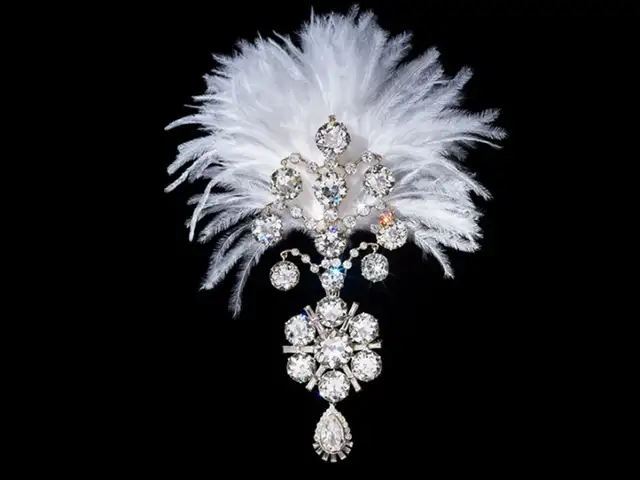
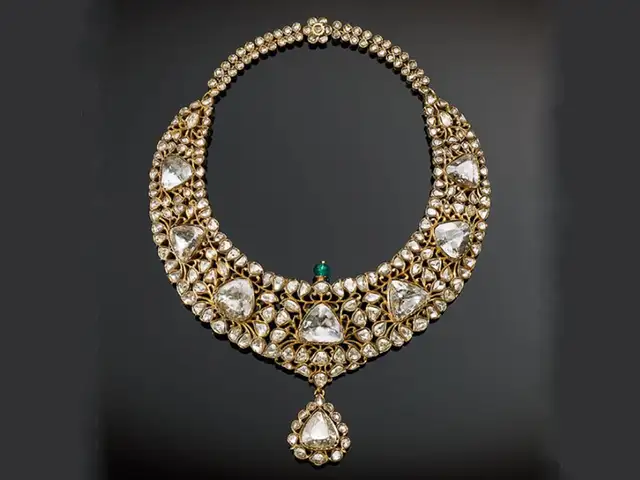
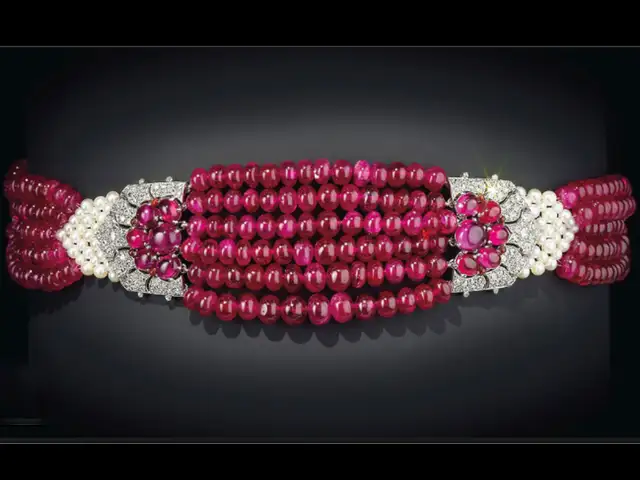
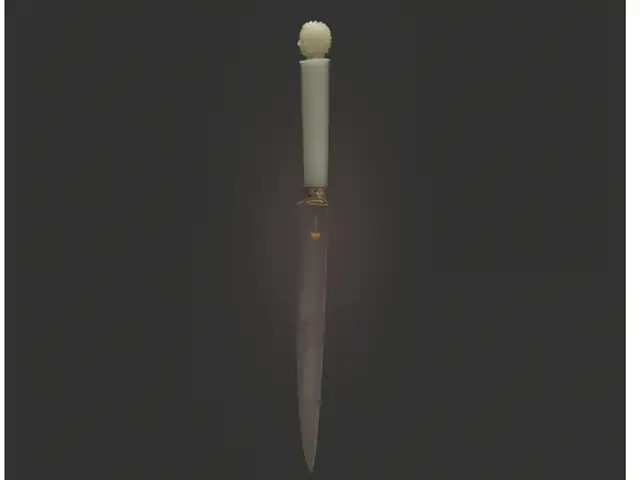
The oldest book in the auction is ‘De Vita Caesarum’ written by Gaius Suetonius Tranquillus in 121 AD. ‘De Vita Caesarum’, or The Twelve Caesars, is a set of biographies of Julius Caesar, Augustus, Tiberius among others, written during the reign of emperor Hadrian. Another rare book is an English-Hindustani Dictionary written by John Shakespear, a descendent of William Shakespeare.A dagger of an emperor, an ornate pen case and a 17th century necklace of the Nizam. These are among the 400 pieces of ancient Indian treasures and Mughal jewels set to go under the hammer in New York on June 19.
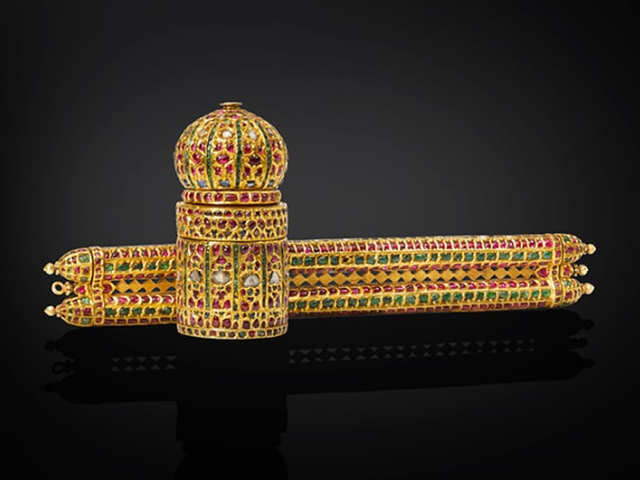
It is a known fact that during the reign of the Mughal dynasty, jewelled pen case and inkwell sets were presented to persons of utmost distinction. This emerald, ruby and diamond-set pen case and inkwell has the engraving of a sacred swan or hamsa under the inkwell. It is dated back to the late 16th century and is said to have originated in the Deccan region.


Download
The Economic Times Business News App for the Latest News in Business, Sensex, Stock Market Updates & More.
The Economic Times Business News App for the Latest News in Business, Sensex, Stock Market Updates & More.
Related Articles
 Double standards: Congress hits out at BJP after Harshwardhan Sapkal faces flak on Shivaji-Tipu Sultan remark2026-02-15T05:50:23Z
- "India will never accept distorted history": BJP's Ramchander Rao slams Owaisi over "Tipu Sultan was martyred" remarks2026-02-15T05:05:53Z
- Congress' Maharashtra President booked over remarks comparing Chhatrapati Shivaji to Tipu Sultan2026-02-15T01:57:53Z
ADVERTISEMENT


