Bhavin Turakhia says one should be prepared for multiple distractions when working from home.
Man on the go, Bhavin Turakhia, CEO, Flock, knows what it’s like to make your workspace work for you, irrespective of where it is. And now, he too is working from home, but this remote setup is something he’s used to.
“Millions of people are now working remotely for the first time ever and experiencing that it isn't as simple or exciting as it may sound. But working remotely can be hugely satisfying and productive, but it can also be challenging at the same time,” he says. Here are the CEOs tips.
1. Prepare for multiple distractions
Working from home does not mean fewer distractions—just different ones. If you’re working from home for the first time, here’s a quick list: family, kids, OTT platforms, neighbours etc.You can’t avoid all distractions. Therefore, be prepared for distractions and set common-sense boundaries.Set aside major chunks of your day for work, and explain your family members about why it’s important that you stay focused.
2. Start your day early, comparatively Beat the rush of distractions later in the day by starting work as early as you can. If you’re used to a long commute that helps you organize yourself for the day ahead, working from home can take a little getting used to. Simply getting started on a task in the morning keeps motivation levels high and helps you stay focused almost throughout the day.
3. Pretend you’re in your office
ADVERTISEMENT
In the office, our actions are sometimes motivated by bosses or colleagues looking over our shoulders. Pretending to be in the office helps you start or continue productive habits, like daily to-dos, and keeps you focused. Set dedicated hours for work, connect with teammates on collaborative platforms, schedule and conduct video calls, do everything you do in the office—as much as you can.
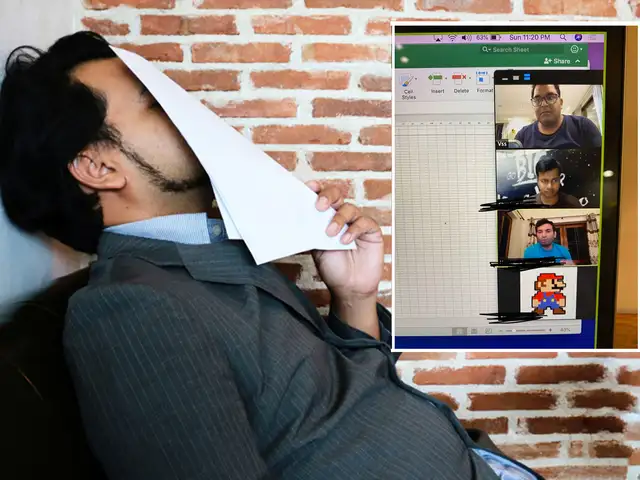
Taking multiple breaks is not a crime, says Bhavin Turakhia. (Representative image) 4. Plan your day – Create a To-Do List! A lot of us probably do this already, but planning your day is all the more important when you work from home. Planning your day doesn’t have to be a big fancy task. Simply think of hours you want to set aside for work. Then you want a list of things to do in those chunks of timeAnd don’t forget to check things off that to-do list every time you finish a task, because that keeps you going!
5. Take multiple breaks, it’s not a crime! Working from home—in a study or in the living room, or even your bed—means working in a space of comfort. While this can be fun and comforting, it can also mean getting lost in the flow, and at times for hours. That’s probably alright, once in a while, but you want to take regular breaks to get up, stretch those fatigued muscles, and hydrate and nourish yourself.
ADVERTISEMENT
6. Save meetings for mid-day (or later!) Early mornings—when energy levels are high—should be saved for your best work. Setting up meetings towards the middle of the day means you can continue being productive for the rest of the day. When you take meetings in the middle of the day, you can take a power nap immediately afterwards—in your own bed. Naps are a superpower, and working from home means you can get more of it every day.
ADVERTISEMENT
7. Make time for video calls Unfortunately, working from home also means missing office banter. Over time, the lack of in-person collaboration when working remotely can foster a feeling of isolation. But connecting over a quick video call with a teammates to talk about your respective days can be a big help.
Tired Of Never-Ending Working From Home Shift? 4 Tips To Maintain A Work-Life Balance
1/6
Working from home has become the new normal as companies try to minimise disruptions and keep operations running as close to normal as possible. But with most of us working from home, the lines between "work" and "home" could become quickly blurred.
A few weeks ago, Paytm founder Vijay Shekhar Sharma took to Twitter to announce that he had been so wrapped up in Zoom meetings (inset from Sharma's Twitter account) that he forgot it was Sunday. And that seems to be the case with most entrepreneurs who are dealing with investor pressure and the stress of a looming economic slowdown.
Working from home has become the new normal as companies try to minimise disruptions and keep operations running as close to normal as possible. But with most of us working from home, the lines betwe..
Read More
In a recent media interview, Zerodha CEO Nithin Kamath (L) confessed, “I start work around 8.30 am and work till I sleep. I am definitely overworking, so are a few of my colleagues.”
“I had assumed that there would be more family time than before (but) the opposite has happened. Maybe I am spending lesser time than before because the boundary between work and personal time has disappeared. That said, daily I work out with my wife and play music with my son, and enjoy a drink with my brother and father once in a few days.”
If you find yourself in a similar situation as Kamath or Paytm's Vijay Shekhar Sharma (R), here are a few practical ways you can quickly establish boundaries.
In a recent media interview, Zerodha CEO Nithin Kamath (L) confessed, “I start work around 8.30 am and work till I sleep. I am definitely overworking, so are a few of my colleagues.”“I had assumed t..
Read More
Working from home can be invasive to your personal life. Without scheduled work hours, work can creep into your home life and just as personal errands can creep into work hours. To avoid this, start and end your workday at the same time every day. Don’t mix household chores into work hours and vice-versa.
Working from home can be invasive to your personal life. Without scheduled work hours, work can creep into your home life and just as personal errands can creep into work hours. To avoid this, start ..
Read More
Studies have shown that having a designated workspace helps put your brain into work mode and enhances productivity. If you can’t set aside a designated workspace (due to a space crunch), try to create barriers in other ways. For example, use your laptop for work calls/meetings and use your phone to check social media or chat with friends. Having different devices for different purposes will help your brain switch from work to play mode.
Studies have shown that having a designated workspace helps put your brain into work mode and enhances productivity. If you can’t set aside a designated workspace (due to a space crunch), try to crea..
Read More
A shutdown ritual is a set routine of actions that you perform at the end of each workday to finalize your day and signify that your workday is done. Cal Newport, the author of Deep Work, initiated it as a New Years’ resolution to get the most of his relaxation time.
“It has worked better than I imagined. I’ve basically eliminated stressful work-related thoughts from my evenings and weekends. This has really improved my ability to relax and focus on other things,” he wrote on his website.
Some activities you can include in your shutdown ritual are preparing a to-do list for the next day, going for a walk, signing up for an evening fitness class among others. The goal isn’t what you do but that you do something to replace and simulate your commute, which is a built-in shutdown ritual.
A shutdown ritual is a set routine of actions that you perform at the end of each workday to finalize your day and signify that your workday is done. Cal Newport, the author of Deep Work, initiated i..
Read More
One way to ensure that you’re not blurring the lines between work and home is to create a no-work zone for at least an hour before you go to bed and after you wake up. This will keep your mind ample time to properly recharge.
Research shows that what you do before you go to sleep has an impact on the quality of sleep, and your engagement, your ability to focus, the next day. Passive leisure activities, like watching TV or reading a book, were associated with better sleep than doing something like answering work emails.
One way to ensure that you’re not blurring the lines between work and home is to create a no-work zone for at least an hour before you go to bed and after you wake up. This will keep your mind ample ..
Business News › Magazines › Panache › Bhavin Turakhia's 7 tips to work from home like a boss: To-do lists, mid-day meetings & multiple breaksText Size:AAA







 Dragoneer, Zeta’s Bhavin Turakhia participated in Unacademy’s latest funding round

