Bengali period drama on revolutionaries Benoy-Badal-Dinesh to hit screens
The movie '8/12' tells in detail the eventful moments 91 years ago.
By PTI |

iStock
KOLKATA: The attack on Writer's Building, the seat of British power in Bengal on December 8, 1930, by three young revolutionaries and the resultant gun battle which lasted for hours, has now been captured on celluloid in a Bengali period film.
Arun Roy the director of the film told PTI he has named the movie 8/12 which tells in detail the eventful moments 91 years ago when the three revolutionaries – Benoy Krishna Basu, Badal Gupta, and Dinesh Gupta - had barged into the Writer's Building clad in European suits and shot dead the then IG (Prisons) Lt Col N S Simpson.
Simpson had earned notoriety for his atrocities and physical torture of freedom fighters and his killing triggered panic and sent shock waves through the corridors of power, Roy, who had taken up the shooting of the film after years of research told PTI on Sunday.
As Simpson slumped on the floor on that eventful day, a gun battle ensued. Although the British managed to overpower the trio, the men refused to surrender.
Badal Gupta immediately ingested potassium cyanide, while Benoy and Dinesh shot themselves with their firearms. Benoy breathed his last in a hospital on December 13, 1930, while Dinesh survived. He was later hanged to death after being convicted by the then British Justice system.
"The significance about the date of 8/12 in 1930 has sunk into oblivion which is very unfortunate. We remember dark dates like 9/11 or 26/11 which have terrorist associations, but not a single youth of this generation will be able to tell about 8/12 -the glorious phase of Indian freedom struggle," Roy said.
"My intention is to chronicle in the language of cinema the sacrifice of these three young men. Their sacrifice had paved the way for our independence," Roy, who had directed period films like ‘Egaro' (on the historic win of Mohun Bagan AC club against Britishers in 1911), said.
Roy, who had earlier made a biopic on one of the pioneers of Indian cinema Hiralal Sen, said the shooting of the sequences was done at the place of occurrence Writer's Building which largely retained the facade of the 30s.
“Many parts of the building are in ruins, so our art department had to do some work which included VFX technology to reproduce that era,” he added.
Highlighting that the film was based on research for quite some time, Roy said "we wanted to explore what went in the minds of these three young men in their early 20s that they took such a risk..."
Asked if the film would be able to answer those queries, he said "we tried but it is for the audience to decide. We thought it is important to tell about an important part of Bengal's freedom struggle which has not been depicted so much in a previous film.
Roy said the film was not a documentary or docu-feature per se but a feature film based on true accounts of an important saga of Bengal's freedom struggle in which the role of revolutionaries who took the path of armed revolution was highlighted.
To a question, Roy said the screenplay also delved into the background of the three persons - their family, friends, and surroundings.
The area where Writer's building is located was renamed BBD Bagh by Independent India in honour of the three revolutionaries from the earlier name - Dalhousie Square.
Kinjal Nanda (Benoy), Arna Mukherjee (Badal), and Remoo (Dinesh) essayed the role of three protagonists which also starred seasoned actors Saswata Chatterjee and Kharaj Mukherjee among others.
Arna Mukherjee, a theatre actor, said "we were in a state of trance while shooting for the particular shootout sequence. I had read about the exploits of Benoy, Badal, and Dinesh in history books but it was a cathartic experience as I became Badal before the camera. When the director said ‘Cut', we were all weeping. It took hours for me to return to my normal self.”
The film will be tentatively released in theatres by January next year.
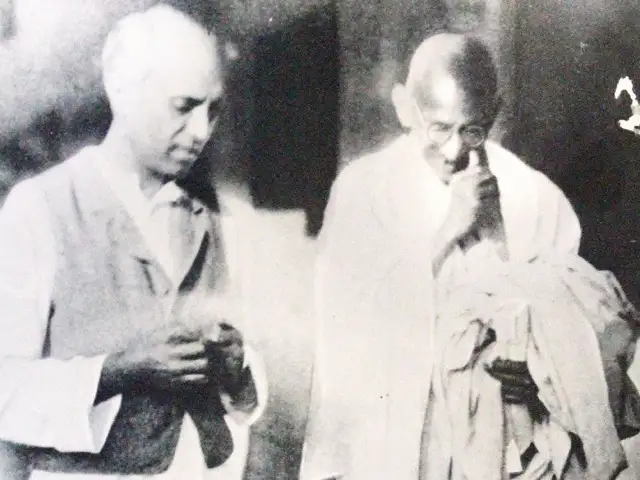
Turning the lens back on those photos of Mahatma Gandhi and Jawaharlal Nehru with some big corporate names of the time.
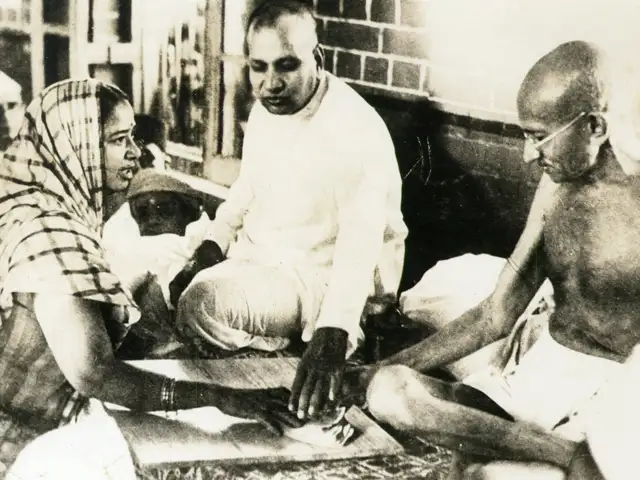
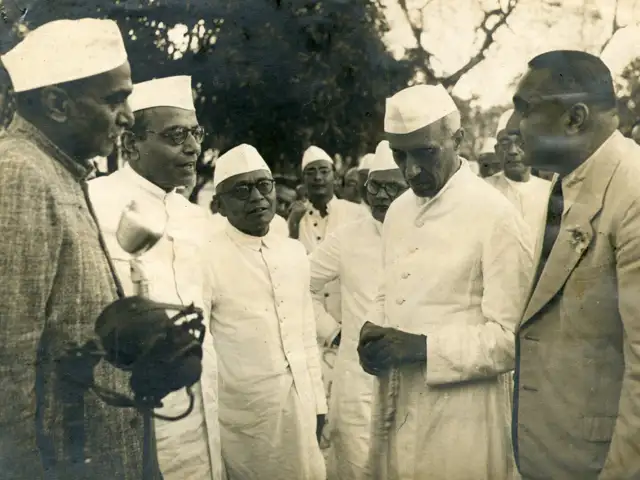
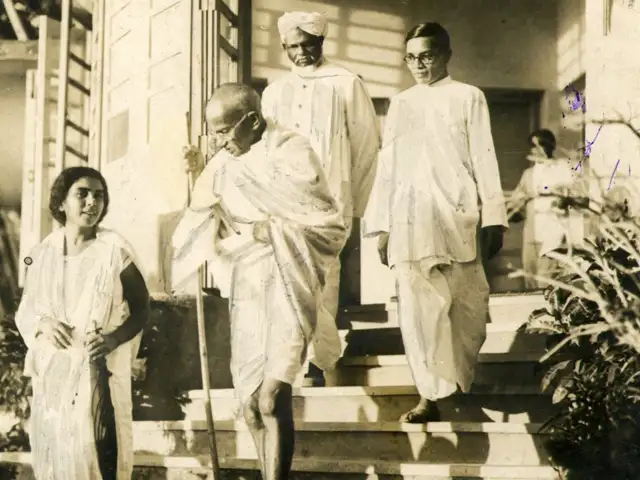
In pic: Mahatma Gandhi (left) and then PM Jawaharlal Nehru at the old JD(S) office which became new Congress Bhavan after the Congress party occupied the building after fighting years long legal battle, at Race course road in Bengaluru.
Arun Roy the director of the film told PTI he has named the movie 8/12 which tells in detail the eventful moments 91 years ago when the three revolutionaries – Benoy Krishna Basu, Badal Gupta, and Dinesh Gupta - had barged into the Writer's Building clad in European suits and shot dead the then IG (Prisons) Lt Col N S Simpson.
Simpson had earned notoriety for his atrocities and physical torture of freedom fighters and his killing triggered panic and sent shock waves through the corridors of power, Roy, who had taken up the shooting of the film after years of research told PTI on Sunday.
As Simpson slumped on the floor on that eventful day, a gun battle ensued. Although the British managed to overpower the trio, the men refused to surrender.
Badal Gupta immediately ingested potassium cyanide, while Benoy and Dinesh shot themselves with their firearms. Benoy breathed his last in a hospital on December 13, 1930, while Dinesh survived. He was later hanged to death after being convicted by the then British Justice system.
"The significance about the date of 8/12 in 1930 has sunk into oblivion which is very unfortunate. We remember dark dates like 9/11 or 26/11 which have terrorist associations, but not a single youth of this generation will be able to tell about 8/12 -the glorious phase of Indian freedom struggle," Roy said.
ADVERTISEMENT
"My intention is to chronicle in the language of cinema the sacrifice of these three young men. Their sacrifice had paved the way for our independence," Roy, who had directed period films like ‘Egaro' (on the historic win of Mohun Bagan AC club against Britishers in 1911), said.
Roy, who had earlier made a biopic on one of the pioneers of Indian cinema Hiralal Sen, said the shooting of the sequences was done at the place of occurrence Writer's Building which largely retained the facade of the 30s.
“Many parts of the building are in ruins, so our art department had to do some work which included VFX technology to reproduce that era,” he added.
Highlighting that the film was based on research for quite some time, Roy said "we wanted to explore what went in the minds of these three young men in their early 20s that they took such a risk..."
ADVERTISEMENT
Asked if the film would be able to answer those queries, he said "we tried but it is for the audience to decide. We thought it is important to tell about an important part of Bengal's freedom struggle which has not been depicted so much in a previous film.
Roy said the film was not a documentary or docu-feature per se but a feature film based on true accounts of an important saga of Bengal's freedom struggle in which the role of revolutionaries who took the path of armed revolution was highlighted.
ADVERTISEMENT
To a question, Roy said the screenplay also delved into the background of the three persons - their family, friends, and surroundings.
The area where Writer's building is located was renamed BBD Bagh by Independent India in honour of the three revolutionaries from the earlier name - Dalhousie Square.
Kinjal Nanda (Benoy), Arna Mukherjee (Badal), and Remoo (Dinesh) essayed the role of three protagonists which also starred seasoned actors Saswata Chatterjee and Kharaj Mukherjee among others.
Arna Mukherjee, a theatre actor, said "we were in a state of trance while shooting for the particular shootout sequence. I had read about the exploits of Benoy, Badal, and Dinesh in history books but it was a cathartic experience as I became Badal before the camera. When the director said ‘Cut', we were all weeping. It took hours for me to return to my normal self.”
The film will be tentatively released in theatres by January next year.
In pic: Mahatma Gandhi (left) and then PM Jawaharlal Nehru at the old JD(S) office which became new Congress Bhavan after the Congress party occupied the building after fighting years long legal battle, at Race course road in Bengaluru.

Download
The Economic Times Business News App for the Latest News in Business, Sensex, Stock Market Updates & More.
The Economic Times Business News App for the Latest News in Business, Sensex, Stock Market Updates & More.
ADVERTISEMENT


