Believe it or not, your food & pollen allergies may be protecting you from catching Covid
New research said that people with atopic diseases have 25% lower odds of contracting Covid.
By PTI |
iStock
If you suffer from other diseases in combination with asthma or allergies, it's important to be aware that this could increase COVID severity.
NOTTINGHAM (UK): To respond effectively to COVID, it's been important to understand who may be at higher risk of contracting the virus and developing more severe disease.
To this end, scientists and clinicians have established a range of risk factors for serious illness with COVID, including older age, obesity, and several underlying health conditions. High body mass index also appears to be linked with increased odds of catching COVID in the first place.
But what about factors that might make someone less likely to contract COVID? Interestingly, research suggests that having allergies could reduce a person's risk.
Allergies are very common. At least 400 million people around the world are affected by pollen allergies, or hay fever. Some 300 million people suffer from allergic asthma (induced by inhaling allergens), while food allergies affect around 250 million.
Many people are also allergic to certain drugs. Allergic reactions can range from mild (perhaps some redness and swelling on the skin) to severe (anaphylactic shock, which can cause death).
Atopic diseases is a name given to a group of conditions triggered by allergens and includes hay fever, eczema and dermatitis. Research has shown that people with atopic diseases have 25% lower odds of contracting COVID. For people with atopic disease and asthma, the risk is 38% lower compared to people without these conditions.
ADVERTISEMENT
A separate study showed that people with food allergies were 50% less likely to become infected with COVID. Why would people with allergies be at lower risk? Initially we thought that people with allergies could be less likely to contract COVID as they may have been more isolated from others. This might be true for asthma because people with this condition were advised to shield earlier in the pandemic.
But the same can't be said for the majority of atopic diseases, such as eczema. And while you might expect people with food allergies to, say, eat out less, research during the pandemic has shown that households with food allergies only had slightly lower levels of exposure in the community compared with other households.
To be able to infect the body, SARS-CoV-2 (the virus that causes COVID-19) attaches to a specific protein called the ACE2 receptor. This protein provides the entry point for the virus to infect a wide range of human cells.
ADVERTISEMENT
If you have allergies, having an allergy management plan is essential. Having higher amounts of ACE2 receptors is associated with increased susceptibility to COVID infection. People who smoke, have diabetes or high blood pressure (all of which are associated with a higher likelihood of severe COVID) have more ACE2 receptors.
Meanwhile, it has been shown that type 2 inflammation - a normal immune reaction that can occur in response to infections or parasites, but also occurs prominently in allergic conditions - reduces ACE2 expression in the airways. This decreases susceptibility to infection, and is considered the primary reason people with allergies appear to be at lower risk of catching COVID.
ADVERTISEMENT
There are also a range of other factors that may contribute to reducing COVID infection risk among those with allergies. For example, people with asthma tend to produce more mucus than others, which is understood to prevent SARS-CoV-2 entering the airways. More good news So we see a reduced risk of catching COVID in people with allergies and asthma. But how do these conditions affect the severity of a COVID infection?
At the beginning of the pandemic, it was assumed that people with asthma may be at greater risk of getting very sick from COVID, because viral infections commonly exacerbate asthma. But it's now well established that asthma that's mild or well controlled doesn't increase the risk of serious illness with COVID. And the evidence doesn't indicate more severe asthma increases the risk either.
Similarly, the atopic disease is not considered a risk factor for severe COVID.
If you suffer from other diseases in combination with asthma or allergies, it's important to be aware that this could increase COVID severity.
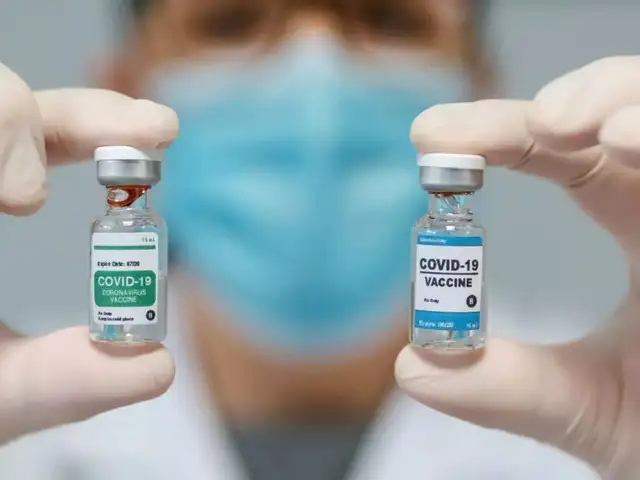
Prevention remains key. The best ways to prevent COVID infection continue to include vaccination, wearing appropriately-fitting face coverings, and physical distancing.
Meanwhile, if you have allergies, having an allergy management plan is essential. Make sure your treatment plan is current and that you have medications on hand in case you need them. (The article has been syndicated by PTI via The Conversation)
Beyond Delta: Scientist Track Other Coronavirus Variants With Potential Threat
1/5
The continued spread of the SARS-CoV-2 virus has spawned a Greek alphabet of variants - a naming system used by the World Health Organization (WHO) to track concerning new mutations of the virus that causes COVID-19. Some have equipped the virus with better ways of infecting humans or evading vaccine protection.
Scientists remain focused on Delta, now the dominant variant around the world, but are tracking others to see what may one day take its place.
The continued spread of the SARS-CoV-2 virus has spawned a Greek alphabet of variants - a naming system used by the World Health Organization (WHO) to track concerning new mutations of the virus that..
Read More
The Delta variant first detected in India remains the most worrisome. It is striking unvaccinated populations in many countries and has proven capable of infecting a higher proportion of vaccinated people than its predecessors.
The WHO classifies Delta as a variant of concern, meaning it has been shown capable of increasing transmissibility, causing more severe disease or reducing the benefit of vaccines and treatments.
According to Shane Crotty, a virologist at the La Jolla Institute for Immunology in San Diego, Delta's "superpower" is its transmissibility. Chinese researchers found that people infected with Delta carry 1,260 times more virus in their noses compared with the original version of the coronavirus. Some U.S. research suggests that the viral load in vaccinated individuals who become infected with Delta is on par with those who are unvaccinated, but more research is needed.
While the original coronavirus took up to seven days to cause symptoms, Delta can cause symptoms two to three days faster, giving the immune system less time to respond and mount a defense.
The Delta variant first detected in India remains the most worrisome. It is striking unvaccinated populations in many countries and has proven capable of infecting a higher proportion of vaccinated p..
Read More
The Lambda variant had attracted attention as a potential new threat, but this version of the coronavirus, first identified in Peru in December, appears to be receding.
Although cases involving Lambda were rising in July, reports of this variant have been falling globally for the past four weeks, according to data by GISAID, a database that tracks SARS-CoV-2 variants.
The WHO classifies Lambda as a variant of interest, meaning it carries mutations suspected of causing a change in transmissibility or causing more severe disease, but it is still under investigation. Lab studies show it has mutations that resist vaccine-induced antibodies.
The Lambda variant had attracted attention as a potential new threat, but this version of the coronavirus, first identified in Peru in December, appears to be receding.Although cases involving Lambda..
Read More
Mu, the variant formerly known as B.1.621, was first identified in Colombia in January. On Aug. 30, the WHO designated it as a variant of interest due to several concerning mutations, and assigned a Greek letter name to it.
Mu carries key mutations, including E484K, N501Y and D614G, that have been linked with increased transmissibility and reduced immune protection.
According to the WHO's Bulletin published last week, Mu has caused some larger outbreaks in South America and Europe. While the number of genetic sequences identified as Mu have fallen below 0.1% globally, Mu represents 39% of variants sequenced in Colombia and 13% in Ecuador, places where its prevalence has "consistently increased," WHO reported.
The global health agency said it continues to monitor Mu for changes in South America, especially in areas where it is co-circulating with the Delta variant. Maria van Kerkhove, head of WHO's emerging diseases unit, said circulation of the variant is decreasing globally but needs to be observed closely. In a press briefing last week, White House chief medical advisor Dr. Anthony Fauci said U.S. officials are watching it, but so far Mu is not considered an immediate threat.
Mu, the variant formerly known as B.1.621, was first identified in Colombia in January. On Aug. 30, the WHO designated it as a variant of interest due to several concerning mutations, and assigned a ..
Read More
Getting more people vaccinated against COVID-19 is critical as large groups of unvaccinated people give the virus more opportunity to spread and mutate into new variants.
That effort must be stepped up internationally to keep variants from emerging unchecked among the populations of poor nations where very few people have been inoculated, experts say.
Even so, while the current vaccines prevent severe disease and death, they do not block infection. The virus is still capable of replicating in the nose, even among vaccinated people, who can then transmit the disease through tiny, aerosolized droplets.
To defeat SARS-CoV-2 will likely require a new generation of vaccines that also block transmission, according to Dr. Gregory Poland, a vaccine developer at the Mayo Clinic. Until then, Poland and other experts say, the world remains vulnerable to the rise of new coronavirus variants.
Getting more people vaccinated against COVID-19 is critical as large groups of unvaccinated people give the virus more opportunity to spread and mutate into new variants.That effort must be stepped u..