Major General John Raaen Jr was the captain of the elite 5th Ranger Infantry Battalion the day the Allied troops stormed Omaha Beach at Normandy in June 1944. He recounts witnessing the battle from a protected area on the beach, his contemporaries being gunned down one after the other because they could not get past barbed wires.
“There was nothing but wire. Double-open wire that was impossible to breach. So the battalion commander told us to get out the Bangalores,” Raaen Jr said on The Weapon Hunter, a Smithsonian Channel show that reconstructed the D-Day battle from ground up. D-Day is the term given to the Allied invasion of the beaches of Normandy during World War II, which turned the tide against Adolf Hitler’s German army. “Without the Bangalore Torpedo, we would have never gotten off that beach,” he said.
The famous Bangalore Torpedo that he refers to was an explosive charge placed within one or several connected tubes. Also called as ‘Bangalore mine’, ‘Bangalore Banger’ or simply ‘Bangalore’, it was used to clear barbed wires or booby traps and was devised by the soldiers of the Madras Engineering Group (MEG). Informally known as Madras Sappers, they accompanied the British Army in their battles.
The first three of them being used in a war (Image: Madras Sappers Association) “The Bangalore Torpedo was invented in 1912 and first used towards the end of World War I,” said Tejshvi Jain, who is working on a year-long project around Bengaluru’s role in World War I. “The prototype was designed here and it later went on to be used in warfare across the world. In fact, it has many popular culture references, including the film Saving Private Ryan where Tom Hanks’s character is shown using a Bangalore Torpedo.” The Bangalore Torpedo was designed by Captain RL McClintock of the Madras Sappers. Approximately 1.8 metres in length, the path-clearing weapon had a smooth nose designed to penetrate its target, a number of empty sections that gave the torpedo required length and finally, additional empty pipes that were filled with explosives. Given its portability and effectiveness, it continues to be used even today.
ADVERTISEMENT
Urban historian Yashaswini Sharma said that the most initial and basic inspiration for the Bangalore Torpedo was the self-propelling rockets made by Tipu Sultan at Taramandalpete. “Tipu Sultan had collaborated with the French military to train his own army. These rockets had a range of 1,000 yards but the problem was it often missed its targets,” she said. “The British officers credited for the Bangalore Torpedo recalibrated and modernised Tipu Sultan’s invention.”
Recently, the Archaeological Survey of India unearthed over 1,000 war rockets belonging to Tipu Sultan at the Bidanooru Fort in Shivamogga. At the centenary year of the Bangalore Torpedo in November 2016, the Madras Sappers engineered a cocktail by the same name, with ingredients that represent India and Britain.
Plastic-Eating Enzymes And Other Accidental Discoveries That Changed The World
1/7
After scientists accidentally created mutant plastic-eating enzymes, we look at other unintentional discoveries that changed the world.
(Text: Shannon Tellis)
After scientists accidentally created mutant plastic-eating enzymes, we look at other unintentional discoveries that changed the world.
(Text: Shannon Tellis)
In the 1950s, pacemakers were large, television-sized machines that were temporarily attached to patients from the outside. Thankfully, a technical mistake by Wilson Greatbatch changed everything. While working on an os cillator to record heart sounds, he accidentally installed a 1-megaohm resistor instead of the 10,000-ohm variety. When the prototype started giving off a rhythmic electrical pulse very similar to the human heart, Greatbatch realised the device could be placed in someone’s chest to help their heart beat. He refined the device and was awarded a patent two years later.
In the 1950s, pacemakers were large, television-sized machines that were temporarily attached to patients from the outside. Thankfully, a technical mistake by Wilson Greatbatch changed everything. Wh..
Read More
This popular soft drink actually started as a medicine for morphine addicts. Post the American Civil War, pharmacist John Pemberton invented a recipe made from coca leaves and coca wines to combat his addiction to morphine. It was also marketed as an opium-free painkiller. When legislative prohibition hit a year later, Pemberton came up with a non-alcoholic version that became the beverage we know today. The first sales were at Jacob’s Pharmacy in Atlanta, Georgia, where it was as a patent medicine for five cents.
This popular soft drink actually started as a medicine for morphine addicts. Post the American Civil War, pharmacist John Pemberton invented a recipe made from coca leaves and coca wines to combat hi..
Read More
If you’ve ever reached out for these colourful sticky notes, you have 3M employee Arthur Fry to thank. In 1968, an employee was trying to develop a strong adhesive, but accidentally created a weaker one instead. Not knowing what to do with it, he abandoned the project. It was only six years later, when Fry needed a light adhesive to attach bookmarks to his church hymn book, that the idea for post-its was born. While the company was initially sceptical about the product’s use, they were launched in 1980 and are now sold in more than 100 countries.
If you’ve ever reached out for these colourful sticky notes, you have 3M employee Arthur Fry to thank. In 1968, an employee was trying to develop a strong adhesive, but accidentally created a weaker ..
Read More
While attempting to create an artificial quinine to treat malaria in 1856, teenage student William Perkins discovered a new colour while oxidising anilines (a colourless aromatic oil derived from coal tar).
He successfully isolated the purplish colour, creating the world’s first synthetic dye — mauveine.
While attempting to create an artificial quinine to treat malaria in 1856, teenage student William Perkins discovered a new colour while oxidising anilines (a colourless aromatic oil derived from coa..
Read More
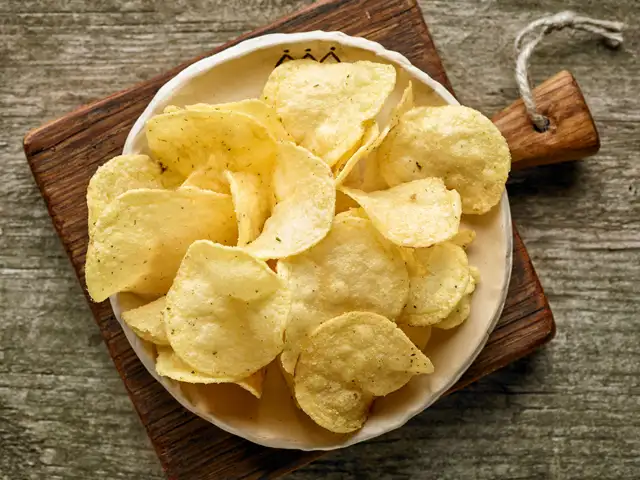
Fed up with a fussy customer who kept sending his fried potatoes back because they weren’t crunchy enough, New England chef George Crum is said to have sliced potatoes as finely as possible and salted them heavily in an attempt to make them inedible. To his surprise, the customer loved the deep-fried chips and asked for a second serving. The ‘Saratoga Chips’ became so popular that were soon mass-produced for home consumption.
Fed up with a fussy customer who kept sending his fried potatoes back because they weren’t crunchy enough, New England chef George Crum is said to have sliced potatoes as finely as possible and salte..
Read More
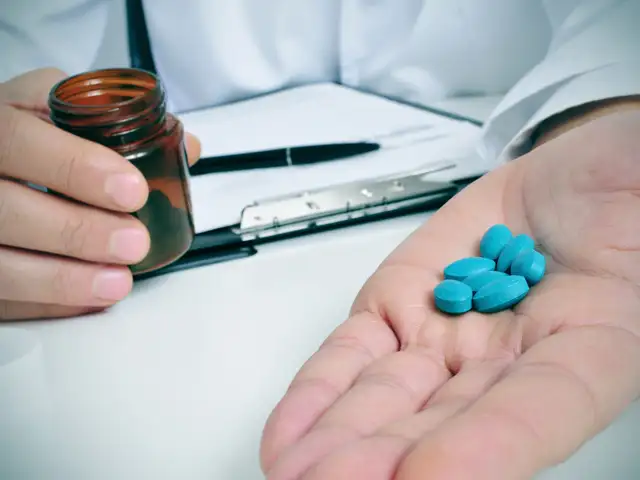
Strangely enough, this heart-attack inducing pill was invented during an experiment to prevent heart attacks. In the early 1990s, pharmaceutical giant Pfizer was testing sildenafil as a drug to treat angina (chest pain caused due to restriction of blood vessels). Midway through the trials, they realised that test subjects refused to return the pills because it helped their sex drive. And thus, the infamous little blue pill was born.
Strangely enough, this heart-attack inducing pill was invented during an experiment to prevent heart attacks. In the early 1990s, pharmaceutical giant Pfizer was testing sildenafil as a drug to treat..