Back in the game: Aston Martin and Jaguar Land Rover working on expensive continuation series
The continuation series has been the most controversial project.
By Bloomberg | Updated:
Agencies
By Hannah Elliott
Earlier this fall, Aston Martin Lagonda Global Holdings Plc announced it would make 19 new continuations of its classic DB4 Zagato GT from the 1960s.
They’ll be built at Aston Martin Works in Newport Pagnell, England, the company's in-house classic-car department, and will have the same all-aluminum bodywork of an original DB4 GT Zagato, digitally scanned from the original and then hand-finished for maximum authenticity. They’ll have exactly the same 380-horsepower, 3.8-liter, straight-six engine and a four-speed manual transmission as the original, too—which means it won’t be road legal for modern standards. Thankfully, it will come paired with a road-legal DBS GT Zagato; it’s all part of a DBZ Centenary Collection celebrating the Italian design house’s 100th anniversary. Pricing starts at $7.9 million for the pair.
But don’t expect to see them on the track for at least 18 months. If anything, the 105-year-old brand has learned to take its time.
“It’s a balancing act. The continuation series has been the most controversial of our projects,” says Simon Sproule, the vice president and chief marketing officer for Aston Martin Lagonda. “We have approached it with a cautious view. We know our strategy: We go slowly.”
Aston Martin DB4 Zagato GT from the 1960s.
ADVERTISEMENT
Loosely defined, a continuation car is a vehicle no longer in production that the original automaker begins producing again, usually in limited amounts such as nine, or 25, or 50. These are not restorations or replicas. The cars are built new in accordance with the original standards and engineering plan, although some contain modern components. The OEM might continue the VIN numbering right where it left off—or start at zero.
In August, Aston Martin announced it would make a limited run of 25 continuation Goldfinger DB5s, complete with the lethal spy gadgets seen in the film and the same Silver Birch paint. The first cars will be built in 2020 and will cost £2.75 million ($3.6 million).
Elsewhere in England, Jaguar Land Rover Ltd. has produced classic Jaguar XKSS, Lightweight E-Type, and D-Type continuation cars. The Tata Motors Ltd. brand announced the D-Type earlier this year. It will look exactly like the original D-type, which won the Le Mans 24 Hours race three times from 1955 to 1957, with the same monocoque cockpit fashioned from sheets of aluminum alloy and a fuel tank in its tail. The interior will have the same round speedometer dial; thin wooden, metal-perforated steering wheel (right-hand drive, of course); and four-speed manual shifter. The price tag will likely exceed $1.4 million.
(Land Rover’s forthcoming Defender V8s, which were discontinued in 2016, are slightly different: They’re conversions of old cars with low mileage, not continuations built completely from scratch to original specification.)
ADVERTISEMENT
Their sales success is uncontested. Virtually each continuation series offered from the likes of Aston Martin, Jaguar, Land Rover, and Zagato has sold out before the official announcement of the vehicle—and for plenty of cash. Most range in pricing from $350,000 to more than $1 million.
Porsche, Ferrari and Mercedes-Benz: The Futuristic And Fancy Cars At Geneva Motor Show
1/9
The ongoing 2018 Geneva Motor Show is the first major European car show of the year. Car makers pulled out all the stops to show off their latest and greatest.
From Ferrari to McLaren and Aston Martin to Mercedes, Geneva is packed with the next generation of exotics. In addition, there are a host of production-ready models from mass-market luxury brands. Automakers around the world are making sure that supercars of the future don’t stop at fuel stations.
Here’s a closer look at the eight coolest cars at the show:
The ongoing 2018 Geneva Motor Show is the first major European car show of the year. Car makers pulled out all the stops to show off their latest and greatest.
From Ferrari to McLaren and Aston Mart..
Read More
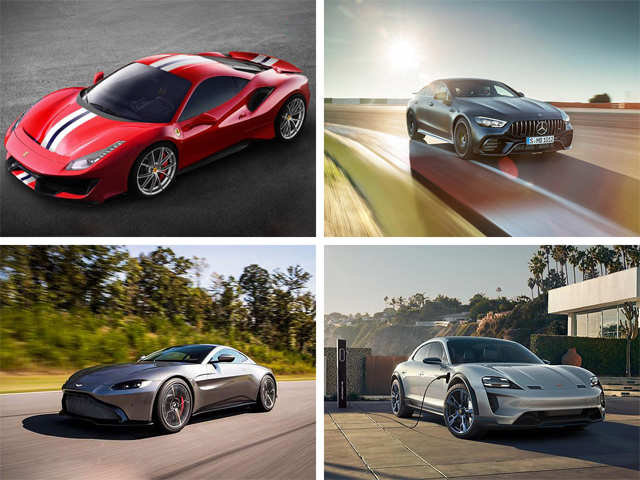
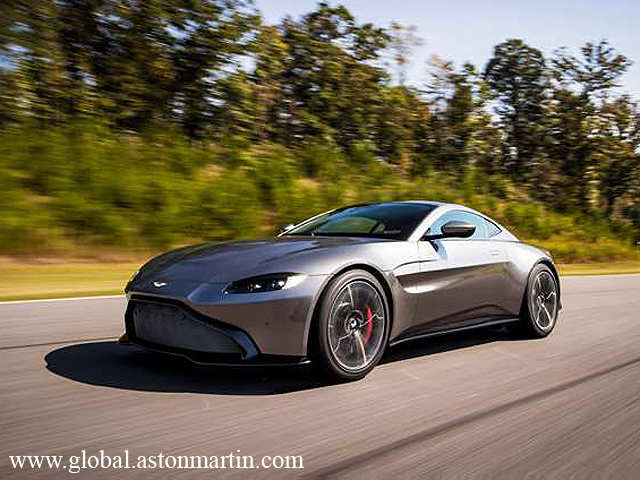
Geneva marked the auto show debut of Aston Martin’s new Vantage sports car — the automaker’s thoroughbred twin-turbocharged V8 sports coupe. The racer is in the final stages of an intensive development programme ahead of its international race debut at the 6 Hours of Spa-Francorchamps (in Belgium) in May.
Geneva marked the auto show debut of Aston Martin’s new Vantage sports car — the automaker’s thoroughbred twin-turbocharged V8 sports coupe. The racer is in the final stages of an intensive developme..
Read More
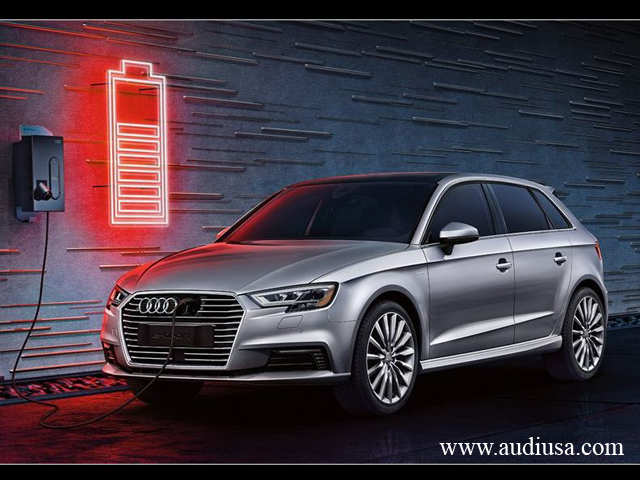
Audi unveiled its e-tron electric prototype — the luxury-class sport SUV that has a total output of 320 kW and sprints from a standstill to 100 kmph in 4.6 seconds. The e-tron claims to have a range of more than 500 kilometres for full everyday usability.
Audi unveiled its e-tron electric prototype — the luxury-class sport SUV that has a total output of 320 kW and sprints from a standstill to 100 kmph in 4.6 seconds. The e-tron claims to have a range..
Read More
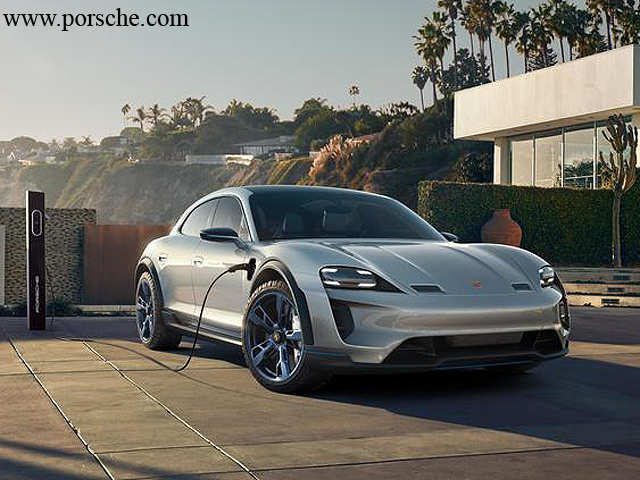
Porsche also introduced its Mission E Cross Turismo concept. It’s an all-electric crossover wagon designed to take on the Tesla Model X. The car can accelerate from zero to 100 kmph in less than 3.5 seconds and reach a speed of 200 kmph in less than 12 seconds.
Porsche also introduced its Mission E Cross Turismo concept. It’s an all-electric crossover wagon designed to take on the Tesla Model X. The car can accelerate from zero to 100 kmph in less than 3.5 ..
Read More
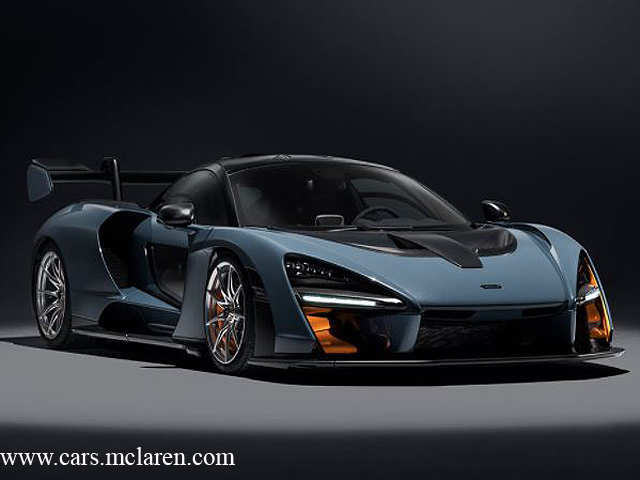
McLaren’s 789 horsepower Senna supercar is also a crowdpuller this year. It has the most powerful internal combustion engine McLaren has ever built, a staggering power-to-weight ratio of 668PS-per-tonne (659bhp), sprints from zero to 200 kmph in 6.8 seconds and has a top speed of 340 kmph.
McLaren’s 789 horsepower Senna supercar is also a crowdpuller this year. It has the most powerful internal combustion engine McLaren has ever built, a staggering power-to-weight ratio of 668PS-per-to..
Read More
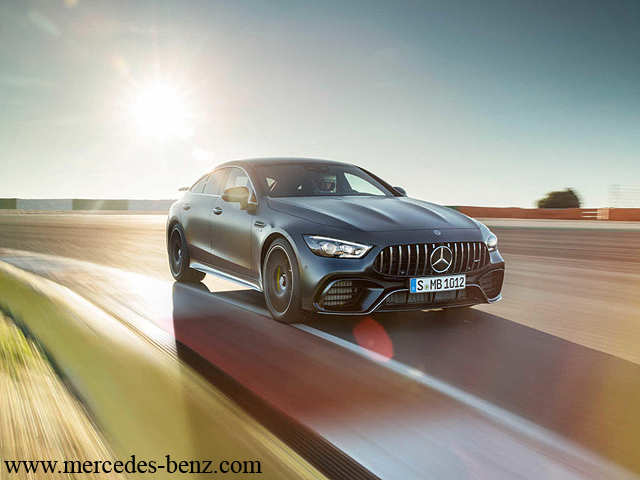
The new Mercedes-AMG GT four-door coupe arrived in production guise at the show. It combines sports car performance with the everyday suitability of an elegant fourdoor vehicle. Powerful R6 and V8 engines with a performance ranging from 320 kW/435 HP to 470 kW/639 HP accelerates the coupé to maximum speeds of 315 kmph.
The new Mercedes-AMG GT four-door coupe arrived in production guise at the show. It combines sports car performance with the everyday suitability of an elegant fourdoor vehicle. Powerful R6 and V8 en..
Read More
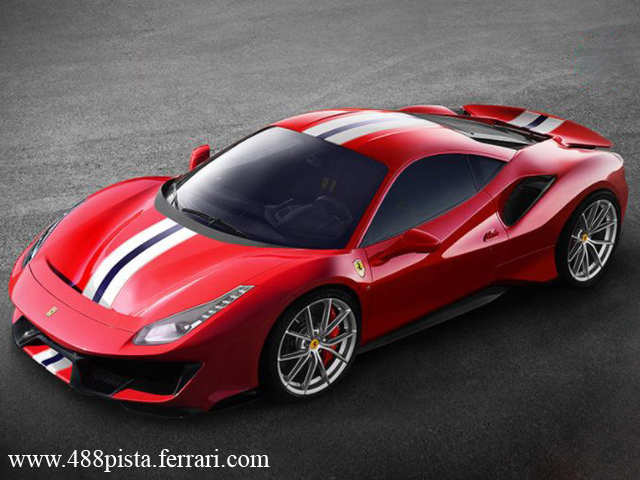
Ferrari’s new 711 horsepower 488 Pista was unveiled at the auto show. Its engine is the most powerful V8 in Ferrari history, weighs 90 kg less compared to the Ferrari 488 GTB, and is a step forward from the previous (Ferrari) special series in terms of sporty dynamics.
Ferrari’s new 711 horsepower 488 Pista was unveiled at the auto show. Its engine is the most powerful V8 in Ferrari history, weighs 90 kg less compared to the Ferrari 488 GTB, and is a step forward f..
Read More
BMW rolled out its new 8 Series Gran Coupe. It’s a four-door sports car that shows off BMW’s new design language that emphasises the car’s dynamism through its bodywork. The 8 Series Gran Coupe dons an all-new look with Salève Vert paint finish, whose colour appears to change from green to greyish blue in different lights.
BMW rolled out its new 8 Series Gran Coupe. It’s a four-door sports car that shows off BMW’s new design language that emphasises the car’s dynamism through its bodywork. The 8 Series Gran Coupe dons ..
Read More
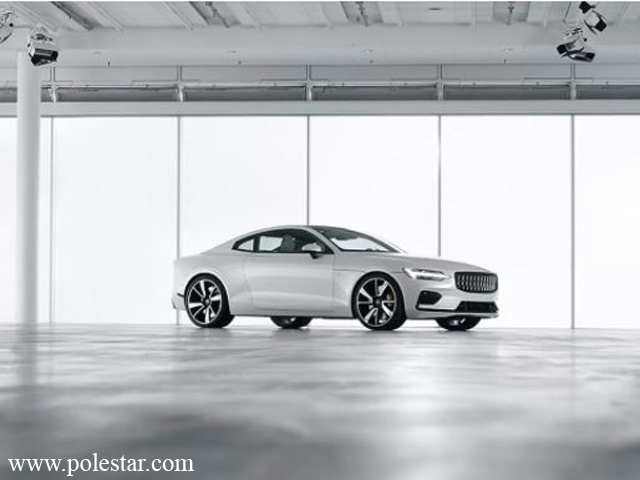
Visitors also got the first look of the allelectric offering from Volvo’s performance off-shoot, Polestar 1. It is an electric performance hybrid 2+2 GT coupé which produces 600 horsepower, 1,000 Nm of torque and 150 km of electric driving range — the longest of any hybrid car in the world.
Visitors also got the first look of the allelectric offering from Volvo’s performance off-shoot, Polestar 1. It is an electric performance hybrid 2+2 GT coupé which produces 600 horsepower, 1,000 Nm ..
“It’s a market that has created itself in the last five years,” Sproule says, describing the attention newer collectors pay to “modern classics” such as continuations. “There is a new breed of collector out there who is younger, has come into money through an [initial public offering]—or whatever it might be—and this new car collector is collecting modern classics.” It’s a reaction to general market interest in rare cars. “The sales numbers speak for themselves,” says Sproule.
Twenty years ago, a continuation car was worth half that of an original. In May 1998, a 1991 Aston Martin DB4 GT Zagato continuation sold for just over $500,000 at a Brooks auction, according to Hagerty records. The very next month, an original Zagato-bodied Aston Martin DB4 GT took $1.1 million at a similar auction.
Their values continue to hold, with prices of continuation cars still running at half or just under half the current value of the originals. And it doesn’t seem to be hurting the value of the actual classics.
“So far, our perspective is that continuation cars neither hurt nor enhance the value of the original cars,” Jonathan Klinger, a spokesman and analyst for Hagerty, tells Pursuits. “We certainly keep track. It’s a very calculated program the brands do; the last thing they want is to dilute their brand or hurt the market.” A flashy gem from an automaker’s past might not reflect well on the bland sedan it makes today.
For high-end brands, the value and rarity of certain blue-chip vintage items circulating through auctions and private sales always relates to, and sometimes informs, the value of their modern collectable cars.
The Counter Argument Continuation cars remain polarizing. Some say they mark the downfall of car society, encouraging relatively instant gratification and ease of driving, whether or not a particular car is original and authentic to its period.
“You can say they’re attracting people who don’t want the experience of an old classic car,” says Stephen Serio, owner of Aston Martin of New England and the Bond Group, a consultancy and brokerage firm for collectible cars. “It’s nothing more than a cash grab” for the companies, he says. “It cheapens the brand. It makes a mockery of it.’”
Audi, Mercedes-Benz & Kalashnikov: World’s Most Beautiful Concept Electric Cars
1/6
These e-car concepts made a quiet noise during the Pebble Beach Concours d’Elegance 2018.
These e-car concepts made a quiet noise during the Pebble Beach Concours d’Elegance 2018.
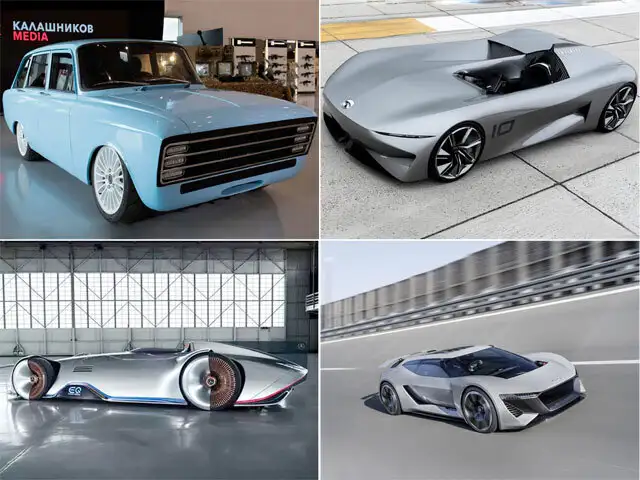
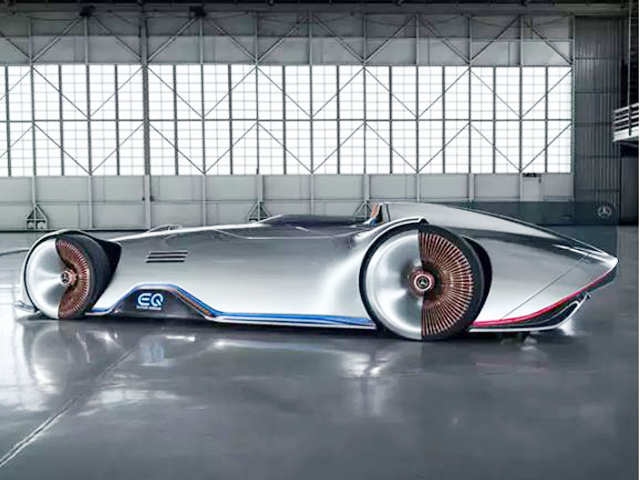
Mercedes-Benz unveiled a one-seater Vision EQ Silver Arrow show car that has a body made of carbon fibre, is powered by a rechargeable battery with a usable capacity of 80 kWh and has a calculated range of over 400 km. The interior has a digital cockpit — it includes a curved panoramic screen with back projection, and a touchscreen integrated into the steering wheel.
Mercedes-Benz unveiled a one-seater Vision EQ Silver Arrow show car that has a body made of carbon fibre, is powered by a rechargeable battery with a usable capacity of 80 kWh and has a calculated r..
Read More
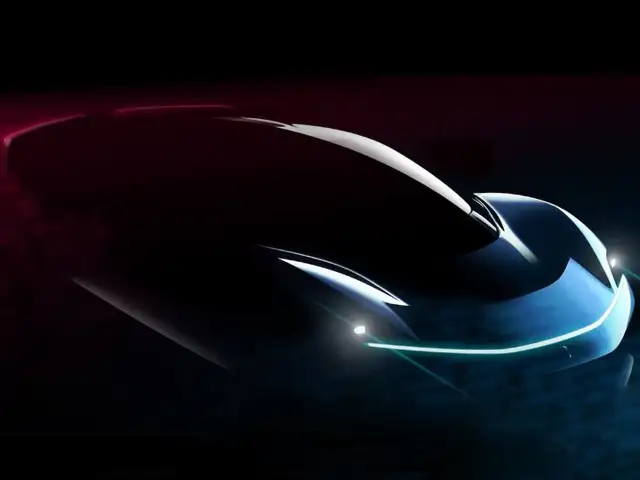
Automobili Pininfarina debuted its fully electric hypercar, codenamed PF0, at the show. Cloaked in a visually stunning body created from carbon fibre, extreme levels of technology and functional design define the PF0, delivering a staggering performance for a road car: a stated ambition to accelerate from 0-100 kmph in less than two seconds, break the 400 kmph top speed barrier, and provide a potential zero-emissions range of over 500 km.
Automobili Pininfarina debuted its fully electric hypercar, codenamed PF0, at the show. Cloaked in a visually stunning body created from carbon fibre, extreme levels of technology and functional des..
Read More
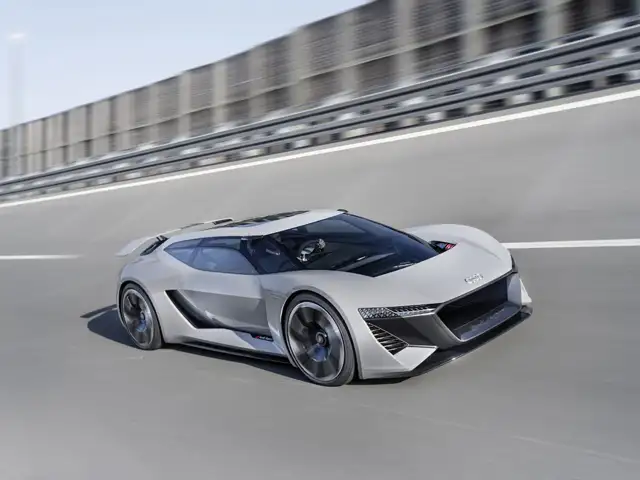
The German automaker unveiled the all-electric Audi PB18 e-tron that’s broad and flat, visibly inspired by the wind tunnel and the race track. The concept uses three powerful electric motors – one up front and two in the rear that deliver power output of up to 150 kW to the front axle and 350 kW to the rear. The car can accelerate from 0 to 100 kmph in just a little over two seconds.
The German automaker unveiled the all-electric Audi PB18 e-tron that’s broad and flat, visibly inspired by the wind tunnel and the race track. The concept uses three powerful electric motors – one u..
Read More
Infiniti also revealed a singleseat concept marrying the aesthetics of a classic grand prix racer with an electric powertrain and 21st-century materials. While the allelectric car hints at the striking future design cues from Infiniti, the Prototype 10 concept’s most important feature is its electric powertrain.
Infiniti also revealed a singleseat concept marrying the aesthetics of a classic grand prix racer with an electric powertrain and 21st-century materials. While the allelectric car hints at the strik..
Read More
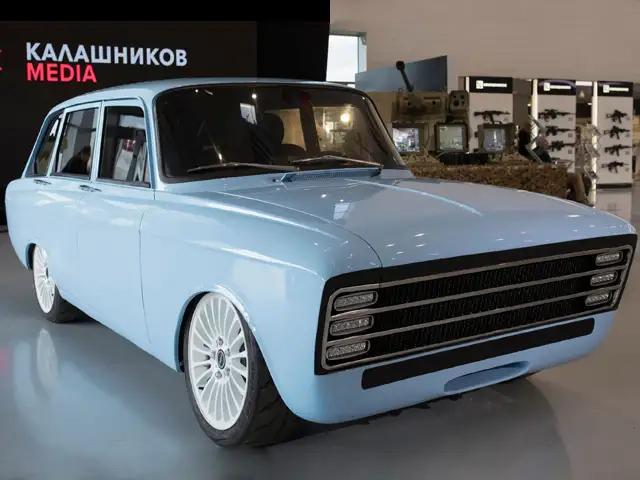
Far away from Pebble Beach, Kalashnikov — the company behind the AK-47 — last week unveiled a tiny all-electric retro car of its own, the CV-1. It has a broad front grille, a 350-kilometre driving range and is likely to help Kalashnikov enter the ranks of electric-car makers like Tesla. (Image: AFP)
Far away from Pebble Beach, Kalashnikov — the company behind the AK-47 — last week unveiled a tiny all-electric retro car of its own, the CV-1. It has a broad front grille, a 350-kilometre driving ra..
The vehicles can often be found twisted into things that aren’t OEM-made continuations but are close: replicas, recreations, kit cars, and the like. Exhibit A: In the 1980s, various third-party companies started building kit-style replica or “tribute” Shelby AC Cobra cars, with myriad levels of quality, engineering, and authentic provenance. Carroll Shelby himself authorized true continuations of the original AC-built Cobra series made by his own company, which served to further dilute the market.
Then there’s that thing about driving them: You can’t on city streets in Europe or the U.S., nor in historic races and rallies. Most of the cars aren’t homologated to comply with modern safety and emissions standards on public roads. For those who believe beautiful, powerful, iconic cars are meant to be driven, it’s an outrage.
“Why would you buy something you can’t drive?” Serio asks. “Maybe you can drive on the track for club days—so you spend millions of dollars on a car you can use twice or three times a year? This is just not cool.”
Sproule contends that many who buy the continuation Aston Martins already own the original cars; they just want something with which they can tool around on the track, even if infrequently.
“The buyers of the continuations are serious collectors. They understand the model; they understand what it is about,” he says. For those who can afford this high six- and seven-figure price point, it’s about having fun more than winning an investment proposition: “These are collectors at a level where they just want to have unique, fun cars. For them, it’s a new type of collectible car, so if you’re into James Bond and you’ve got a big car collection—and you’ve got everything—there’s some whimsy in collecting, isn’t there?”
The Good Stuff Jaguar has as good a reputation as any for making careful, exact continuations in extremely low batches. It’s not a wildly profitable program, says Tim Hannig, the director of Jaguar Land Rover Classic, though it does make money. He declines to specify exact revenue or profit margins, as does Aston’s Sproule.
“It washes its face and it pays my salary,” Hannig says. “But we don’t have so much money, we don’t know what to do with it.”
Rather, Hannig says, the real value of the continuation cars is the awareness and interest that they cultivate for Jaguar as a company. They’re hype machines.
“There was a lot of concern when we did the first lightweight E-Type [in 2014]—that it might deteriorate values—but the other way around happened,” he says. “Suddenly, people were talking about these cars. It promoted the car in its own right. It allows us in a different way to communicate about the past and show what we have as heritage.”
Alexander Weaver, a car specialist for RM Sothebys, concurs. He says it even works for cars that are borderline continuations, such as the gold-yellow metallic Porsche sold for $3.415 million last month at a Sotheby’s sale in Atlanta.
Since the one-of-one 993, which officially ended production in 1998, is a single, unique car built for charity, it’s not technically a continuation series. But it’s darned close. (Ask five people if they think it qualifies as “continuation” work, and you’ll get five different answers.)
More important, it garnered rabid internet and social media attention for Porsche Classic, the division that made it, and for another car also featured at the Atlanta sale, which Porsche AG will soon be selling in volume: the 911 Turbo S Exclusive Series.
“I think it was a great thing. Porsche were showing off a bit as to what they can do,” Weaver says. “It was a great way for them to launch the Turbo S Exclusive Series, and a very good way for them to show what they can do with Porsche Classic. The air-cooled market has been exceptionally strong—and was before the sale and will continue to be after the sale.”