Atul Gawande, Divya Nag and Raj Panjabi make it to Time's most-influential 'Health Care 50' US list
The Indian-Americans were named for their work in transforming US healthcare.
By PTI |
Agencies
(L-R) Atul Gawande, Divya Nag and Dr Raj Panjabi
HOUSTON: Three Indian-Americans have been named in the Time magazine's 2018 list of the 50 most influential people whose work is transforming healthcare in the US.
To put together the list, Time's team of health editors and reporters nominated people who made significant contributions to the state of healthcare in America this year.
Stress Patch, Solar Supercapacitor & More: Tech For Well-Being Is The Next Big Thing
1/7
From a stress-detecting patch to AI that mimics the human brain, the technology of the future is geared towards health solutions.
From a stress-detecting patch to AI that mimics the human brain, the technology of the future is geared towards health solutions.
A team of US researchers has developed an ‘artificial synapse’ that does not process information like a digital computer but rather mimics the way the human brain completes tasks. The discovery can lead to energy-efficient AI devices. The graphene-based neural networks can be employed in flexible and wearable electronics to enable computation at the ‘edge of the internet’ — places where computing devices such as sensors contact the physical world.
“By empowering even a rudimentary level of intelligence in wearable electronics and sensors, we can track our health with smart sensors, provide timely diagnostics, regulate and optimise the manufacturing process,” say the researchers.
A team of US researchers has developed an ‘artificial synapse’ that does not process information like a digital computer but rather mimics the way the human brain completes tasks. The discovery can ..
Read More
Scientists have developed a waterproof wearable patch, which when applied directly to the skin, absorbs sweat and within seconds assesses how much cortisol — stress hormone — a person is producing. “This offers a novel approach for the early detection of various diseases and evaluation of sports performance,” says lead author, Onur Parlak from Stanford University, US.
Scientists have developed a waterproof wearable patch, which when applied directly to the skin, absorbs sweat and within seconds assesses how much cortisol — stress hormone — a person is producing. ..
Read More
Google Glass can rekindle the hopes of people with autism spectrum disorder (ASD) globally, including in India. According to Ned Sahin, founder and CEO of Brain Power, a US-based science-driven company, Augmented Reality (AR)-powered wearable computers can help those with ASD gain confidence, clarity, understanding, social integration and self-sufficiency.
Google Glass can rekindle the hopes of people with autism spectrum disorder (ASD) globally, including in India. According to Ned Sahin, founder and CEO of Brain Power, a US-based science-driven comp..
Read More
Using wearable sensor technology, researchers have developed an automatic alert system that may help people to quit smoking by sending video messages. A smartphone app automatically texts 20 to 120-second video messages to smokers when the sensors detect specific arm and body motions associated with smoking. According to the researchers, the mobile alert system that they are testing may be the first that combines an existing online platform with mindfulness training and a personalised plan to quit smoking.
Using wearable sensor technology, researchers have developed an automatic alert system that may help people to quit smoking by sending video messages. A smartphone app automatically texts 20 to 120-..
Read More
A team of scientists led by an Indian-origin professor has developed a new solar-powered supercapacitor that could help make future wearable technologies lighter and more energy-efficient. The research could take the wearable systems for health monitoring to remote parts of the world where solar power is often the most reliable source of energy.
A team of scientists led by an Indian-origin professor has developed a new solar-powered supercapacitor that could help make future wearable technologies lighter and more energy-efficient. The resear..
Read More
Falls are a common cause of injury in older adults and can create health problems. A recent study under NIH’s Women’s Health Initiative to predict an individual’s risk of falling made 67 participants, all over the age of 60, wear a small device with motion sensors that measured their walking patterns for one week. They found that data extracted from the devices could accurately predict the participants’ risk of falling, as measured by physical examinations of unsteadiness in standing and walking.
Falls are a common cause of injury in older adults and can create health problems. A recent study under NIH’s Women’s Health Initiative to predict an individual’s risk of falling made 67 participant..
The publication then evaluated their work on originality, impact and quality. The list was broken up into four separate categories, including public health, treatments, cost and technology.
The list included physicians, scientists, business and political leaders, whose work is transforming healthcare.
ADVERTISEMENT
Divya Nag At not even 30, Nag is leading Apple's special projects focusing on health. Nag's team developed ResearchKit, an open-source app developer for doctors and researchers to share patient results and clinical data, and this fall it announced groundbreaking new tools for the Apple Watch: the Series 4 includes an emergency response system, in case the wearer falls and doesn't respond, and a medical-grade EKG heart-rate monitor. Dr Raj Panjabi A Harvard Medical School professor who came to the US as a refugee from Liberia, Panjabi co-founded Last Mile Health to recruit and train community health workers in areas that lack local health services. Last Mile's efforts were crucial in fighting Ebola from 2014 to 2016, and now Panjabi is building Community Health Academy, a mobile platform for training health care workers remotely through video and audio instruction. Atul Gawande Gawande was tapped to lead a new nonprofit health care venture that will cover the more than 1 million employees of Amazon, Berkshire Hathaway and JPMorgan Chase. Though few details are public, it's said to focus on transparent, low-cost corporate health care.
"The American health care system has been plagued for decades by major problems, from lack of access to uncontrolled costs to unacceptable rates of medical errors," the Time editors wrote in a report unveiling the list.
ADVERTISEMENT
"And yet, real as those issues remain, the field has also given rise to extraordinary innovation," the editors added.
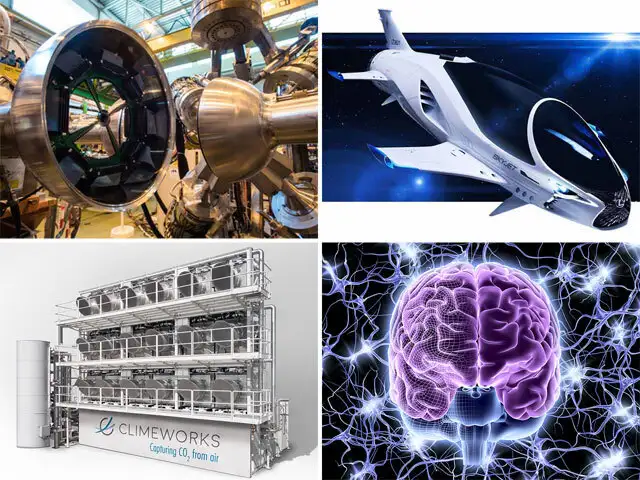
Next Horizon Of Science: AI To Diagnose Brain Haemorrhage, Spacecraft For Intergalactic Travel
1/6
From AI that can diagnose stroke to scientists taking antimatter for a truck ride, here’s everything exciting about technologies that are going to shape our future. (Text: Rajarshi Bhattacharjee)
From AI that can diagnose stroke to scientists taking antimatter for a truck ride, here’s everything exciting about technologies that are going to shape our future. (Text: Rajarshi Bhattacharjee)
Hate carbon dioxide for heating up the planet? Switzerland has a giant machine that sucks carbon dioxide from air and performs better than plants. In essence, it’s a gigantic artificial tree. Zurichbased Climeworks AG is the world’s first ever commercial plant that can capture CO2 from the air on an industrial level. The amount (900 tonnes) of carbon dioxide the plant draws annually is approximately the same as the amount emitted by 200 cars in the same time.
(Image: www.climeworks.com)
Hate carbon dioxide for heating up the planet? Switzerland has a giant machine that sucks carbon dioxide from air and performs better than plants. In essence, it’s a gigantic artificial tree. Zurich..
Read More
Scientists at the Icahn School of Medicine at Mount Sinai in US have developed an artificial intelligence platform that can identify disease in brain CT scans in 1.2 seconds, and diagnose a range of acute neurological illnesses, such as stroke, and haemorrhage. The study shows that the system was faster than human diagnosis. This is the first study to utilise AI for detecting acute neurologic events and demonstrate a direct clinical application.
Scientists at the Icahn School of Medicine at Mount Sinai in US have developed an artificial intelligence platform that can identify disease in brain CT scans in 1.2 seconds, and diagnose a range of..
Read More
Remember the pursuit craft driven by Valerian (Dane DeHaan) in the 2017 movie Valerian and the City of a Thousand Planets? US design and technology company Lexus has a concept of the futuristic single-seat craft called Skyjet that will take the future humans on intergalactic trips. Powered by a compact fuel-cell capsule, the Skyjet will fly on clean, renewable energy for space travel, sometime around 2740.
(Image: www.lexus.co.uk)
Remember the pursuit craft driven by Valerian (Dane DeHaan) in the 2017 movie Valerian and the City of a Thousand Planets? US design and technology company Lexus has a concept of the futuristic sing..
Read More
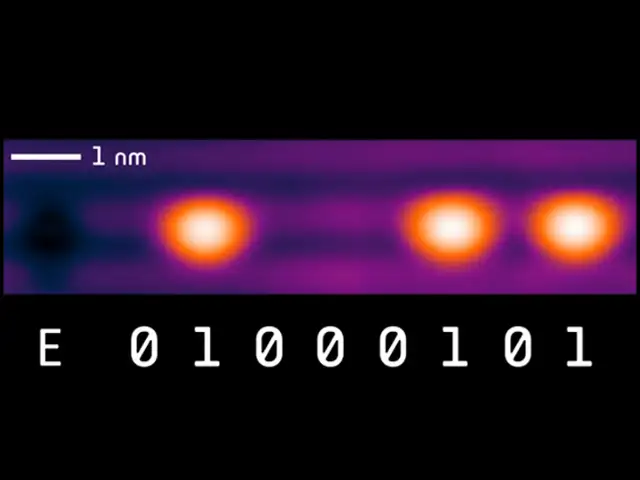
The most dense, solidstate memory in history is here. It could soon exceed the capabilities of current hard drives by 1,000 times. Scientists at the University of Alberta in Edmonton, Canada say they can use hydrogen atoms to boost storage capacity. They were able to reach a storage density of 128TB per square inch. That’s much ahead of current 10TB hard disks which have approximately 512GB per square inch.
(Image: www.ualberta.ca)
The most dense, solidstate memory in history is here. It could soon exceed the capabilities of current hard drives by 1,000 times. Scientists at the University of Alberta in Edmonton, Canada say the..
Read More
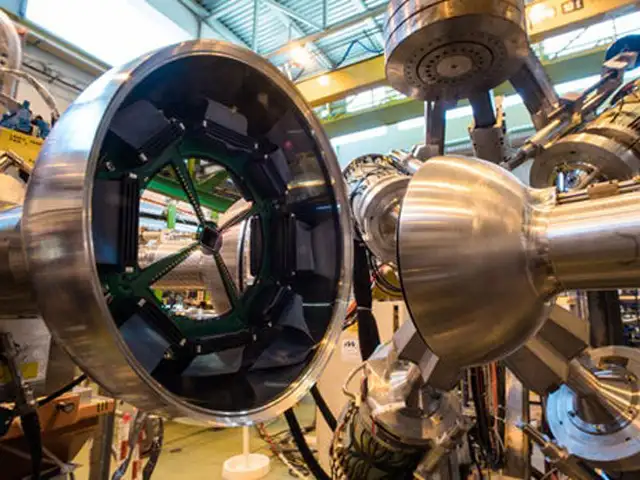
We know antimatter is highly volatile — when it comes into contact with matter, the two annihilate each other. However, physicists at CERN in Switzerland have learned to control it so well that they are now preparing to transport antimatter by truck and then use it to study the strange behaviour of rare radioactive nuclei.
(Image: Julien Marius Ordan-CERN - https://home.cern)
We know antimatter is highly volatile — when it comes into contact with matter, the two annihilate each other. However, physicists at CERN in Switzerland have learned to control it so well that they..