Specifications: 6.26-inch 19:9 IPS, 2280 x 1080 pixels, octa-core Snapdragon 660 processor, 3/4/6GB RAM, 32/64GB storage, dedicated microSD slot (up to 512GB supported), 12MP f1.8 + 5MP f2.0 dual rear camera, 13MP f2.0 front camera with LED flash, WiFi n, Bluetooth 5.0, GPS, NFC, rear fingerprint scanner, Android 8.1, 5,000mAh, 175 grams Pros: Value for money, great performance, best in class battery life, stylish design, excellent rear and front cameras, stock Android interface, loud speakers Cons: Plastic body, screen brightness could be better, glossy back prone to scratches, doesn’t support WiFi ac, no option to hide the notch
Asus had a great year as far as smartphones go. They completely revamped their smartphone lineup in the entry, mid-range and premium segment. What really stood out was the ZenFone Max Pro M1 — a mid-range smartphone with massive battery, stock Android and best-in-class specifications. Now, Asus has launched a successor — ZenFone Max Pro M2. Most of the improvements on this phone have been suggested by Max Pro M1 users.
ADVERTISEMENT
As expected, the Max Pro M2 has significantly updated hardware. It is powered by an octa-core Snapdragon 660 processor with an option of 3/4/6GB RAM and 32/64GB storage. At Rs 12,999, this is the cheapest smartphone with the Snapdragon 660. Our review unit is the 4GB RAM variant which is also the one we would recommend for most users. The phone gave no problems in day to day task, switching between 20 running apps as well as playing games like PUBG and Asphalt 9. We ran PUBG on high settings with anti-aliasing switched off — the game ran without an issue and the phone was only slightly warm after 45 minutes of gaming.
Foldable Phones, Notch-Free Display: Smartphone Tech To Watch Out For In 2019
1/7
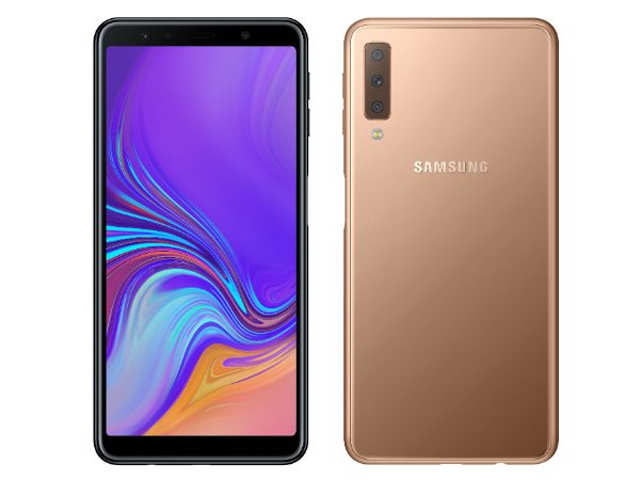
While the Google Pixel 3 and iPhone XR continue to push the boundaries of a single smartphone camera, other companies have not stopped there. Dual cameras became a norm in 2018 and we’ve also seen them in sub Rs10k phones. Huawei was first with a triple camera smartphone (P20 Pro) and others followed suit. Samsung Galaxy A7, LG V40, Oppo R17 Pro and Huawei Mate 20 Pro were some of the phones with triple rear cameras. Samsung didn’t stop there and went on to launch a phone with quad cameras – the Samsung A9. For 2019, there are already rumours of a Nokia phone with five rear cameras and we expect more companies to follow the trend. You can expect all major brands to have phones with multiple cameras across price brackets. According to us, having multiple cameras only makes sense when you get good results and flexibility (wide, macro, tele lenses).
(In Pic: Samsung Galaxy A7)
While the Google Pixel 3 and iPhone XR continue to push the boundaries of a single smartphone camera, other companies have not stopped there. Dual cameras became a norm in 2018 and we’ve also seen th..
Read More
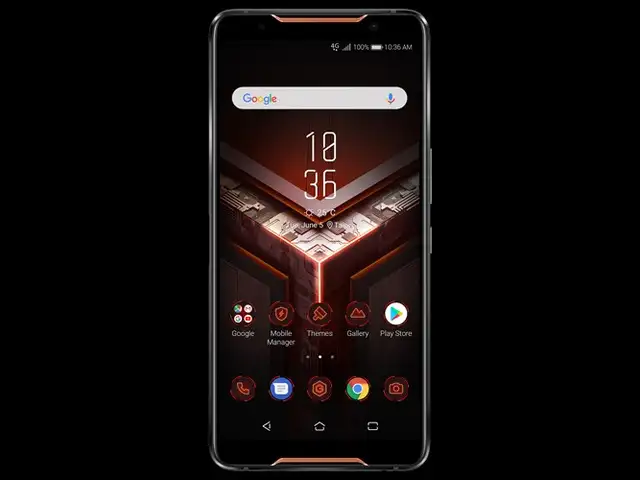
Battery technology simply hasn’t kept pace with smartphone development. One solution to this is to have phones with larger batteries but this also makes the device larger/heavier. The other logical solution is to make the batteries charge faster. OnePlus users have enjoyed the super-fast Dash Charge feature. A number of smartphones also come with Qualcomm’s QuickCharge 3.0. In 2018, we saw devices go beyond and develop their own ultrafast charging technologies. Oppo showed everyone how it’s done with SuperVooc charging on the Find X and R17 Pro. Huawei Mate 20 Pro has Super Charge 2.0, OnePlus launched WarpCharge on the OnePlus 6T McLaren edition while the Asus ROG has QuickCharge 4.0 support. These phones are capable of charging phones from 0 to 50% in less than 30 minutes which is good for about a day of battery life. In 2019, this ultrafast charging tech should be available on more smartphones.
(In Pic: ASUS ROG Phone)
Battery technology simply hasn’t kept pace with smartphone development. One solution to this is to have phones with larger batteries but this also makes the device larger/heavier. The other logical s..
Read More
We see new smartphone features every few months – starting from CES in January to various events through the year. We are also likely to see more of Qi wireless charging, phones without 3.5mm port, IR assisted face unlock, glass backs on entry-level devices, smaller, teardrop shape notches. Here are some of the favourites that are expected to be a lot more visible in the coming year.
(In Pic: The FlexPai from Royole)
We see new smartphone features every few months – starting from CES in January to various events through the year. We are also likely to see more of Qi wireless charging, phones without 3.5mm port, I..
Read More
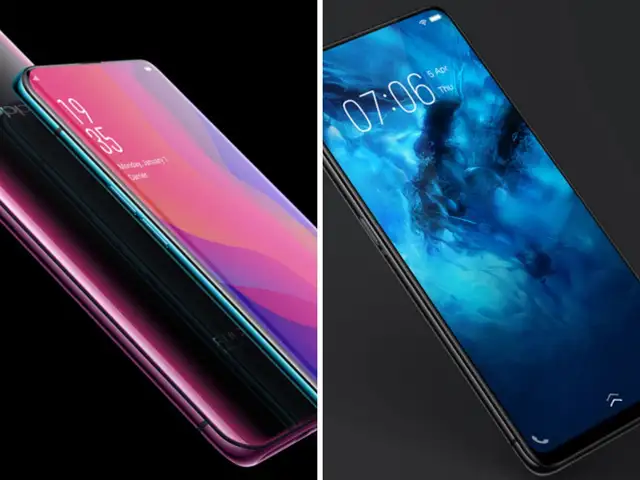
While we first saw the notch in 2017, 2018 was when it came to even at entry-level devices. It’s now so prevalent that more people seem to hate it rather than understand why it’s there. Thankfully, we also saw smartphone brands take a step ahead with allscreen designs (without any notch). Phones like Oppo Find X and Vivo NEX and still on sale but you do have to pay a premium for the design. For 2019 we expect the all-screen design to take center stage as display prices come down. By the end of 2019, we should see mid-range smartphones with all-screen designs.
(In Pic: On the left is the Oppo Find X, and on the right is the Vivo NEX)
While we first saw the notch in 2017, 2018 was when it came to even at entry-level devices. It’s now so prevalent that more people seem to hate it rather than understand why it’s there. Thankfully, w..
Read More
Foldable smartphones have been a concept for a long time now with a few proof of concept devices being shown off at international events. Things escalated quickly in 2018 with Samsung and Huawei announcing that their foldable smartphones will debut in 2019. Samsung showcased a working prototype of their foldable smartphone at an event recently showing how close they are to a consumer device. Another little-known Chinese company called Royale surprised everyone by launching the world’ first foldable smartphone called FlexPai (it’s supposed to go on sale in China by the end of this year). We might just see the first foldable phone next year but you should expect it to be a halo product with a stratospheric price tag.
(In Pic: Samsung's foldable phone which is likely to hit markets in 2019)
Foldable smartphones have been a concept for a long time now with a few proof of concept devices being shown off at international events. Things escalated quickly in 2018 with Samsung and Huawei anno..
Read More
4G and VoLTE is commonplace now thanks to Jio’s cross country network (and their affordable data packages brought prices down for everyone). The DoT has announced that they expect to complete the process of 5G spectrum auction by August 2019 which means that there are chances we might see 5G rollout by end of 2019. While the network rollout is not clear at the moment, the hardware for 5G is already ready. Qualcomm has already announced that they have over 15 smartphone OEMs committed to 5G for 2019. A number of them including OnePlus, Oppo and Huawei have also announced 5G phones for 2019 (we’ll see the first wave of announcements at the Mobile World Congress 2019).
4G and VoLTE is commonplace now thanks to Jio’s cross country network (and their affordable data packages brought prices down for everyone). The DoT has announced that they expect to complete the pro..
Read More
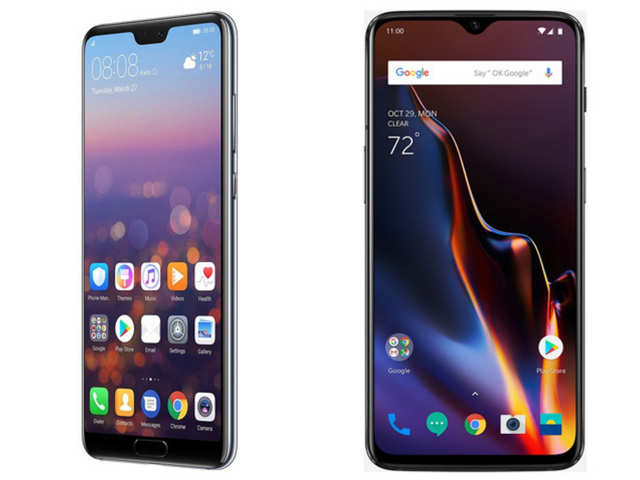
As a personal choice, we prefer capacitive fingerprint scanners on smartphones (simply because they’re faster and more accurate). However, the next generation of fingerprint scanners (embedded in the smartphone display) are already a reality. We’ve seen in-display scanners on Vivo NEX, Vivo V11 Pro, Huawei Mate 20 Pro and the OnePlus 6T. Capacitive scanners also had their share of issues initially and the speed/accuracy improved over the years – we expect the same to happen with in-display fingerprint scanners. One of the things holding back the in-display scanners is that they can only work on devices with amoled screens (which are more expensive than LCD). Qualcomm recently announced ultrasonic in-display fingerprint scanning technology that can work on any type of screen and even through metal.
(In Pic: On the left is the Huawei Mate 20 Pro, and on the right is the OnePlus 6T)
As a personal choice, we prefer capacitive fingerprint scanners on smartphones (simply because they’re faster and more accurate). However, the next generation of fingerprint scanners (embedded in the..
Apart from the stellar performance, the highlight of the phone is battery life. The 5,000mAh battery regularly lasted us for two full days. It was only with really heavy usage (3 hours of GPS navigation, 3 hours of PUBG gaming, an hour of video calls, multiple benchmarks and 2 hours of voice calls) that the phone’s battery dropped below 20% in a single day. Much to our surprise, the Max Pro M2 weighs just 175 grams even with the large 5,000mAh battery.
In comparison, the Realme 2 Pro with a 3,500mAh battery weighs 174 grams. The main reason for this is that the phone has a plastic body and not metal. Asus has opted for a glossy back with what they call a wave finish design that changes hue with different ambient light. The back has a curved design which gives a good fit in hand and also adds to the overall look of the phone.
While this looks great, the glossy finish also tends to pick up smudges and scratches quickly — within a week of usage there were a number of scratches on the back. It is highly recommended that you use the phone with a back cover. Up front is a 6.26-inch IPS display with 19:9 aspect ratio and a resolution of 2280 x 1080 pixels. Asus has used the latest Gorilla Glass 6 for protection – this is amongst the first phones with GG6 in this price segment.
ADVERTISEMENT
Asus says this phone has a smallest full function notch — the notch houses the speaker, camera, various sensors, notification led and even a front LED flash. The screen shows vivid colours and has good sharpness, but the maximum brightness level is not up to the mark. This leads to poor sunlight legibility which makes it difficult to view onscreen content when using the phone under direct sun.
Also, there is no option to hide the notch at the moment in the phone. The other big upgrade on the Max Pro M2 is in the camera department. The rear has a dual camera setup (12MP + 5MP) with the Sony IMX 486 sensor — just like the Mi A2 — one of our favorite camera phones of the year. The Max Pro M2 matches up to the Mi A2 in its camera performance — photos have good detail, the edge detection is great so is the bokeh effect. Low light photos suffer from visible noise but the images still have enough details to view on phone or share on social media.
ADVERTISEMENT
Video recording is supported in 4K resolution and we found the video quality to be great for the price. You get a 13MP front camera with f2.0 which captures selfies with good amount of details. One big advantage for selfies on the Max Pro M2 is the front LED flash for low light environments. Only letdown is that there is no portrait mode for the front camera at the time of writing — Asus has promised that this feature will be added via next software update. There are a few other features that we liked on the phone.
The first being the use of stock Android UI which enhances performance and battery life. However, it is not part of Android One, so the software updates will not come as fast as Android One devices. The other things we liked are the loud speakers and fast fingerprint scanner. What we did not like was the slow face unlock and the fact that the Pro M2 does not support the faster WiFi ac connectivity.
In our opinion, Asus has another winner on its hands with the ZenFone Max Pro M2. It offers excellent value for money with a feature set suitable for any kind of user. The closest competition to the Pro M2 is the Realme 2 Pro. It has a Snapdragon 660, 4GB RAM, 64GB storage option at Rs 13,990 with WiFi ac support, better face unlock and marginally better cameras. But the Realme has a smaller battery, skips the stock Android UI and uses Gorilla Glass 3 for protection.