VR for health, gadget-vending machines at work: Tech that will affect you in 2019
Spending on AR and VR products and services is forecasted to reach $27 billion this year.
By ET CONTRIBUTORS |
Getty Images
Smart vending solutions is another trend propelled by transformation in the workplace that enables employees to procure various IT products, from fully configured laptops all the way down to a mouse, keyboard or headset.
By Rohit Midha
Life as we know it is in a state of transition; everything around us is getting smarter, from our PCs to conference room systems to our lightbulbs. As humans and societies, we are adapting and evolving the way we engage with technology - in the workplace and at home - for faster consumption and productivity, and more convenient connections.
Many of these advances in technology are working towards a greater sense of good, improving our quality of life. In 2019, the dawn of limitless connectivity, full automation, and immersion into extended realities will inch closer than ever before.
Everything’s getting smarter, so what’s missing? Smart spaces – whether physical or digital – are those wondrous environments where humans, devices and systems interact in open, connected and efficient ways. Smart cities, homes, and digital workspaces are all on the rise.
So where are the gaps? Research shows that saving time, creating comfort and enabling authentic human connections are what people value most in technology. If a smart piece of technology doesn’t serve those core human needs, then users will be just as fast to abandon it as they are to adopt.
ADVERTISEMENT
For consumers that means a much less frustrating and time-consuming experience when setting up their smart home with devices from a slew of different manufacturers with little-to-no integration. The smart home category will continue to expand as advantageous solutions that offer quick configuration, a painless user experience, and interoperability between devices and ecosystems will be deployed.
Spatial Computing, Digital Afterlives, PII: Tech Terms To Know In 2019
1/6
By Rajarshi Bhattacharjee
Do you know some apps on your phone could be tracking your device usage with an ultrasonic beacon? Or that you can achieve digital immortality with a few clicks? Here are a few emerging technologies you shouldn’t miss.
(Image: Getty)
By Rajarshi BhattacharjeeDo you know some apps on your phone could be tracking your device usage with an ultrasonic beacon? Or that you can achieve digital immortality with a few clicks? Here are a f..
Read More
At present, mobile computing is defined by our ability to move around with devices. The next is spatial computing, which will allow us to use space as a medium to interact with technology. Since space is the native medium of human interaction, spatial computing is easier to use and quicker to learn. It will make human-computer interaction more like our real-world interaction.
At present, mobile computing is defined by our ability to move around with devices. The next is spatial computing, which will allow us to use space as a medium to interact with technology. Since spac..
Read More
Personally identifiable information or PII, is any data that could potentially be used to identify a particular person. It is the first category of information that the General Data Protection Regulation (GDPR) in the EU protects. It covers information such as names and national identifiers like social security numbers (SSN) in the US and European identifiers such as driver’s licence numbers, etc. PII is among the most critical info targeted during data breaches and identity theft. Exposed PII can be sold on the dark web and used for identity theft, putting breach victims at risk.
Personally identifiable information or PII, is any data that could potentially be used to identify a particular person. It is the first category of information that the General Data Protection Regula..
Read More
Some apps in our smartphones can track us through ultrasonic tones. These tones can’t be picked up by the human ear, but the apps are always listening for them. The technology is called ultrasonic cross-device tracking and works by emitting high-frequency tones from ads, billboards, web pages and across retail outlets, etc. Apps with access to the phone’s microphone can pick up these tones and build a profile about your smartphone usage and, in some cases, even the websites you have visited.
Some apps in our smartphones can track us through ultrasonic tones. These tones can’t be picked up by the human ear, but the apps are always listening for them. The technology is called ultrasonic cr..
Read More
It is not exactly a new term. In fact, it’s a field that’s more than 20 years old. Unlike traditional cryptology methods — encoding and decoding information or messages — quantum cryptology depends on physics, not mathematics. The encryption is encoded by a key, which is generated using photons. Since the method uses physics instead of math to create the key, there is little chance that it can be cracked using mathematics.
It is not exactly a new term. In fact, it’s a field that’s more than 20 years old. Unlike traditional cryptology methods — encoding and decoding information or messages — quantum cryptology depends o..
Read More
All the information that gets recorded about your life on every digital platform you access can be used to make a ‘digital ghost’ or, in other words, a biography of your entire life. And that information can be used to create your new life in a simulated virtual universe. Another concept to digital immortality is ‘mind-uploading’, wherein at the end of your life, the brain gets mapped and scanned. The scan data is then used to start your new life in a simulated universe.
All the information that gets recorded about your life on every digital platform you access can be used to make a ‘digital ghost’ or, in other words, a biography of your entire life. And that informa..
The adoption of PCs with smarter, connected features like voice recognition, biometric authentication and always-on connectivity, alongside an emerging category of smart displays that combine sight (touchscreen displays) with sound (voice assistants) will also evolve the way we engage with technology.
In the workplace, it is all about the employee experience – not simply about tech or spaces, but about culture and how the three merge together. In order to attract and retain the best talent as well as drive innovative and profitable organisations, employers must recognise and accommodate the changes in how the new generation works, and what they expect at the workplace.
Tech-enriched spaces that are configurable and flexible are certainly trending, but everyone still needs a sense of comfort and belonging. Forward-thinking organisations will start turning their attention to the concept of transitional, mobile engagement, and spaces that foster greater collaboration and human connection - whether in hallways, cafeterias or huddle rooms. These communal spaces will require smarter, more democratic and agile tools for instant collaboration and co-creation, including smart meeting room solutions, interactive displays and more. Furthermore, as the tech-savvy Gen Z enters the workforce, they expect control over the types of technology available to them – often favouring the technology they grew up with and use in other spheres of their lives.
ADVERTISEMENT
What's Making News In Tech: SIM-Free Data Service, Android Satellite Phones
1/4
There’s a lot happening in the gadget space this last quarter, apart from the glut of new product launches. Hitesh Raj Bhagat talks about some of the interesting news items from the world of consumer technology.
There’s a lot happening in the gadget space this last quarter, apart from the glut of new product launches. Hitesh Raj Bhagat talks about some of the interesting news items from the world of consumer..
Read More
Movie buffs probably know all about how images of the black hole in the movie Interstellar were created — staying as true as possible to the original by using computational analysis. But now, you can explore a little bit more in depth, thanks to Scientists at the Radboud University (The Netherlands) and Goethe University (Germany). They used recent astrophysical models of a black hole Sagittarius A* to create a series of images that were used to create a 360-degree virtual reality simulation of a black hole. You can view it using any commercially available VR headset — we recommend using the Google Daydream and a compatible smartphone. The entire simulation has been uploaded to YouTube — within the YouTube app on the VR headset, search for Black Hole VR (uploaded by BMC or BioMed Central) and prepare to be amazed!
Movie buffs probably know all about how images of the black hole in the movie Interstellar were created — staying as true as possible to the original by using computational analysis. But now, you can..
Read More
Although announced earlier, this feature has only just gone live. Thanks to a partnership with Microsoft, Skype now works on the Echo, Echo Plus, Echo Dot or Echo Spot. To enable this, open the Alexa app on your phone and head to Settings > Communications. You will see the option to add Skype. It will re-direct you to a web browser where you can sign in with your Microsoft/Skype credentials (to allow Alexa access to your Skype account). Once linking is complete, you will receive 200 free minutes of Skype calling to 34 countries (100 minutes per month for two months). To use your Echo Dot to call on Skype, you can say, ‘Alexa, Skype mom’.
Although announced earlier, this feature has only just gone live. Thanks to a partnership with Microsoft, Skype now works on the Echo, Echo Plus, Echo Dot or Echo Spot. To enable this, open the Alexa..
Read More
The Thuraya X5-Touch sits somewhere in-between a sleek Android phone and those massive, heavy satellite phones with external antennas. It offers a retractable satellite antenna, dual SIM functionality (one of them is for conventional 4G GSM networks) and a 5.2-inch 1080p IPS LCD touchscreen. The specs resemble a mid-range Android phone: Snapdragon 625, 2GB RAM, 16GB storage, 8MP rear camera, 2MP front camera, 3,800mAh battery, IP67 + MIL-STD-810 certification and a weight of 262 grams. Expected price is about US$ 1300 and it launches this December. That being said, you should know that use of satellite phones is still restricted in India. You can do so only with the prior, written permission from the DoT.
The Thuraya X5-Touch sits somewhere in-between a sleek Android phone and those massive, heavy satellite phones with external antennas. It offers a retractable satellite antenna, dual SIM functionalit..
Another aspect of workplace transformation will be the organisations’ ability to deploy pre-configured, or ready-for-cloud configured devices to their workforce. Smart vending solutions is another trend propelled by transformation in the workplace that enables employees to procure various IT products, from fully configured laptops all the way down to a mouse, keyboard or headset. The smart part of these vending solutions takes the tedious paperwork out of the procurement process and empowers employees and end-users to focus on productivity.
ADVERTISEMENT
Tech for good: How IoT, AI and AR/VR are making us happier and healthier The Internet of Things (IoT), artificial intelligence (AI) and augmented reality/virtual reality (AR/VR) are hot industry topics. The adoption of these intelligent offerings will continue to scale into different verticals from manufacturing to education, retail and more in 2019. In fact, according to a recent Accenture study, 72 percent of health executives agree that extended reality will be widespread, and impact virtually every industry over the next five years.
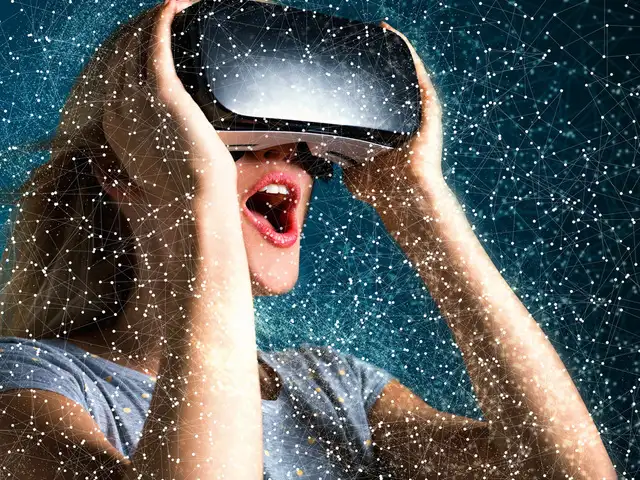
In the healthcare sector for example, IoT and AI-enhanced applications have the capability to solve some of humanity’s greatest challenges. Reducing emergency waiting room times, enabling remote health care and monitoring, offering the availability and accessibility of critical hardware, and even freeing up doctors’ time through the use of AI in detecting and diagnosing tumors are all examples. In fact, according to a recent market research forecast, the IoT healthcare sector will continue to expand significantly, reaching US$163.24 billion by 2020, a 38 percent compound annual growth rate from 2015. AR and VR products and services spending is forecasted to reach $27 billion this year, a 92% year-over-year jump, according to IDC. AR/VR has exciting future implications for the healthcare field too. For instance, AR/VR can be used to let patients virtually visit a hospital prior to being hospitalised, or help patients visualise procedures to reduce anxiety. VR can also provide hospitalised children with the vital distraction needed through fun, dynamic entertainment, meditation exercises and therapeutic games.
In the education space, VR in the classroom allows students the chance to immerse themselves in experiences they normally wouldn’t have access to, like learning about wildlife on other continents through a virtual field trip or participating in RNA sequencing to identify a new gene in a virtual lab. For those students facing physical, social or cognitive disabilities, VR creates an inclusive environment and potentially even levels the playing field. The promise of virtual distance learning is on the horizon as well, providing students and teachers with the ability to create their own VR content and distribute to the class.
6 Amazing Augmented Reality Experiences On iPad That Are Free
1/7
Even though augmented reality (AR) apps have been around for a long time, we’re still only beginning to scratch the surface of possibilities. New iPads are among the best way to experience AR thanks to the large screens, faster processors and Apple’s ARkit framework. Here are some genuinely astonishing AR apps that are available completely free.
Even though augmented reality (AR) apps have been around for a long time, we’re still only beginning to scratch the surface of possibilities. New iPads are among the best way to experience AR thanks ..
Read More
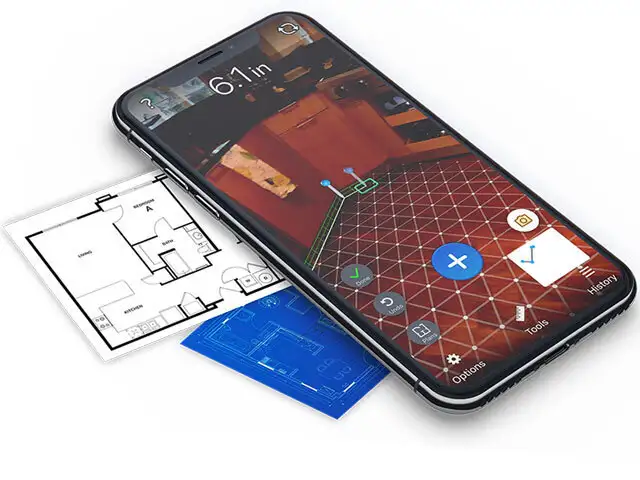
Using tape measures is so old school now that you have AR to help. It sounds almost unbelievable but you can actually measure (with a fair degree of accuracy) things like a person’s height, the diameter of a circular table, the length of a sofa and even the height of a building. AirMeasure gives you a point and shoot ruler — just tap to start and move the device along the plane you want to measure. But that’s not all, you can use it to create a floor plan, project a level line (to see whether your painting is hung straight), measure distance to a far away wall (like a laser distance measurement tool) and much more. Our favourite is the virtual furniture — you can place things like tables, chairs, beds, desks, shelves and so on into your room. Then walk around them to see how they look from different parts of the room.
(Image: http://armeasure.com)
Using tape measures is so old school now that you have AR to help. It sounds almost unbelievable but you can actually measure (with a fair degree of accuracy) things like a person’s height, the diame..
Read More
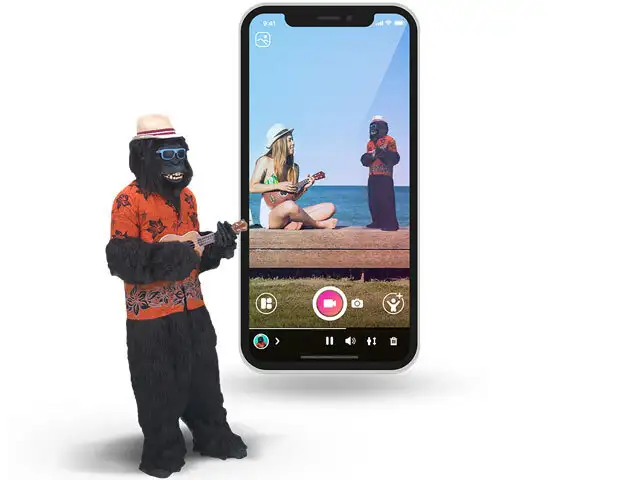
Holo is short for holograms — actual 3D animals and people you can place into your real surroundings. Some of the holos you can download for free include Spiderman, a zombie, tigers, celebrities and even Bollywood dancers. The developer is constantly adding more holos that you can download to your device. Holos are dynamic, which means they’re not static images but accurate, moving avatars. Once you scan a flat surface and place a holo, you can rotate it and scale it up or down in size to match real world sizes. Then you place yourself into the frame and snap a photo or capture a short video. In the right kind of lighting, it can look quite convincing too. Holo is also available for Android.
(Image: https://thisisholo.com)
Holo is short for holograms — actual 3D animals and people you can place into your real surroundings. Some of the holos you can download for free include Spiderman, a zombie, tigers, celebrities and ..
Read More
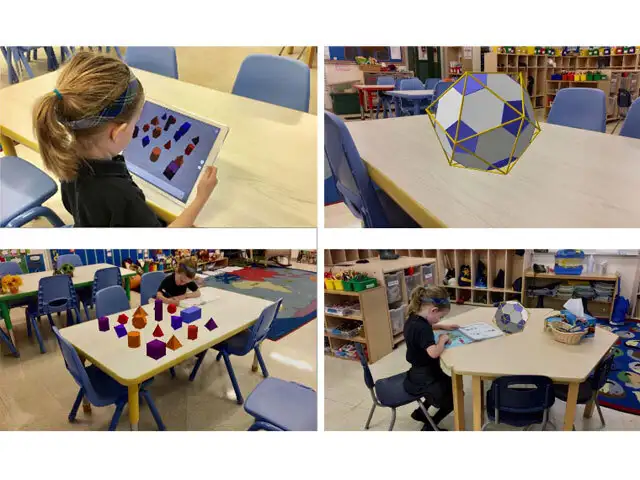
Learning is a lot more fun in AR and if a complex subject like math can be visually represented in your real world, it might make concepts a lot clearer. GeoGebra places math objects in your world so that you can explore them from different angles. You can place solid objects into your view while little exercises teach you about pyramids, prisms and cubes. More advanced users can look at the impossible Penrose triangle, 3D functions, spiral staircase and Sierpinski pyramid among others. You will have to physically move around the virtual objects to complete the tasks and take the required screenshots.
(Image: www.geogebra.org)
Learning is a lot more fun in AR and if a complex subject like math can be visually represented in your real world, it might make concepts a lot clearer. GeoGebra places math objects in your world so..
Read More
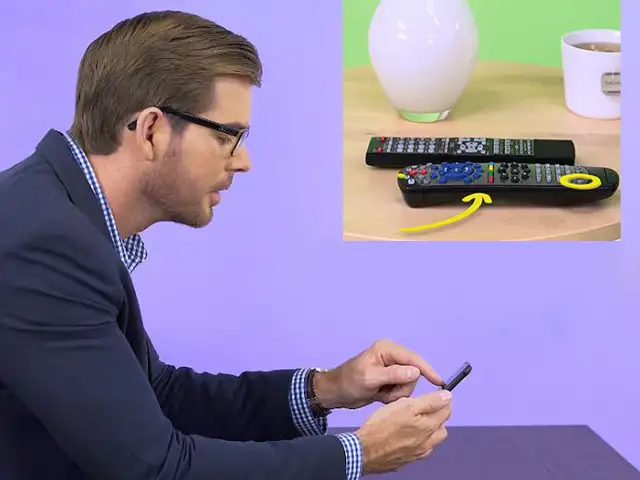
This app is a great example of how AR can help solve problems even in long distance. If you’re tech savvy, you’ve probably been asked for help with common tech issues over the phone. Problem is, over the phone, it’s really hard to explain to someone which button to tap, which menu item to click and which port to use. Vuforia’s Chalk opens up an AR guided private chat between you and the person you’re helping. They can activate their camera and you can doodle with virtual chalk right into their view — making circles, drawing arrows and illustrating as needed. But that’s not even the best part. Whatever you draw on sticks to the item you drew it on, so even if the camera moves around, the instruction stays true and correct.
(Image: https://chalk.vuforia.com)
This app is a great example of how AR can help solve problems even in long distance. If you’re tech savvy, you’ve probably been asked for help with common tech issues over the phone. Problem is, over..
Read More
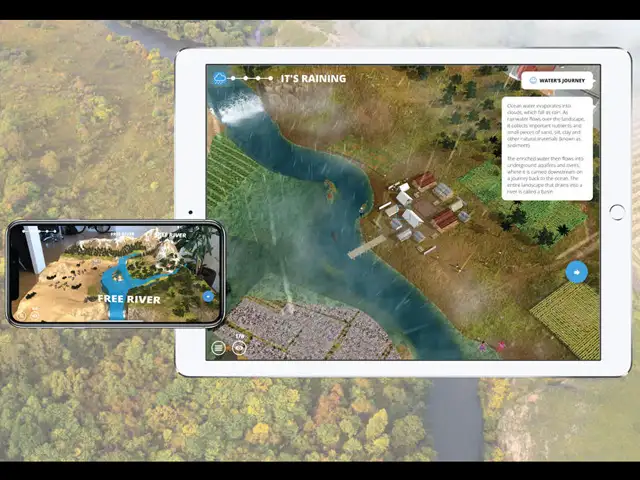
Imagine seeing an entire, living landscape on your table. You can zoom in, look around and learn more about why free flowing rivers are so important. Through helpful little floating tips, you learn more about the journey of water, how it impacts the area through which it flows, the people it affects and how building dams can cause damage to delicate ecological systems. Place a dam and you can see (in accelerated time) how the river changes and how everything else is affected downstream. This app is the WWF’s concerted effort to educate about how human development can either be harmful or sustainable.
(Image: www.worldwildlife.org)
Imagine seeing an entire, living landscape on your table. You can zoom in, look around and learn more about why free flowing rivers are so important. Through helpful little floating tips, you learn m..
Read More
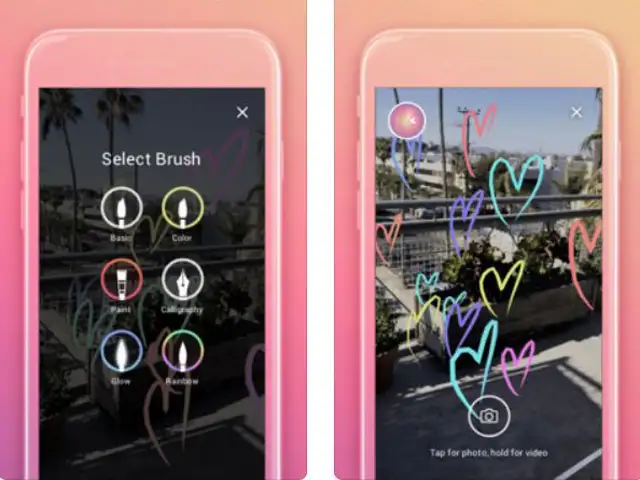
Graffiti in a public place can help beautify but it can also be an eyesore, with authorities stuck in a never-ending cycle of removing unwanted art.
What if that graffiti only existed in the virtual world and was only visible through an augmented reality app? That’s the idea behind World Brush.
You open up the app, hold it up and start drawing in virtual space. You should do this somewhere outdoors and your art will be geo-locked — this means it’s approximate GPS location is tagged and if another World Brush user comes along at a later date and holds up the app, he/she will be able to see and walk around what you drew. Another similar app without the GPS position (but more brush options) is 3DBrush — Augmented Reality.
(Image: https://itunes.apple.com)
Graffiti in a public place can help beautify but it can also be an eyesore, with authorities stuck in a never-ending cycle of removing unwanted art.
What if that graffiti only existed in the virtual..
Retail is also going through a transformation, with new ways to identify and engage customers in the shopping experience, as well as enabling them to purchase flexibly, whether via mobile, self-checkout, online or regular checkout. The drive to unified commerce applications in retail is leading a revolution in transactional point-of-sale devices. The advancements also help in real-time pricing, inventory management and customer analytics.
As new advances and applications make their way into various verticals, expect to see accelerated costs of technology come down.
AR moves from fun to function The immersive technology market is quickly advancing; in fact, AR and VR products and services spending is forecasted to reach $27 billion this year, a 92% year-over-year jump, according to IDC. VR clearly has already made its mark in gaming, journalism, film-making, education, sports and music and is well established in training and data visualisation.
The larger appetite will be around AR, which is already being used for consumer entertainment and in the commercial space. With the advent of 5G, the rich and meaningful capabilities of AR – real life enhanced with computer-generated imagery, remote assistance, object recognition, workflow builders and other powerful content – will leap forward and make meaningful impact to businesses.
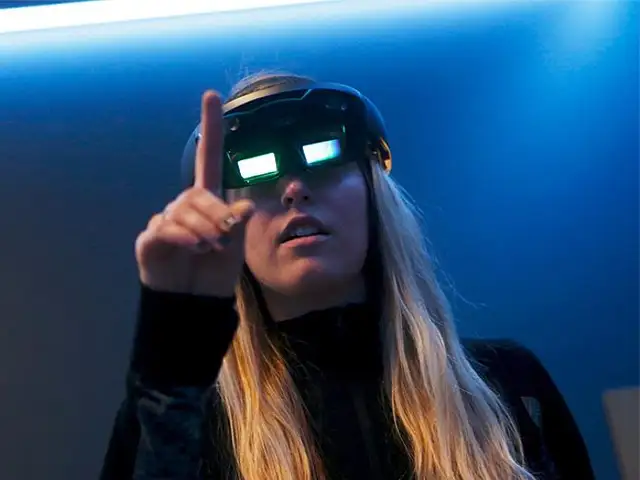
For instance, using AR glasses as part of a larger system can give manufacturing and field workers real-time data that helps reduce errors and improves accuracy, safety and quality. With AR remote assistance, a worker on an offshore oil rig could be assisted by an office-based worker who can see what’s happening live through the glasses. With object recognition, AR glasses worn by an airplane mechanic working on a tarmac could connect to a remote server to automatically identify the parts being worked on, and pull up schematics and other critical materials. With new AR workflows and tools, a factory line worker on the first day can see through their AR glasses for step-by-step guidance on how to accomplish the task at hand with minimal training.
Moreover, there will be a rise in demand for more hardware/software agnostic solutions to ease users’ pain-point of experiencing incompatibility between AR headsets and glasses with AR content and platforms. Content creators and hardware makers may converge to develop a more holistic and seamless hardware plus software solution for businesses. Expect to see AR gain momentum in the commercial space this year. In the near future, we may also see enterprises deploying AR and VR together through IT integration for even more benefits.
The future of security Humans are often times considered to be the weakest link in security. The growth of mobility, BYOD, remote working and the gig economy have all contributed to the security challenges companies are facing today. Well-meaning employees who ignore – or don’t understand – security protocols can expose enterprises to considerable security threats, financial loss and reputational damage. Digital natives are accustomed to technologies that are more ‘intimate’ in terms of personal data access, but people of all ages can be guilty of prioritising convenience over compliance.
AI has been touted as the pathway to protection; but as with many powerful tools, it can be used for good or for evil, as AI platforms are favored by cyber criminals too. We expect to see much more focus on machine learning to address security vulnerabilities, as well as more of a focus on end-to-end security solutions versus a patchwork collection of discrete tools.
There are four spaces where companies and end users need to focus to protect themselves – data, identity, online and device. The trend from two-factor to multi-factor authentication on personal devices, for example, will continue to grow as security industry bodies like the FIDO Alliance integrate with Windows Hello to enable safer authentication. The rise of smart devices at home and office that are all interconnected will also introduce security vulnerabilities that will need to be addressed. A crucial aspect will be to learn from users through heuristics and new learning models addressing not just changes in technology but also changes in human behaviors. Companies will need to understand their multi-generational workforce, to better manage and protect devices as well as develop strong security protocols and practices.
Offering a number of life-cycle and other benefits, DaaS (Device-as-a-Service) is a smart way to address security issues, particularly as they become increasingly complex and frequent due to the expanding mobile workforce. In response, companies will need to seek agile, customisable solutions and greater control of the device ecosystem as well as the security implemented with it. This is a growing trend; almost 30% of CIOs who responded to a Gartner study in 2018 are considering DaaS as part of their device strategy in the next five years, and a recent IDC study shows total market value tripling between now and 2020.
- The author is Director, Commercial Named Accounts at Lenovo India.
(Disclaimer: The opinions expressed in this column are that of the writer. The facts and opinions expressed here do not reflect the views of www.economictimes.com.)