Filmmaker Anubhav Sinha’s latest movie Article 15 unfolds in Lalgaon, a fictional village in Uttar Pradesh that is in perpetual half-light and half-darkness. Here, contemporary caste atrocities converge. The film, unusually for Bollywood, references the alleged rape and murder of two girls in Badaun and the flogging of Dalits in Una. It recalls both Chandrashekhar Azad 'Ravan' of the Bhim Army and Rohith Vemula. The movie has opened to much acclaim, criticism as well as protests by fringe organisations that represent upper castes. While 'Article 15' focuses on caste privilege and discrimination, there have been questions about the gaze and whether it is upper castes speaking to upper castes. Over a WhatsApp video call with Charmy Harikrishnan, Sinha, 54, responds to questions on why a Brahmin police officer is the hero and whether Dalits have become blurred and without agency in his film even as it makes visible the atrocities against them. Edited excerpts:
Can I ask a question that Ayan Ranjan, the protagonist of Article 15, asks everyone? What is my caste? I am a Kayasth.
Your film takes a stark look at caste in contemporary India. Why caste? When I was 10 or 11, in my own home and around me, I realised that people were judged by their surname. Even now, headlines that are made to look insignificant on Page 6 or 7 of newspapers are about Dalits getting raped, murdered, tortured and discriminated against. This film came out of a lot of anger.
Is it difficult or complicated to look at atrocities against Dalits as a non-Dalit? I don’t think so. I think it is about good or bad people. I don’t look at people as a subset. I don’t consider myself as a subset. I have looked at this as a human being horrified at society.
ADVERTISEMENT
Why did you have a Brahmin as the hero? The privileged has to question their privilege. I find that more rewarding. It is no fun when the oppressed asks why this is happening. I did not design it that way, though — to have a Brahmin as the hero. But I saw it and recognised it and let it be. For me, he is a good human being. The privileged has to speak up. Even in my earlier film 'Mulk', it is the Hindu daughter-in-law who argues for the Muslim family (which is accused of being terrorists).
Will you accept the argument that Article 15 is more about the savarna’s encounter with caste atrocities than the Dalit’s visceral experience of caste? I am sure some people can look at it like that. You know, while writing the script I had to choose between placing the ‘master script camera’ inside looking at us or on Ayan’s shoulders looking at them. Both had a movie. Legitimate movies. I chose to place that camera on Ayan’s shoulder because I wanted to highlight our ignorance/inadvertent complicity. Or, even fully advised complicity and inertia.
In the process, have you transferred the angst from the suffering Dalit to the horrified Brahmin? One doesn’t take away from the other. I don’t see Ayan as a horrified Brahmin. I see him as a horrified privileged man. I wanted him to be privileged on both the ladders, social and structural, and then he had to take a stand, the onus is on him. Hence the end credit song ‘Shuru karein kya’.
ADVERTISEMENT
The Badaun case where two girls were found hanged from a tree is at the heart of the story. It is — and it is not. It is one of the catalysts. That image disturbed me a lot. So did Una. So did Rohith Vemula’s suicide. They stayed with me.
ADVERTISEMENT
The character Nishad recalls Chandrashekhar Azad ‘Ravan’ of the Bhim Army. You have also fused certain aspects of Rohith Vemula in Nishad. I did not want Nishad to be Chandrashekhar entirely because I did not know enough about him. I haven’t met him. I liked his stand during the elections. When Mohammed Zeeshan Ayyub (who plays Nishad) came to meet me, he was coming from the sets of Hansal Mehta’s film. He had that moustache. He asked me whether he should keep it. I said yes. I realised the similarity with Chandrashekhar. But I wanted the audience to enter the film as Ayan.
Lalgaon, the village in your film, is the site where contemporary assaults on Dalits come together — including a woman who is thrown out of her job as a cook of midday meals because she is Dalit. In January 2017, when I started writing the script, it was called ‘Kanpur Dehat’. I wrote this before 'Mulk' but people said these things don’t happen anymore. I changed the name because I did not want people to assume that this happens only in one particular place. I did not want this to be place-specific. I wanted to use these images that you might have looked past. And I wanted to take you back there and make you see them. Caste is everywhere.
In your film, you are critical of the ‘we are all Hindus’ line when the society is so divided. You mock at the mahant’s attempt to eat alongside a Dalit. When you actually share your food with everyone else it is fantastic. It is part of my thinking and my life. The moment you sell it, it is wrong. It happens in politics — politicians have a meal at a Dalit’s home just to score political points.
In your WhatsApp profile picture, you have a saffron Sita-Ram shawl wrapped around you. I want to reclaim that colour because it has been maligned. This colour was worn and accepted by people who believed in equality. This is the colour of dawn, of knowledge. Now when people are protesting against my film, they are carrying that colour. It spoke something else. My religion doesn’t tell me to beat someone to chant Jai Shri Ram.
We have a right wing government with a huge majority at the Centre. That’s a fact. We have to accept it. But do I agree with them? No. A lot of things are happening in this country that I don’t agree with. Now lynching has replaced riots but never before has it seemed that people will not be protected. In Patna, where some were protesting against my film, asking that it should not be screened, there was no police presence. But when Dalits of the Bhim Army said they wanted to watch the film, they were lathi-charged. Whose side are we on? Was the earlier group protected?
Why are the upper castes angry with your film? Not even 1% of them is against the film. These organisations (which oppose the film) simply don’t want their privilege questioned.
You have said in an interview that the audience is an accused party. Who are you pointing the finger at? The upper castes? I am pointing the finger at everyone. The idea is to make a society that does not exploit identity. I am pointing a finger at anyone who exploits caste identity for benefits. And that includes improper Dalit politics. Identity should not be used merely for electoral purpose but for the uplift of people. The defence mechanism of a people who have been discriminated against is to huddle together — and a leader emerges from among them. But if the leader starts selling his position or uses caste politics to further his own interests, then I am pointing a finger at them, too. There is a line in my film: ‘When you are in power, you make statues; when you are in the opposition, you become Dalit’.
But making statues is also a part of Dalit assertion and politics. If the upper castes can, why can’t Dalits? No matter who does it, the act is wrong.
Even as your film highlights the crimes against Dalits, have Dalits become blurred, without agency or victims in it? I don’t think so. Gaura has agency. I like the arc of (the policeman) Jatav — from ‘Jatav tho zero hain’ in the beginning, he arrests and slaps (the Thakur circle officer) Brahmadatt Singh in the end. In an ideal world, Dalits should have enough to defend their causes. But they have been made helpless. There’s no water to drink. There’s no food to eat. In that kind of a society where Dalits are systematically oppressed, it would have been too Bollywood to have a Dalit hero. It would have been unbelievable.
What is caste? Caste is a conspiracy. Human beings are designed to create class divide. Here it is caste. It is designed to keep the majority of people way under the minority. It is about entitlement. It is about cheap labour. It is about exploitative free labour. Caste is all about class. It is power-based discrimination. In my apartment building, housekeepers and drivers are not allowed in a particular elevator. When I ask the security guard why they are not allowed, he would say, ‘Saheb log naaraz ho jaayega.’
And what have you done about it? Sometimes I take them along in the lift. Sometimes I am too busy to do that. I am a party to it. I am pointing a finger at myself.
But isn’t caste far more insidious and ingrained than class where mobility is possible? I don’t think so. If you sit next to a billionaire, most likely you don’t think of their caste.
I am sure one does. Maybe. But caste considerations are often subservient to commercial concerns.
The film upholds the primacy of the Constitution. Yes, it is about the primacy of the Constitution. It is about one particular article which is long forgotten. I respect that book. These are rules that are supposed to govern us. These have not been implemented and they are thinking about amending them already. I wanted everyone to find out about Article 15. That’s why I kept the shot lingering on what Article 15 says in the film, just before the interval.
The film also quotes Ambedkar that ‘I will be the first person to burn the Constitution’. Yes, he said that and he was right. What is the point of having the Constitution if it is misused, if the rules are not followed?
In Mulk and Article 15, you solve religious prejudice and caste discrimination through law. Do you think only due process can save us? I have used the process to elucidate a problem. It is when you, as an individual, fail to deliver that due process comes into play.
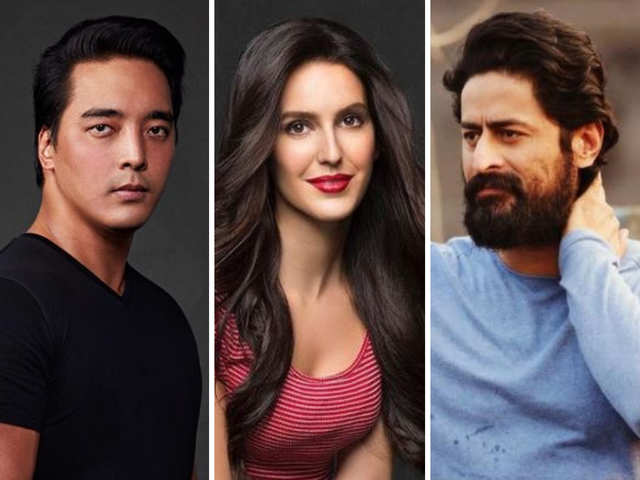
Danny’s Son, Katrina’s Sister, Mohit Raina: Bollywood 2019’s Starry Debuts
1/20
2018 witnessed a host of young faces making their debut in tinsel town. From Sridevi’s daughter Janhvi Kapoor to Saif Ali Khan's ward Sara Ali Khan, the new faces managed to make a mark, in ways more than one.
As another year comes alone, it’s the turn of a new bunch to take over. From star-kids to telly stars, 2019 will see the next generation in action.
Here's a look at 2019's line-up set to hit B-town.
2018 witnessed a host of young faces making their debut in tinsel town. From Sridevi’s daughter Janhvi Kapoor to Saif Ali Khan's ward Sara Ali Khan, the new faces managed to make a mark, in ways more..
Read More
After Katrina Kaif, her younger sister, Isabelle, is set to debut opposite actor Aditya Pancholi's son Sooraj in 'Time to Dance'. Kaif Jr has already been seen in a Lakme commercial. The movie's initial release was set for January 4.
After Katrina Kaif, her younger sister, Isabelle, is set to debut opposite actor Aditya Pancholi's son Sooraj in 'Time to Dance'. Kaif Jr has already been seen in a Lakme commercial. The movie's ini..
Read More
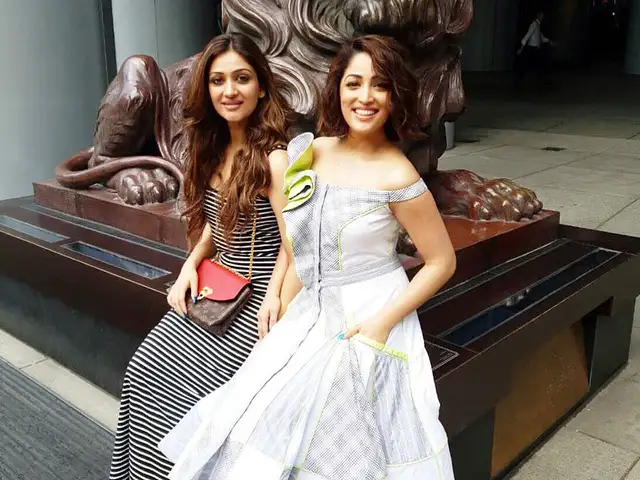
Daughter of director Mukesh Gautam and younger sister of Yami, Surilie is all set to make her Bollywood debut with the 'Battle of Saragarhi'. The actress had made her debut in a TV show 'Meet Mila De Rabba' in 2008. She will star opposite actor Randeep Hooda in this period film.
Daughter of director Mukesh Gautam and younger sister of Yami, Surilie is all set to make her Bollywood debut with the 'Battle of Saragarhi'. The actress had made her debut in a TV show 'Meet Mila D..
Read More
The TV actor, who left everyone mesmerised with his portrayal of Lord Shiva in 'Devon Ke Dev Mahadev', is now graduating to the big screen. , Actor Mohit Raina will make his debut with Aditya Dhar's 'Uri: The Surgical Strike', which also stars Vicky Kaushal and Yami Gautam. The film will hit the screens on January 11.
The TV actor, who left everyone mesmerised with his portrayal of Lord Shiva in 'Devon Ke Dev Mahadev', is now graduating to the big screen. , Actor Mohit Raina will make his debut with Aditya Dhar's..
Read More
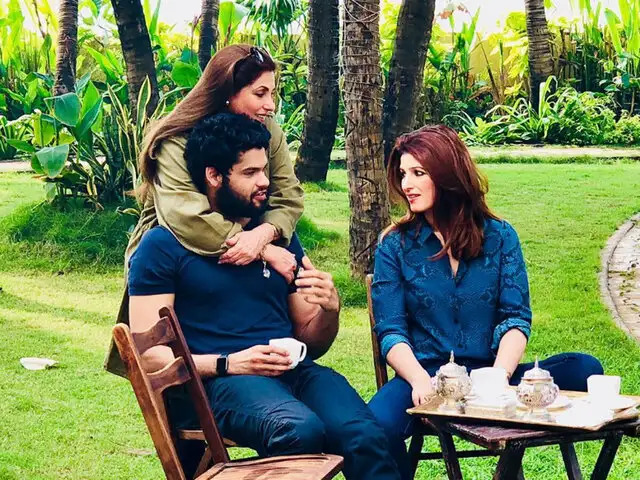
Dimple Kapadia's nephew and Twinkle's cousin, Karan Kapadia, will share screen space with Sunny Deol in a Tony D’souza-directorial 'Blank'. The film will hit the screens on January 11.
Dimple Kapadia's nephew and Twinkle's cousin, Karan Kapadia, will share screen space with Sunny Deol in a Tony D’souza-directorial 'Blank'. The film will hit the screens on January 11.
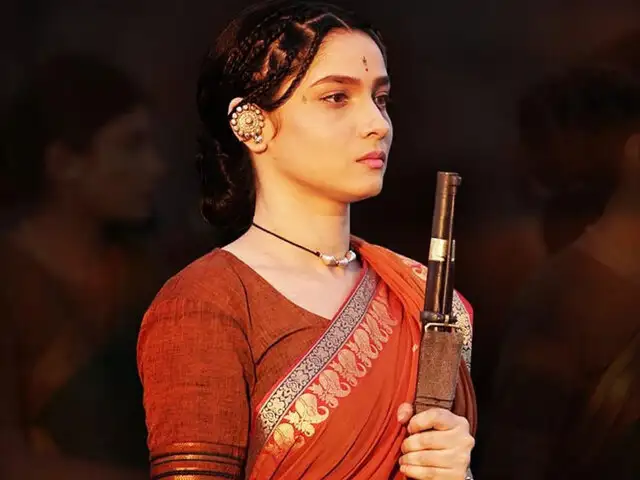
TV actor Ankita Lokhande gained popularity after playing the lead in Ekta Kapoor's 'Pavitra Rishta' in 2009. Now, she is all set to make her silver-screen debut in Kangana Ranaut's 'Manikarnika: The Queen of Jhansi', a movie inspired by Rani Laxmibai. Lokhande plays the role of Jhalkaribai, a fierce soldier who is also an advisor to the Queen of Jhansi. The film will release on January 25.
TV actor Ankita Lokhande gained popularity after playing the lead in Ekta Kapoor's 'Pavitra Rishta' in 2009. Now, she is all set to make her silver-screen debut in Kangana Ranaut's 'Manikarnika: The..
Read More
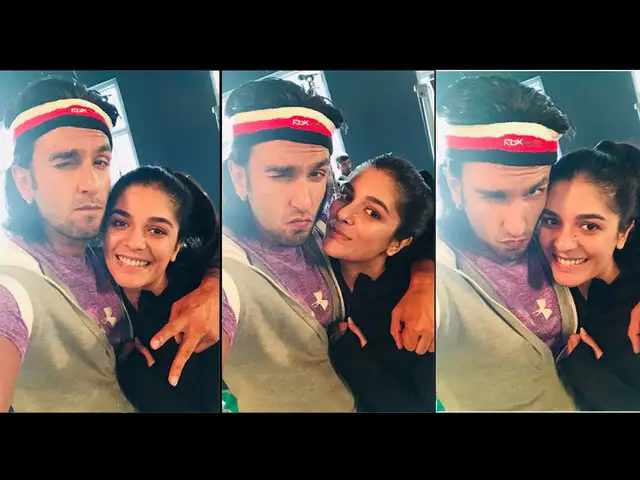
Pooja Gor became a household name after her powerful portrayal as Pratigya in the 2009 TV show 'Mann Kee Awaaz Pratigya'. After acting in various TV shows and being a part of 'Bigg Boss 6', she is finally making her Bollywood debut with a bang in Zoya Akhtar’s 'Gully Boy' opposite Ranveer Singh. The movie will release on February 14.
Pooja Gor became a household name after her powerful portrayal as Pratigya in the 2009 TV show 'Mann Kee Awaaz Pratigya'. After acting in various TV shows and being a part of 'Bigg Boss 6', she is f..
Read More
Salman Khan, known to be a mentor to many newbies, has again donned the hat for Zaheer Iqbal (right) & Pranutan Bahl. His upcoming film 'Notebook' is directed by Nitin Kakkar and is set in Kashmir. Veteran star Nutan's granddaughter Pranutan Bahl (her father is Mohnish Bahl), and Zaheer Iqbal, son of Khan's builder-friend, are all set for B-town in March when the film releases.
Salman Khan, known to be a mentor to many newbies, has again donned the hat for Zaheer Iqbal (right) & Pranutan Bahl. His upcoming film 'Notebook' is directed by Nitin Kakkar and is set in Kashmir...
Read More
Danny Denzongpa's son, Rinzing, will make his big entry in Bollywood with action thriller 'Squad'. While the film will be produced by Nilesh Sahay, the cast and director are yet to be finalised. The film will go on the floors in April.
Danny Denzongpa's son, Rinzing, will make his big entry in Bollywood with action thriller 'Squad'. While the film will be produced by Nilesh Sahay, the cast and director are yet to be finalised. The..
Read More
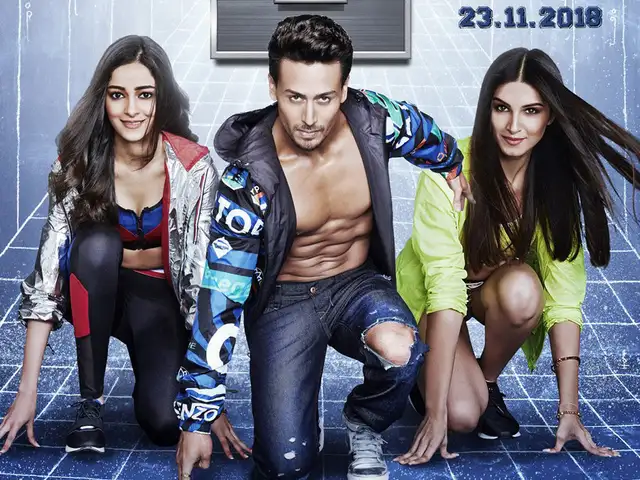
The newcomers are set to make a mark with Karan Johar’s 'Student of the Year 2', sequel to the film that launched Alia Bhatt, Varun Dhawan and Sidharth Malhotra.
While Tara Sutaria (right) has had some TV experience as Disney India's VJ, and in series like 'Oye Jassie' & 'The Suite Life of Karan & Kabir', this will be the first time that Chunky Pandey's daughter, Ananya (left), will appear in front of the camera. The movie, starring Tiger Shroff (centre), will hit the theatres on May 10.
The newcomers are set to make a mark with Karan Johar’s 'Student of the Year 2', sequel to the film that launched Alia Bhatt, Varun Dhawan and Sidharth Malhotra.
While Tara Sutaria (right) has had s..
'Mulk' and 'Article 15' mark quite a change from your earlier films like 'Dus' and 'Ra.One'. How did the shift happen? 'Mulk' and 'Article 15' came out of anger. Earlier I had a misplaced sense of success. For me, success was whose picture is bigger — mine or Sanjay Gupta’s or Rohit Shetty’s. In the past five years, I have started reading again. I felt liberated. I read 'The Discovery of India'. It told me so much about the country. That’s why I showed that book in the movie. Then I read Gandhi’s autobiography. I realised that he was so fallible — he kept making mistakes and he kept correcting himself. I read Om Prakash Valmiki’s Joothan and Anand Teltumbde’s Republic of Caste. I gave a copy of Joothan to (actor) Ayushmann Khurrana (who plays the IPS officer Ayan Ranjan) because I wanted him to know who he was defending and what he was defending.
Do you think a film can effect change, alter mindsets about caste? No, films can only raise questions. In the larger scheme of things, they have a point. After 'Mulk' was released, I got a message. It said, 'I always thought I was secular. But I wasn't.' If a film can make you look within, that is the most it can do. The only idea is to make people see. We need to become better human beings. We need to learn to coexist. Because to tell you the truth, this world is f**ked up.