An epidemic is coming: Mobile data can predict risk without hacking into privacy
This data can ultimately aid in stopping an outbreak from evolving into an epidemic.
By PTI |

Agencies
GENEVA: Mobile phone data, and census models can be used to effectively predict the spatial distribution of infectious diseases, according to a study in Singapore which showed that location information can be used for tracking epidemics without invading the privacy of cellphone users.
The study, published in the journal Scientific Reports, compared different models of predicting people's mobility, and concluded that having access to mobile phone location data can be crucial for understanding disease transmission dynamics.
They said this data can ultimately aid in stopping an outbreak from evolving into an epidemic.
The researchers, including those from Ecole polytechnique federale de Lausanne (EPFL) in Switzerland, studied the relationship between human mobility and the 2013 and 2014 dengue outbreaks in Singapore.
According to the World Health Organization (WHO), dengue prevalence has increased 30-fold worldwide over the past 50 years with 3.9 billion people in 128 countries -- almost half of the world's population -- exposed to the virus.
They found that even low levels of mobility can cause the epidemic to spread, underscoring the need for an effective spatial distribution model.
"Urbanisation, mobility, globalisation and climate change could be all factors in the emergence of vector-borne diseases, even here in Europe," said Emanuele Massaro, the study's lead author and a scientist at EPFL.

Massaro said most research, until now, examined how mobility affected the spread of infections in larger areas such as countries or regions.
In the current study, he said, the researchers focused on the same question, but in towns and cities.
"We also wanted to explore when people's mobile phone location data might prove useful," he added.
Using an specific model in which humans and mosquitoes are represented as agents that go through the epidemic stages of dengue, the researchers compared how the system responded to an outbreak against actual reported cases from 2013 and 2014 in Singapore.
They also compared four different mobility models, each using different datasets -- mobile phone location data, census records, random mobility, and theoretical assumptions.
In each model, the citizens were assigned two locations - home and work - as places they visited daily and could potentially become infected.
The mobile phone model was based on anonymised device data sourced from a Singaporean mobile operator, using call, text, and other activity records to pinpoint users' home and work addresses, the researchers said.
The researchers said phone location data is better than annual census records.
However, they said, accessing information from citizens' phones is a problem since the data is owned by private companies.
"We need to think seriously about changing the law around accessing this kind of information - not just for scientific research, but for wider prevention and public health reasons," Massaro said.
The researchers said their model could equally be applied to other vector-borne diseases, such as malaria.
The study, published in the journal Scientific Reports, compared different models of predicting people's mobility, and concluded that having access to mobile phone location data can be crucial for understanding disease transmission dynamics.
They said this data can ultimately aid in stopping an outbreak from evolving into an epidemic.
The researchers, including those from Ecole polytechnique federale de Lausanne (EPFL) in Switzerland, studied the relationship between human mobility and the 2013 and 2014 dengue outbreaks in Singapore.
According to the World Health Organization (WHO), dengue prevalence has increased 30-fold worldwide over the past 50 years with 3.9 billion people in 128 countries -- almost half of the world's population -- exposed to the virus.
They found that even low levels of mobility can cause the epidemic to spread, underscoring the need for an effective spatial distribution model.
ADVERTISEMENT
"Urbanisation, mobility, globalisation and climate change could be all factors in the emergence of vector-borne diseases, even here in Europe," said Emanuele Massaro, the study's lead author and a scientist at EPFL.
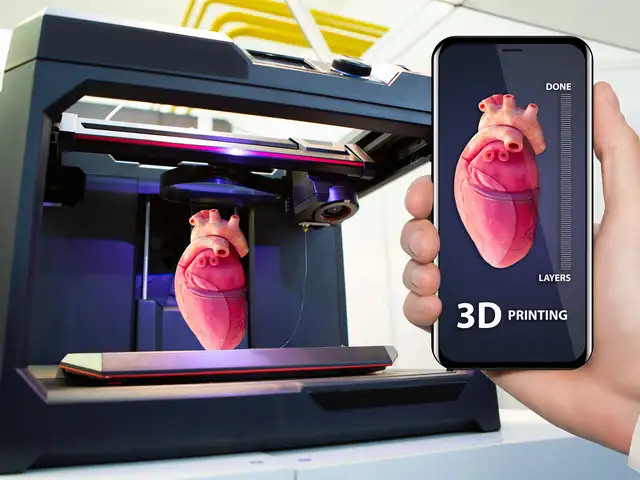
Emergence of a 3D printed heart, thermal tracking of asteroids, algorithms to forecast disruptions in nuclear fusion and more are turning science fiction into reality.




Massaro said most research, until now, examined how mobility affected the spread of infections in larger areas such as countries or regions.
In the current study, he said, the researchers focused on the same question, but in towns and cities.
ADVERTISEMENT
"We also wanted to explore when people's mobile phone location data might prove useful," he added.
Using an specific model in which humans and mosquitoes are represented as agents that go through the epidemic stages of dengue, the researchers compared how the system responded to an outbreak against actual reported cases from 2013 and 2014 in Singapore.
ADVERTISEMENT
They also compared four different mobility models, each using different datasets -- mobile phone location data, census records, random mobility, and theoretical assumptions.
In each model, the citizens were assigned two locations - home and work - as places they visited daily and could potentially become infected.
The mobile phone model was based on anonymised device data sourced from a Singaporean mobile operator, using call, text, and other activity records to pinpoint users' home and work addresses, the researchers said.
The researchers said phone location data is better than annual census records.
However, they said, accessing information from citizens' phones is a problem since the data is owned by private companies.
"We need to think seriously about changing the law around accessing this kind of information - not just for scientific research, but for wider prevention and public health reasons," Massaro said.
The researchers said their model could equally be applied to other vector-borne diseases, such as malaria.
Download
The Economic Times Business News App for the Latest News in Business, Sensex, Stock Market Updates & More.
The Economic Times Business News App for the Latest News in Business, Sensex, Stock Market Updates & More.
ADVERTISEMENT


