Stablecoins contrast with other cryptocurrencies like Bitcoin that depend on the utility of the token and market demand for valuation. (Representative image)
Cryptocurrencies are having their moment of reckoning. Valuations have consistently declined over the past few quarters, validating naysayers like Warren Buffett, who famously described Bitcoin as “rat poison”.
But recent evidence suggests that Buffett’s Berkshire Hathaway has invested in StoneCo, a Brazilian firm that is reportedly in talks to open its platform to trade in Bitcoin and Ethereum.
Regulators, however, argue that the anonymity afforded by virtual currencies is a boon for players in the underground economy.
In an interview with ETPanache, Garrick Hileman, head of research, Blockchain exuded confidence that Stablecoin, a new class of cryptocurrency, could alter the status quo and remedy the inherent flaws of the old order.
Edited excerpts:
What is Stablecoin and how is it different from existing cryptocurrencies? Stablecoins are cryptocurrencies that are designed to minimise price volatility. This can be accomplished through various mechanisms, such as linking its price to fiat currencies, commodities, or a price-stabilising algorithm.
Stablecoins contrast with other cryptocurrencies like Bitcoin that depend on the utility of the token and market demand for valuation.
How do you think Stablecoin will fare as a class of digital asset? Significant volatility is one of the most cited factors responsible for holding back institutions and individuals from embracing cryptocurrencies for cases like retail payments and insurance. Garrick Hileman, head of research, Blockchain. Because they limit this volatility, Stablecoins have immense potential for users and businesses to use cryptocurrencies without the risk of prices dramatically changing after a transaction. Stablecoins are centralised.
Does that not defeat the purpose of blockchain-based cryptocurrencies? Today, Stablecoins are in a sort of ‘Goldilocks Zone’ where they take some of the best from both crypto and traditional finance.
ADVERTISEMENT
This comes with trade-offs like centralisation. While collateralising these assets involves a centralised authority and reserve — which we typically think is antithetical to crypto — it brings the scalability and certainty users need for remittances, risk mitigation and storing value. Stablecoins are still nascent and we expect they will evolve to become more decentralised.
What are the benefits of Stablecoin over fiat currencies, especially in economies dominated by cash? Access to US dollars is something some of us take for granted. However, for the majority of the world, especially in underbanked and emerging economies, there’s often limited stability in local fiat currencies. So, Stablecoins can introduce these users to relatively stable stores of value, like the US dollar, that can bridge global commerce and enable financial sovereignty.
The digital nature and programmability of Stablecoins also open up new use cases, such as trust minimised escrow services. In a bull market, stability could work against an asset class that does not appreciate quickly.
How do you think it will perform in the next decade? Stablecoins are typically not designed to appreciate in value.
ADVERTISEMENT
However, as we highlight in our 2019 State of Stablecoins report, a growing number of Stablecoins offer what we characterise as ‘upside participation’. What this means is that growth in the use of a particular Stablecoin may allow its users to benefit financially in some way.
This can be accomplished by offering some type of transaction fee-sharing arrangement, or through another token that plays a role in the functioning of the Stablecoin system (like, governance).
ADVERTISEMENT
However, it is important to recognise that Stablecoin systems offering upside participation are still relatively new and less tested than fiat-collateralised Stablecoins.
At present, the market has also clearly signaled that price stability is the primary desired quality in a Stablecoin, with decentralisation and upside participation as less important for now.
When Elorza And Other Cities Introduced Their Local Currency To The World
1/6
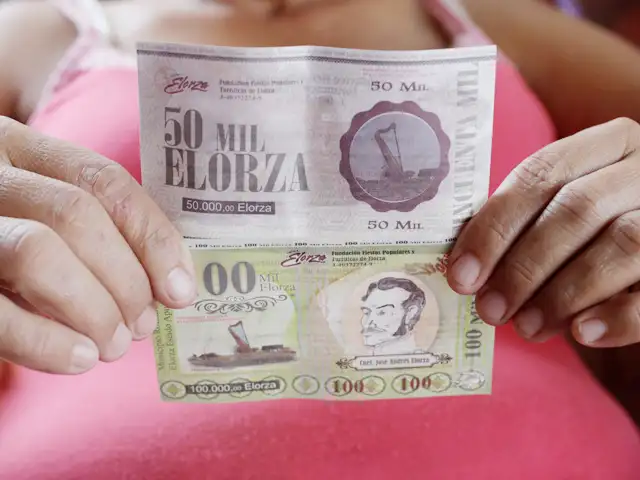
Elorza, a city in Venezuela, recently launched their own local currency to deal with inflation and monetary crunch. Here’s a look at other cities who have also gone local with cash.
Elorza, a city in Venezuela, recently launched their own local currency to deal with inflation and monetary crunch. Here’s a look at other cities who have also gone local with cash.
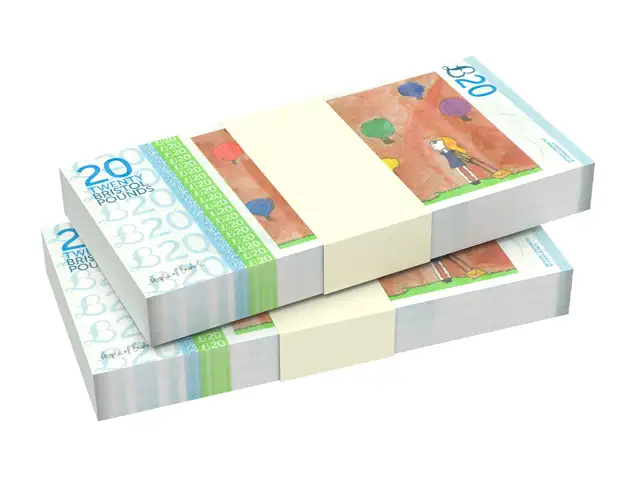
In 2012, the city launched the Bristol Pound with the objective to encourage people to spend their money on local, independent businesses in Bristol. This currency can only be used in the city with colourful and anti-fraud features. Bristol Pound account holders can convert £Bs to and from pounds sterling at a 1:1 ratio.
In 2012, the city launched the Bristol Pound with the objective to encourage people to spend their money on local, independent businesses in Bristol. This currency can only be used in the city with c..
Read More
Started in 1995, the Calgary dollars are plastic notes launched for the sole purpose of the development of Calgary’s local community. While it is not legal tender, many businesses like food joints and shops accept this currency in the Canadian city.
(Image: www.calgarydollars.ca)
Started in 1995, the Calgary dollars are plastic notes launched for the sole purpose of the development of Calgary’s local community. While it is not legal tender, many businesses like food joints an..
Read More
Students at the Intercultural University of Veracruz in Mexico started an alternative currency called Tumin in 2010 with the aim to make the local economy stronger. The notes feature Emiliano Zapata and paintings by Diego Rivera. While it is quite popular in Espinal, makers of the Tumin were sued by Mexico’s National Bank for substituting the peso. The case is still in court.
(Image: www.tumin.org.mx)
Students at the Intercultural University of Veracruz in Mexico started an alternative currency called Tumin in 2010 with the aim to make the local economy stronger. The notes feature Emiliano Zapata ..
Read More
When Greece started facing economic troubles in 2010, the port city of Volos began using a barter-based system called TEM. Widely accepted in the Greek town, the currency is completely online and people are not allowed to have more 1,200 TEMs at a time. In terms of value, one TEM is equal to one euro.
(Representative image)
When Greece started facing economic troubles in 2010, the port city of Volos began using a barter-based system called TEM. Widely accepted in the Greek town, the currency is completely online and peo..
Read More
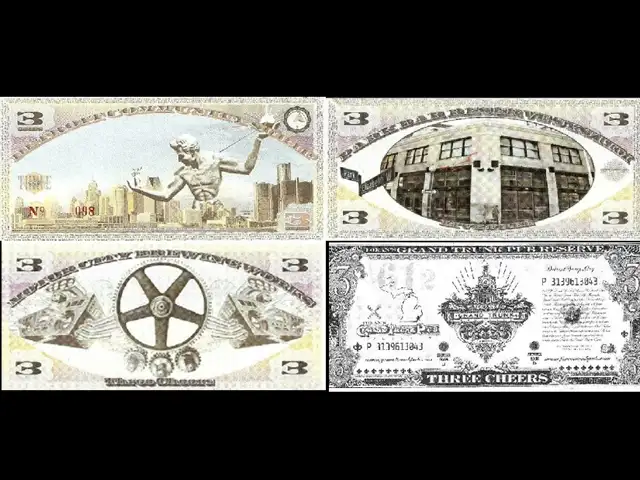
Issued in 2009, the Detroit Cheers is a local currency used in this American city. The note is available in only one denomination — $3 and is worth about $4,500. The currency can be exchanged with US dollars for equal value. Many local business people back the Detroit Cheers, which is based on a model of money used during the Great Depression of 1930.
(Image: www.michigancoinclub.org)
Issued in 2009, the Detroit Cheers is a local currency used in this American city. The note is available in only one denomination — $3 and is worth about $4,500. The currency can be exchanged with US..