Aladdin's 'magic carpet' becomes a reality: New self-powered sheet can fly & flap
Researchers have designed a 2D, shape-changing sheet that moves autonomously in a reactant-filled fluid.
By PTI |
Getty Images
NEW YORK: Inspired by the magic carpet featured in the folk tale of 'Aladdin', researchers have designed a two-dimensional, shape-changing sheet that moves autonomously in a reactant-filled fluid.
The 'magic carpet' in tales from "One Thousand and One Nights" to Disney's "Aladdin" captures the imagination not only because it can fly, but because it can also wave, flap, and alter its shape to serve its riders.
"It's long been a challenge in chemistry to create a non-living object that moves on its own within an environment, which in turn alters the object's shape, allowing it to carry out brand new tasks, like trapping other objects," said Anna C Balazs from the University of Pittsburgh in the US.
Researchers previously have made chemically active patches on a surface that could generate fluid flow, but the flow didn't influence the location or shape of the patch.
In the study published in the journal Science Advances, the team modelled spherical and rectangular particles that can move autonomously within a fluid-filled micro-chamber.
ADVERTISEMENT
"Now we have this integrated system that utilises a chemical reaction to activate the fluid motion that simultaneously transports a flexible object and "sculpts" its shape, and it all happens autonomously," Balazs said.
The group accomplished this feat of self-propulsion and reconfiguration by introducing a coating of catalysts on the flexible sheet, which is roughly the width of a human hair.
The addition of reactants to the surrounding fluid initiates both the carpet's motion and the changes of its form.
"To best of our knowledge, this is the first time these catalytic chemical reactions have been applied to 2D sheets to generate flows that transform these sheets into mobile, 3D objects," Balazs said.
ADVERTISEMENT
By placing different catalysts on specific areas of the sheet and controlling the amount and type of reactants in the fluid, the group created a useful cascade of catalytic reactions where one catalyst breaks down an associated chemical, which then becomes a reactant for the next of the set of catalytic reactions.
Adding different reactants and designing appropriate configurations of the sheet allows for a variety of actions -- in this study, enwrapping an object, making a flapping motion, and tumbling over obstacles on a surface.
ADVERTISEMENT
"A microfluidic device that contains these active sheets can now perform vital functions, such as shuttling cargo, grabbing a soft, delicate object, or even creeping along to clean a surface," said Oleg E Shklyaev, a post-doctoral associate at the University of Pittsburgh.
Next Horizon Of Science: AI To Diagnose Brain Haemorrhage, Spacecraft For Intergalactic Travel
1/6
From AI that can diagnose stroke to scientists taking antimatter for a truck ride, here’s everything exciting about technologies that are going to shape our future. (Text: Rajarshi Bhattacharjee)
From AI that can diagnose stroke to scientists taking antimatter for a truck ride, here’s everything exciting about technologies that are going to shape our future. (Text: Rajarshi Bhattacharjee)
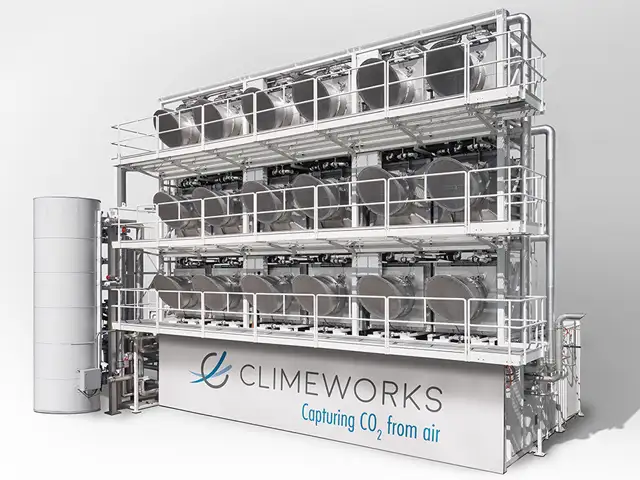
Hate carbon dioxide for heating up the planet? Switzerland has a giant machine that sucks carbon dioxide from air and performs better than plants. In essence, it’s a gigantic artificial tree. Zurichbased Climeworks AG is the world’s first ever commercial plant that can capture CO2 from the air on an industrial level. The amount (900 tonnes) of carbon dioxide the plant draws annually is approximately the same as the amount emitted by 200 cars in the same time.
(Image: www.climeworks.com)
Hate carbon dioxide for heating up the planet? Switzerland has a giant machine that sucks carbon dioxide from air and performs better than plants. In essence, it’s a gigantic artificial tree. Zurich..
Read More
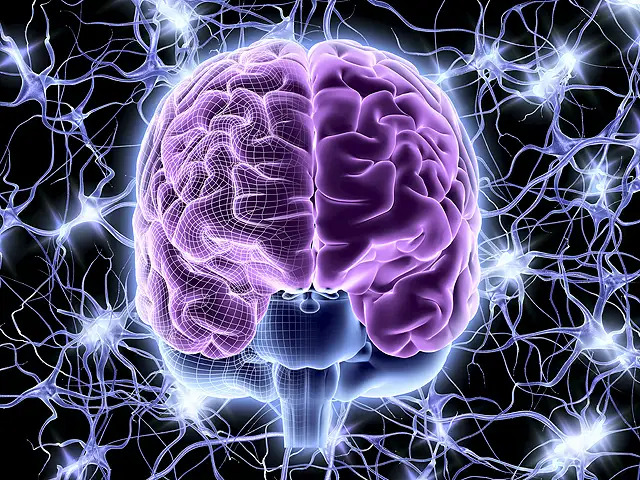
Scientists at the Icahn School of Medicine at Mount Sinai in US have developed an artificial intelligence platform that can identify disease in brain CT scans in 1.2 seconds, and diagnose a range of acute neurological illnesses, such as stroke, and haemorrhage. The study shows that the system was faster than human diagnosis. This is the first study to utilise AI for detecting acute neurologic events and demonstrate a direct clinical application.
Scientists at the Icahn School of Medicine at Mount Sinai in US have developed an artificial intelligence platform that can identify disease in brain CT scans in 1.2 seconds, and diagnose a range of..
Read More
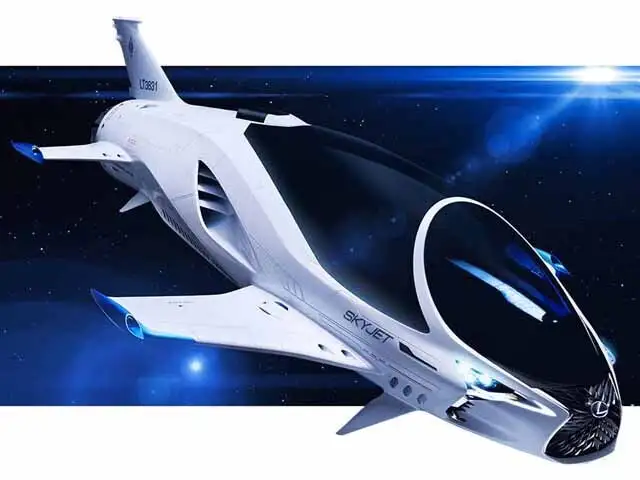
Remember the pursuit craft driven by Valerian (Dane DeHaan) in the 2017 movie Valerian and the City of a Thousand Planets? US design and technology company Lexus has a concept of the futuristic single-seat craft called Skyjet that will take the future humans on intergalactic trips. Powered by a compact fuel-cell capsule, the Skyjet will fly on clean, renewable energy for space travel, sometime around 2740.
(Image: www.lexus.co.uk)
Remember the pursuit craft driven by Valerian (Dane DeHaan) in the 2017 movie Valerian and the City of a Thousand Planets? US design and technology company Lexus has a concept of the futuristic sing..
Read More
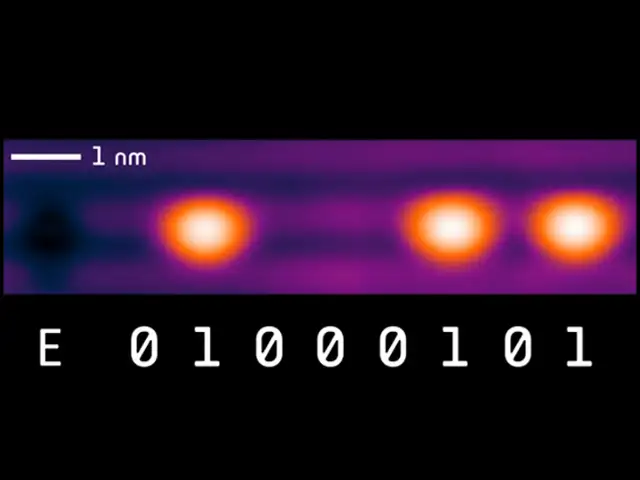
The most dense, solidstate memory in history is here. It could soon exceed the capabilities of current hard drives by 1,000 times. Scientists at the University of Alberta in Edmonton, Canada say they can use hydrogen atoms to boost storage capacity. They were able to reach a storage density of 128TB per square inch. That’s much ahead of current 10TB hard disks which have approximately 512GB per square inch.
(Image: www.ualberta.ca)
The most dense, solidstate memory in history is here. It could soon exceed the capabilities of current hard drives by 1,000 times. Scientists at the University of Alberta in Edmonton, Canada say the..
Read More
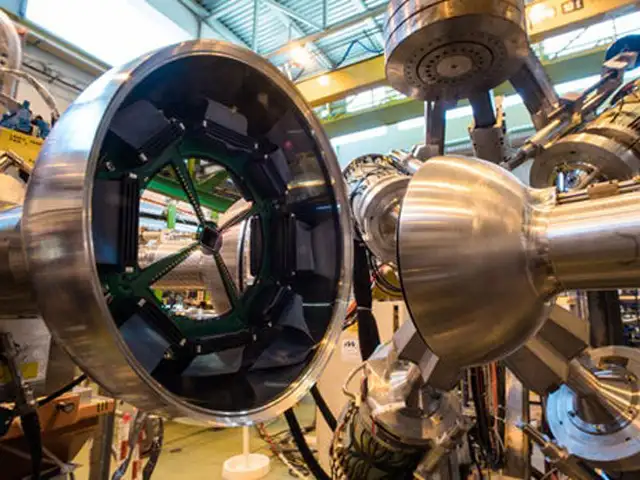
We know antimatter is highly volatile — when it comes into contact with matter, the two annihilate each other. However, physicists at CERN in Switzerland have learned to control it so well that they are now preparing to transport antimatter by truck and then use it to study the strange behaviour of rare radioactive nuclei.
(Image: Julien Marius Ordan-CERN - https://home.cern)
We know antimatter is highly volatile — when it comes into contact with matter, the two annihilate each other. However, physicists at CERN in Switzerland have learned to control it so well that they..
"These flexible micro-machines simply convert chemical energy into spontaneous reconfiguration and movement, which enables them to accomplish a repertoire of useful jobs," Shklyaev said.
If the sheet is cut into the shape of a four-petal flower and placed on the surface of a microfluidic device, the chemistry of the petals can be "programmed" to open and close individually, creating gates that perform logic operations, researchers said.
It can also generate particular fluid flows to transport particles throughout the device, they said.