Ahead of MWC, Xiaomi shows-off special prototype of foldable phone
The phone folds into not two, but three parts.

This ambitious device could be the world's first double folding mobile phone. The foldable device looks like a tablet which can be folded to convert it into a smartphone.
Check out this special video from #Xiaomi President and Co-founder Bin Lin, showing off a very special phone protot… https://t.co/7rZLasA4TI
— Donovan Sung (@donovansung) 1548221459000This device seems to be better than what has already been showcased earlier.
Recently another Chinese-tech giant Royole unveiled the FlexPai at CES 2019. The device did not receive rave reviews and most online watchers said that the device was launched in a hurry, in order to gain advantage.
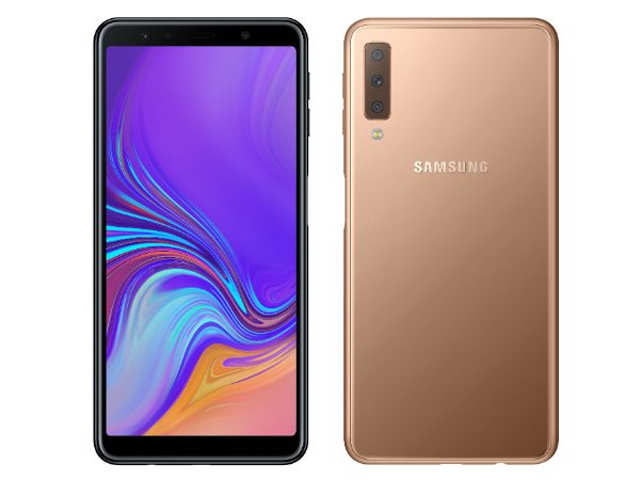
While the Google Pixel 3 and iPhone XR continue to push the boundaries of a single smartphone camera, other companies have not stopped there. Dual cameras became a norm in 2018 and we’ve also seen them in sub Rs10k phones. Huawei was first with a triple camera smartphone (P20 Pro) and others followed suit. Samsung Galaxy A7, LG V40, Oppo R17 Pro and Huawei Mate 20 Pro were some of the phones with triple rear cameras. Samsung didn’t stop there and went on to launch a phone with quad cameras – the Samsung A9. For 2019, there are already rumours of a Nokia phone with five rear cameras and we expect more companies to follow the trend. You can expect all major brands to have phones with multiple cameras across price brackets. According to us, having multiple cameras only makes sense when you get good results and flexibility (wide, macro, tele lenses).
(In Pic: Samsung Galaxy A7)
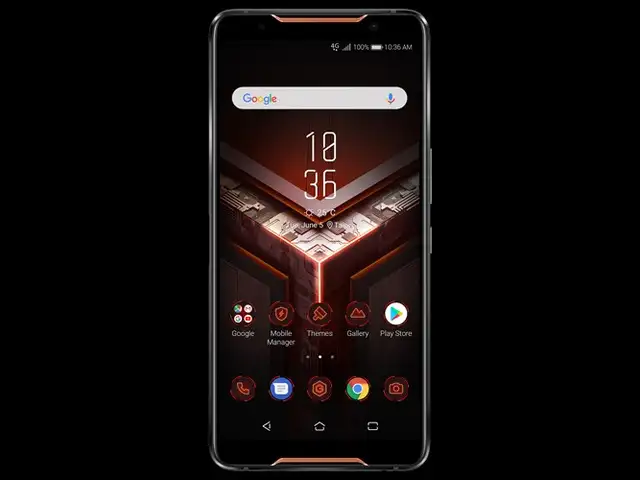
Battery technology simply hasn’t kept pace with smartphone development. One solution to this is to have phones with larger batteries but this also makes the device larger/heavier. The other logical solution is to make the batteries charge faster. OnePlus users have enjoyed the super-fast Dash Charge feature. A number of smartphones also come with Qualcomm’s QuickCharge 3.0. In 2018, we saw devices go beyond and develop their own ultrafast charging technologies. Oppo showed everyone how it’s done with SuperVooc charging on the Find X and R17 Pro. Huawei Mate 20 Pro has Super Charge 2.0, OnePlus launched WarpCharge on the OnePlus 6T McLaren edition while the Asus ROG has QuickCharge 4.0 support. These phones are capable of charging phones from 0 to 50% in less than 30 minutes which is good for about a day of battery life. In 2019, this ultrafast charging tech should be available on more smartphones.
(In Pic: ASUS ROG Phone)
We see new smartphone features every few months – starting from CES in January to various events through the year. We are also likely to see more of Qi wireless charging, phones without 3.5mm port, IR assisted face unlock, glass backs on entry-level devices, smaller, teardrop shape notches. Here are some of the favourites that are expected to be a lot more visible in the coming year.
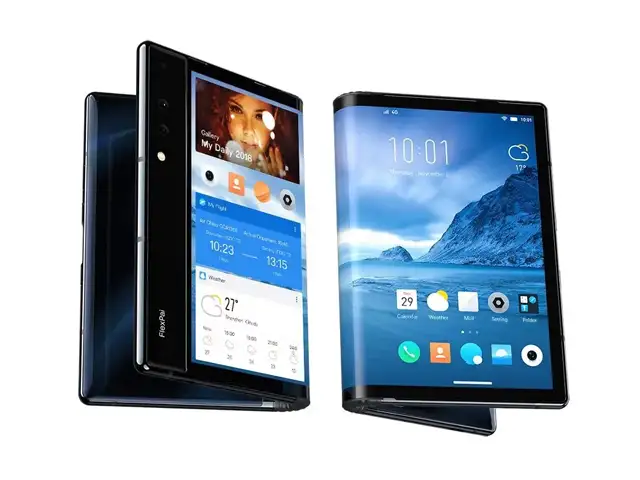
(In Pic: The FlexPai from Royole)
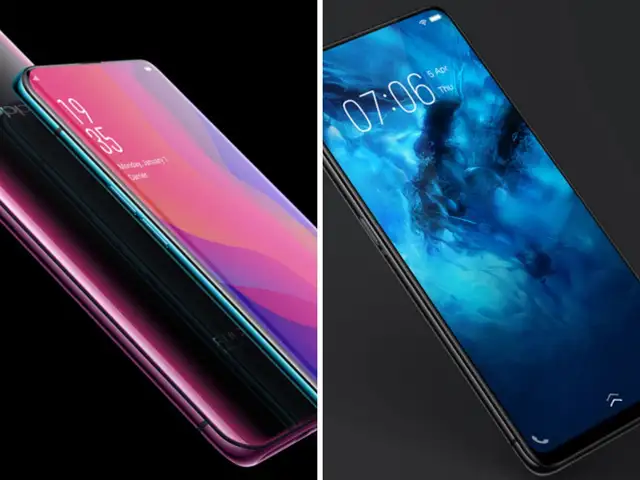
While we first saw the notch in 2017, 2018 was when it came to even at entry-level devices. It’s now so prevalent that more people seem to hate it rather than understand why it’s there. Thankfully, we also saw smartphone brands take a step ahead with allscreen designs (without any notch). Phones like Oppo Find X and Vivo NEX and still on sale but you do have to pay a premium for the design. For 2019 we expect the all-screen design to take center stage as display prices come down. By the end of 2019, we should see mid-range smartphones with all-screen designs.
(In Pic: On the left is the Oppo Find X, and on the right is the Vivo NEX)
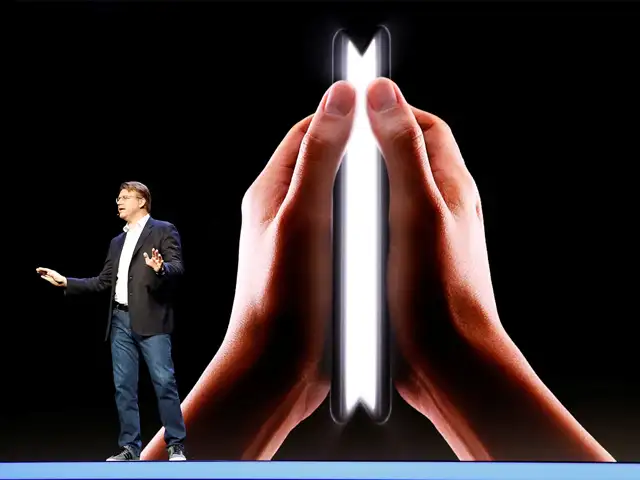
Foldable smartphones have been a concept for a long time now with a few proof of concept devices being shown off at international events. Things escalated quickly in 2018 with Samsung and Huawei announcing that their foldable smartphones will debut in 2019. Samsung showcased a working prototype of their foldable smartphone at an event recently showing how close they are to a consumer device. Another little-known Chinese company called Royale surprised everyone by launching the world’ first foldable smartphone called FlexPai (it’s supposed to go on sale in China by the end of this year). We might just see the first foldable phone next year but you should expect it to be a halo product with a stratospheric price tag.
(In Pic: Samsung's foldable phone which is likely to hit markets in 2019)
4G and VoLTE is commonplace now thanks to Jio’s cross country network (and their affordable data packages brought prices down for everyone). The DoT has announced that they expect to complete the process of 5G spectrum auction by August 2019 which means that there are chances we might see 5G rollout by end of 2019. While the network rollout is not clear at the moment, the hardware for 5G is already ready. Qualcomm has already announced that they have over 15 smartphone OEMs committed to 5G for 2019. A number of them including OnePlus, Oppo and Huawei have also announced 5G phones for 2019 (we’ll see the first wave of announcements at the Mobile World Congress 2019).
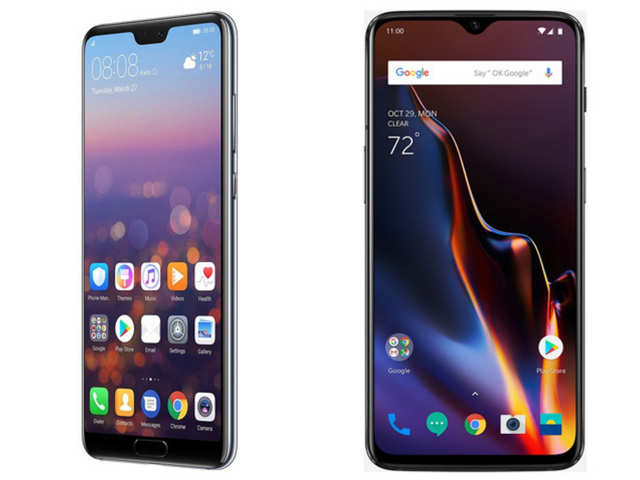
As a personal choice, we prefer capacitive fingerprint scanners on smartphones (simply because they’re faster and more accurate). However, the next generation of fingerprint scanners (embedded in the smartphone display) are already a reality. We’ve seen in-display scanners on Vivo NEX, Vivo V11 Pro, Huawei Mate 20 Pro and the OnePlus 6T. Capacitive scanners also had their share of issues initially and the speed/accuracy improved over the years – we expect the same to happen with in-display fingerprint scanners. One of the things holding back the in-display scanners is that they can only work on devices with amoled screens (which are more expensive than LCD). Qualcomm recently announced ultrasonic in-display fingerprint scanning technology that can work on any type of screen and even through metal.
(In Pic: On the left is the Huawei Mate 20 Pro, and on the right is the OnePlus 6T)
Although, not much is revealed about the device yet, Lin says that Xiaomi has adapted its MIUI (Mi User Interface) software for the foldable phone.
The device, set to compete with Samsung's foldable phone, Royole's FlexPai and Huawei's foldable phone, comes just before the Mobile World Congress next month where the device may make a formal appearance.
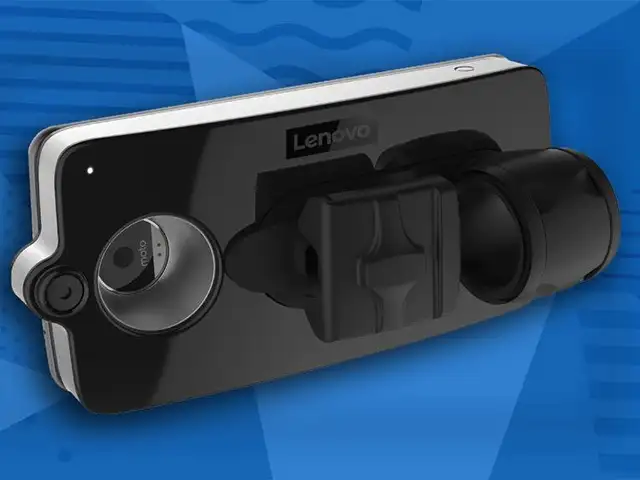
Cosmetics company L’Oreal has a new take on outdoor health — their UV Sense is a battery-free, stick-on wearable that monitors how much UV exposure you’ve had. Once you tap your phone to it, data is collected over NFC.
Nokia Sleep is a WiFi enabled mattress sensor that tracks your sleep patterns and shows you data on the companion app.
And Quartz’s UV Purification Bottle is a battery powered water purification system that uses ultraviolet light to clean itself and the water stored inside.
(Lenovo Vital Image: Twitter/LenovoHealthUS)
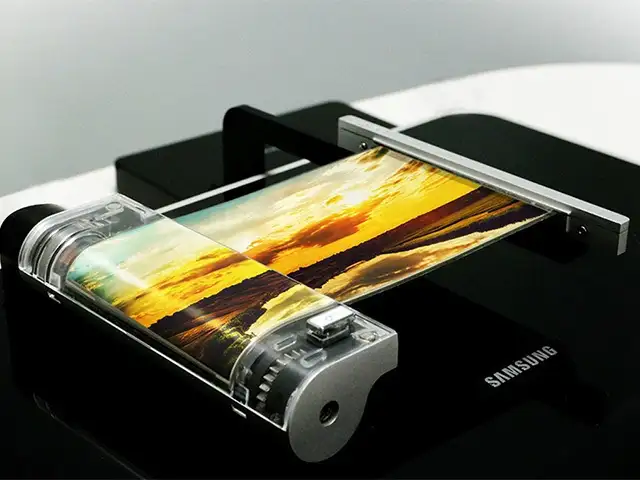
Last year, things changed when Samsung announced that they will launch a smartphone with a foldable display in 2018. Now, if rumors are to be believed, Samsung did a private demo of the prototype of its upcoming foldable smartphone at CES 2018. Going by the grapevine, the device has a 7.3-inch OLED display which can be curved inwards. Samsung was the first to launch smartphones with curved screens and they will like to take the first mover advantage on foldable displays also.
We expect a public demo in the middle of the year, with the phone launch towards the end of 2018. Of course, this all depends on Samsung being able to work out issues regarding durability and mass production of foldable screens.
(Image: androidcentral.com)
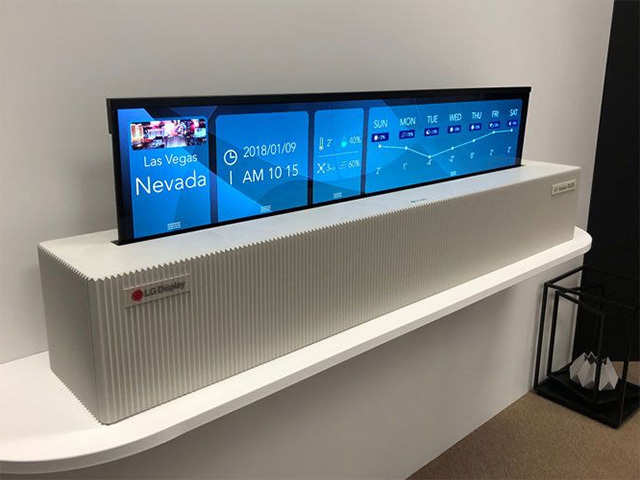
The 65-inch OLED TV rolls in and out of a base just like a large poster. You can adjust the screen for different aspect ratios (16:9 or 21:9) depending upon your content — you will no longer have black bars on top or bottom of the screen while watching movies. You can even roll the screen further to only show an informational display (weather, photos, time/date) when not in use. LG still needs to figure out how to manage the connections for audio and video but we expect that to be sorted in the coming months. Hopefully, other brands will follow suit and announce their own rollable TVs before the end of the year.
(Image: mensxp.com)
Optoma’s new 4k Projector (UHD51A) delivers 2,400 lumens, 500,000:1 contrast & HDR10. Using Alexa, you will be able to switch on/off the projector, adjust brightness/volume and swap video sources.
Jabra’s Elite 65t are fitness-oriented (with heart rate, step tracking) wireless earbuds with Alexa. With the tap of a button, you’ll be able to ask Alexa anything. Alexa is also finding her way into cars from Ford and Toyota (to start with) — the features you get will be similar to placing an Echo Dot in your car today.
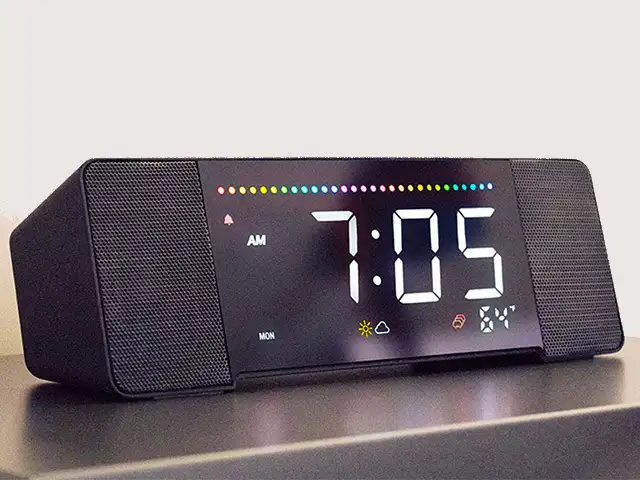
Finally, the Sandman Doppler is a bedside alarm, clock, stereo speaker and multi-device charger (it has 6 powered USB ports) with Alexa built in.
(Sandman Doppler image: kickstarter.com)
At CES 2018, Vivo had a functioning smartphone with an under screen fingerprint scanner. Till now, even devices with 18:9 aspect ratio displays were stuck with a physical fingerprint scanner on the back or front of the device. With an under-screen fingerprint scanner, devices no longer need to have a separate fingerprint scanner on the body.
Qualcomm also announced their advanced fingerprint scanning technology which can scan a fingerprint through a screen, glass and even metal. While there was no demo by Qualcomm of the said feature at CES, expect them to be a major player providing this functionality across various brands through 2018.
(Representative image)
The Economic Times Business News App for the Latest News in Business, Sensex, Stock Market Updates & More.