This concept of agility occupies center-stage in Mundra’s new book. Called ‘Enterprise Agility: Being Agile in a Changing World.
BENGALURU: It is ironical to see companies struggling with the concept of change when the ability to evolve comes naturally to human beings, said Sunil Mundra. Giving the example of the gradual shifts from the barter system to cryptocurrency, he explained that human evolution is essentially a story of change.
“So, when I looked at the root cause behind why most organizations find it hard to adapt, the most glaring reason was the lack of agility. Because people have ended up treating organizations like machines, when in fact, they are living systems,” said Mundra, principal consultant, ThoughtWorks.
This concept of agility occupies center-stage in Mundra’s new book. Called ‘Enterprise Agility: Being Agile in a Changing World’, it suggests fundamental practices and practical examples to help accelerate the pace of disruptive change in an organization.
In an era where customers are becoming more demanding and employees are seeking greater engagement with the company, Mundra believed that thinking of a company as living systems is at the core of agility. According to him, it is essential that every organization is treated as a Complex Adaptive System (CAS).
“Agility is to enterprises what health is to human beings. Just like the definition of health is subjective for every individual, being agile is also not just about a single capability,” the 52-year-old author explained.
ADVERTISEMENT
Most companies, he said, take time to change their mindset and do not work towards it until they are pushed to the wall or their survival is threatened. “Every enterprise must recognize its capabilities, and have the ability to sense, adapt and respond o survive and remain healthy. Leaders must align themselves to the larger purpose of the organization; to its people, processes, governance, structure, technology and customers.”
Mundra believed that his work is essential since there are only stray pieces of literature available on CAS. The book, written and published over 20 months, also talks about how companies must move away from the single-minded pursuit of profits.
“Companies that are actually creating a lot of wealth in the stock market are the ones whose purpose is bigger than just shareholder maximization," he said. "We have to stop applying traditional engineering and manufacturing principles to companies, and introduce greater flexibility in thinking and action.”
When Murakami, Toni Morrison, J D Salinger's Books Were Banned
1/6
By Apoorva Puranik
As Haruki Murakami’s new book faces a ban in Hong Kong for being obscene, here are some other literary masterpieces that fought a hard battle to reach bookshelves.
By Apoorva PuranikAs Haruki Murakami’s new book faces a ban in Hong Kong for being obscene, here are some other literary masterpieces that fought a hard battle to reach bookshelves.
The Nobel-Prize-winning author is no stranger to censorship. Her novel 'The Bluest Eye' (1970) was ranked as the second most banned book in the United States by the American Library Association.
The book has been attacked for its ‘pornographic language’ and ‘inappropriate content’. A part of reading lists in schools across the US, it was banned after several parents’ association protested against its inclusion in the syllabus. Despite explicit sex scenes describing incest, rape, and pedophilia, the book is held as a thought-provoking literary work.
Set in 1941, it centres around the life of an African-American girl named Pecola. Morrison’s other works, 'Beloved' (1987) and 'Song of Solomon' (1977), have also met with calls to be removed from school libraries and reading lists.
The Nobel-Prize-winning author is no stranger to censorship. Her novel 'The Bluest Eye' (1970) was ranked as the second most banned book in the United States by the American Library Association. The ..
Read More
In 1929, Norah James wrote her 'stream-of-consciousness' novel about two lovers who form a suicide pact.
Deemed obscene because of expressions such as 'b***s', 'bloody' and 'For Christ's sake give me a drink', the British Home secretary Sir William Joyson-Hicks prompted a raid on the premises of Scholartis Press, the publishing house owned by the New Zealander Eric Partridge. Copies were seized and then destroyed after the final judgement was made that the novel suggested 'thoughts of the most impure character.'
However, a clandestine French edition, published by Jack Kahane of Obelisk Press, made it to bookshelves.
In 1929, Norah James wrote her 'stream-of-consciousness' novel about two lovers who form a suicide pact. Deemed obscene because of expressions such as 'b***s', 'bloody' and 'For Christ's sake give me..
Read More
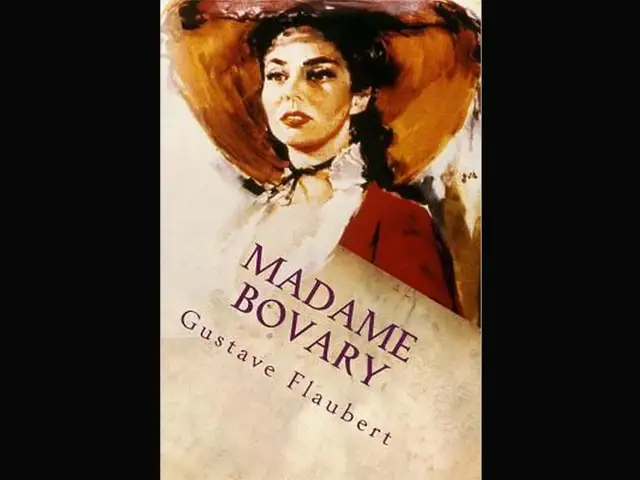
This 1857 masterpiece by the French writer caused public outcry over its sexualised content and themes of adultery when La Reveau, a French magazine, released some of its excerpts.
While Flaubert and his publishers agreed to remove certain passages, it wasn’t enough and Flaubert was charged with offending public morality. At the trial, Imperial Advocate Ernest Pinard famously said, “No gauze for him, no veils — he gives us nature in all her nudity and crudity.”
While the public opinion remained that Flaubert's work would inevitably lead to the decay of public decency, the jury acquitted him and 'Madame Bovary' was republished in its entirety and sold 15,000 copies in two months.
This 1857 masterpiece by the French writer caused public outcry over its sexualised content and themes of adultery when La Reveau, a French magazine, released some of its excerpts. While Flaubert and..
Read More
The controversial English writer’s tryst with censorship goes beyond the hotly debated Lady Chatterley’s Lover. With 'Women In Love', Lawrence once again shot to infamy, sparking controversy over its sexual content.
The book, published privately in 1920, examines the ill effects of industrialisation on the human psyche through intensity and passion.
The book was banned during Lawrence’s lifetime and after years of misunderstandings, accusations of duplicity, and hurried letters, Thomas Seltzer finally published the first edition of 'Women in Love' in New York City, on November 9, 1920.
This had come after three drawn out years of delays and revisions.
The controversial English writer’s tryst with censorship goes beyond the hotly debated Lady Chatterley’s Lover. With 'Women In Love', Lawrence once again shot to infamy, sparking controversy over its..
Read More
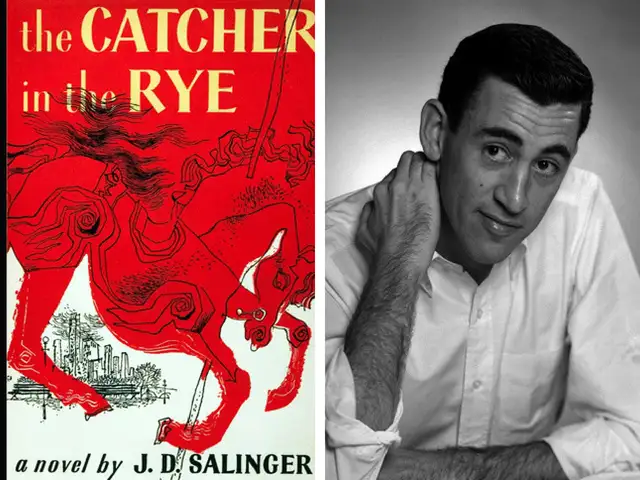
Ever since J D Salinger’s 'The Catcher in the Rye' was published in 1951, it attracted the attention of the censors.
One of the earliest works of fiction exploring male teenage consciousness, the book is narrated in the first person by Holden Caulfield, who struggles with feelings of alienation and anxiety.
During 1965 to 1975, it was the most frequently banned book in American schools, with the common complaint being of obscene language and the portrayal of inappropriate adolescent behaviour.
Although challenged many times, the book remains on many reading lists, and is constantly reprinted.
Ever since J D Salinger’s 'The Catcher in the Rye' was published in 1951, it attracted the attention of the censors. One of the earliest works of fiction exploring male teenage consciousness, the boo..