Seriously, when they don’t explode or peel apart or simply turn to black, the Samsung name represents solid, reliable devices with good hardware and nice software.
That’s why its decision to delay the launch of its first foldable smartphone shows that these gimmicks may be more hassle than they’re worth. The Fold was never likely to be a huge revenue or earnings driver. It was merely a chance to show off what the South Korean company could do. Unfortunately, Samsung has simply proven that it can’t actually do foldable phones after all.
This poor product execution comes a little more than two years after the release of the exploding Galaxy Note 7, a device that earned the rare honor of being banned by name from airlines around the world. As predicted, consumers forgave Samsung and were more than willing to revisit the brand after that dust had settled.
Not only could the Samsung brand do without this kind of trauma, the company’s financials don’t need the risk-taking. Another smartphone product failure would be costly, and as my colleague Alex Webb wrote last week, could poison consumer appetite for foldable phones overall. Besides, the company makes buckets of money elsewhere.
ADVERTISEMENT
Foldable Phones, Notch-Free Display: Smartphone Tech To Watch Out For In 2019
1/7
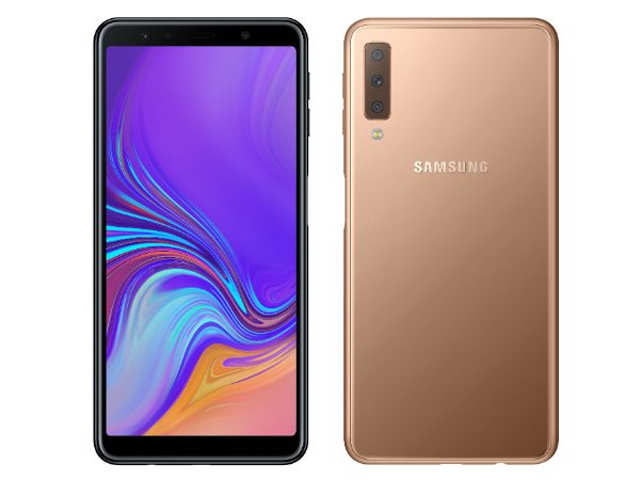
While the Google Pixel 3 and iPhone XR continue to push the boundaries of a single smartphone camera, other companies have not stopped there. Dual cameras became a norm in 2018 and we’ve also seen them in sub Rs10k phones. Huawei was first with a triple camera smartphone (P20 Pro) and others followed suit. Samsung Galaxy A7, LG V40, Oppo R17 Pro and Huawei Mate 20 Pro were some of the phones with triple rear cameras. Samsung didn’t stop there and went on to launch a phone with quad cameras – the Samsung A9. For 2019, there are already rumours of a Nokia phone with five rear cameras and we expect more companies to follow the trend. You can expect all major brands to have phones with multiple cameras across price brackets. According to us, having multiple cameras only makes sense when you get good results and flexibility (wide, macro, tele lenses).
(In Pic: Samsung Galaxy A7)
While the Google Pixel 3 and iPhone XR continue to push the boundaries of a single smartphone camera, other companies have not stopped there. Dual cameras became a norm in 2018 and we’ve also seen th..
Read More
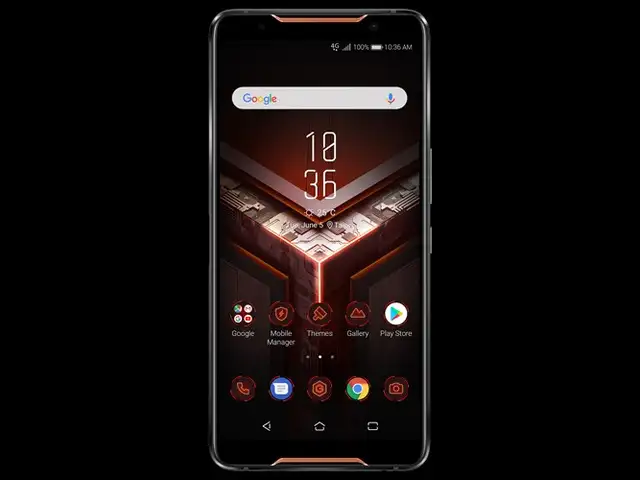
Battery technology simply hasn’t kept pace with smartphone development. One solution to this is to have phones with larger batteries but this also makes the device larger/heavier. The other logical solution is to make the batteries charge faster. OnePlus users have enjoyed the super-fast Dash Charge feature. A number of smartphones also come with Qualcomm’s QuickCharge 3.0. In 2018, we saw devices go beyond and develop their own ultrafast charging technologies. Oppo showed everyone how it’s done with SuperVooc charging on the Find X and R17 Pro. Huawei Mate 20 Pro has Super Charge 2.0, OnePlus launched WarpCharge on the OnePlus 6T McLaren edition while the Asus ROG has QuickCharge 4.0 support. These phones are capable of charging phones from 0 to 50% in less than 30 minutes which is good for about a day of battery life. In 2019, this ultrafast charging tech should be available on more smartphones.
(In Pic: ASUS ROG Phone)
Battery technology simply hasn’t kept pace with smartphone development. One solution to this is to have phones with larger batteries but this also makes the device larger/heavier. The other logical s..
Read More
We see new smartphone features every few months – starting from CES in January to various events through the year. We are also likely to see more of Qi wireless charging, phones without 3.5mm port, IR assisted face unlock, glass backs on entry-level devices, smaller, teardrop shape notches. Here are some of the favourites that are expected to be a lot more visible in the coming year.
(In Pic: The FlexPai from Royole)
We see new smartphone features every few months – starting from CES in January to various events through the year. We are also likely to see more of Qi wireless charging, phones without 3.5mm port, I..
Read More
While we first saw the notch in 2017, 2018 was when it came to even at entry-level devices. It’s now so prevalent that more people seem to hate it rather than understand why it’s there. Thankfully, we also saw smartphone brands take a step ahead with allscreen designs (without any notch). Phones like Oppo Find X and Vivo NEX and still on sale but you do have to pay a premium for the design. For 2019 we expect the all-screen design to take center stage as display prices come down. By the end of 2019, we should see mid-range smartphones with all-screen designs.
(In Pic: On the left is the Oppo Find X, and on the right is the Vivo NEX)
While we first saw the notch in 2017, 2018 was when it came to even at entry-level devices. It’s now so prevalent that more people seem to hate it rather than understand why it’s there. Thankfully, w..
Read More
Foldable smartphones have been a concept for a long time now with a few proof of concept devices being shown off at international events. Things escalated quickly in 2018 with Samsung and Huawei announcing that their foldable smartphones will debut in 2019. Samsung showcased a working prototype of their foldable smartphone at an event recently showing how close they are to a consumer device. Another little-known Chinese company called Royale surprised everyone by launching the world’ first foldable smartphone called FlexPai (it’s supposed to go on sale in China by the end of this year). We might just see the first foldable phone next year but you should expect it to be a halo product with a stratospheric price tag.
(In Pic: Samsung's foldable phone which is likely to hit markets in 2019)
Foldable smartphones have been a concept for a long time now with a few proof of concept devices being shown off at international events. Things escalated quickly in 2018 with Samsung and Huawei anno..
Read More
4G and VoLTE is commonplace now thanks to Jio’s cross country network (and their affordable data packages brought prices down for everyone). The DoT has announced that they expect to complete the process of 5G spectrum auction by August 2019 which means that there are chances we might see 5G rollout by end of 2019. While the network rollout is not clear at the moment, the hardware for 5G is already ready. Qualcomm has already announced that they have over 15 smartphone OEMs committed to 5G for 2019. A number of them including OnePlus, Oppo and Huawei have also announced 5G phones for 2019 (we’ll see the first wave of announcements at the Mobile World Congress 2019).
4G and VoLTE is commonplace now thanks to Jio’s cross country network (and their affordable data packages brought prices down for everyone). The DoT has announced that they expect to complete the pro..
Read More
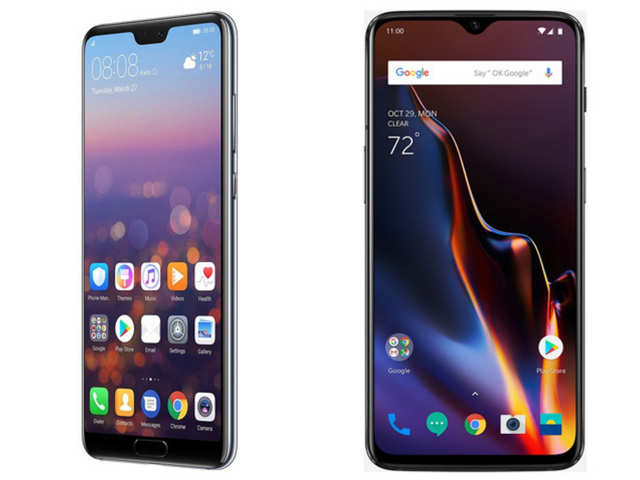
As a personal choice, we prefer capacitive fingerprint scanners on smartphones (simply because they’re faster and more accurate). However, the next generation of fingerprint scanners (embedded in the smartphone display) are already a reality. We’ve seen in-display scanners on Vivo NEX, Vivo V11 Pro, Huawei Mate 20 Pro and the OnePlus 6T. Capacitive scanners also had their share of issues initially and the speed/accuracy improved over the years – we expect the same to happen with in-display fingerprint scanners. One of the things holding back the in-display scanners is that they can only work on devices with amoled screens (which are more expensive than LCD). Qualcomm recently announced ultrasonic in-display fingerprint scanning technology that can work on any type of screen and even through metal.
(In Pic: On the left is the Huawei Mate 20 Pro, and on the right is the OnePlus 6T)
As a personal choice, we prefer capacitive fingerprint scanners on smartphones (simply because they’re faster and more accurate). However, the next generation of fingerprint scanners (embedded in the..
Let’s remember that Samsung is a global leader in the key components used in electronics — displays and memory chips. Granted, these are cyclical and unstable businesses, yet Samsung’s solid execution has allowed it to continue making money when smaller rivals have lost money or gone belly up.
Samsung’s chip business, for example, contributed 76 percent of operating income last year despite accounting for 32 percent of revenue. Phones, on the other hand provided less than 18 percent of operating profit on 36 percent of sales.
This in-house supply chain is a competitive advantage no other company in the world enjoys.
ADVERTISEMENT
To leverage that, Samsung would be better served focusing on solid execution of reliable products rather than trying to be novel with untested technology.
Its longtime rival, Apple Inc., is a good example of that strategy. Rarely the first to utilize new technology, Apple has been content to watch others implement OLED displays, facial recognition and 4G. When its iPhones do finally catch up, they execute with nary a hiccup.
ADVERTISEMENT
Along with its walled-garden iOS ecosystem, it’s this boring (sorry, Apple) but dependable product approach that allows consumers to feel comfortable knowing that the latest iPhone won’t be a lottery. It’s when Apple has strayed into new territory that it hit product problems (just think of antenna gate and scratch gate).
With the smartphone business becoming so lackluster, it’s tempting to try push the boundaries just to drum up excitement. But most consumers want a product that works, and don’t need one that excites.
In February I wrote that foldable handsets from both Samsung and Huawei Technologies Co., selling for $2,000 and $2,600 apiece, were really more like concept products than consumer-ready devices. That was even before I knew that the Fold would be beset with issues.
Having recovered from the saga of exploding phones, Samsung should be careful consumers don’t start muttering, “Fool me once, shame on you; fool me twice, shame on me.”
Samsung 'Unpacked' Event: Galaxy S10+, Foldable Phone, Active Smartwatch Steal The Show
1/8
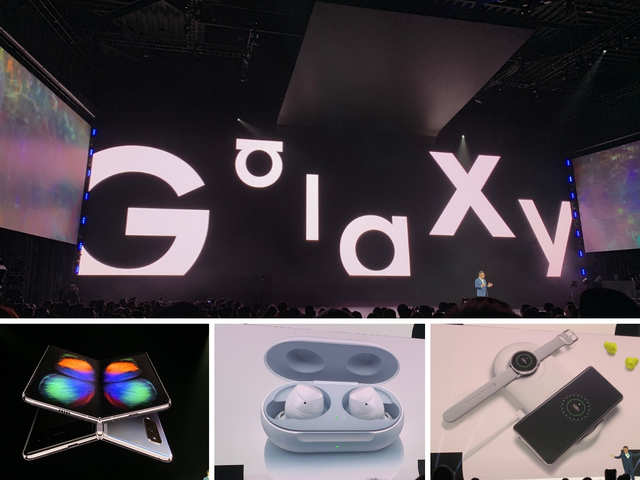
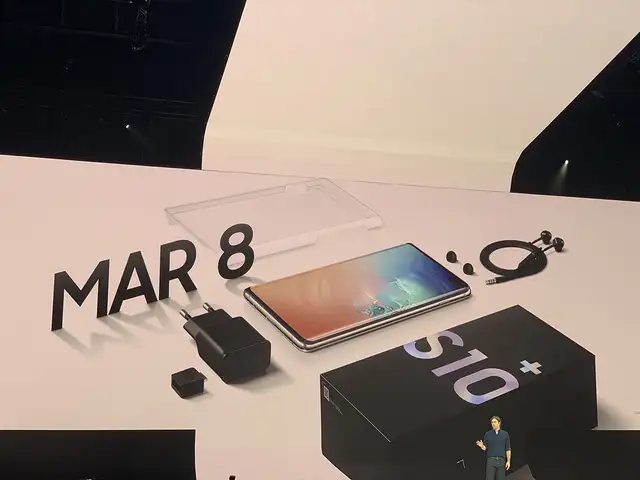
At the 2019 Samsung 'Unpacked' event in San Francisco, the tech giant unveiled its upcoming Galaxy S10 phones, 5G smartphone, Galaxy buds and smartwatches.
The tech-heavy evening witnessed the launch of the world's first foldable phone. The Korean tech tycoon set the standards high for competition by taking the wraps off the world's first-ever 5G smartphone. But this is not where it ends. Samsung left tech geeks in awe of the new gadgets launched.
Without much ado, take a look at the highlights of Samsung's 'Unpacked' event.
At the 2019 Samsung 'Unpacked' event in San Francisco, the tech giant unveiled its upcoming Galaxy S10 phones, 5G smartphone, Galaxy buds and smartwatches. The tech-heavy evening witnessed the launch..
Read More
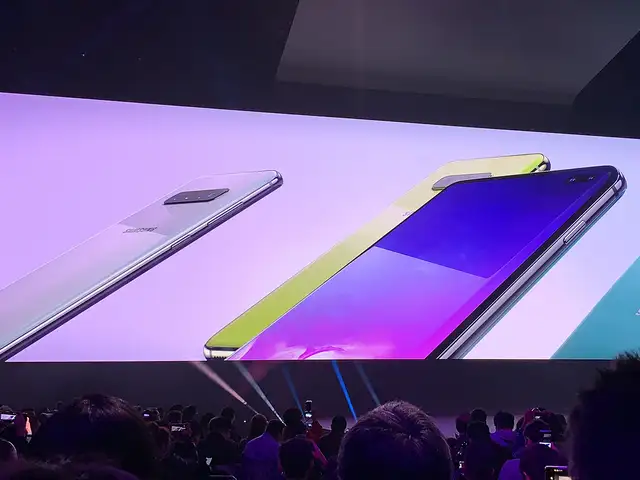
Samsung finally took the wraps off three new devices from Galaxy S flagship. All three devices are set to launch in India next month and are powered by the same Exynos 9820 processor.
The Samsung Galaxy S10 features AMOLED screen with Samsung's new Infinity O style notch design, also known as the punch hole display. It also features an in-display ultrasonic fingerprint scanner and face unlock. Selfie lovers can rejoice as the device features a triple rear camera setup.
With an 8GB RAM with 128GB or 512GB storage, the device comes with Samsung’s One UI based on Android 9.0. The smartphone is priced at USD $899.99.
Samsung finally took the wraps off three new devices from Galaxy S flagship. All three devices are set to launch in India next month and are powered by the same Exynos 9820 processor. The Samsung Gal..
Read More
Like Galaxy S10, S10+ also features AMOLED screen with punch hole display and in-display fingerprint scanner. The smartphone has a 6.4-inch screen: both with quad HD+ curved displays. What's different with this device is the Vapor Chamber Cooling. For selfie loves, it features a triple rear camera setup with dual front camera. It is expected to be priced at USD 999.99.
Like Galaxy S10, S10+ also features AMOLED screen with punch hole display and in-display fingerprint scanner. The smartphone has a 6.4-inch screen: both with quad HD+ curved displays. What's differen..
Read More
Samsung Galaxy S10e shares the same screen as S10 and S10+. In terms of display, it features a 5.8-inch full HD+ screen, both with quad HD+ curved displays. What's different with this one is a side-mounted capacitive fingerprint scanner. It stands back in terms of the camera with a dual rear camera setup. This one is priced at $749.99.
Samsung Galaxy S10e shares the same screen as S10 and S10+. In terms of display, it features a 5.8-inch full HD+ screen, both with quad HD+ curved displays. What's different with this one is a side-m..
Read More
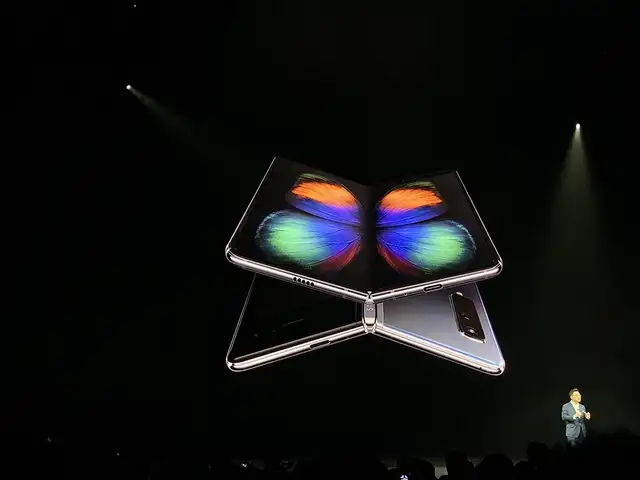
Foldable phones have been the talk of the tech town for months now. In December last year, Samsung hinted towards the launch of such a device at its upcoming event. The tech giant kept its promise and kicked-off the 'Unpacked' event with the launch of Samsung Galaxy Fold. The device features a 7.3-inch Infinity Flex display with Dynamic AMOLED panel and QXGA+ resolution. A hidden hinge system is used for smooth transition between displays. Android 9.0 with a custom UI powers the Galaxy Fold.
Other characteristics of this device include a 855 processor, 12GB RAM and 512GB storage, dual batteries offering a 4,380mAh capacity. It is the first-ever smartphone that comes with a super-fast UFS 3.0 flash storage.
It has a total of six cameras with a triple rear camera setup. Priced at USD 1,980, the device will launch in April in the US. However, its India launch date has not been revealed yet.
Foldable phones have been the talk of the tech town for months now. In December last year, Samsung hinted towards the launch of such a device at its upcoming event. The tech giant kept its promise an..
Read More
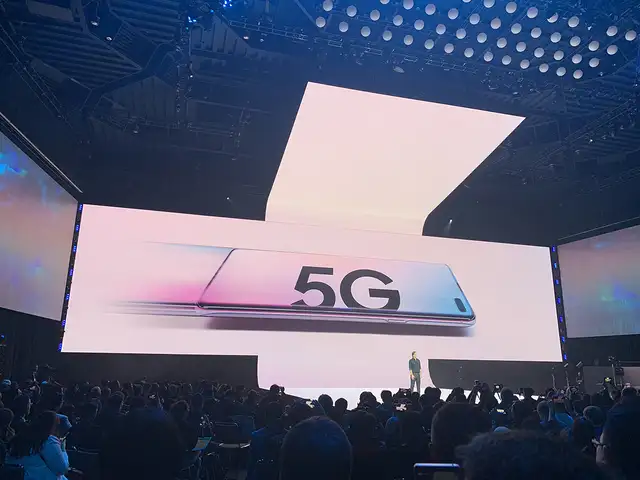
Samsung unveiled the first ever 5G device, Galaxy S10 5G, at the 'Unpacked' event. The device is the first in the world with 5G support.
It sports a 6.7-inch curved Quad HD and AMOLED display with Infinity-O style notch. Highlight of the phone is a 3D depth camera on the rear and back. It puts battery woes to an end with a massive 4500 mAh battery, the largest on any Samsung Galaxy device. It is expected to be priced at USD 1,499.99.
Samsung unveiled the first ever 5G device, Galaxy S10 5G, at the 'Unpacked' event. The device is the first in the world with 5G support. It sports a 6.7-inch curved Quad HD and AMOLED display with In..
Read More
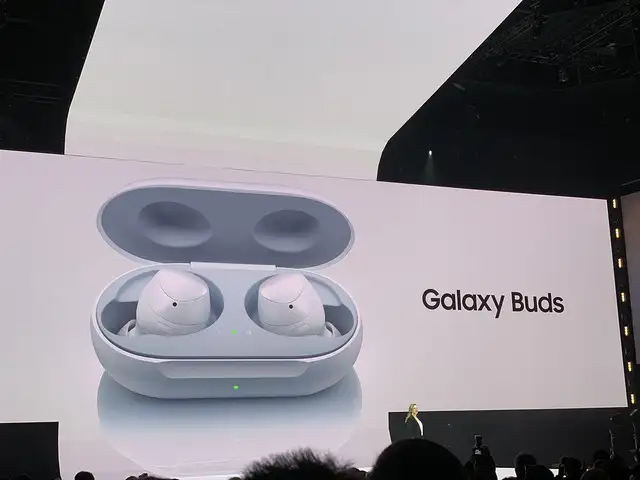
Samsung did not stop at smartphones at the 'Unpacked' event. A bunch of new accessories also made it to the tech giant's new line-up this year. Galaxy Buds, Samsung's latest wireless earbuds with Bluetooth 5.0 connectivity, were launched at the big event. The adaptive dual microphones cut background noise. Bixby allows enhanced ambient sound support.
The buds weigh only 49 grams each and deliver up to 6 hours of music playback and 5 hours of call on a single charge. They also support wireless charging. Priced at USD 129.99, these earbuds are expected to launch in India in next month.
Samsung did not stop at smartphones at the 'Unpacked' event. A bunch of new accessories also made it to the tech giant's new line-up this year. Galaxy Buds, Samsung's latest wireless earbuds with Blu..
Read More
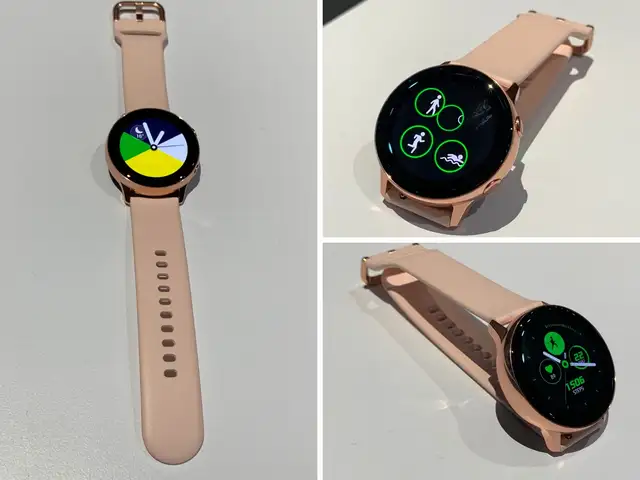
Samsung took care of the needs of fitness freaks too with the Galaxy Active Smartwatch and Galaxy Fit Fitness Tracker. A 360X360 resolution is protected by Gorilla glass 3. The water-resistant watch weighs only 25 grams. Other features include Exynos 9110 Dual-core 1.15 GHz, 768MB RAM, 4GB storage and 230mAh battery. A Tizen based Wearable OS 4.0 allows the device to monitor heart rate and blood pressure. The smartwatch is priced at USD 199.
The Korean tech giant also unveiled the Galaxy Fit Fitness Tracker at the 'Unpacked' event. It features a 120X120 resolution, is water resistant and tracks the heart rate and sleep levels as well. This one is priced at USD 99.99.
Samsung took care of the needs of fitness freaks too with the Galaxy Active Smartwatch and Galaxy Fit Fitness Tracker. A 360X360 resolution is protected by Gorilla glass 3. The water-resistant watch ..