Khan was born to a filmmaking family in Mumbai; his father Nazar Khan made the films Shaitan Mujrim and Shagoon.
It was -49 degree Celsius in the Canadian Arctic. Ejaz Khan waited in the tent, gazing into an unending expanse of snow. White blanketed the earth and the sky.
Khan had his cameras — a Nikon D5 and a D850 — and his Inuit guide Raymond for company. If his cameras came alive occasionally to capture ravens or foxes, Raymond was taciturn. “Raymond, talk to me,” Khan would implore as the silence got to him. In the cold and the quiet, Khan waited, day after day — for the Arctic wolf.
A week into his 11-day trip in March, Khan gave up with no wolf in sight. “I was dying inside. Just sitting in my tent was traumatic,” recalls Khan over Skype from his studio in New York. He and Raymond packed up. Khan decided that he would “live with the humiliation” of not capturing the animal. On the way back, Raymond suddenly stopped his snowmobile. Soon they emerged from the snow: hoary beasts that looked like another shade of white. A pack of Arctic wolves, at last.
Arctic wolf (Image: ejazkhanearth.com)
Khan, a Mumbai-born, New York-based fashion photographer, fell for wildlife in 2011. His work had featured in magazines like Vogue and Twill but he was feeling burnt out. His wife Maxine put him on a flight to Alaska with a DSLR camera to cheer him up. He shot bald eagles swooping down in the snow and bears digging for clams. He called his family and told them he didn’t want to come back. He eventually did in a couple of weeks but his camera had found two new loves: wildlife and ice. “It’s cold, but heaven can be cold too, right?” he asks.
White as a background enamours Khan. Against it, a lot can look beautiful, even a flock of ravens flying overhead. The ice also gives him intimations of mortality.
ADVERTISEMENT
One wrong decision about gloves can be life-threatening. When Khan returned from his rendezvous with the Arctic wolves, he had lost nerves in two of his fingers and had frostbite on his face.
Khan plays with black and white. Many of his photographs have a strong sense of movement, too, especially those of the horses of Camargue in the south of France.
(Clockwise from bottom right) Puma; bald eagle in Alaska; horses of Camargue.
He will next climb the Himalayas in the freezing cold of December, looking for snow leopards, which are classified as “vulnerable” in the Red List of the International Union for Conservation of Nature (IUCN). Photographs from the project, which is for Nikon, will feature in an exhibition in New York and its proceeds will go to the Big Cat Sanctuary, a wildlife charity.
ADVERTISEMENT
Khan was born to a filmmaking family in Mumbai; his father Nazar Khan made the films Shaitan Mujrim and Shagoon. At 18, Ejaz decided that he wanted to be a photographer and dropped out of college. He worked in a shoe shop and as a salesperson in a clothing store.
In 1990, he was done with the city and moved to New York with $300 in his pocket. He stayed at a shelter for the homeless and did odd jobs — washing vegetables, loading trucks and filling gas. Khan likens New York to Mumbai. “In both places, you get paid if you work hard,” he laughs.
ADVERTISEMENT
It was only in 1993 that photography happened to Khan when Maxine gave him a camera as an engagement gift. He started taking photographs for the clothing companies he worked for. Around the turn of the millennium he decided to pursue photography full-time. “In fashion, you are god,” he says.
For his new passion, wildlife photography, he studies the animal and tries to visualise the photograph he wants. Wildlife photography is more about patience than skill or science, he says. “You study the animal and try to predict its behaviour. It’s more about preparing. Get there, and wait for the right moment.”
Be it Alaska or Chile, where he was shooting puma, he says he came across the effects of climate change. In the Arctic, he glimpsed it in the tearing eyes of his stoic Inuit guide. “We were climbing a glacier when I saw Raymond had tears in his eyes. He pointed to a distance and said, ‘There used to be a glacier there. It’s gone now.’” In more ways than one, wildlife photography can be an eye-opener.
Picture Perfect: Try Trick Photography With Your Smartphone
1/5
Your phone camera is a lot more capable than you think.
While it may not offer as much control as a DSLR yet, you can use you phone to capture photos with amazing trick effects.
ET tells you tips and apps to get unique captures using your phone camera.
Your phone camera is a lot more capable than you think.
While it may not offer as much control as a DSLR yet, you can use you phone to capture photos with amazing trick effects.
ET tells you tips a..
Read More
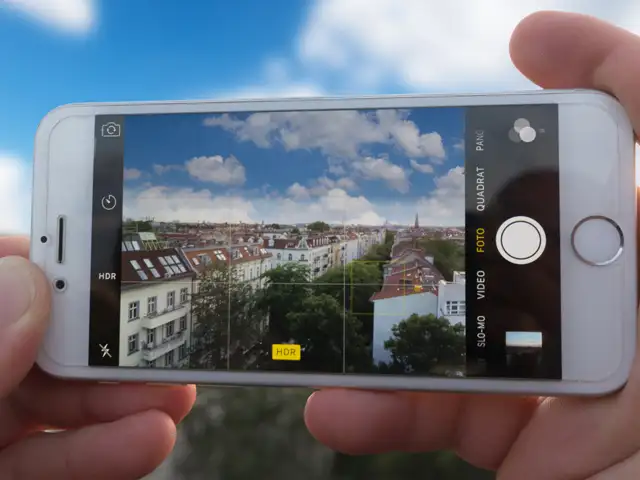
The idea behind HDR or High Dynamic Range is to enhance detail in an image (especially the shadows and darker areas) and make it appear more vibrant.
Typically, this is done by taking multiple photos with different exposure level and then combining them into one. On a majority of smartphones today, the HDR feature is built into the camera interface so you don’t need a separate app.
In case your smartphone does not have HDR feature, try an app called ‘A Better Camera’ by Almalence — it offers HDR for both stills and videos. iPhone users can enable or disable Auto HDR in the camera settings.
Head to Settings > Camera and you will see the option of Auto HDR along with the option to save the normal photo in addition.
The idea behind HDR or High Dynamic Range is to enhance detail in an image (especially the shadows and darker areas) and make it appear more vibrant.
Typically, this is done by taking multiple phot..
Read More
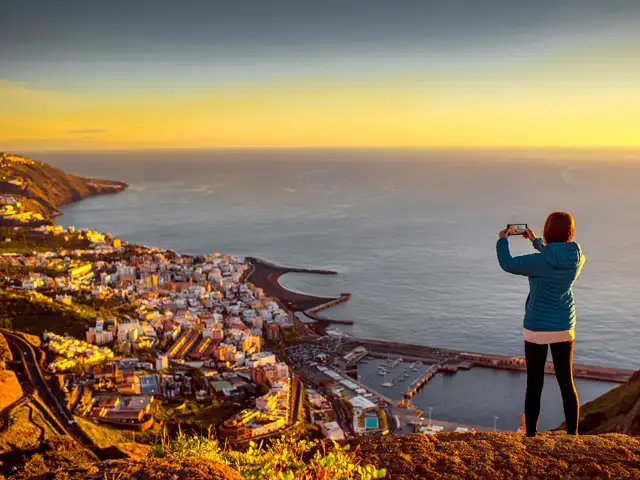
Tilt Shift lets you take miniature photos and is ideal for shooting cars or a cityscape from atop a building. It is important that you find the right place to shoot and make sure that the area you keep in focus has lots of bright colours to make it stand out.
Android users can try the Tilt-Shift Camera app by mrgnpza. This free app lets you adjust the focus area and lets you choose between linear or circular zones.
Various apps such as Instagram, Snapseed and Pixlr also offer the option to add the tilt-shift effect. If case you are an iOS users and want better control, you can get the Glass Tilt Shift app which costs US $2.99.
Tilt Shift lets you take miniature photos and is ideal for shooting cars or a cityscape from atop a building. It is important that you find the right place to shoot and make sure that the area you k..
Read More
You’ve probably seen photos with beautiful light trails or a photo of a waterfall/river in which the water appears to be in motion. This is done by a technique called long exposure which requires control over the shutter speed.
In auto mode, any camera (including a DSLR) will tend to keep the fastest shutter speed that freezes everything in place. You will need to slow the shutter down with a manual mode. The first thing to keep in mind is that your camera needs to be steady — placing on a flat surface or stand/tripod is best.
Android users can check if the smartphone has a Pro/Manual mode. If yes, then open it and increase the shutter speed (make it a second or more). Next, go to the ISO setting and select the lowest available value. That’s it, you just need to find a subject — you can use a highway, shoot stars or even do light painting by pointing a light towards camera and moving it around in the air.
You will need to experiement with different shutter speeds for different scenarios. In case your Android phone does not have a manual mode, you can use apps like Long Exposure Camera 2 or Camera FV-5 Lite.
iOS users can use the Live Photo feature to create long exposure photos. Just enable Live in the camera interface and take a photo. Head to the Gallery, tap the photo you have taken and swipe-up — you will see four options including long exposure. Select it and your photo will be converted to one with a long exposure.
This might not give you the best results each time as the shutter speed is not that long. Alternatively, you can try out third party apps such as LongExpo, Slow Shutter Insta and Ultra Slow Shutter Cam.
You’ve probably seen photos with beautiful light trails or a photo of a waterfall/river in which the water appears to be in motion. This is done by a technique called long exposure which requires co..
Read More
In a panorama sequence, you can take a wideangle panorama with your subject appearing multiple times in the frame for a cool looking shot. Since almost all smartphones today come with a panorama mode, you don’t need to install any extra app.
Start shooting a panorama from one corner with your subject standing in one pose. Once you have panned enough to have the subject out of the frame, stop moving and let your subject circle around behind you to a new position in the frame.
Repeat this process a few times in a single panorama photo and you will get a panorama sequence. Your subject will appear in different poses in a single panorama photo.
In a panorama sequence, you can take a wideangle panorama with your subject appearing multiple times in the frame for a cool looking shot. Since almost all smartphones today come with a panorama mod..