313 million women may be diabetic by 2040: These preventive practices can help
Young girls, who are physically active and nutritionally aware, will not only improve their long-term health outcomes, but will also ensure the well-being of their family.
By Nilakshi Sharma, ET Bureau | Updated:

Awareness of diabetes should start early. Young girls, who are physically active and nutritionally aware, will not only improve their long-term health outcomes, but will also ensure the wellbeing of their family.
Diabetes is a global epidemic that impacts nearly half a billion adults globally. India already ranks a prominent second in the list of top ten countries/territories for the number of adults with diabetes as per the seventh edition of the Diabetes Atlas released by the International Diabetes Federation.
India is already home to 70 million diabetics and this number is set to further increase across genders. Dr Shweta Khandelwal, Associate Professor, Public Health Foundation of India, says, "As per studies, the male sex was associated with a higher risk of becoming diabetic. However, this gap is vanishing very rapidly and urban and peri-urban women are increasingly becoming vulnerable to developing risk factors and then full blown diabetes because of increasing obesity, sedentary lifestyles, consuming unhealthy diets, etc." Equally worrying, according to her, is the narrowing of the gap between urban and rural prevalence of diabetes.
WOMEN AND DIABETES
The theme of World Diabetes Day this year is Women and diabetes -our right to a healthy future.
Today, at 199.5 million, nearly half of the disease burden is being borne by women. This number is set to increase to 313 million women living with diabetes by 2040. An urgent intervention is required now to prevent this escalation. While diabetes is classified into two main categories - type 1 and type 2, a third type is also being categorised - Gestational diabetes (GDM) is a temporary form of type 2 diabetes that an increasing number of women have begun to suffer from during pregnancy.
Type 2 diabetes, which is the more prevalent and more closely linked to lifestyle habits, is preventable in up to 70% of all cases with the right intervention and adoption of healthy lifestyle habits. This means that the diseases awareness and education and preventive measures are potentially lifesaving, especially when you factor in the fact that women in type 2 diabetes are nearly 10 times more likely to also develop coronary heart disease when compared to non-diabetic women.

The number of women suffering from diabetes is set to increase to 313 million by 2040.
PREVENTIVE PRACTICES
Regular testing: Dr Pramod Tripathi, Diabetologist, Freedom Clinic, recommends an annual Fasting Plasma Glucose (FPG) test for every woman. This test measures the blood glucose levels in the morning, after fasting for at least eight hours. According to Dr Tripathi, the alarm bells should ring if the result value is above four because "it is an early sign of insulin resistance. This means the pancreas are over working to keep normal sugars.
Another test that should be undertaken with regularity is the HbA1C test. This is a test that shows the average blood glucose levels over the past three months. This is a test that is good for checking for prediabetes but regular FPG tests are still preferable.
BMI: Tracking the ratio between your height and waist is another good way to identify the first warning symptoms of a body heading towards diabetes.
"Ideally the waist line needs to remain less than half of one's height. If waist is more than half of one's height (e.g. height is 5'4" = 64 inches. Waist should be less than 32 inches), then it's an indicator of excess fat. And women need to work on their diet and exercise to come back in shape," warns Dr Tripathi.
Expert View: Why it is important to empower women with the right information & technologies to win against diabetes
WARNING SIGNS AND SYMPTOMS
According to Dr Sahil Fulara, Consultant Endocrinologist at Jaslok Hospital and Research Centre, "Both men and women may experience the following symptoms of undiagnosed diabetes: increased thirst and hunger, frequent urination, weight loss or gain that has no obvious cause, fatigue, blurred vision, wounds that heal slowly, nausea, skin infections, patches of darker skin in areas of the body that have creases, irritability, breath that has a sweet, fruity, or acetone odour, and reduced feeling in your hands or feet." However, he adds that "the complications of diabetes in women are more difficult to diagnose. Women often have different kinds of heart disease than men. Hormones and inflammation act differently in women."
Clearly, early diagnosis, preferably at the pre-diabetes stage, when the onset of the disease can be prevented, is the best strategy to adopt, especially for women.
Disclaimer: The information found in this feature is of general nature only and not intended as a substitute for professional health advice. No person should act in reliance on any statement contained in the information provided. People should obtain specific advice from professional medical practitioners should they require medical help or assistance.
Diabetes is a global epidemic that impacts nearly half a billion adults globally. India already ranks a prominent second in the list of top ten countries/territories for the number of adults with diabetes as per the seventh edition of the Diabetes Atlas released by the International Diabetes Federation.
India is already home to 70 million diabetics and this number is set to further increase across genders. Dr Shweta Khandelwal, Associate Professor, Public Health Foundation of India, says, "As per studies, the male sex was associated with a higher risk of becoming diabetic. However, this gap is vanishing very rapidly and urban and peri-urban women are increasingly becoming vulnerable to developing risk factors and then full blown diabetes because of increasing obesity, sedentary lifestyles, consuming unhealthy diets, etc." Equally worrying, according to her, is the narrowing of the gap between urban and rural prevalence of diabetes.
WOMEN AND DIABETES
The theme of World Diabetes Day this year is Women and diabetes -our right to a healthy future.
Today, at 199.5 million, nearly half of the disease burden is being borne by women. This number is set to increase to 313 million women living with diabetes by 2040. An urgent intervention is required now to prevent this escalation. While diabetes is classified into two main categories - type 1 and type 2, a third type is also being categorised - Gestational diabetes (GDM) is a temporary form of type 2 diabetes that an increasing number of women have begun to suffer from during pregnancy.
ADVERTISEMENT
Having GDM automatically puts both the mother and the child at an increased risk of developing type 2 diabetes later in life. More precisely, approximately half of all women diagnosed with GDM go on to develop type 2 diabetes within 5 to 10 years of childbirth.Type 2 diabetes, which is the more prevalent and more closely linked to lifestyle habits, is preventable in up to 70% of all cases with the right intervention and adoption of healthy lifestyle habits. This means that the diseases awareness and education and preventive measures are potentially lifesaving, especially when you factor in the fact that women in type 2 diabetes are nearly 10 times more likely to also develop coronary heart disease when compared to non-diabetic women.
The number of women suffering from diabetes is set to increase to 313 million by 2040.
PREVENTIVE PRACTICES
ADVERTISEMENT
The right education and awareness have to start early. Young girls, who are in the habit of being physically active and nutritionally aware, will improve not only their long-term health outcomes but also have an impact on the health of their family members. Given that one in seven births worldwide is affected by GDM, educating women on diabetes awareness and prevention impacts future generations. Traditionally, women tend to be the keepers of their family's health and usually have a huge influence over diet and nutrition. This is even truer in the case of children. So what are some of the simple steps and prevention practises?Regular testing: Dr Pramod Tripathi, Diabetologist, Freedom Clinic, recommends an annual Fasting Plasma Glucose (FPG) test for every woman. This test measures the blood glucose levels in the morning, after fasting for at least eight hours. According to Dr Tripathi, the alarm bells should ring if the result value is above four because "it is an early sign of insulin resistance. This means the pancreas are over working to keep normal sugars.
ADVERTISEMENT
Over a period of time, this overworking leads to exhaustion of pancreatic b-cells. This, in turn, increases the sugars over time and leads to diabetes."Another test that should be undertaken with regularity is the HbA1C test. This is a test that shows the average blood glucose levels over the past three months. This is a test that is good for checking for prediabetes but regular FPG tests are still preferable.
BMI: Tracking the ratio between your height and waist is another good way to identify the first warning symptoms of a body heading towards diabetes.
"Ideally the waist line needs to remain less than half of one's height. If waist is more than half of one's height (e.g. height is 5'4" = 64 inches. Waist should be less than 32 inches), then it's an indicator of excess fat. And women need to work on their diet and exercise to come back in shape," warns Dr Tripathi.
Expert View: Why it is important to empower women with the right information & technologies to win against diabetes
WARNING SIGNS AND SYMPTOMS
According to Dr Sahil Fulara, Consultant Endocrinologist at Jaslok Hospital and Research Centre, "Both men and women may experience the following symptoms of undiagnosed diabetes: increased thirst and hunger, frequent urination, weight loss or gain that has no obvious cause, fatigue, blurred vision, wounds that heal slowly, nausea, skin infections, patches of darker skin in areas of the body that have creases, irritability, breath that has a sweet, fruity, or acetone odour, and reduced feeling in your hands or feet." However, he adds that "the complications of diabetes in women are more difficult to diagnose. Women often have different kinds of heart disease than men. Hormones and inflammation act differently in women."
Clearly, early diagnosis, preferably at the pre-diabetes stage, when the onset of the disease can be prevented, is the best strategy to adopt, especially for women.
Disclaimer: The information found in this feature is of general nature only and not intended as a substitute for professional health advice. No person should act in reliance on any statement contained in the information provided. People should obtain specific advice from professional medical practitioners should they require medical help or assistance.
Download
The Economic Times Business News App for the Latest News in Business, Sensex, Stock Market Updates & More.
The Economic Times Business News App for the Latest News in Business, Sensex, Stock Market Updates & More.
Related Articles
 Alkem rolls out single-shot semaglutide syringes at Rs 350 for diabetes, weight loss2026-06-02T09:58:48Z
- The supplement your doctor hasn't mentioned yet could be quietly fighting type 2 diabetes - here's everything you need to know2026-06-01T15:20:12Z
- Good news for diabetes & BP patients: Govt cuts prices of these 30 medicines, relief may reach pharmacies soon2026-06-01T11:18:41Z
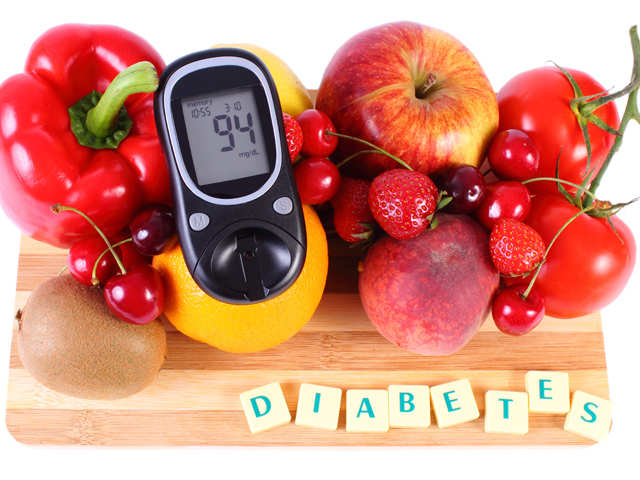
Whole foods that are not processed should always be on the menu. But also remember that some items have to be away from the dining table if you want to steer clear of diabetes.
Additionally, avoid special diets and stick to what you make at home. Just follow the basic rules like keeping a constant calorie count during meals.





ADVERTISEMENT


