There will be an increase in more affordable art, thanks to the new wave of young collectors.
Museums and galleries were among the first places to shutter when the Covid-19 pandemic hit. Art lovers moved online, as did carefully curated collections. Now with museums reopening and collectors slowly making their way back to galleries, what does the future hold for a post-pandemic art world?
Sanjana Shah, creative director, Tao Art Gallery, believes that art purchases will see an increase as people look to redecorate their homes and enhance their living spaces.
Prettier Homes, Affordable Art “Firstly, there will be an increase in more affordable art as there is a whole new wave of young collectors now,” she told ET Panache. Over 50 per cent of the lots sold in Sotheby’s Modern & Contemporary South Asian Art last year were under $5,000.
Shah explained: “The pandemic forced people to reconsider the value of their homes and its look and feel. Many young people will now want to enhance their living spaces as they continue to work from home.”
Sanjana Shah believes that art purchases will see an increase. When the world started shutting down last March, Sotheby’s New York auction for modern and contemporary South Asian art beat pandemic fears and recorded their highest total in the city for three years. The sale achieved $4.8 million with over 90 per cent of the lots sold.
ADVERTISEMENT
“Our auctions of Modern & Contemporary South Asian art provide a really interesting example to show how the art market has held strong in the past year,” said Manjari Sihare-Sutin, Sotheby’s Specialist in Modern & Contemporary South Asian Art. The auction house is readying to launch their next sale in this category on 16 March 2021 and say the signs look very promising.
What the Pandemic Looked Like Shah believes the pandemic has rocked our world so much that artists will be driven to document this moment in history, boosting creativity and expression. “Creativity amongst artists will continue to be on the rise as they express their collective and individual experience of this pandemic,” she said. “The wave of art from these times will be remembered forever and will very much be thematically linked to the pandemic and its repercussions on every level.”
Virtual is the way forward The pandemic has not only boosted partnerships within the art world but it has also increased coordination amongst the global art industry, says Shah. “Collaborating virtually and supporting one another not just nationally, but internationally, is the way forward to sustain and develop stronger roots. In a world where there are limits on physical travel, virtual collaboration will go a long way in helping people stay connected,” she said.
Sotheby’s agrees. “There’s been a complete sea-change in spending habits here when it comes to online. In 2019, there were $80 million of online sales at Sotheby’s. In 2020 that jumped to $575 million, with 80% of all bids placed online. It’s now become the norm for clients to bid with us this way, even on works over a million dollars: the highest online bid placed in 2020 was over 70$ million. These are all things we could have barely dreamed of this time last year,” said Sihare-Sutin.
ADVERTISEMENT
Banksy, KAWS & More: 5 Things To Know About Collecting Street Art
1/7
Street art is no longer spray painting on bus stops, street corners and walls. It’s making its way into your home, and if you’re a collector, it’s a genre to consider.
Works by pioneers such as Haring, Stik, Banksy and KAWS have gained popularity in recent years as we have seen an urban liberation of art media, pushing through the conventional parameters of paper, cardboard and canvas and on to pavement, sidewalks, subways and the bricks of buildings.
As the personification of movement, freedom and spontaneity, art inspired by graffiti has taken centre stage, both literally in scale and visibility and in its burgeoning popularity.
Street art is no longer spray painting on bus stops, street corners and walls. It’s making its way into your home, and if you’re a collector, it’s a genre to consider.Works by pioneers such as Haring..
Read More
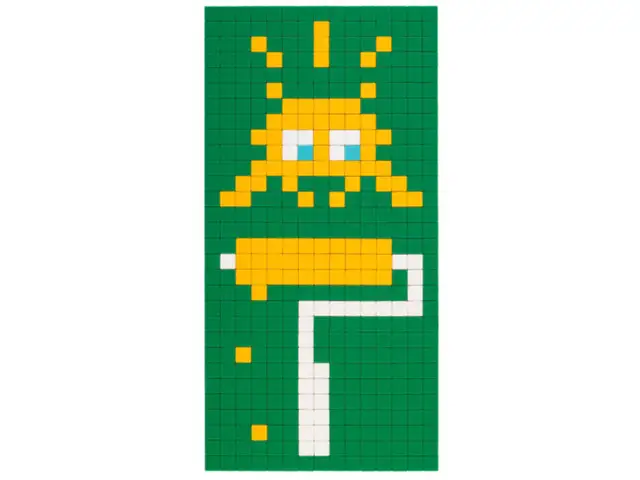
“Since the hip-hop crews of Philadelphia and New York turned graffiti into an elaborate language, encrypted in a range of unique styles, Street art has become an established art form. While its very public presence may scream manifesto, perhaps with subversive intent, Street art nonetheless promotes a sense of the uncompromising, a radical ethos that consistently attracts clusters of fervent supporters throughout the world,” says Noah Davis, Specialist, Post War and Contemporary Art at Christie’s Inc. They share their tips on what you need to know if you’re considering going street.
In pic: INVADER (b. 1969), Alias SP_43, 2011. Ceramic tiles on perspex. 28? x 14 in (71.5 x 35.6 cm). Estimate $40,000-60,000. Offered in Trespassing, 5-19 August 2020, Online
“Since the hip-hop crews of Philadelphia and New York turned graffiti into an elaborate language, encrypted in a range of unique styles, Street art has become an established art form. While its very ..
Read More
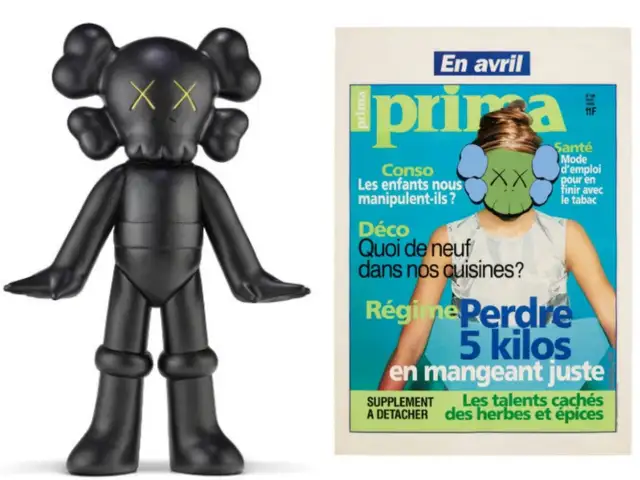
Artists inspired by graffiti often revisit a theme or rely on a repeated technique in their work, creating a recognisable trademark that forms an essential part of their visual vocabulary. Haring developed his man figure; Jean-Michel Basquiat combined symbols and epigrams; and Banksy fashions irreverent, politically-charged subjects.
In pic: Left - KAWS (b. 1974), Untitled Ad Disruption (Prima/Paris), 1999. Acrylic on found advertising poster. 68 x 47¾ in (173.5 x 120.1 cm). Estimate: $100,000-150,000. Offered in Trespassing, 5-19 August 2020, Online
Right - KAWS (B. 1974), Untitled (Astro Boy), 2003. Hand-painted resin. 18½ x 12 x 4½ in (47 x 32 x 11.2 cm). Estimate: $150,000-200,000. Offered in Trespassing, 5-19 August 2020, Online
Artists inspired by graffiti often revisit a theme or rely on a repeated technique in their work, creating a recognisable trademark that forms an essential part of their visual vocabulary. Haring dev..
Read More
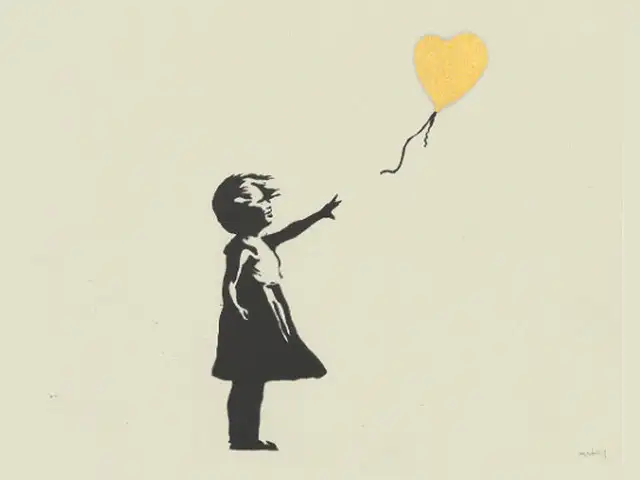
Some street artworks are site-specific, such as Haring’s infamous ‘Crack Is Wack’, a 1986 public project still visible along the Harlem River Drive in New York City. As a way to represent the whole, a distinct element of the work may be replicated in a more portable form. Haring’s iconic figures and symbols repeat throughout his oeuvre, finding themselves not only on his murals and canvases but also on his screen prints. This is also true for artists such as Stik and Banksy.
In pic: Banksy (b. 1975), Girl with Balloon — Colour AP (Gold), 2004. Screenprint in black and gold. Sheet 695 x 495 mm. Sold for £395,250, 24 Sep 2019, Online
Some street artworks are site-specific, such as Haring’s infamous ‘Crack Is Wack’, a 1986 public project still visible along the Harlem River Drive in New York City. As a way to represent the whole, ..
Read More
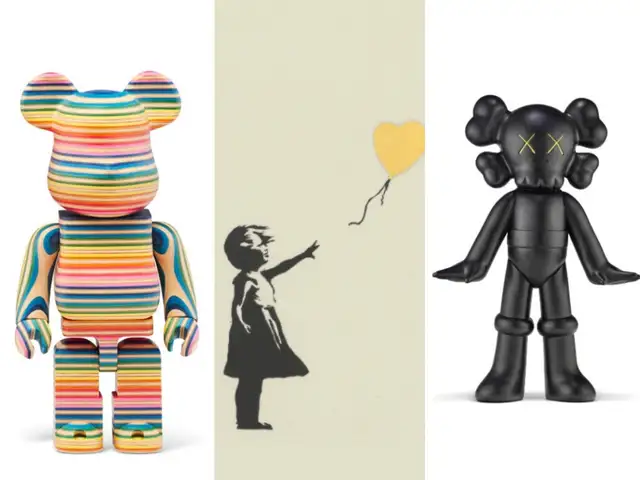
Street art can be easily duplicated. As stencils can be used and infinitely reused, the question of originality that plagues all art becomes particularly critical for this genre. Consult a specialist. For prints, it is extremely important that they match the catalogue raisonné for the artist or compare well to other examples from the edition.
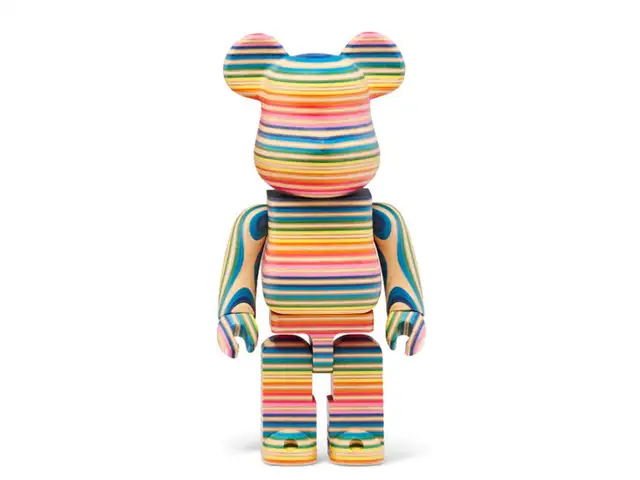
In pic: HAROSHI X KARIMOKU (b. 1978), BE@RBRICK KARIMOKU HAROSHI 400%, 2019. Repurposed skate deck maple wood
Street art can be easily duplicated. As stencils can be used and infinitely reused, the question of originality that plagues all art becomes particularly critical for this genre. Consult a specialist..
Read More
Street art is, by its very nature, exposed to the elements more than other kinds of art. Restoration may be possible — some artists, such as Stik, make a point of personally touching up their works in situ whenever they can — but some level of wear is to be expected. Collectors should keep in mind that, as with any kind of artwork, condition may impact the perceived value of a piece.
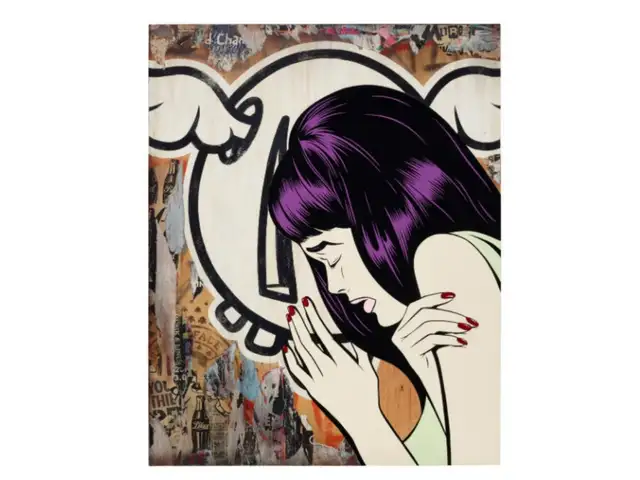
In pic:D*FACE (b. 1978), London — LA, 2014. Acrylic and printed paper collage on panel. 60 x 48 in (152.40 x 121.92 cm). Estimate: $12,000-18,000. Offered in Trespassing, 5-19 August 2020, Online
Street art is, by its very nature, exposed to the elements more than other kinds of art. Restoration may be possible — some artists, such as Stik, make a point of personally touching up their works i..
Read More
Since Street Art is a relatively new movement in art history, it’s important to know what came before in order to understand where it’s going. Most are aware that graffiti — and more specifically, Wild Style — represented the nascent form of Street art in the 1970s, but Pop art also paved the way, incorporating many of the same topics for the first time, from mass consumerism to elements of pop culture.
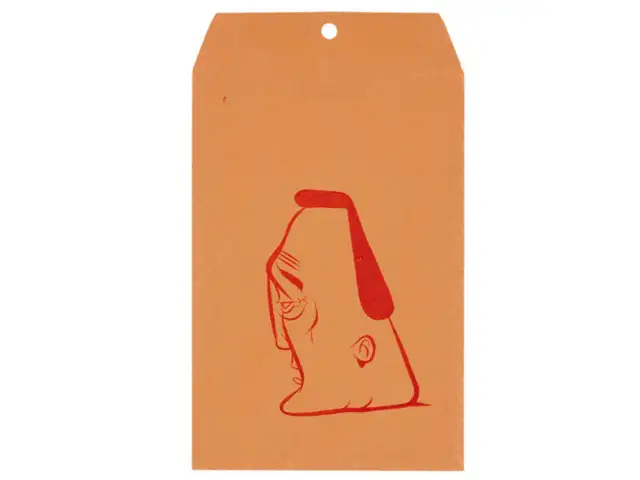
In pic: Barry McGee (b. 1966), [Untitled], 2007. Double-sided — silkscreen on envelope. 10¾ x 6? in (27.3 x 16 cm). Estimate: $2,000-3,000. Offered in Trespassing, 5-19 August 2020, Online
Since Street Art is a relatively new movement in art history, it’s important to know what came before in order to understand where it’s going. Most are aware that graffiti — and more specifically, Wi..