2020 QG: Twenty-ft-long, closest-ever asteroid passes Earth over Indian Ocean
It was moving at nearly 12.3 kilometres per second.
By AFP |

AFP
WASHINGTON: An asteroid the size of an SUV passed 1,830 miles (2,950 kilometres) above Earth, the closest asteroid ever observed passing by our planet, NASA said Tuesday.
If it had been on a collision course with Earth, the asteroid - named 2020 QG - would likely not have caused any damage, instead disintegrating in the atmosphere, creating a fireball in the sky, or a meteor, NASA's Jet Propulsion Laboratory (JPL) said in a statement.
The asteroid, which was about 10 to 20 feet (three to six meters) long, passed above the southern Indian Ocean on Sunday at 0408 GMT.
It was moving at nearly eight miles per second (12.3 kilometres per second), well below the geostationary orbit of about 22,000 miles at which most telecommunication satellites fly.
The asteroid was first recorded six hours after its approach by the Zwicky Transient Facility, a telescope at the Palomar Observatory at the California Institute of Technology, as a long trail of light in the sky.
The US space agency said that similarly sized asteroids pass by Earth at a similar distance a few times per year.
But they're difficult to record, unless they're heading directly towards the planet, in which case the explosion in the atmosphere is usually noticed - as in Chelyabinsk, Russia in 2013, when the explosion of an object about 66 feet long shattered windows for miles, injuring a thousand people.
One of NASA's missions is to monitor larger asteroids (460 feet) that could actually pose a threat to Earth, but their equipment also tracks smaller ones.
"It's really cool to see a small asteroid come by this close, because we can see the Earth's gravity dramatically bends its trajectory," said Paul Chodas, the director of the Center for Near-Earth Object Studies at NASA.
According to the JPL's calculations, the asteroid turned by about 45 degrees due to Earth's gravitational pull.

If it had been on a collision course with Earth, the asteroid - named 2020 QG - would likely not have caused any damage, instead disintegrating in the atmosphere, creating a fireball in the sky, or a meteor, NASA's Jet Propulsion Laboratory (JPL) said in a statement.
The asteroid, which was about 10 to 20 feet (three to six meters) long, passed above the southern Indian Ocean on Sunday at 0408 GMT.
It was moving at nearly eight miles per second (12.3 kilometres per second), well below the geostationary orbit of about 22,000 miles at which most telecommunication satellites fly.
The asteroid was first recorded six hours after its approach by the Zwicky Transient Facility, a telescope at the Palomar Observatory at the California Institute of Technology, as a long trail of light in the sky.
The US space agency said that similarly sized asteroids pass by Earth at a similar distance a few times per year.
ADVERTISEMENT
But they're difficult to record, unless they're heading directly towards the planet, in which case the explosion in the atmosphere is usually noticed - as in Chelyabinsk, Russia in 2013, when the explosion of an object about 66 feet long shattered windows for miles, injuring a thousand people.
One of NASA's missions is to monitor larger asteroids (460 feet) that could actually pose a threat to Earth, but their equipment also tracks smaller ones.
"It's really cool to see a small asteroid come by this close, because we can see the Earth's gravity dramatically bends its trajectory," said Paul Chodas, the director of the Center for Near-Earth Object Studies at NASA.
According to the JPL's calculations, the asteroid turned by about 45 degrees due to Earth's gravitational pull.
ADVERTISEMENT
A monster asteroid - named Apophis after the Egyptian 'God of Chaos' - is likely to swoosh past Earth, but there is a slight chance that it may hit the planet.
The bigger-than-Eiffel Tower asteroid, weighing around 27 billion-kg, could leave a crater impact of 1.6 km wide in diameter and 518 metre deep. It has the capacity of an 880 million tonne TNT explosion that can wipe out large cities or even an entire country.
First spotted in August 2006, the ‘hazardous’ asteroid was initially named 2006 QQ23.
Meanwhile, the European Space Agency recently released a 'risk list' of 878 asteroids that are likely to cause a massive impact on Earth in the next 100 years.
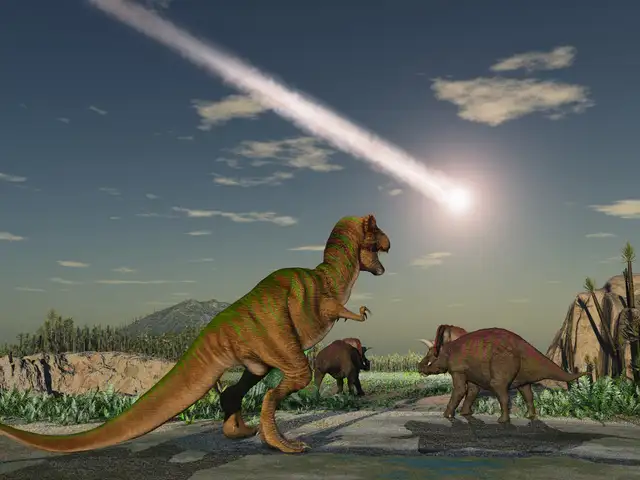
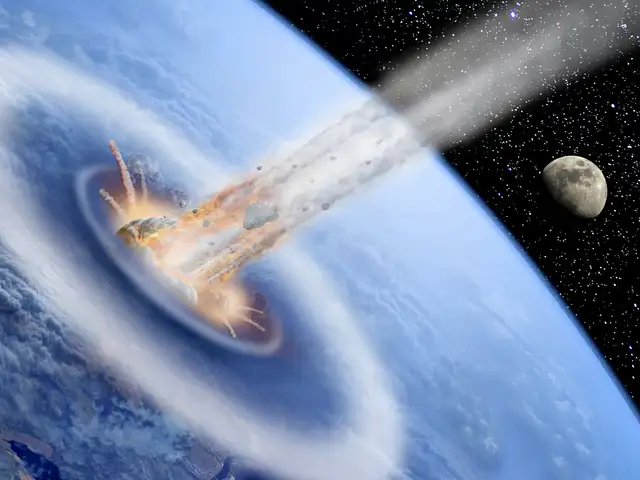
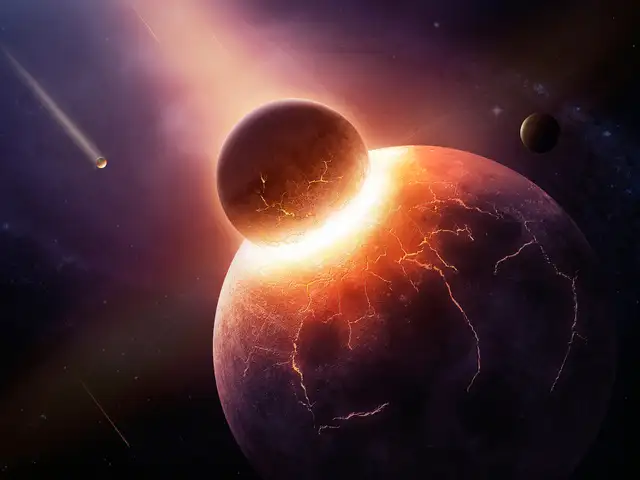
Here's a look at all the asteroids Earth has braved.

Download
The Economic Times Business News App for the Latest News in Business, Sensex, Stock Market Updates & More.
The Economic Times Business News App for the Latest News in Business, Sensex, Stock Market Updates & More.
ADVERTISEMENT


