Thousands of trucks stranded as fuel outlets & toll plazas refuse Rs 500, Rs 1000 notes
About 10 million commercial vehicles ply on India’s roads. Industry figures show that of this, about 3 million are trucks ferrying between cities and towns.
By Anirban Chowdhury, ET Bureau |
MUMBAI: Hundreds of thousands of trucks have been stranded on the country’s national highways as a crippling cash shortage threatens the normal delivery of goods to consumers and businesses.
Logistics firms and transport fleet operators say that close to 90% of 3 million trucks on India’s roadways have been stuck for up to two days as petrol pumps, state highway toll collection outposts and small eateries refuse cash payments in denominations of Rs 500 and Rs 1000.
This is likely to delay delivery of consignments such as commodities, vegetables, pulses and other food products to their destinations worsening shortages and causing a price spiral.
About 10 million commercial vehicles ply on India’s roads. Industry figures show that of this, about 3 million are trucks ferrying between cities and towns.
“While we are all in full support of the demonetisation move, transporters should have been given more time to take care of their cash situation,” said Vijay Kumar, chief operating officer of the lobbying body Express India Council of India. It has 25 of the biggest express operators such as DHL and Gati.

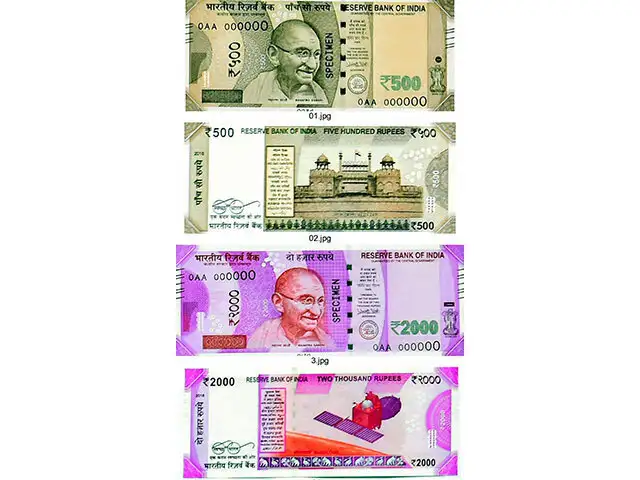
On November 8, Prime Minister Narendra Modi announced demonetisation of `500 and `1000 notes to clamp down on hoarders of black money — on which tax isn’t paid to the government — as well as forged currency.
RBI later said hospitalisation charges at government hospitals, ticket counters at state-run bus services and railways and petrol pumps would accept the obsolete notes till November 11.
Later, this was extended till November 14 with a few additions such as court fees. Many, especially in small towns and roadways, haven’t adhered to the latter instructions and have refused to accept Rs 500 and Rs 100 notes.
More than 15 km of some highway stretches are lined with trucks, some of them stuck for a couple of days due to the cash scarcity, truck industry executives said.
“Truck drivers are usually given Rs 35,000 advance for long distances. As much as Rs 25,000 of it can be spent on fuel. But outlets are refusing to accept (demonetised) currency. Hence trucks are stuck,” said the chief of a leading trucking company who refused to be identified.
“We usually have good relationships with roadside dhabas, but all that has come to nought. A dhaba owner told us that he is at his wits’ end on what to do with his Rs 5 lakh savings.
Opening a bank account is cumbersome as he is in a remote area and needs access to ready cash every minute. The drivers were counting on them to give change for Rs 500 and Rs 1000 notes but they have refused,” he added.
The government has also suspended toll collection at national highways till November 14. But state highway booths are asking for toll and not accepting the invalid notes, said the executive.
“In terms of per-trip cost for a trucker, 14% is on toll charges and 45% on buying diesel. Only 30% of the transporters pay in cheque at diesel outlets while others have to pay in cash. So the pumps not accepting currency notes is a problem. Also, our real fears start post November 14, when toll plazas on national highways will begin to charge again. The government should suspend toll charges for another 10 days,” said Ramesh Agarwal, chairman of Agarwal Packers & Movers, which has a fleet of over 1,000 trucks.
“Of course it is a problem for smaller truckers. For a move like demonetisation to not create problems for the trucking sector, a lot of transactions have to shift online.
But about 80% of the trucking industry is dependent on cash for transactions. The government has introduced something called the ‘Fastag’ for online payments at toll booths, but these are present in 70% of the national highways. The rest don’t have them and many truckers don’t use them.
Logistics firms and transport fleet operators say that close to 90% of 3 million trucks on India’s roadways have been stuck for up to two days as petrol pumps, state highway toll collection outposts and small eateries refuse cash payments in denominations of Rs 500 and Rs 1000.
This is likely to delay delivery of consignments such as commodities, vegetables, pulses and other food products to their destinations worsening shortages and causing a price spiral.
About 10 million commercial vehicles ply on India’s roads. Industry figures show that of this, about 3 million are trucks ferrying between cities and towns.
“While we are all in full support of the demonetisation move, transporters should have been given more time to take care of their cash situation,” said Vijay Kumar, chief operating officer of the lobbying body Express India Council of India. It has 25 of the biggest express operators such as DHL and Gati.
ADVERTISEMENT
On November 8, Prime Minister Narendra Modi announced demonetisation of `500 and `1000 notes to clamp down on hoarders of black money — on which tax isn’t paid to the government — as well as forged currency.
RBI later said hospitalisation charges at government hospitals, ticket counters at state-run bus services and railways and petrol pumps would accept the obsolete notes till November 11.
Later, this was extended till November 14 with a few additions such as court fees. Many, especially in small towns and roadways, haven’t adhered to the latter instructions and have refused to accept Rs 500 and Rs 100 notes.
More than 15 km of some highway stretches are lined with trucks, some of them stuck for a couple of days due to the cash scarcity, truck industry executives said.
ADVERTISEMENT
“Truck drivers are usually given Rs 35,000 advance for long distances. As much as Rs 25,000 of it can be spent on fuel. But outlets are refusing to accept (demonetised) currency. Hence trucks are stuck,” said the chief of a leading trucking company who refused to be identified.
“We usually have good relationships with roadside dhabas, but all that has come to nought. A dhaba owner told us that he is at his wits’ end on what to do with his Rs 5 lakh savings.
ADVERTISEMENT
Opening a bank account is cumbersome as he is in a remote area and needs access to ready cash every minute. The drivers were counting on them to give change for Rs 500 and Rs 1000 notes but they have refused,” he added.
The government has also suspended toll collection at national highways till November 14. But state highway booths are asking for toll and not accepting the invalid notes, said the executive.
“In terms of per-trip cost for a trucker, 14% is on toll charges and 45% on buying diesel. Only 30% of the transporters pay in cheque at diesel outlets while others have to pay in cash. So the pumps not accepting currency notes is a problem. Also, our real fears start post November 14, when toll plazas on national highways will begin to charge again. The government should suspend toll charges for another 10 days,” said Ramesh Agarwal, chairman of Agarwal Packers & Movers, which has a fleet of over 1,000 trucks.
“Of course it is a problem for smaller truckers. For a move like demonetisation to not create problems for the trucking sector, a lot of transactions have to shift online.
But about 80% of the trucking industry is dependent on cash for transactions. The government has introduced something called the ‘Fastag’ for online payments at toll booths, but these are present in 70% of the national highways. The rest don’t have them and many truckers don’t use them.
Start a SIP with as low as ₹500 with ET Money App!
Download
The Economic Times News App for Quarterly Results, Latest News in ITR, Business, Share Market, Live Sensex News & More.
The Economic Times News App for Quarterly Results, Latest News in ITR, Business, Share Market, Live Sensex News & More.
Related Articles
 24 million honeybees escape after truck overturns in Texas, neighbourhood placed under lockdown as beekeepers warn only a fraction of hives may survive2026-06-24T12:31:15Z
- From buses to trucks, Tata Motors lands 3,400 EV orders across segments2026-06-21T10:32:00Z
- Big corporates plug into electric trucks as rising diesel and logistics expenses drive a rethink2026-06-12T19:37:10Z
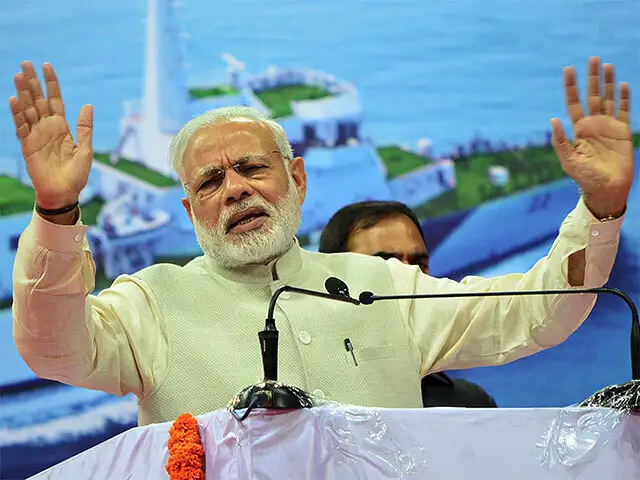
If you think it is Narendra Modi who came up with the idea, you are wrong.
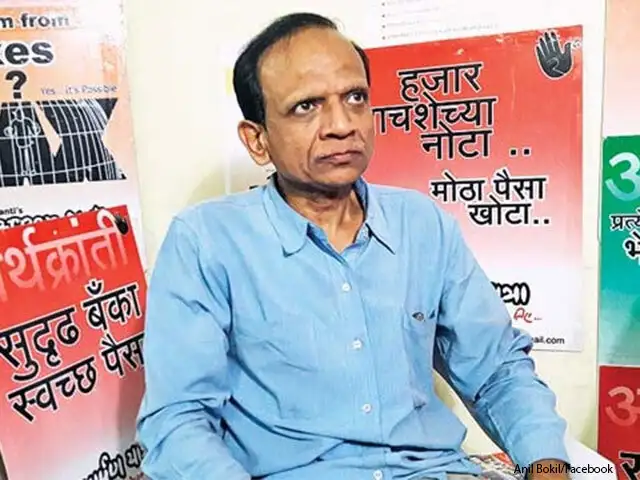
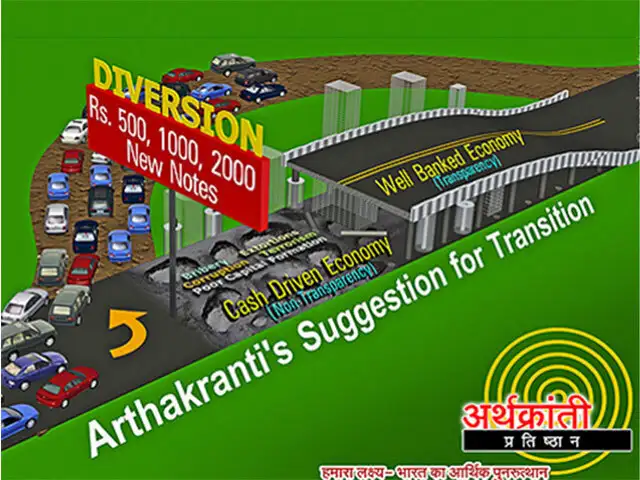
Nearly a decade ago, Pune-based organization Arthakranti, which has roots in Pune and Nagpur, was briefing PM Narendra Modi, then the chief minister of Gujarat, on a new economic model.


ADVERTISEMENT


