How a new expressway will help Delhi save thousands of crores of rupees
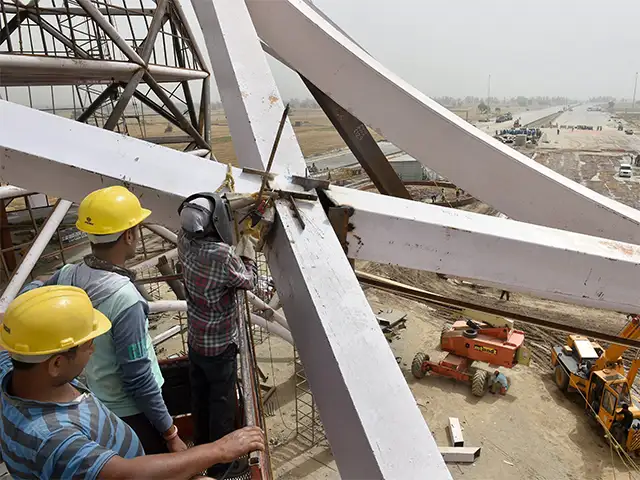
The Eastern Peripheral Expressway, a six-lane access-controlled expressway, will divert around 2 lakh vehicles passing through the national capital daily.
By ET Online | Updated:
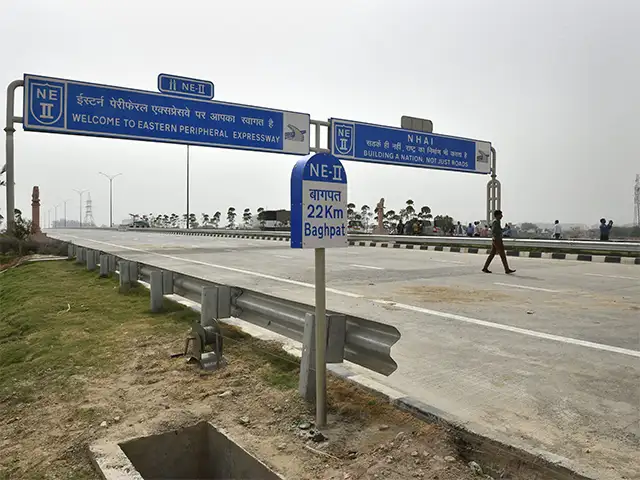
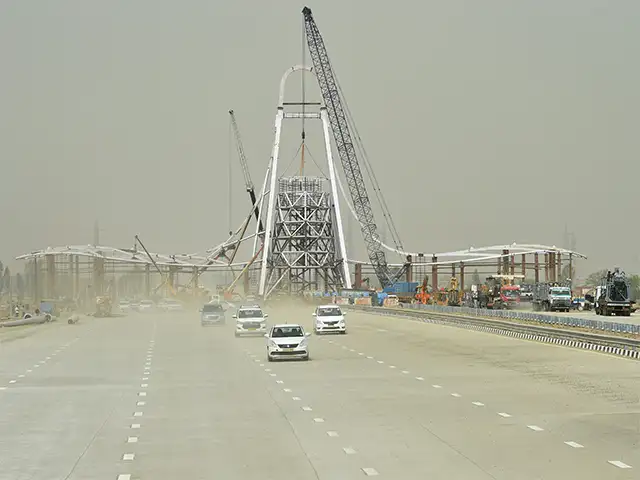
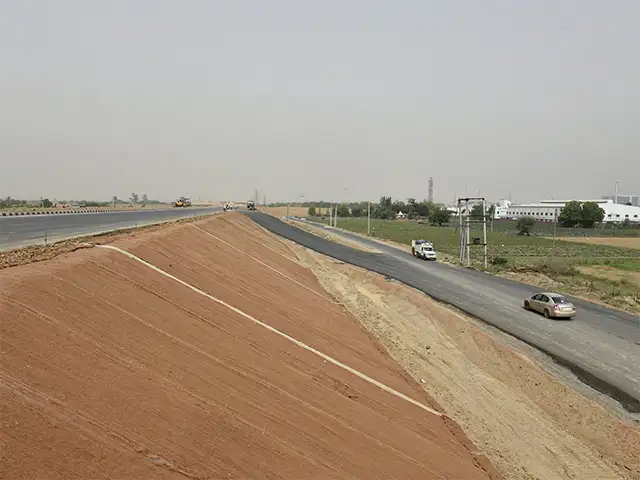
NEW DELHI: A new expressway around Delhi will divert an estimated 2 lakh vehicles passing through the national capital daily. Eastern Peripheral Expressway, a six-lane access-controlled expressway to be inaugurated by Prime Minister Narendra Modi soon, will reduce congestion as well as pollution.
The expressway will bring another tangible benefit—a saving of thousands of crores of money. According to a study conducted by global consultancy firm Boston Consulting Group (BCG), traffic congestion during peak hours in four major cities — Delhi, Mumbai, Bengaluru and Kolkata — costs the economy Rs 1.47 lakh crore annually, TOI reports.
The cost of construction of Delhi's portion of the Eastern Peripheral Expressway is Rs 4,420 crore. This amount could be offset in a short period of time by the money that will flow into the economy by decongestion of Delhi. The expressway will surely make a major contribution to decongestion of Delhi roads.
The study across the four cities in January has found Kolkata is the worst among them so far as congestion is concerned followed by Bengaluru. Delhi despite having maximum number of registered vehicles (little over 10 million) seems to be better because of its good road network, which is about 12% the capital’s total area. On the contrary, Kolkata has barely 6% of its total area under road network. The survey covered 300 persons from each city.

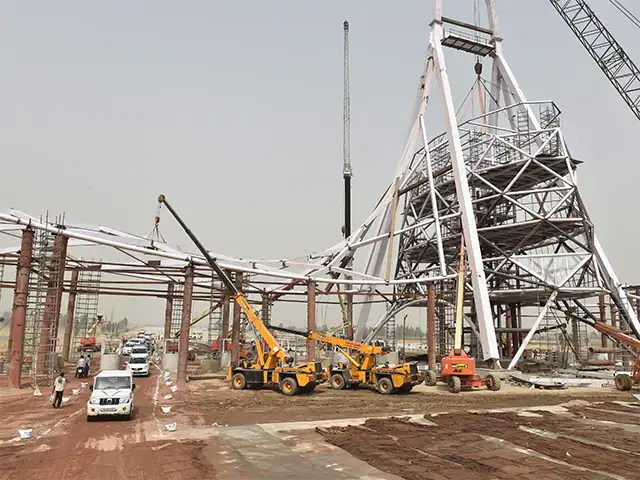
The Eastern Peripheral Expressway (EPE), which consumed 5 lakh tonne of cement and 1 lakh tonne of steel, is going to be completed in a record time of about 500 days against a target of 910 days. The expressway will be inaugurated by Prime Minister Narendra Modi on April 29. Here are some facts about the new road.
According to the report, Delhi has the highest share of 45% of people using their private cars for commuting while in Bengaluru their share is 38%. Mumbai tops the list when it comes to using public transport for commuting followed by Kolkata and it’s worst in Bengaluru.
The BCG report prepared for Uber claimed that on average 89% of commuters indicated their plans to purchase a car in the next five years. However, 80% of them also said they would shelve the idea, if rideshare could meet their requirements on “price, timeliness and availability.”
Ride-share is using a mobile app to book a ride in a privately owned vehicle. Uber has been pushing for this.
“Ride-share is a good intervention purely from congestion point of view. But the other issues of safety of passengers and liability in case of road accidents, which are crucial, also need to be addressed. Safety on women passenger is a concern,” Ranganathan pointed out.
The expressway will bring another tangible benefit—a saving of thousands of crores of money. According to a study conducted by global consultancy firm Boston Consulting Group (BCG), traffic congestion during peak hours in four major cities — Delhi, Mumbai, Bengaluru and Kolkata — costs the economy Rs 1.47 lakh crore annually, TOI reports.
The cost of construction of Delhi's portion of the Eastern Peripheral Expressway is Rs 4,420 crore. This amount could be offset in a short period of time by the money that will flow into the economy by decongestion of Delhi. The expressway will surely make a major contribution to decongestion of Delhi roads.
The study across the four cities in January has found Kolkata is the worst among them so far as congestion is concerned followed by Bengaluru. Delhi despite having maximum number of registered vehicles (little over 10 million) seems to be better because of its good road network, which is about 12% the capital’s total area. On the contrary, Kolkata has barely 6% of its total area under road network. The survey covered 300 persons from each city.

According to the report, Delhi has the highest share of 45% of people using their private cars for commuting while in Bengaluru their share is 38%. Mumbai tops the list when it comes to using public transport for commuting followed by Kolkata and it’s worst in Bengaluru.
ADVERTISEMENT
“In Kolkata, private minibuses are are main mode of transport. Despite having high share of people using public transport, Kolkata is congested for reasons like low share of road network, poor geometrics and huge flow of vehicles in core part of the city,” said urban transport expert Prof N Ranganathan. He added the situation in Bengaluru is alarming as road network planning is obnoxious, traffic engineering and management is missing and there is blatant misuse of road.The BCG report prepared for Uber claimed that on average 89% of commuters indicated their plans to purchase a car in the next five years. However, 80% of them also said they would shelve the idea, if rideshare could meet their requirements on “price, timeliness and availability.”
Ride-share is using a mobile app to book a ride in a privately owned vehicle. Uber has been pushing for this.
“Ride-share is a good intervention purely from congestion point of view. But the other issues of safety of passengers and liability in case of road accidents, which are crucial, also need to be addressed. Safety on women passenger is a concern,” Ranganathan pointed out.
ADVERTISEMENT
Start a SIP with as low as ₹500 with ET Money App!
Download
The Economic Times News App for Quarterly Results, Latest News in ITR, Business, Share Market, Live Sensex News & More.
The Economic Times News App for Quarterly Results, Latest News in ITR, Business, Share Market, Live Sensex News & More.
Related Articles
 CDPQ-backed Maple Highways completes Rs 6,267 crore acquisition of Eastern Peripheral Expressway2022-11-11T04:55:49Z
- Nitin Gadkari inaugurates intelligent transport system on Eastern Peripheral Expressway2021-12-23T10:54:22Z
- Bikers' stunts on Eastern Peripheral Expressway a day before launch raise questions over security2018-05-27T12:24:16Z
ADVERTISEMENT


