Why Indian Railways must transition to commercial accounting for big investment to pour in
Revenue expenditure is like consumption expenditure, while capital expenditure (loosely investment) adds to assets and productive potential.
Updated:
By: Bibek Debroy
Courtesy Charles Dickens we have the clichéd Micawber Principle: "Annual income twenty pounds, annual expenditure nineteen pounds nineteen and six, result happiness. Annual income twenty pounds, annual expenditure twenty pounds nought and six, result misery." This does apply to many situations, including Indian Railways (IR).
Everyone understands the difference between revenue account and capital account. Revenue expenditure is like consumption expenditure, while capital expenditure (loosely investment) adds to assets and productive potential. Everyone wants IR to invest in freight corridors, electrification, doubling (or more) of lines, track renewal, bridges, signalling, station development, logistics parks, locomotives, coaches, wagons.
Unless resources come from somewhere else, IR must find the money for this. That is, IR must have a surplus on the revenue account, so that it can meet capital expenditure. Indeed, in recent years, IR hasn't made operating losses, defined as difference between gross traffic receipts and ordinary working expenses.
IR's operating ratio a multiple of the cost to revenue ratio has been around 90, barring the period between 2005-06 and 2007-08. This means that out of every Rs 100 earned, Rs 90 is spent on expenses, leaving Rs 10 for investments. That can hardly be enough. While there can't be an ideal operating ratio, it should probably be around 75.
There are several recommendations on how revenue can increase and working expenses reduce. But there is a more fundamental problem. IR's accounting system is completely non-transparent.

With a mishmash of commercial principles and requirements of Comptroller & Auditor General, Controller General of Accounts and Public Accounts Committee very few people, including those within IR, can understand what's going on. There is no quantification of liabilities, both works and staff-related. The cash-based system leaves pensions unfunded. There is no listing and valuation of assets. There is no sense of true cost of providing a service.How much does it cost to run a train, passenger or freight? How much does it cost to stop at a station? How much will it cost to introduce a new train? What is the profit loss status of a zone or division?
No one expects IR to be completely commercial. But how much do social costs amount to? Answers to these questions are completely subjective and nontransparent, without any objectivity .
A long list of committees has recommended that IR should transition to commercial accounting. Contrary to perception, this isn't only because one is trying to attract private capital. This is important for IR to itself understand what it is up to.
This accounting reforms project shouldn't wait for 42 years. Tragically , this isn't a privatisation issue, where one can blame unions for being obstructionist. Unions have nothing against commercial accounting, they welcome it. The resistance to commercial accounting and transparency comes from those who have something to hide.
Essentially , Union government grants a loan in perpetuity to IR through what is called gross budgetary support (GBS). That loan never gets extinguished. The principal remains and interest is repaid as `dividends'.
Courtesy Charles Dickens we have the clichéd Micawber Principle: "Annual income twenty pounds, annual expenditure nineteen pounds nineteen and six, result happiness. Annual income twenty pounds, annual expenditure twenty pounds nought and six, result misery." This does apply to many situations, including Indian Railways (IR).
Everyone understands the difference between revenue account and capital account. Revenue expenditure is like consumption expenditure, while capital expenditure (loosely investment) adds to assets and productive potential. Everyone wants IR to invest in freight corridors, electrification, doubling (or more) of lines, track renewal, bridges, signalling, station development, logistics parks, locomotives, coaches, wagons.
Unless resources come from somewhere else, IR must find the money for this. That is, IR must have a surplus on the revenue account, so that it can meet capital expenditure. Indeed, in recent years, IR hasn't made operating losses, defined as difference between gross traffic receipts and ordinary working expenses.
IR's operating ratio a multiple of the cost to revenue ratio has been around 90, barring the period between 2005-06 and 2007-08. This means that out of every Rs 100 earned, Rs 90 is spent on expenses, leaving Rs 10 for investments. That can hardly be enough. While there can't be an ideal operating ratio, it should probably be around 75.
There are several recommendations on how revenue can increase and working expenses reduce. But there is a more fundamental problem. IR's accounting system is completely non-transparent.
ADVERTISEMENT
With a mishmash of commercial principles and requirements of Comptroller & Auditor General, Controller General of Accounts and Public Accounts Committee very few people, including those within IR, can understand what's going on. There is no quantification of liabilities, both works and staff-related. The cash-based system leaves pensions unfunded. There is no listing and valuation of assets. There is no sense of true cost of providing a service.How much does it cost to run a train, passenger or freight? How much does it cost to stop at a station? How much will it cost to introduce a new train? What is the profit loss status of a zone or division?
No one expects IR to be completely commercial. But how much do social costs amount to? Answers to these questions are completely subjective and nontransparent, without any objectivity .
A long list of committees has recommended that IR should transition to commercial accounting. Contrary to perception, this isn't only because one is trying to attract private capital. This is important for IR to itself understand what it is up to.
ADVERTISEMENT
An accounting reforms project has existed, ostensibly, since 2005-06. Unfortunately, that project has been like Begunkodor railway station in Purulia district of West Bengal. In case you don't know what Begunkodor is, it used to be a ghost station, without any trains. Because of fears of a ghost, between 1967 and 2009, there were no trains in Begunkodor and it remained an abandoned station.This accounting reforms project shouldn't wait for 42 years. Tragically , this isn't a privatisation issue, where one can blame unions for being obstructionist. Unions have nothing against commercial accounting, they welcome it. The resistance to commercial accounting and transparency comes from those who have something to hide.
ADVERTISEMENT
This also means the operating ratio which is bandied around is artificial and misleading. Relationships between Union government and IR are messy and `dividends' aren't what you would normally expect them to be.Essentially , Union government grants a loan in perpetuity to IR through what is called gross budgetary support (GBS). That loan never gets extinguished. The principal remains and interest is repaid as `dividends'.
Dividends and appropriations to Deprecation Reserve Fund (DRF), Railway Safety Fund (RSF) and Pension Fund (PF) are part of revenue expenditure. Note that dividends may be externally determined, but contributions to DRF, RSF and PF are internally determined and have nothing to do with what these amounts should really be. A new railway minister wants to show a healthy operating ratio? Not an issue, reduce contributions to DRF, RSF and PF. Consequences will be borne by posterity.
I have exaggerated, but you get the general picture. Parliament determines a rate of dividend. That's a cost. If IR borrows through IRFC (Indian Railways Finance Corporation), that's a cost too, as is any attempt to float bonds, or even invite private resources. Against that x% (whatever that figure may happen to be), one needs to figure out what return on investment (ROI) truly is. Because of lack of sensible accounting, there is no means for working out an authentic ROI, or deciding on priorities for competing demands on capital investment.
Other than the freight corridor, have you ever wondered why multilateral lending is rare for IR, especially since 2006 or thereabouts? That's because there isn't faith in ROIs computed. This is also partly the reason why ex-ante ROIs (computed before a project starts) are so much at variance with ex-post ROIs (after a project is completed).
I started with Dickens and will end with an uncharitable reference from Dickens. This is the Oliver Twist quote, "Please, sir, I want some more". Whether Mr Bumble is Union government, private capital, or citizens, i don't think another portion of gruel will be forthcoming in the absence of commercial accounting.
The writer is member of Niti Aayog and head of the panel on restructuring railways.
Start a SIP with as low as ₹500 with ET Money App!
Download
The Economic Times News App for Quarterly Results, Latest News in ITR, Business, Share Market, Live Sensex News & More.
The Economic Times News App for Quarterly Results, Latest News in ITR, Business, Share Market, Live Sensex News & More.
Text: TNN, PTI
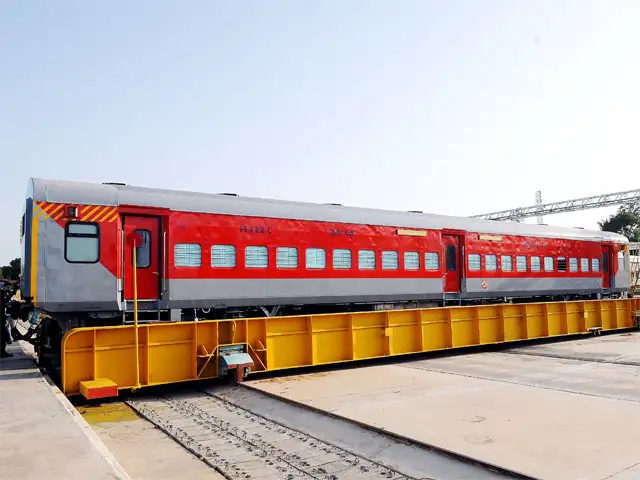
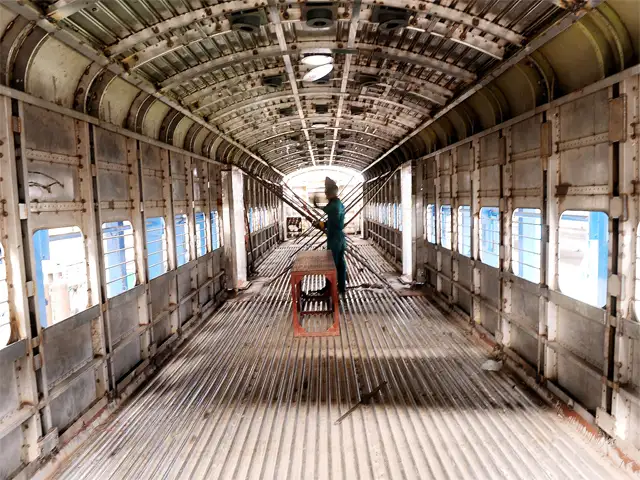
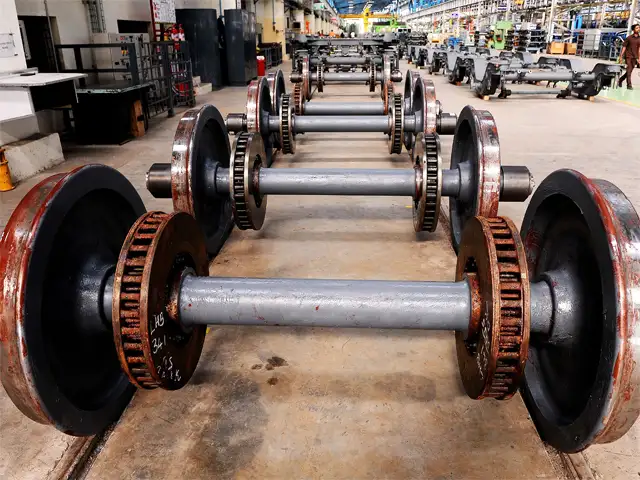
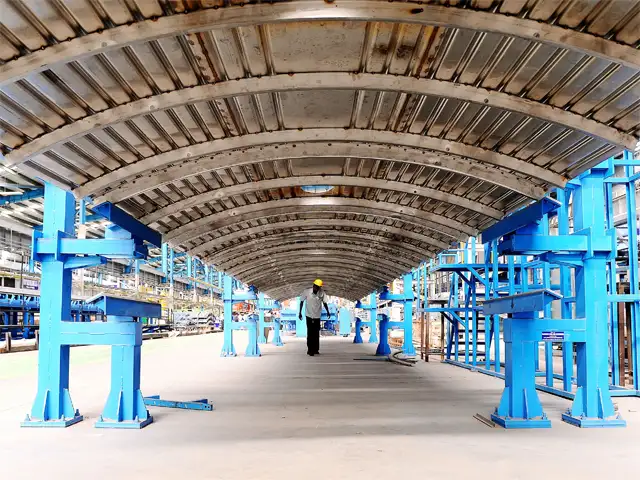
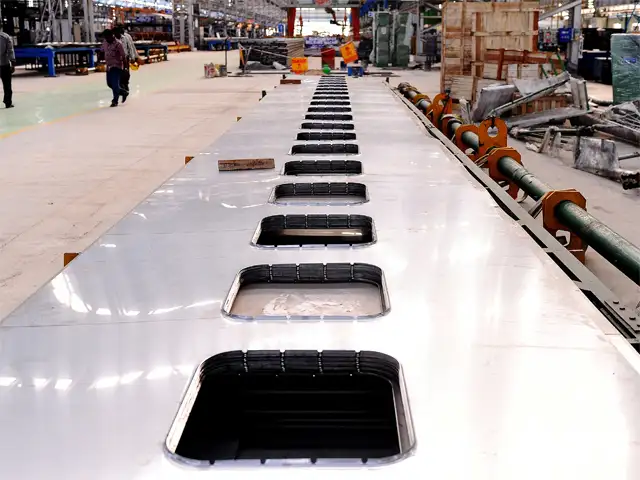
After its 50,000th coach rolled out, Integral Coach Factory (ICF) announced that it will now focus on producing safer, faster and more comfortable stainless steel LHB coaches.
The factory can now make 300 such coaches per year and it will soon double its capacity.
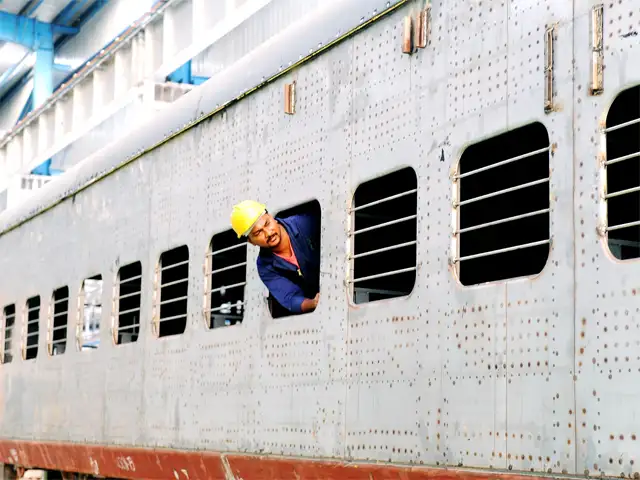
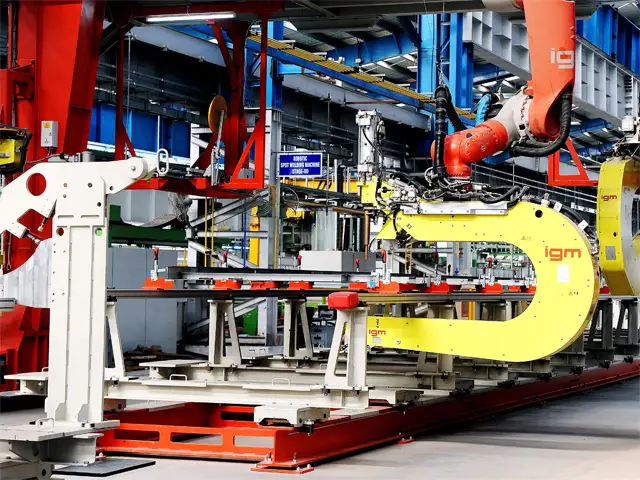
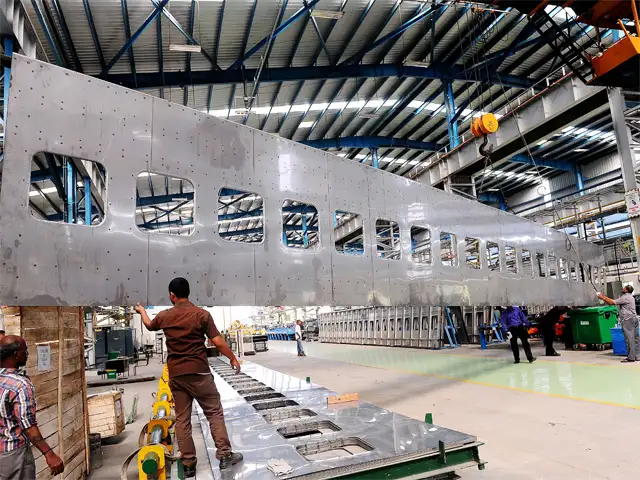
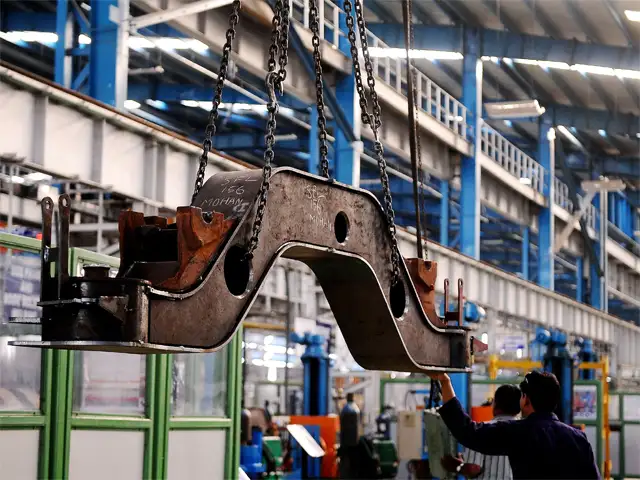
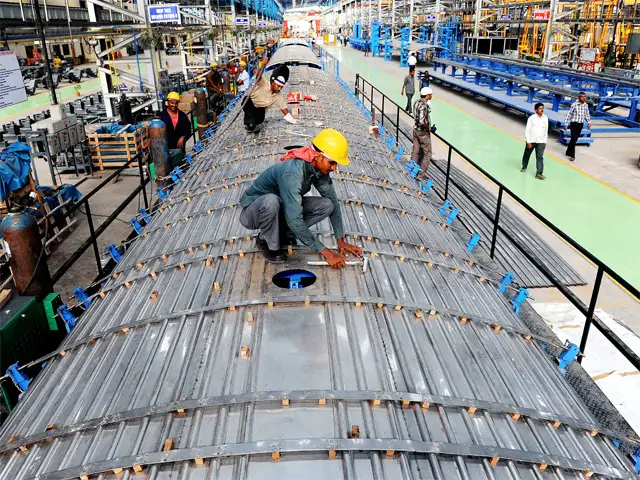
Let's take a quick sneak peek into the LHB Railway coach manufacturing unit in Chennai...
After its 50,000th coach rolled out, Integral Coach Factory (ICF) announced that it will now focus on producing safer, faster and more comfortable stainless steel LHB coaches.
The factory can now make 300 such coaches per year and it will soon double its capacity.
Let's take a quick sneak peek into the LHB Railway coach manufacturing unit in Chennai...

ADVERTISEMENT


