Vande Bharat races across world’s highest Chenab & first cable-stayed Anji bridges at 100 kmph as Katra-Banihal speed limit rises from 75 to 100 kmph
Vande Bharat milestone: The maximum permissible speed on the 111-km Shri Mata Vaishno Devi Katra-Banihal railway section has been increased from 75 kmph to 100 kmph. A Vande Bharat Express successfully crossed the Chenab Railway Bridge, the world’...
By ET Online | Updated:
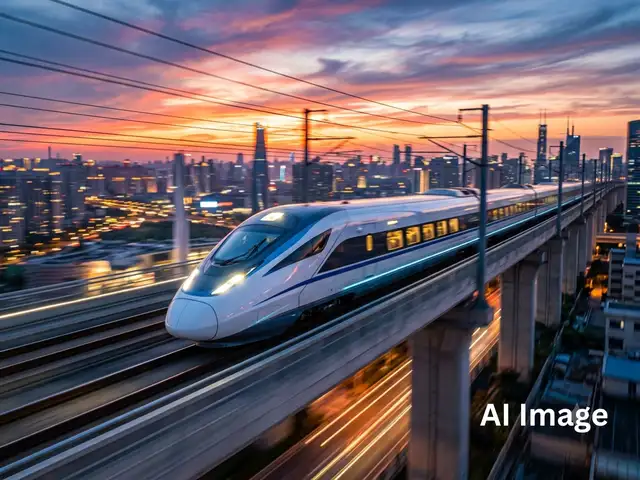
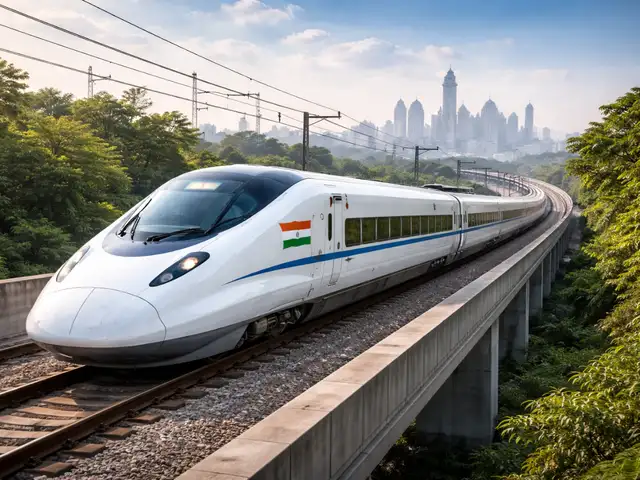
A Vande Bharat Express crossed the world’s highest railway bridge over the Chenab River and India’s first cable-stayed railway bridge at Anji at 100 kmph, as Railways raised the maximum permissible speed on the 111-km Shri Mata Vaishno Devi Katra-Banihal section from 75 kmph to 100 kmph.
The speed enhancement was successfully tested on Thursday on the Jammu division of Northern Railway. The development marks another operational milestone for the Udhampur-Srinagar-Baramulla Railway Link (USBRL) project, which is aimed at improving rail connectivity between the Kashmir Valley and the rest of the country.
Katra-Banihal train speed limit raised to 100 kmph
"The maximum permissible speed on the 111-km-long Shri Mata Vaishno Devi Katra-Banihal section has been increased from 75 kmph to 100 kmph," Senior Divisional Commercial Manager Uchit Singhal said.
The higher speed limit follows the completion of the prescribed safety requirements. The Railway Ministry approved the speed enhancement after the required safety conditions were complied with by the Railways in August this year, officials said.
Earlier, trains could operate at up to 85 kmph on the Katra-Sangaldan section and 75 kmph on the Sangaldan-Banihal section.
Singhal said the Vande Bharat created a new record by crossing the two major railway structures at 100 kmph.
The Chenab Railway Bridge, built over the Chenab River near Reasi, is recognised as the world’s highest railway bridge. The Anji Khad Railway Bridge is India's first cable-stayed railway bridge.
ADVERTISEMENT
From 6 hours to just 1.5 from Mumbai to Ahmedabad: What passengers need to know about the railway plan that could transform the journey
1/10
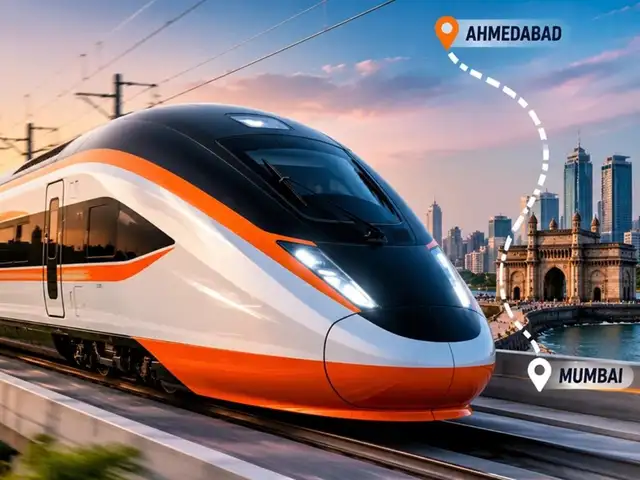
India’s first bullet train project is moving closer to its trial-run stage, with the indigenous high-speed train expected to begin testing on the Mumbai-Ahmedabad corridor in May or June 2027. The project is aimed at cutting travel time between major cities and bringing high-speed rail travel to India for the first time.
India’s first bullet train project is moving closer to its trial-run stage, with the indigenous high-speed train expected to begin testing on the Mumbai-Ahmedabad corridor in May or June 2027. The pr..
Read More
The first indigenous high-speed train is expected to enter trial runs in May or June 2027. The testing will take place on the Mumbai-Ahmedabad High-Speed Rail Corridor, which is being developed as India’s first dedicated bullet train route. The train will undergo extensive testing before passenger services begin. Officials expect the testing phase to continue for around two to four months, after which the service could be opened to commuters, subject to the completion of the required checks and approvals.
The first indigenous high-speed train is expected to enter trial runs in May or June 2027. The testing will take place on the Mumbai-Ahmedabad High-Speed Rail Corridor, which is being developed as In..
Read More
The Mumbai-Ahmedabad bullet train project is a dedicated high-speed rail corridor connecting Mumbai in Maharashtra with Ahmedabad in Gujarat. The route is being built to support trains travelling at much higher speeds than conventional Indian trains. The project is being developed in phases, with different sections expected to become ready at different times. This means passengers may get access to parts of the route before the entire Mumbai-Ahmedabad corridor is operational.
The Mumbai-Ahmedabad bullet train project is a dedicated high-speed rail corridor connecting Mumbai in Maharashtra with Ahmedabad in Gujarat. The route is being built to support trains travelling at ..
Read More
One of the biggest attractions of the project is the sharp reduction in travel time. The high-speed service is expected to bring major cities along the route much closer in terms of journey time. A trip between Vadodara and Mumbai, for instance, is expected to take around 90 minutes by bullet train. The full Mumbai-Ahmedabad journey will also be significantly faster than existing rail services once the complete corridor becomes operational.
One of the biggest attractions of the project is the sharp reduction in travel time. The high-speed service is expected to bring major cities along the route much closer in terms of journey time. A t..
Read More
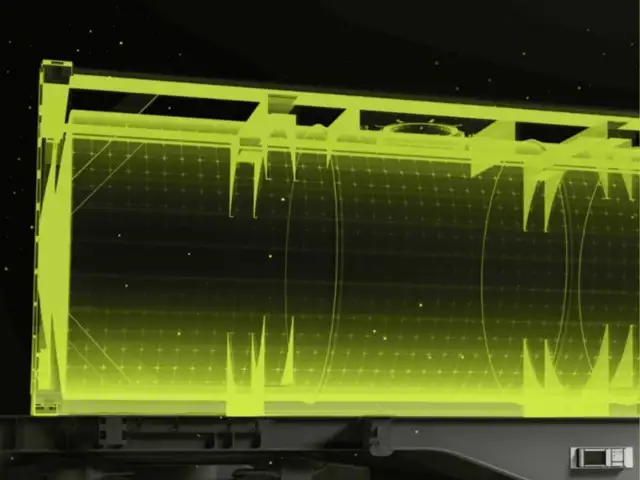
The indigenous high-speed train has already crossed an important manufacturing milestone, with its first body frame completed and sent for squeeze testing. The structural test is designed to assess the strength and durability of the train coaches. Such testing is an important step before the train can move on to dynamic trials and eventually undergo testing on the high-speed rail corridor.
The indigenous high-speed train has already crossed an important manufacturing milestone, with its first body frame completed and sent for squeeze testing. The structural test is designed to assess t..
Read More
Construction of the Mumbai-Ahmedabad High-Speed Rail Corridor is progressing across multiple sections. Some parts of the route are expected to be completed ahead of others, allowing the project to move towards a phased rollout. The Surat-Vapi section is expected to be completed by December, while other stretches are being developed simultaneously as work continues on stations, tracks and associated infrastructure.
Construction of the Mumbai-Ahmedabad High-Speed Rail Corridor is progressing across multiple sections. Some parts of the route are expected to be completed ahead of others, allowing the project to mo..
Read More
The Surat-Bilimora section is planned to be the first part of the Mumbai-Ahmedabad bullet train corridor to become operational. Once this section is ready for passenger services, the high-speed rail network is expected to expand progressively to other parts of the corridor. The phased approach means the complete Mumbai-Maharashtra connection will take longer to become operational.
The Surat-Bilimora section is planned to be the first part of the Mumbai-Ahmedabad bullet train corridor to become operational. Once this section is ready for passenger services, the high-speed rail ..
Read More
The planned rollout will take place in stages. After Surat-Bilimora, the Vapi-Surat section is expected to follow, followed by the Vapi-Ahmedabad stretch. The subsequent stages are planned to cover Ahmedabad-Thane and, finally, the Mumbai section once the Thane stretch is ready. The sequencing will allow services to be introduced progressively instead of waiting for the entire corridor to be completed.
The planned rollout will take place in stages. After Surat-Bilimora, the Vapi-Surat section is expected to follow, followed by the Vapi-Ahmedabad stretch. The subsequent stages are planned to cover A..
Read More
The Mumbai-Ahmedabad corridor is not expected to be the end of India’s high-speed rail plans. Seven additional corridors have been proposed for future development. These include Delhi-Varanasi, Varanasi-Patna-Siliguri, Mumbai-Pune, Pune-Hyderabad, Bengaluru-Chennai, Bengaluru-Hyderabad and Chennai-Hyderabad. If developed, these corridors could expand India’s high-speed rail network beyond the western corridor and connect several major cities through faster intercity services.
The Mumbai-Ahmedabad corridor is not expected to be the end of India’s high-speed rail plans. Seven additional corridors have been proposed for future development. These include Delhi-Varanasi, Varan..
Read More
The bullet train will not immediately start carrying passengers once track trials begin. The train is expected to undergo several months of testing to assess its performance, safety and other operational parameters. Passenger services will begin only after the necessary testing and approvals are completed. For now, the May-June 2027 trial window marks the next major milestone in India’s long-awaited bullet train project.
The bullet train will not immediately start carrying passengers once track trials begin. The train is expected to undergo several months of testing to assess its performance, safety and other operati..
The 111-km Katra-Banihal rail section is a key and technically challenging part of the USBRL project. The route passes through the rugged terrain of the Pir Panjal and lower Himalayan ranges.
ADVERTISEMENT
The railway line crosses deep valleys, steep mountain slopes and major rivers, while also passing through areas with complex geological formations.
The difficult terrain required extensive engineering work, including the construction of long tunnels, high-level bridges and other specialised railway infrastructure.
The section has 33 tunnels, along with several major bridges that form an important part of the railway link to the Kashmir Valley.
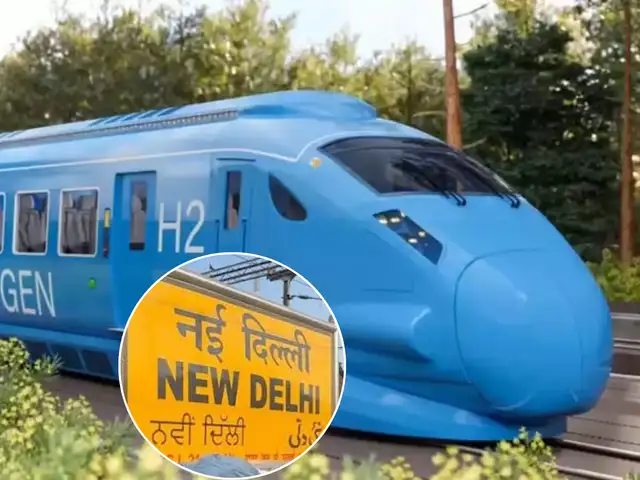
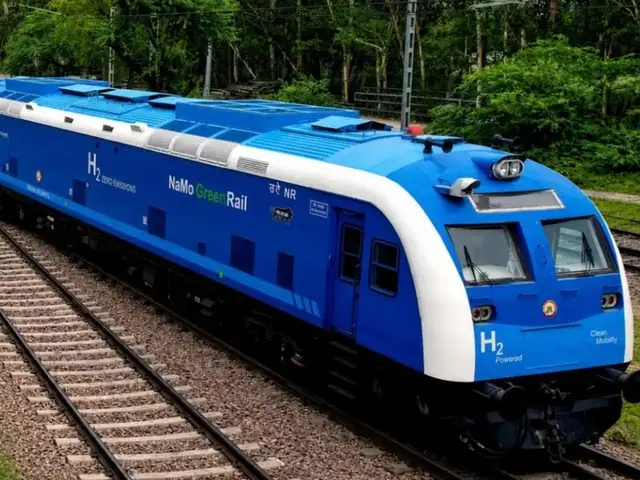
India’s first indigenous hydrogen-powered train could soon be extended to Delhi after seeing limited passenger traffic on its existing 89-km Jind-Sonipat route in Haryana. The train, which began operations on July 17, has a capacity of around 2,600 passengers, but only about 40-60 passengers reportedly travel on the full route, according to officials cited by PTI.
India’s first indigenous hydrogen-powered train could soon be extended to Delhi after seeing limited passenger traffic on its existing 89-km Jind-Sonipat route in Haryana. The train, which began oper..
Read More
Indian Railways is considering extending the hydrogen train to Azadpur station in Delhi, located close to the city’s wholesale fruits and vegetables market. Railway officials said the train has completed two months of successful operations as a technology demonstrator, while teams are working on the requirements for extending its service towards Delhi.
Indian Railways is considering extending the hydrogen train to Azadpur station in Delhi, located close to the city’s wholesale fruits and vegetables market. Railway officials said the train has compl..
Read More
The low ridership appears to be linked more to the route than the train itself. The hydrogen service replaced a DEMU train that also had limited passenger traffic. Railway staff said there are few office commuters or industrial workers travelling between Jind and Sonipat, while three other DEMU services on the route also reportedly see low footfall. Local passengers have therefore suggested extending the train towards Delhi to make better use of the service.
The low ridership appears to be linked more to the route than the train itself. The hydrogen service replaced a DEMU train that also had limited passenger traffic. Railway staff said there are few of..
Read More
Fuel range is not expected to be the biggest hurdle. Officials said the train can cover around 250-300 km on a full tank, while the distance between Jind and Delhi is about 130 km. At present, however, the train can be refuelled only at Jind. Capacity could be a bigger challenge, as the 10-coach hydrogen train can carry around 2,600 passengers, while trains serving Delhi often require 18-20 coaches because of high commuter demand and track capacity constraints.
Fuel range is not expected to be the biggest hurdle. Officials said the train can cover around 250-300 km on a full tank, while the distance between Jind and Delhi is about 130 km. At present, howeve..
Read More
If extending the hydrogen train to Delhi proves difficult, local passengers have suggested changing its route within Haryana. One proposal is to run the train from Jind to Sonipat, then towards Panipat and Safidon before returning to Jind. The proposed circuit would cover around 180 km and could serve more commuters, particularly because Panipat is an important industrial area.
If extending the hydrogen train to Delhi proves difficult, local passengers have suggested changing its route within Haryana. One proposal is to run the train from Jind to Sonipat, then towards Panip..
Read More
The train’s launch in July marked an important step in Indian Railways’ efforts to explore hydrogen-powered transportation. Railway officials have described it as a pilot project and said experts are closely monitoring its operation and trial runs towards Delhi. Since the technology is new and passenger safety remains a priority, the final decision on extending the hydrogen train service to Delhi will be taken after further assessment.
The train’s launch in July marked an important step in Indian Railways’ efforts to explore hydrogen-powered transportation. Railway officials have described it as a pilot project and said experts are..
Katra-Banihal speed increase: What it means for passengers
The increase in the maximum permissible speed is expected to make train operations on the Katra-Banihal section smoother and reduce travel time.
It is also expected to provide passengers with faster and more comfortable rail connectivity between Shri Mata Vaishno Devi Katra and Banihal.
The speed enhancement is another step towards improving the operational efficiency of the USBRL project and strengthening rail connectivity between Jammu and Kashmir and the rest of India.
LNG vs Hydrogen train: India now has both alternative-fuel trains; what’s different in technology, fuel consumption, range and emissions
1/7
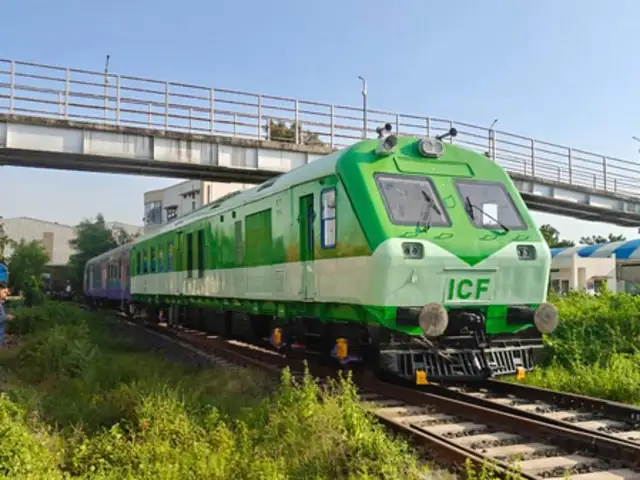
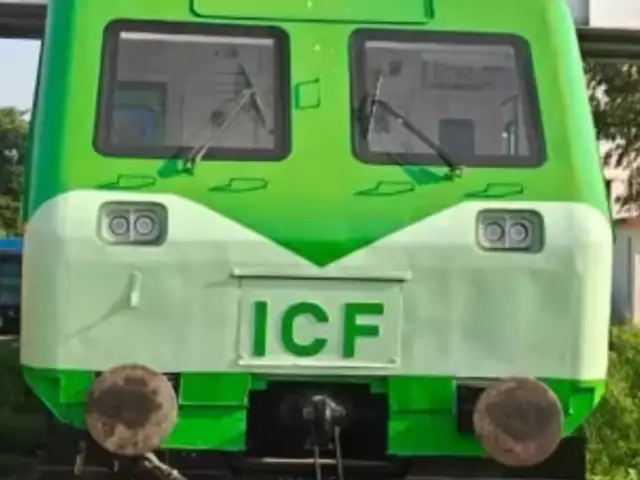
Indian Railways has introduced the country's first LNG-diesel dual-fuel DEMU train, adding another alternative-fuel technology to its railway network after the launch of its first hydrogen train earlier this year. The LNG-powered train was launched from Sabarmati in Gujarat on September 27, 2026, and is designed to run on both liquefied natural gas (LNG) and diesel.
Indian Railways has introduced the country's first LNG-diesel dual-fuel DEMU train, adding another alternative-fuel technology to its railway network after the launch of its first hydrogen train earl..
Read More
The new train uses a dual-fuel system, allowing its engine to operate on LNG as well as diesel. Unlike an LNG-only train, it can switch between the two fuels depending on operational requirements and fuel availability. Indian Railways has converted two 1,400 HP Driving Power Cars (DPCs) at the Sabarmati Integrated Coaching Depot for the project. The system is designed to replace around 40% of diesel consumption with LNG, helping reduce fuel use and emissions.
The new train uses a dual-fuel system, allowing its engine to operate on LNG as well as diesel. Unlike an LNG-only train, it can switch between the two fuels depending on operational requirements and..
Read More
The first LNG-diesel dual-fuel DEMU began its inaugural run between Sabarmati and Mahesana Junction. The train has eight coaches and features non-AC chair car seating. Indian Railways has already completed more than 2,000 km of field trials on the converted Driving Power Cars (DPCs) to assess the performance and reliability of the dual-fuel technology. Further details about the train’s regular route and operations are expected to be announced soon.
The first LNG-diesel dual-fuel DEMU began its inaugural run between Sabarmati and Mahesana Junction. The train has eight coaches and features non-AC chair car seating. Indian Railways has already com..
Read More
Each Driving Power Car has an LNG tank with a capacity of around 2,200 litres, holding approximately 950-1,000 kg of usable LNG. According to project estimates, one DPC can cover around 444 km on a full LNG load. The system has been designed to maintain the required power and operational reliability while using LNG alongside diesel.
Each Driving Power Car has an LNG tank with a capacity of around 2,200 litres, holding approximately 950-1,000 kg of usable LNG. According to project estimates, one DPC can cover around 444 km on a f..
Read More
The LNG system is expected to help Indian Railways reduce fuel costs and emissions, including CO2, nitrogen oxides (NOx) and particulate matter. Trial-based estimates suggest that one DPC could save around Rs 11.9 lakh annually, while an eight-coach rake could save around Rs 23.9 lakh per year. The project is part of efforts to explore alternative fuels and reduce dependence on conventional diesel in railway operations.
The LNG system is expected to help Indian Railways reduce fuel costs and emissions, including CO2, nitrogen oxides (NOx) and particulate matter. Trial-based estimates suggest that one DPC could save ..
Read More
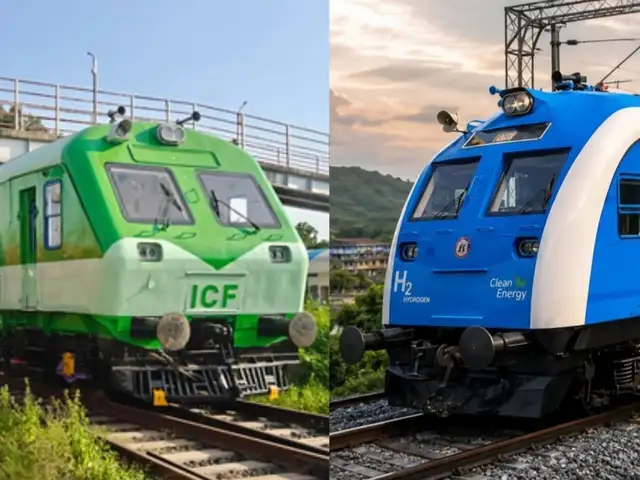
Before the LNG train, Indian Railways launched the country's first hydrogen-powered train between Jind and Sonipat on July 17, 2026. According to the Ministry of Railways, the train had covered more than 1,200 km by July 25 and saved over 3,200 litres of diesel. The hydrogen train uses a fuel-cell system in which hydrogen and oxygen generate electricity onboard, with water vapour as the direct by-product. It has 10 coaches, including two Hydrogen Driving Power Cars, and a total power output of 2,400 kW.
Before the LNG train, Indian Railways launched the country's first hydrogen-powered train between Jind and Sonipat on July 17, 2026. According to the Ministry of Railways, the train had covered more ..
Read More
While both projects aim to introduce alternative fuels into railway operations, their technologies are different. The hydrogen train uses fuel cells to generate electricity from hydrogen and oxygen, whereas the LNG train uses an internal-combustion engine converted to a dual-fuel LNG-diesel system. The hydrogen train therefore represents a fuel-cell-based propulsion system, while the LNG train continues to use diesel alongside LNG, with LNG currently replacing around 40% of diesel consumption in the system.
While both projects aim to introduce alternative fuels into railway operations, their technologies are different. The hydrogen train uses fuel cells to generate electricity from hydrogen and oxygen, ..
Prime Minister Narendra Modi flagged off the Katra-Srinagar Vande Bharat Express from Shri Mata Vaishno Devi Katra on June 6, 2025.
The service operates over the strategically important railway infrastructure developed as part of the USBRL project, which aims to establish an all-weather rail link between the Kashmir Valley and the wider Indian railway network.
Business News › Industry › Transportation › Railways › Vande Bharat races across world’s highest Chenab & first cable-stayed Anji bridges at 100 kmph as Katra-Banihal speed limit rises from 75 to 100 kmphText Size:AAA






 Kerala close to historic milestone with introduction of name change bill in LS: Rajeev Chandrasekhar2026-08-10T06:55:17Z

