Talgo completes New Delhi-Mumbai Central trial run in less than 12 hours
Talgo train had left New Delhi at 2.45 PM yesterday and reached Mumbai at 2.33 AM early this morning covering the 1,384 km stretch at about maximum speed of 150 KMPH.
By PTI |
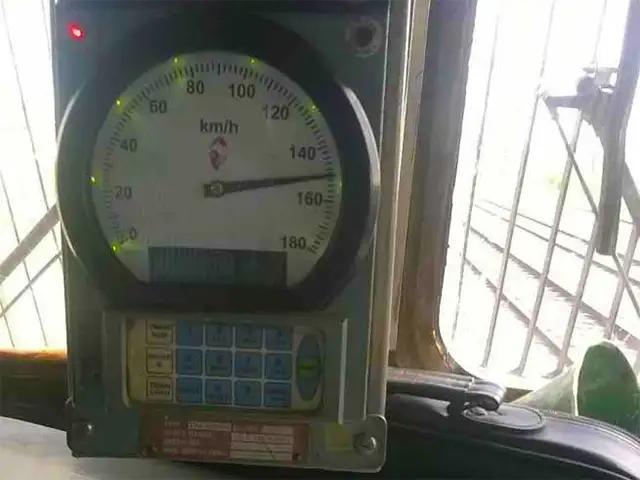
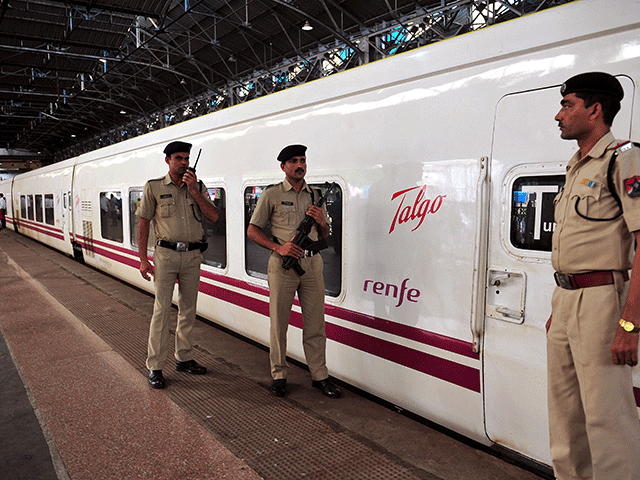
NEW DELHI: The Spanish Talgo train completed today its final trial between Delhi and Mumbai in less than 12-hours at a maximum speed of 150 km per hour speed, to make a strong pitch for its induction in Indian Railways future venture.
"The light weight Talgo train covered the distance between Delhi and Mumbai in 11 hours 42 minutes in its final trial," Railway Board Member (Traffic) Mohd Jamshed said here.
The Talgo train had left New Delhi at 2.45 PM yesterday and reached Mumbai at 2.33 AM early this morning covering the 1,384 km stretch at about maximum speed of 150 KMPH.
It was a successful trial by the Talgo train comprising light weight aluminum coaches with tilting technology, Jamshed said.
The train with nine coaches had a third trial between New Delhi and Mumbai at 140 km per hour speed on September 7.
Talgo aims to reduce travel time between Delhi-Mumbai by four hours. Currently, the super-fast Rajdhani Express train takes around 16 hours between New Delhi and Mumbai.
Railways had conducted the first trial run of Talgo trains on the Bareilly-Moradabad stretch in Uttar Pradesh followed by the second trial run was conducted on the Palwal-Mathura section of the North-Central Railway.
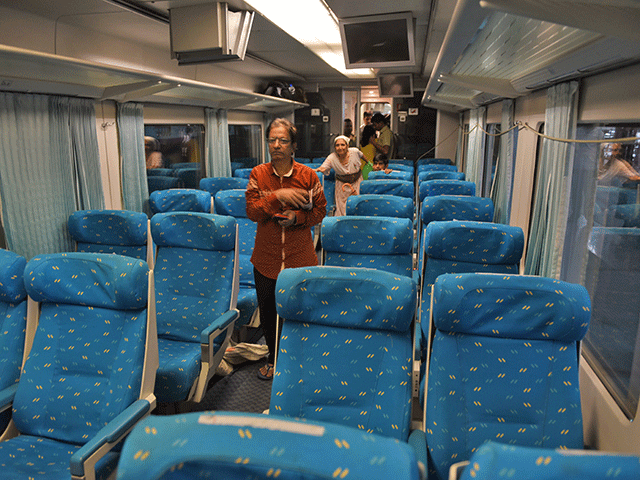
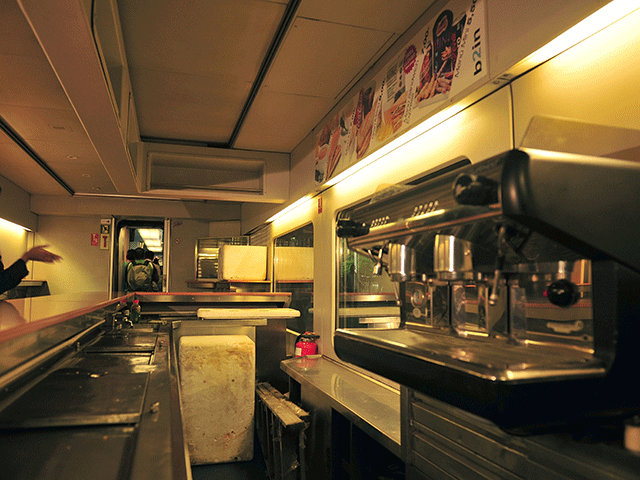
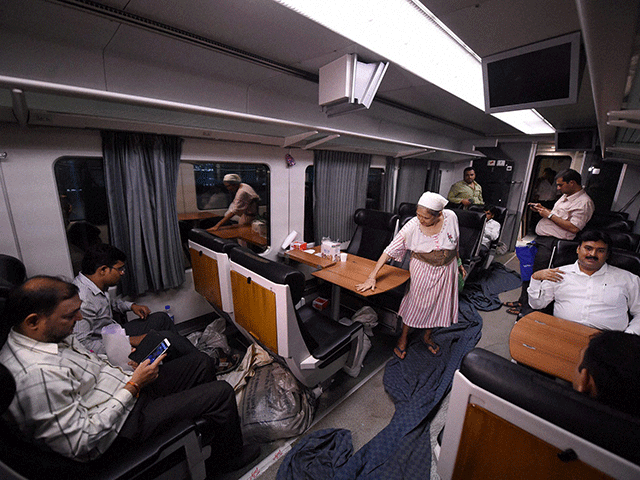
The nine-coach Talgo train consists of two Executive Class cars, four Chair Cars, a cafeteria, a power car and a tail-end coach for staff and equipment.
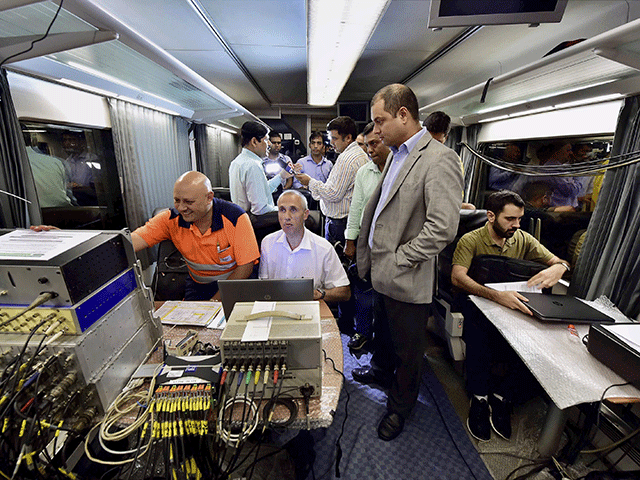
Besides railway staff, technicians from Talgo were onboard during the trial.
"The light weight Talgo train covered the distance between Delhi and Mumbai in 11 hours 42 minutes in its final trial," Railway Board Member (Traffic) Mohd Jamshed said here.
The Talgo train had left New Delhi at 2.45 PM yesterday and reached Mumbai at 2.33 AM early this morning covering the 1,384 km stretch at about maximum speed of 150 KMPH.
It was a successful trial by the Talgo train comprising light weight aluminum coaches with tilting technology, Jamshed said.
The train with nine coaches had a third trial between New Delhi and Mumbai at 140 km per hour speed on September 7.
Talgo aims to reduce travel time between Delhi-Mumbai by four hours. Currently, the super-fast Rajdhani Express train takes around 16 hours between New Delhi and Mumbai.
ADVERTISEMENT
Railways had conducted the first trial run of Talgo trains on the Bareilly-Moradabad stretch in Uttar Pradesh followed by the second trial run was conducted on the Palwal-Mathura section of the North-Central Railway.
The nine-coach Talgo train consists of two Executive Class cars, four Chair Cars, a cafeteria, a power car and a tail-end coach for staff and equipment.
Besides railway staff, technicians from Talgo were onboard during the trial.
Start a SIP with as low as ₹500 with ET Money App!
Download
The Economic Times News App for Quarterly Results, Latest News in ITR, Business, Share Market, Live Sensex News & More.
The Economic Times News App for Quarterly Results, Latest News in ITR, Business, Share Market, Live Sensex News & More.
Related Articles
 Tenant wins tax relief on Rs 38.62 lakh sale of landlord’s property, received for surrendering tenancy rights; know why ITAT Mumbai ruled in his favour2026-06-20T01:41:00Z
- Mumbai auto, taxi drivers to face action if found without Marathi language proficiency certificate after Aug 15; here's how to obtain it for free2026-06-19T14:49:04Z
- 'America, learn from India': US woman riding Mumbai Metro for the first time shares why it is better than the New York subway2026-06-19T12:28:54Z
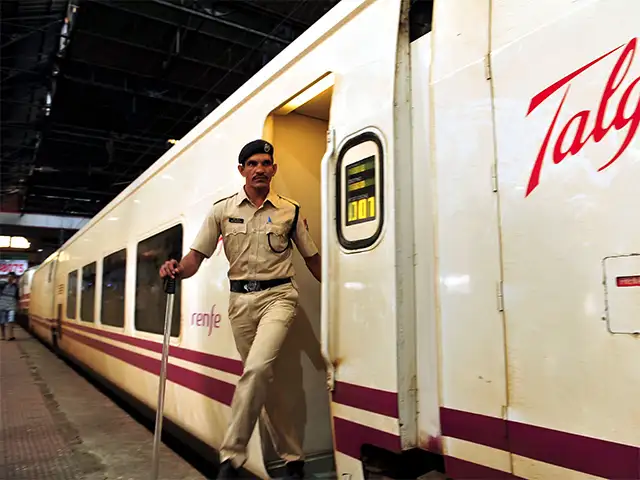
The final leg of Spanish Talgo train completed Delhi-Mumbai Rajdhani route trial in less than 12 hours on Sunday.

ADVERTISEMENT


