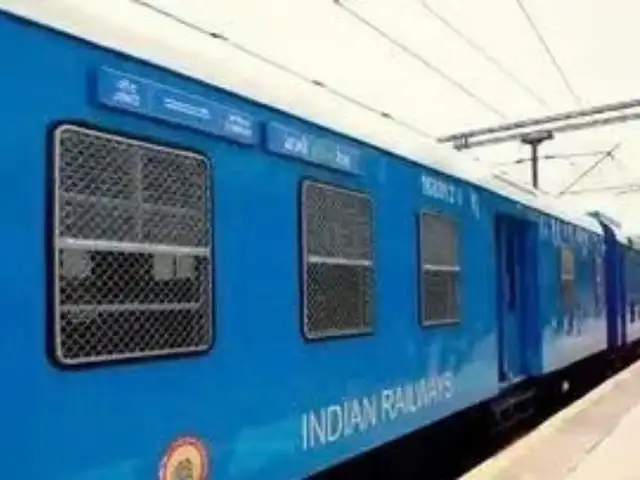
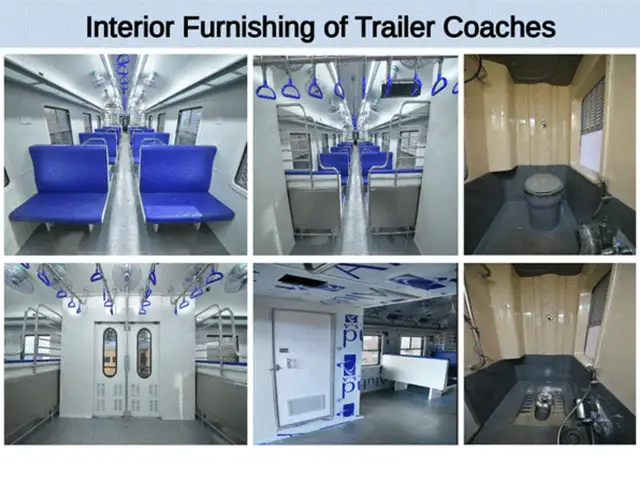
Running water trains: Railways ready to transport water to drought-hit Maharashtra, but state must first find a water source

Central Railway is open to running special water trains to drought-hit districts of Maharashtra if the state government provides an adequate water source. The railway zone has not yet received a formal request. With 265 of Maharashtra’s 358 taluka...

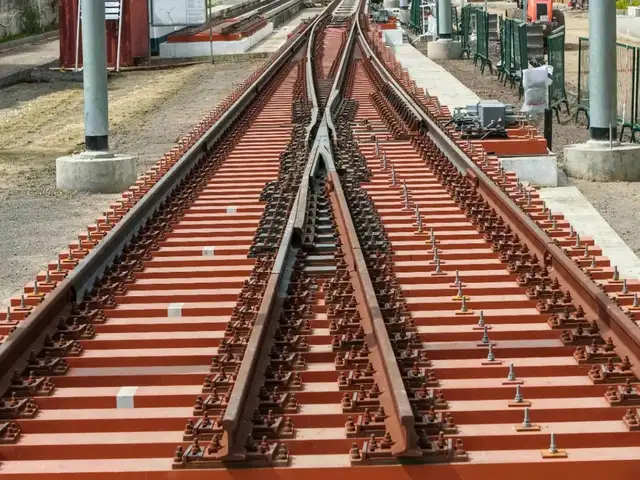
Central Railway is open to operating special water trains for drought-hit districts of Maharashtra, but the state government will first have to identify and provide an adequate source of water, railway officials said.

The railway zone has not yet received a formal request from the state government for the service. The development comes as Maharashtra faces a widespread drought following deficient monsoon rainfall and prolonged dry spells.
Central Railway says it can transport water, not source it

Central Railway chief public relations officer Swapnil Nila said the railway's role would be limited to transporting the water.


From 6 hours to just 1.5 from Mumbai to Ahmedabad: What passengers need to know about the railway plan that could transform the journey
1/10

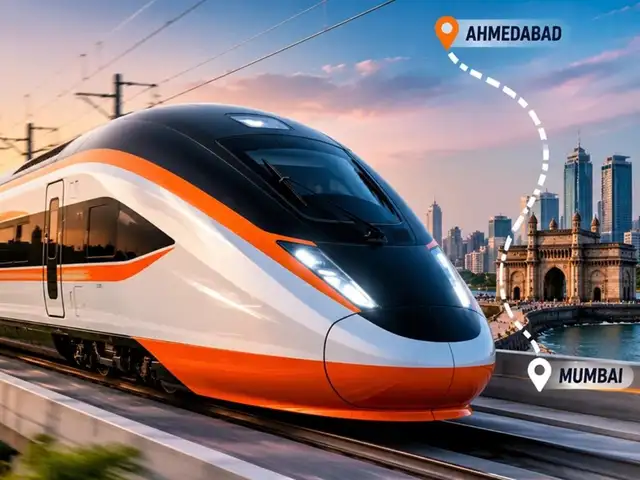
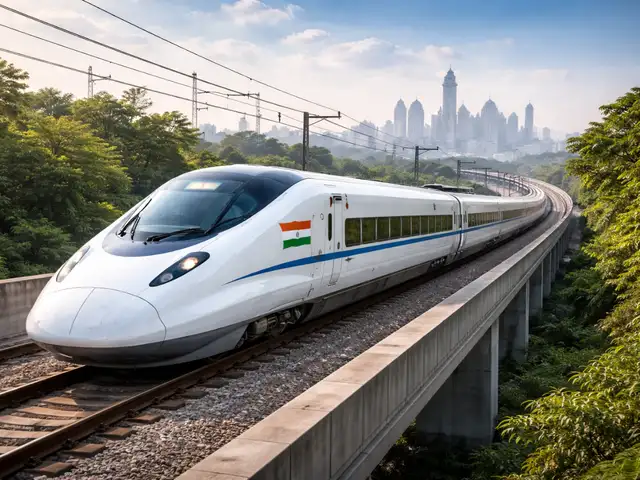
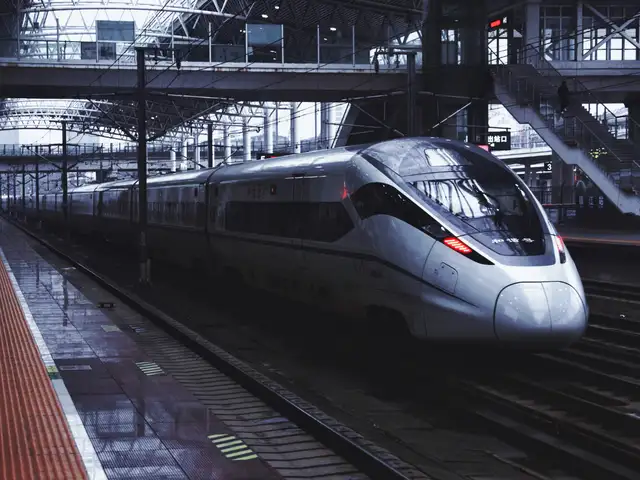
India’s first bullet train project is moving closer to its trial-run stage, with the indigenous high-speed train expected to begin testing on the Mumbai-Ahmedabad corridor in May or June 2027. The project is aimed at cutting travel time between major cities and bringing high-speed rail travel to India for the first time.

India’s first bullet train project is moving closer to its trial-run stage, with the indigenous high-speed train expected to begin testing on the Mumbai-Ahmedabad corridor in May or June 2027. The pr..
Read More

The first indigenous high-speed train is expected to enter trial runs in May or June 2027. The testing will take place on the Mumbai-Ahmedabad High-Speed Rail Corridor, which is being developed as India’s first dedicated bullet train route. The train will undergo extensive testing before passenger services begin. Officials expect the testing phase to continue for around two to four months, after which the service could be opened to commuters, subject to the completion of the required checks and approvals.

The first indigenous high-speed train is expected to enter trial runs in May or June 2027. The testing will take place on the Mumbai-Ahmedabad High-Speed Rail Corridor, which is being developed as In..
Read More

The Mumbai-Ahmedabad bullet train project is a dedicated high-speed rail corridor connecting Mumbai in Maharashtra with Ahmedabad in Gujarat. The route is being built to support trains travelling at much higher speeds than conventional Indian trains. The project is being developed in phases, with different sections expected to become ready at different times. This means passengers may get access to parts of the route before the entire Mumbai-Ahmedabad corridor is operational.

The Mumbai-Ahmedabad bullet train project is a dedicated high-speed rail corridor connecting Mumbai in Maharashtra with Ahmedabad in Gujarat. The route is being built to support trains travelling at ..
Read More

One of the biggest attractions of the project is the sharp reduction in travel time. The high-speed service is expected to bring major cities along the route much closer in terms of journey time. A trip between Vadodara and Mumbai, for instance, is expected to take around 90 minutes by bullet train. The full Mumbai-Ahmedabad journey will also be significantly faster than existing rail services once the complete corridor becomes operational.

One of the biggest attractions of the project is the sharp reduction in travel time. The high-speed service is expected to bring major cities along the route much closer in terms of journey time. A t..
Read More

The indigenous high-speed train has already crossed an important manufacturing milestone, with its first body frame completed and sent for squeeze testing. The structural test is designed to assess the strength and durability of the train coaches. Such testing is an important step before the train can move on to dynamic trials and eventually undergo testing on the high-speed rail corridor.

The indigenous high-speed train has already crossed an important manufacturing milestone, with its first body frame completed and sent for squeeze testing. The structural test is designed to assess t..
Read More

Construction of the Mumbai-Ahmedabad High-Speed Rail Corridor is progressing across multiple sections. Some parts of the route are expected to be completed ahead of others, allowing the project to move towards a phased rollout. The Surat-Vapi section is expected to be completed by December, while other stretches are being developed simultaneously as work continues on stations, tracks and associated infrastructure.

Construction of the Mumbai-Ahmedabad High-Speed Rail Corridor is progressing across multiple sections. Some parts of the route are expected to be completed ahead of others, allowing the project to mo..
Read More

The Surat-Bilimora section is planned to be the first part of the Mumbai-Ahmedabad bullet train corridor to become operational. Once this section is ready for passenger services, the high-speed rail network is expected to expand progressively to other parts of the corridor. The phased approach means the complete Mumbai-Maharashtra connection will take longer to become operational.

The Surat-Bilimora section is planned to be the first part of the Mumbai-Ahmedabad bullet train corridor to become operational. Once this section is ready for passenger services, the high-speed rail ..
Read More

The planned rollout will take place in stages. After Surat-Bilimora, the Vapi-Surat section is expected to follow, followed by the Vapi-Ahmedabad stretch. The subsequent stages are planned to cover Ahmedabad-Thane and, finally, the Mumbai section once the Thane stretch is ready. The sequencing will allow services to be introduced progressively instead of waiting for the entire corridor to be completed.

The planned rollout will take place in stages. After Surat-Bilimora, the Vapi-Surat section is expected to follow, followed by the Vapi-Ahmedabad stretch. The subsequent stages are planned to cover A..
Read More

The Mumbai-Ahmedabad corridor is not expected to be the end of India’s high-speed rail plans. Seven additional corridors have been proposed for future development. These include Delhi-Varanasi, Varanasi-Patna-Siliguri, Mumbai-Pune, Pune-Hyderabad, Bengaluru-Chennai, Bengaluru-Hyderabad and Chennai-Hyderabad. If developed, these corridors could expand India’s high-speed rail network beyond the western corridor and connect several major cities through faster intercity services.

The Mumbai-Ahmedabad corridor is not expected to be the end of India’s high-speed rail plans. Seven additional corridors have been proposed for future development. These include Delhi-Varanasi, Varan..
Read More

The bullet train will not immediately start carrying passengers once track trials begin. The train is expected to undergo several months of testing to assess its performance, safety and other operational parameters. Passenger services will begin only after the necessary testing and approvals are completed. For now, the May-June 2027 trial window marks the next major milestone in India’s long-awaited bullet train project.

The bullet train will not immediately start carrying passengers once track trials begin. The train is expected to undergo several months of testing to assess its performance, safety and other operati..
Read More
“An adequate quantity of water needs to be provided to us first so that we can transport it. Our job is transportation and we cannot find a source of water,” Nila told TOI.

The railway authorities are therefore waiting for the state government to identify a suitable water source and make the necessary arrangements before a water-train operation can begin.

Maharashtra drought: 265 of 358 talukas declared affected

The Maharashtra government has declared a drought in 265 of the state's 358 talukas following inadequate monsoon rainfall and prolonged dry spells that affected kharif crops.
ADVERTISEMENT

District collectors have been directed to assess crop losses so that relief and assistance can be provided.

Hydrogen train Delhi route soon? 2,600-seat train carries just 40-60 passengers; Railways explores Azadpur extension
1/6

India’s first indigenous hydrogen-powered train could soon be extended to Delhi after seeing limited passenger traffic on its existing 89-km Jind-Sonipat route in Haryana. The train, which began operations on July 17, has a capacity of around 2,600 passengers, but only about 40-60 passengers reportedly travel on the full route, according to officials cited by PTI.
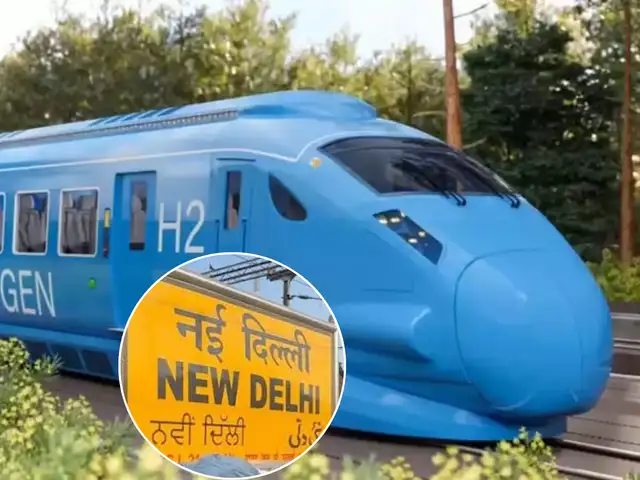

India’s first indigenous hydrogen-powered train could soon be extended to Delhi after seeing limited passenger traffic on its existing 89-km Jind-Sonipat route in Haryana. The train, which began oper..
Read More

Indian Railways is considering extending the hydrogen train to Azadpur station in Delhi, located close to the city’s wholesale fruits and vegetables market. Railway officials said the train has completed two months of successful operations as a technology demonstrator, while teams are working on the requirements for extending its service towards Delhi.

Indian Railways is considering extending the hydrogen train to Azadpur station in Delhi, located close to the city’s wholesale fruits and vegetables market. Railway officials said the train has compl..
Read More

The low ridership appears to be linked more to the route than the train itself. The hydrogen service replaced a DEMU train that also had limited passenger traffic. Railway staff said there are few office commuters or industrial workers travelling between Jind and Sonipat, while three other DEMU services on the route also reportedly see low footfall. Local passengers have therefore suggested extending the train towards Delhi to make better use of the service.

The low ridership appears to be linked more to the route than the train itself. The hydrogen service replaced a DEMU train that also had limited passenger traffic. Railway staff said there are few of..
Read More

Fuel range is not expected to be the biggest hurdle. Officials said the train can cover around 250-300 km on a full tank, while the distance between Jind and Delhi is about 130 km. At present, however, the train can be refuelled only at Jind. Capacity could be a bigger challenge, as the 10-coach hydrogen train can carry around 2,600 passengers, while trains serving Delhi often require 18-20 coaches because of high commuter demand and track capacity constraints.

Fuel range is not expected to be the biggest hurdle. Officials said the train can cover around 250-300 km on a full tank, while the distance between Jind and Delhi is about 130 km. At present, howeve..
Read More

If extending the hydrogen train to Delhi proves difficult, local passengers have suggested changing its route within Haryana. One proposal is to run the train from Jind to Sonipat, then towards Panipat and Safidon before returning to Jind. The proposed circuit would cover around 180 km and could serve more commuters, particularly because Panipat is an important industrial area.

If extending the hydrogen train to Delhi proves difficult, local passengers have suggested changing its route within Haryana. One proposal is to run the train from Jind to Sonipat, then towards Panip..
Read More

The train’s launch in July marked an important step in Indian Railways’ efforts to explore hydrogen-powered transportation. Railway officials have described it as a pilot project and said experts are closely monitoring its operation and trial runs towards Delhi. Since the technology is new and passenger safety remains a priority, the final decision on extending the hydrogen train service to Delhi will be taken after further assessment.

The train’s launch in July marked an important step in Indian Railways’ efforts to explore hydrogen-powered transportation. Railway officials have described it as a pilot project and said experts are..
Read More

Why a repeat of the 2016 Latur water train could be difficult

During the severe 2016 drought, special Jaldoot trains transported more than 24 crore litres of water to Latur in over 100 trips.

The first train left Miraj on April 11, 2016, carrying 10 wagons with a combined capacity of 50,000 litres.

Railway officials said the scale of the current drought could make a similar operation more challenging.
ADVERTISEMENT

According to an official, drought conditions now cover more than 70% of Maharashtra, while neighbouring states including Karnataka and parts of Andhra Pradesh and Telangana have also declared drought.

In 2016, water could be sourced from one location and transported to a specific drought-hit district. The current situation involves several districts across multiple states, making the logistics more complicated.
ADVERTISEMENT

Central Railway focuses on water for railway operations

For now, Central Railway is also working to secure sufficient water for its own operations in drought-affected areas including Beed, Solapur and Kolhapur.

Nila said the railway is looking at ways to ensure adequate drinking water at stations as well as water required for other railway-related activities.

“Our immediate focus is to ensure that passengers do not face any inconvenience,” he said.

When could Maharashtra get water trains?

A water-train operation would depend on a request from the state government and the availability of a suitable water source.

Central Railway has indicated that it is open to transporting water if these arrangements are made. However, no formal request had been received from the Maharashtra government at the time of the report.

The monsoon is expected to retreat by around October 8, but officials do not expect late rainfall to provide significant relief to drought-affected areas.


Inputs from TOI
READ MORE
ADVERTISEMENT

READ MORE:

LOGIN & CLAIM

50 TIMESPOINTS

More from our Partners

Loading next story
Business News › Industry › Transportation › Railways › Running water trains: Railways ready to transport water to drought-hit Maharashtra, but state must first find a water source
Text Size:AAA
Success
This article has been saved

*

+